Are US spy agencies sharing weapons, intelligence with Hezbollah?
October 2, 2014 Leave a comment
 By JOSEPH FITSANAKIS | intelNews.org
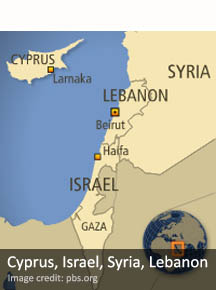
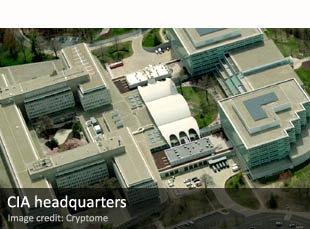
In its effort to amass regional support for its war against the Islamic State, the United States is reaching out to militant Shiites in Lebanon, including Hezbollah, according to some sources. In a report for New York-based magazine Newsweek, veteran intelligence correspondent Jeff Stein said on Wednesday that the meteoric rise of Sunni radicalism, in the form of the Islamic State, may have prompted the creation of a “de facto US-Saudi-Lebanese-Hezbollah-Iranian” alliance in the Middle East. Although no partner in this informal coalition is willing to admit its role in the collaborative effort, the common goal of eradicating Sunni extremism has brought about an “unwritten, unacknowledged cease fire” between these former adversaries, says Stein, quoting “authoritative sources”. Washington and Hezbollah, the militant Shiite group that controls large swathes of Lebanese territory, have a common interest in combating the Islamic State and preventing its rule from spreading beyond Syria. So the Americans began reaching out to Hezbollah in 2012, says Stein, and have helped bring about a “regional consensus […] to contain the conflict away from Lebanon and in Syria”. Remarkably, bitter adversaries such as Saudi Arabia and Iran are said to actively subscribe to the Washington-led consensus against the Islamic State. Washington’s decision to reach out to Hezbollah appears to have been prompted by the realization that the militant Shiite group, along with the official Lebanese Armed Forces (LAF), were the only actors on the ground capable of fighting and defeating the Islamic State. Last August, says Stein, the US Pentagon unloaded $20 million worth of weapons in Lebanon for use by the LAF. The weapons were reportedly shipped through the Beirut International Airport, which his under the control of Hezbollah. The group promptly transferred the weapons to the LAF, which is traditionally dominated by Christians, but has recently developed an “arm’s length alliance with Hezbollah” due to their mutual concern over the rise of the Islamic State. Stein suggests that the US-Hezbollah relationship may now also include intelligence-sharing. He quotes a number of sources who claim that some Sunni militants have been apprehended thanks to intelligence-sharing between America, Iran and Saudi Arabia. Some claim that Iran acts as a mediator between Washington and Hezbollah, and that British diplomats also mediate between the two sides. Read more of this post
 By JOSEPH FITSANAKIS | intelNews.org













China hacking Hong Kong protesters’ smartphones, says security firm
October 3, 2014 by Ian Allen Leave a comment
A mobile telephone security company has said the government of China is probably behind a sophisticated malware designed to compromise the smartphones of protesters in Hong Kong. Ever since the Hong Kong ‘umbrella revolution’ began to unfold, countless reports have referred to the use of smartphone applications as organizing tools by the protesters. According to one account, an application called FireChat was downloaded by more than 100,000 smartphone users in Hong Kong in less than 24 hours. FireChat is said to allow protesters to continue communicating with each other even when their individual devices are unable to connect to a mobile network. But a California-based mobile telephone security firm has warned that the Chinese government could be using such enabling applications to compromise the smartphones of pro-democracy protesters in the former British colony. Lacoon Mobile Security, which specializes in assessing and mitigating mobile security threats, said on Tuesday that it had detected several types of malware camouflaged as mobile phone applications designed to help the protesters organize. In a statement posted on its website, the security firm said that, once downloaded by a smartphone user, the malware gives an outsider access to the address book, communication logs and other private data stored on the unsuspecting user’s device. Lacoon added that what made the malware unusual was that it came in two different versions; one appears to target smartphones that run Apple’s iOS operating system, while the other is designed to compromise phones using Google’s Android software. The company noted that the types of malware that are circulating among Hong Kong protesters were some of the most sophisticated it had ever seen. They made use of a method called mRAT, which stands for multidimensional requirements analysis tool. Among other things, mRAT allows a hacker to take surreptitious pictures using the phone camera of a compromised smartphone. According to Lacoon, the design of the malware in question is so advanced that it is “undoubtedly backed by a nation state”. Read more of this post
Filed under Expert news and commentary on intelligence, espionage, spies and spying Tagged with cellular telephony, China, Hong Kong, mRAT, News, telephone hacking