News you may have missed #872

Capture from al-Qaeda's Resurgence videoBy IAN ALLEN | intelNews.org
►►Analysis: US military treads lightly in Africa. America’s aim seems to be to tackle Islamist militants in the Sahel region while keeping its military presence in Africa light. Military experts say direct US military action in Africa is limited to short raids on “high-value” targets in places such as Somalia and Libya, while French troops take on longer, bigger operations.
►►Al Qaeda announces new English-language magazine. Al-Qaeda is starting an English-language magazine as part of a fresh effort to recruit and inspire Western Islamists to launch attacks in their own countries, according to security analysts. A video posted on (and later removed from) YouTube uses the words of Malcolm X to justify violent struggle, before announcing the name of the magazine, Resurgence. It appears to be modeled on Inspire, an online publication produced by al-Qaeda in the Arabian Peninsula. However, the new magazine appears to be the first English language magazine from the group’s core leadership and is advertised with a slick video from as-Sahab, its media production house.
►►Edward Snowden’s testimony to the European Parliament (.pdf). American intelligence defector Edward Snowden has sent a 12-page document to the European Parliament, in which he answers questions posed to him by several members. In the document he maintains that he has “no relationship” with China and Russia. In response to a question on whether he was approached by the Russian intelligence services, he responds “of course”, and continues: “Even the secret service of Andorra would have approached me, if they had had the chance: that’s their job. But I didn’t take any documents with me from Hong Kong, and while I’m sure they were disappointed, it doesn’t take long for an intelligence service to realize when they’re out of luck”.

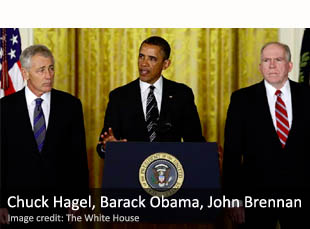
Obama comments on Senate-CIA dispute, fails to mention Feinstein

Chuck Hagel, Barack Obama, John BrennanBy JOSEPH FITSANAKIS | intelNews.org
Yesterday in a radio interview I opined that I would not be surprised if the White House stepped in to mediate the ongoing dispute between the Central Intelligence Agency (CIA) and the Senate Select Committee on Intelligence. Today, President Barack Obama broke his silence “with respect to the issues that are going back and forth between the Senate committee and the CIA”, as he said. But he refused to take sides —or did he? On Wednesday afternoon, the President responded to a question on the matter by a White House pool correspondent. The question related to the increasingly heated public spat between the CIA and the Senate Intelligence Committee. The latter is tasked, along with its sister body in the House of Representatives, with exercising legislative oversight of the Intelligence Community. Many members of the Committee, which is currently investigating the CIA’s use of enhanced interrogation against terrorism detainees, believe that, not only was the CIA’s use of harsh interrogation methods illegal, but that it also failed to generate useful intelligence. The CIA, however, denies this, and has been quite possessive of documents relating to the issue, which the Committee believes has a right to access. The Agency has now asked the Federal Bureau of Investigation (FBI) to look into whether Congressional staffers illegally removed classified documents from the CIA’s archives that were beyond the scope of the Committee’s investigation. The Committee has in turn asked the Bureau to investigate whether the CIA illegally searched the computers used by staffers to carry out their research into CIA files.
Read more of this post

Comment: The significance of the spat between Congress and the CIA

John Brennan and Dianne FeinsteinBy JOSEPH FITSANAKIS | intelNews.org
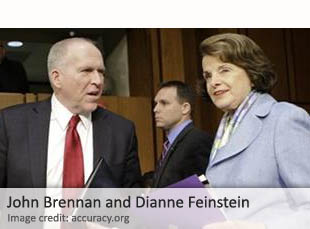
Dianne Feinstein, the chair of the United States Senate Select Committee on Intelligence, had gone out of her way in recent days to avoid commenting on the ongoing quarrel between her Committee and the Central Intelligence Agency (CIA). That ended yesterday, when she gave a press conference accusing the CIA of illegally spying on her Committee’s Congressional staffers. Her stunning announcement came shortly after her tense meeting with the Director of the CIA, a bad-tempered John Brennan. She told the media that at the meeting she requested from Brennan an apology and acknowledgement that the alleged CIA spying was “inappropriate”. By her own account, she failed to get either, so she decided to go public. In an interview I gave yesterday to Michigan’s WILS 1230 AM’s Capital City Recap, I argued that the quarrel between the two government bodies is not in itself important. What is important, I told radio host Mike Cohen, is that the dispute has entered the public arena. A routine ‘push and shove’ mêlée has turned into an all-out fistfight in full view of the media. One Republican Senator, Lindsay Graham, told the Associated Press on Tuesday that the time had come for “the legislative branch [to] declare war on the CIA”. In response to the Committee’s accusations, the CIA has apparently instructed the Department of Justice to investigate the alleged removal by Congressional staffers of classified documents that were “protected by executive privilege [and were] beyond the scope of the Committee’s investigation”.

Read more of this post

Rift between US Congress and CIA biggest in 40 years, say observers

CIA headquartersBy IAN ALLEN | intelNews.org
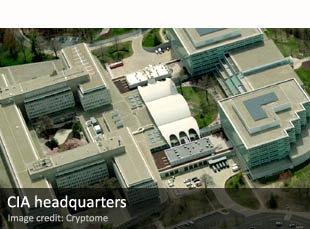
The system of checks and balances that defines the relationship between America’s legislative branch and the Intelligence Community has been strained more than any other time in nearly 40 years, according to insiders. The rift is especially wide between the Central Intelligence Agency (CIA) and the United States Senate’s Select Committee on Intelligence, which was formed in the mid-1970s after the Watergate scandal. Led by Senator Frank Church (D-Id) the congressional investigations into unlawful domestic intelligence activities by American spy agencies shaped the current oversight arrangements between the Senate and the CIA. But the two bodies are now engaged in what Foreign Policy magazine calls “a rare public feud” over the Committee’s ongoing investigation into the CIA’s harsh interrogation techniques. Foreign Policy cites interviews with “ten current and former congressional staff member and US government officials”, all of whom painted a “grim picture” of Senate-CIA relations. The Foreign Policy article quotes former Justice Department lawyer Dan Metcalfe, who opines that the current imbroglio “might well be the most acrimonious public moment between the CIA and a Senate committee [in] nearly 40 years”. Both sides accuse each other of violating longstanding agreements during the investigation into CIA’s use of torture in interrogations of terrorism detainees. Committee members have been claiming that the Agency’s interrogation methods have failed to produce useful information in pursuit of America’s national security. The CIA, on the other hand, accuses Committee staffers of illegally removing documents from an Agency facility, which the Committee was not supposed to see because they fell outside the scope of its inquiry. But some Senators on the Committee claim that the CIA did not want to hand over the documents precisely because they prove that no useful intelligence was extracted under torture. They also claim that the CIA effectively spied on Committee staffers by searching through their activity on computers used to access classified information. Read more of this post

IRA ‘tried to kill Queen’s husband’ during Australia visit

Prince Philip and Queen Elizabeth in 1973By JOSEPH FITSANAKIS | intelNews.org
The Provisional Irish Republican Army tried to assassinate Prince Philip, the Duke of Edinburgh and husband of Queen Elizabeth II, during an official Royal visit to Australia in the early 1970s, according to a new book. The claim is detailed in the book Shadow of a Spy, written by Warner Russell, a veteran Australian reporter and retired military intelligence officer. The alleged assassination attempt was uncovered in Sydney on March 15, 1973, during the Prince’s two-day visit to Australia. While there, the Queen’s husband attended a conservation meeting and led an official opening ceremony of a Royal Australian Air Force war memorial in capital city Canberra. According to Russell, two “crude explosive devices” were discovered in Sydney at locations that had been scheduled to be visited by the British Royal entourage. The first device was detected in a trash can in Dowling Street, in Sydney’s downtown Potts Point neighborhood. The second device was found inside a luggage locker at Sydney’s Central Station, a few miles away from the location of the first bomb. The book claims that the two other “suspicious packages” were found, one in a local government building located across the street from an officer’s club that the Prince was due to visit, and another in a trash can at Taylor Square, less than a mile from Central Station. Eventually, the two “suspicious packages” were determined to be “decoys”, says Russell. But the other two devices contained explosive material and were defused by an Australian Army bomb disposal team before being secretly taken to a forensic laboratory for examination. Russell claims that the bombs were defused just minutes before Prince Philip’s group arrived at the two Sydney locations, and Australian authorities were so nervous that they ordered the Prince’s motorcycle escort and protection team to “take evasive action” as they approached Dowling Street. Read more of this post

Analysis: The war between Israel and international arms smugglers

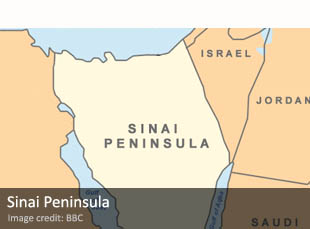
Sinai PeninsulaBy IAN ALLEN | intelNews.org
The interception earlier this week of a civilian cargo vessel in the southern Red Sea by Israeli commandos has brought to light the ongoing war between weapons smugglers and the Israeli state. The vessel, named Klos-C, was seized by Israeli forces in international waters, over 1,000 miles away from Israel’s coast. Few observers were surprised by the location of the seizure, which took place in the waters between Eritrea and Sudan. Israeli security planners consider the East African country as a major link in the complex smuggling network that supplies goods and weapons to the Gaza Strip. Tel Aviv has long asserted that the smuggled weapons, which usually originate from Iran or Syria, are secretly carried from Port Sudan into Egypt before eventually ending up across the border into the Palestinian enclave that is controlled by militant group Hamas.

Regular readers of this blog will remember the October 2012 Israeli air attack on the outskirts of Sudanese capital Khartoum, which destroyed an alleged illicit weapons warehouse. In May of 2012, a missile attack in Port Sudan, which was also linked to Israel, killed Nasser Awadallah Ahmed Said, an eminent member of the Red Sea’s Ababda Bedouin tribe, whose members have a long history of smuggling weapons and goods to and from Sudan.

Read more of this post

News you may have missed #871

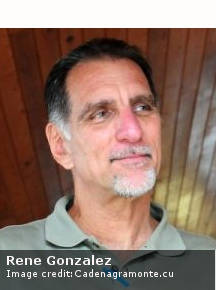
Rene GonzalezBy IAN ALLEN | intelNews.org
►►Britain denies visa for Cuban spy freed by US. Rene Gonzalez, one of the so-called “Cuban Five” intelligence agents convicted by the US of spying, has been denied a British visa to attend a London symposium. Gonzalez, who served 13 years in US prison before his release in 2011, had been invited to a two-day conference put on by “Voice for the Five”, an organization that campaigns in support of the convicted Cuban spies. The Cuban state-run newspaper Juventud Rebelde said Gonzales, 55, was denied a visa because British law prohibits entry of a person sentenced to more than four years in prison.
►►Canada fires intelligence analyst over contacts with Russians. Irina Koulatchenko, a 36-year-old who came to Canada as a Russian refugee via Cuba, has been fired by Canada’s financial-intelligence agency, known as FINTRAC. A Canadian Security Intelligence Service probe recommended she not be trusted to do that job, allegedly because “she had had several social encounters with Russian diplomats”. The latter included one she met “at a Cirque du Soleil show, another who was friends with her ex-fiancé and another she bumped into all the time at various social events”.
►►CIA suspected of spying on Congress members. The United States Department of Justice has opened an investigation into Senate aides removing documents from CIA headquarters that they reportedly “weren’t authorized to have”. It turns out, however, that the CIA found this out because they were secretly spying on members of the Senate Intelligence Committee and their staff who were working on a high-profile report on CIA torture of detainees. What is more, Democratic Senator Mark Udall has claimed US President Barack Obama knew of the CIA’s secret monitoring of the Committee.

Israeli reports accuse US of denying entry visas to Israeli spies

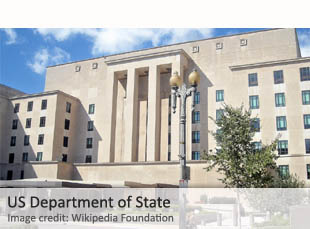
US Department of StateBy JOSEPH FITSANAKIS | intelNews.org
Articles in the Israeli media have accused the United States of quietly instituting a policy of denying entry visa requests from members of Israel’s security and intelligence agencies. In an article published on Tuesday, centrist newspaper Maariv cited “senior security personnel” who have allegedly been barred from entering the US. The centrist Hebrew-language daily said the past 12 months have seen “hundreds of cases” of employees in the Israeli intelligence community who have been told by US consular officials that they could not step foot on US soil. The paper said the visa rejections appear to affect mostly members of the Shin Bet, Israel’s domestic security agency, and the Mossad, which conducts covert operations abroad. Visa bans have also affected employees in Israel’s defense industries, said the article. The report suggests that the targeting of Israeli security and intelligence personnel appears to be deliberate, adding that it applies even to those Israeli intelligence or security officers that are already stationed on US soil. In what seems to be a change in policy, the latter are now being issued short-term visas, rather than multiyear entry permits. As a result, the paper says they are “forced” to cross from the US into Canada at regular intervals, in order to apply to have their visas renewed. However, many of them are now having their visa renewal applications rejected, or are made to wait “several weeks” before having their entry permits renewed by American consular staff. The paper quoted a “senior [Israeli] security expert”, who said he had been denied an entry visa to the US this past January, for the first time in his career, despite having visited the US numerous times in the past “without trouble”. He told Maariv that he had “traveled to the US dozens of times in the past for my job and never faced issues getting a visa” on time. Read more of this post

US intelligence agencies urge ‘cautious approach’ on Ukraine

Chuck Hagel, Barack Obama, John BrennanBy IAN ALLEN | intelNews.org
American intelligence agencies see Russia’s control of the Crimean Peninsula as near-complete and urge Washington to take cautious steps on Ukraine, as Moscow appears prepared “to take military action” in defense of its strategic goals. The Los Angeles Times reported on Monday that some American intelligence analysts believe Moscow is genuinely convinced that its military action in Ukraine is justified under the Budapest Memorandum on Security Assurances. The agreement was signed in 1994 by the United States, United Kingdom, and the Russian Federation. The three nuclear powers guaranteed that they would refrain from actions that would subvert the territorial integrity and political autonomy of Ukraine. Western officials have accused Moscow of violating the agreement by dispatching Russian troops to southeastern Ukraine without the consent of the Ukrainian government. But some American intelligence analysts believe the Russian Foreign Ministry is convinced that Russian forces are acting within the scope of the 1994 agreement. The latter is interpreted by Russian officials as permitting Moscow to unilaterally dispatch up to 25,000 troops to the Crimea. This may even be the predominant view at the Central Intelligence Agency (CIA), judging by a briefing given last week by the Director of the CIA, John Brennan, to an unnamed “senior lawmaker”. The Times cited “US officials who declined to be named” as saying that Brennan suggested that Russian officials genuinely believe that the number of Russian troops in Ukraine “remains well below the threshold” specified in the Budapest Memorandum. Brennan added that, although he did not personally agree with Moscow’s interpretation of the Memorandum, it would be wise for Washington to tread cautiously on the subject, given the fact that Russian policy on Crimea remains unpredictable. Read more of this post

Comment: Is Ukraine’s Military Splitting in Two?

H First PostBy JOSEPH FITSANAKIS | intelNews.org
Much has been made about the presence of Russian troops —including what appear to be special forces units— in southern Ukraine. But peace and stability in the region are not threatened only by the actions of foreign troops; they are also threatened by the attitude of the armed forces of Ukraine, whose stance is likely to determine the outcome of the current crisis. The government of Ukraine has called all military reservists in the country to mobilize in order to “ensure the security and territorial integrity of Ukraine”. But what guarantee is there that the Ukrainian armed forces will remain united while the country is splitting in two —or three, counting the Tatars? At least 20 percent of Ukraine’s citizens consider themselves ethnically Russian, and there is little reason to believe that the ranks of the Ukrainian military, which reflect the ethnic makeup of the country’s divided population, will prove immune to rapidly intensifying sectarian tensions. Already Russian news outlets report that “the majority” of Ukrainian armed forces personnel stationed in Crimea have “switched to the side of local authorities” of the Autonomous Republic of Crimea. The secessionist government’s Deputy Prime Minister, Rustam Temirgaliev, said on Sunday that the Ukrainian armed forces in the breakaway region “have all but surrendered” and that many “are expected to take military oath soon”, declaring their allegiance to the Crimean Republic. Presumably these are ethnic Russians who are abandoning the Ukrainian military and joining that of the secessionist movement in Crimea out of nationalist allegiance.

Read more of this post

British spies infiltrated Nazi sympathizer groups, wartime files show

Page from MI5's Jack King filesBy JOSEPH FITSANAKIS | intelNews.org
A British counterintelligence agent managed to neutralize an extensive network of Nazi sympathizers in the United Kingdom by pretending to represent the German government, newly released files show. The documents, which were released this week by the British National Archives, identify the agent only as “Jack King”, which was the operational codename given to him by his handlers in the British Security Service, commonly known as MI5. Senior officials at the agency, which is tasked with counterintelligence, described “King” as “a genius” at luring in Nazi sympathizers in the UK. The files show that “King’s” work helped MI5 identify hundreds of residents in Britain —most of them British citizens— as committed Nazis who were prepared to pass national secrets to Berlin. The MI5 operative utilized his pro-German contacts in the southeast of England and was able to infiltrate pro-Nazi circles operating in and around London. He did so by posing as an agent of the Gestapo, Nazi Germany’s secret police. He quickly gained the trust of some of the most fervent pro-German activists operating in the British Isles. These included Edgar Whitehead, Hilda Leech and Marita Perigoe, a Swedish resident of the UK, who was so fervently pro-Nazi that she once dismissed Oswald Mosley’s British Union of Fascists as “insufficiently extreme”. Many of these Nazi supporters pledged to “King” that they could be relied on to assist in the event of an invasion of Britain by Nazi forces. The files released by the National Archives show that “King” was well connected with British Nazis by 1942. Read more of this post

News you may have missed #870

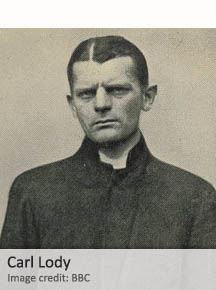
Carl LodyBy IAN ALLEN | intelNews.org
►►Documents show NZ spies taught ‘honey trap’ tricks. Members of New Zealand’s Government Communications Security Bureau were briefed by counterparts from the ultra-secret Joint Threat Research Intelligence Group, a unit of the British Signals intelligence agency GCHQ, on setting honey traps and Internet “dirty tricks” to “control, infiltrate, manipulate, and warp” online discourse, documents leaked by Edward Snowden reveal. According to the slides, JTRIG conducted “honey traps”, sent computer viruses, deleted the online presence of targets and engaged in cyber-attacks on the “hacktivist” collective Anonymous.
►►Ex-CIA analyst tells how data helped catch bin Laden. A central figure in the manhunt for Osama bin Laden, Nada Bakos spoke this week as the keynote speaker at a conference in California, on how data, big and small, led to the capture of al-Qaeda founder Osama bin Laden. “You don’t want to lead the information, you want the information to lead you”, she said, and credited the agency’s innovative gathering process that institutionalized various types of intelligence analysis —opposed to solely relying on general guidelines and best practices.
►►The story of WWI German spy Carl Lody. Towards the end of August 1914 a man checked into what is now the Balmoral Hotel in the centre of Edinburgh claiming to be an American tourist. In reality he was a German spy who had been sent to gather intelligence from the British. Carl Lody was a junior naval officer who had been forced to retire for health reasons but was looking for other ways to serve the fatherland. He was especially attractive to German naval intelligence because he had lived for years in the United States and spoke English fluently, although with an American accent.

Police ‘error’ reveals secret deal between IRA, UK government

Provisional IRA muralBy JOSEPH FITSANAKIS | intelNews.org
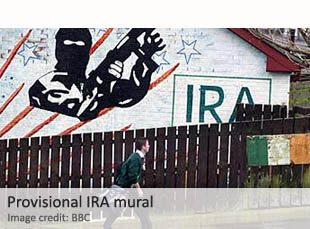
An alleged police error, which has prompted the release from custody of a former Provisional Irish Republican Army (PIRA) volunteer accused of killing British soldiers, has revealed a secret agreement between the PIRA and the British government. British authorities have long suspected John Downey of involvement in a 1982 bomb explosion in London’s Hyde Park, which killed four British soldiers and injured scores of bystanders. But Downey was released from custody yesterday, after a judge was shown a letter that the suspect had been provided by the British government, assuring him that he was not wanted for outstanding crimes related to PIRA operations. The letter was given to Downey in 2007 by Britain’s Northern Ireland Office; it stated that the former PIRA volunteer would be able to travel outside Northern Ireland “without fear of arrest”. British authorities said that the letter had been sent “in error” and that it should have been withdrawn prior to Downey’s recent detention. But the case has exposed what appears to be a “discreet agreement” between the British government and republican paramilitaries. The agreement is undoubtedly connected to the 1998 Good Friday Agreement. The multi-party accord permitted —among other things— power-sharing between Northern Ireland’s loyalist and republican political parties, in exchange for the decommissioning of weaponry held by paramilitary groups on both sides. But it also stipulated that all prisoners held for crimes related to sectarian violence in Northern Ireland were to be freed. By 2000, most of these prisoners had been released, based on the British government’s belief that paramilitary groups on both sides were unlikely to refrain from violence while many of their members remained in prison. However, there was nothing in the Good Friday Agreement to cover the cases of those “on the run”, namely paramilitaries —most of them republican— who were at large and wanted by the British state for crimes connected with paramilitary activity. Read more of this post

News you may have missed #869 (Ukraine edition)

H First PostBy IAN ALLEN | intelNews.org
►►US and UK warn Russia not to deploy troops in Ukraine. US National security adviser Susan E. Rice said Sunday that Russian troop intervention in Ukraine would be a “grave mistake”, arguing that a return to a Cold War posture would not reflect modern realities. Earlier on the same day, British foreign secretary William Hague cautioned Moscow “not to intervene” in Ukraine. “If there is an economic package” from Russia, said Hague, “it will be important that Russia doesn’t do anything to undermine that economic package and is working in cooperation and support of it”.
►►Analysts touting Ukraine’s East-West division are just plain wrong. “The image of two competing blocs is just dead wrong. Ukraine’s diversity is pretty much on par with that found in just about any country of the world. The real divide in Ukraine is not between East and West, but between the democratic forces on the one hand and the Party of Regions on the other. The latter is strongest in the southeast, mostly because its cadres (who are mostly former communists) have controlled the region’s information networks and economic resources since Soviet times and continue to do so to this day”.
►►The global implications of the Ukraine conflict. Thus far, the Kremlin hasn’t sought to encourage separatist sentiment in eastern and southern Ukraine. And it doesn’t appear that Vladimir Putin and his system of power is interested in the prospect of a civil war in his backyard. But it still has the potential to break out even if Moscow doesn’t want it. Those familiar with Ukraine’s history know that the militant nationalists in the west of the country have gone time and time again into battles they can’t win. Whatever the case, romanticizing revolution can only end in a “big bang”, the fallout from which would extend far beyond Ukraine.

Are Israeli arms merchants selling weapons to Iran?

F-4 aircraftBy JOSEPH FITSANAKIS | intelNews.org
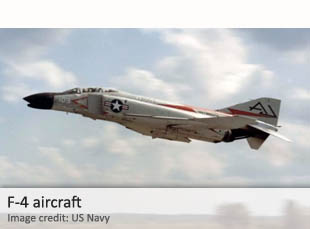
A leaked report by American and Greek investigators suggests that an intercepted shipment of military hardware intended for Iran probably originated in Israel. Greek broadsheet Kathimerini said on Sunday it had in its possession a copy of the classified report, which describes the interception of a large shipment of spare parts for military use. The parts are believed to have been intended for use by the Islamic Republic of Iran Air Force (IRIAF). The shipment allegedly contained spare parts for F-4 Phantom aircraft, which were originally built in the United States in the 1960s for use by the US Navy. The Islamic Republic still maintains a sizable fleet of F-4s, which Iran bought from the US in the 1970s, when the two countries were close allies. But a US-imposed embargo on Iran, which has been in effect since the 1979 Islamic Revolution, has prevented Tehran from easily acquiring spare parts for its aging fleet of F-4s. The Kathimerini report said that the intercepted shipment had been detected following a joint operation by the Greek Financial Crimes Squad and the US Department of Homeland Security. According to the paper, the secret operation began was underway in late 2012 and concluded in April of 2013. But the most shocking part of the report is that the illegal shipment appears to have originated from Binyamina-Giv’at Ada, a small Israeli town located 30 miles south of Haifa. Investigators said the illicit transfer had been facilitated via a Greek firm registered in the Athens district of Votanikos, called “Tassos Karras SA”, which appears to be a front company. Is it possible that Israeli arms merchants are supplying military spare parts to Iran? The Israeli government has refused comment on the case. Read more of this post