Thatcher was warned about CIA activities in Britain, files show
February 6, 2014 1 Comment
 By JOSEPH FITSANAKIS | intelNews.org
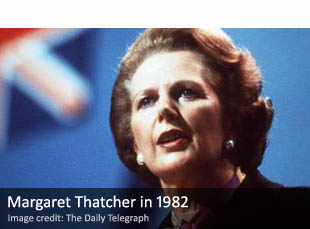
British Prime Minister Margaret Thatcher was warned in 1984 that American intelligence carried out operations in the United Kingdom without London’s consent. Although she dismissed the warnings, she authorized British counterintelligence to investigate the matter. A secret file from the British Foreign Office, which was declassified last month, shows that concerns about alleged American spy activity in the UK were communicated to the Tory Prime Minister by Paddy Ashdown —now Lord Ashdown— a Member of Parliament for Britain’s Liberal Party. In November of 1984, Ashdown notified Thatcher that he was concerned about a series of “clandestine activities” carried out by the United States Central Intelligence Agency (CIA) aimed at preventing communist countries from acquiring advanced computer technology developed by companies based in Britain. The written warning stated that CIA operatives had made “clandestine approaches” targetting individuals employed by leading British computer firms, inquiring about technology transfers to the Soviet Bloc. Ashdown added that the American intelligence agency had failed to provide the British government with advance notice of these activities, as was customary between the two allies. In his letter to Thatcher, the Liberal Party MP concluded that, based on his personal investigation into the matter, he was convinced the CIA operation was “still continuing”. The Prime Minister responded to Ashdown with an official letter explaining that there was “no evidence of improper activity by the CIA” or that British espionage laws had been violated by American intelligence personnel. She added that there was “close cooperation” between London and Washington on enforcing multilaterally agreed export controls, which included computer technology, and concluded that saw no need for an inquiry at that time. But London-based newspaper The Guardian, which accessed the declassified files on the case, said that Whitehall ordered the Foreign Office to investigate Ashdown’s allegations. The Foreign Office then tasked the Security Service (MI5) to find out whether the US had broken an agreement between the two countries to refrain from clandestine operations on each other’s territory unless the latter were authorized by both nations. Read more of this post
 By IAN ALLEN | intelNews.org













Comment: Nuland’s leaked phone call is ‘populist intelligence’
February 10, 2014 by Joseph Fitsanakis 4 Comments
My phone started ringing off the hook on Thursday evening, when a video appeared on YouTube containing a frank conversation between Victoria Nuland and Geoffrey Pyatt. Nuland, Assistant Secretary at the United States Department of State, and Pyatt, US Ambassador to Ukraine, were discussing US diplomatic moves on the political standoff in Ukraine. In the conversation, which was clearly meant to be private, Nuland expresses frustration with efforts by the European Union, which she deems weak and inadequate. In a shocking display of candor, Nuland tells Pyatt that the US should “help glue this thing and […] have the UN help glue it and, you know, f**k the EU”.
On Thursday night I spoke at the main news program of BBC television, where I agreed with most observers —some of the US government officials— that Russia was the obvious culprit behind the leaked conversation. The geopolitical interests of Washington and Brussels coincide almost completely when it comes to Ukraine, as both wish to detach the former Soviet republic from the Russian sphere of influence. So driving a wedge between the two allied sides is clearly to the benefit of Moscow. I added that the two American officials should have known better than to speak so frankly on the phone, given the constant monitoring of diplomatic communications by both adversary and friendly intelligence services, which is common knowledge in diplomatic circles. Read more of this post
Filed under Expert news and commentary on intelligence, espionage, spies and spying Tagged with Analysis, communications interception, diplomacy, European Union, Geoffrey Pyatt, Joseph Fitsanakis, Russia, Ukraine, United States, Victoria Nuland