Australia tries to stop ex-spy from testifying in international court

Australia and East TimorBy JOSEPH FITSANAKIS | intelNews.org
The government of Australia has confiscated the passport of a former intelligence officer who was preparing to testify at an international court that Canberra engaged in illegal economic espionage. The Permanent Court of Arbitration in The Hague, Netherlands, is preparing to hear a case brought against Australia by the government of East Timor. The small island nation accuses Australia of bugging the offices of key Timorese officials in an attempt to acquire inside information on a crucial energy deal. East Timor claims that a group of Australian Secret Intelligence Service (ASIS) officers disguised themselves as a refurbishing crew and planted numerous electronic surveillance devices in an East Timorese government office. The information collected from the listening devices allegedly allowed Australia to gain an upper hand during negotiations that led to the Certain Maritime Arrangements in the Timor Sea (CMATS) treaty. The treaty, signed in 2004, allows the two countries to share the revenue derived from the exploitation of the Greater Sunrise oil and gas field, sections of which are claimed by both Australia and East Timor. But the Timorese side now claims that Canberra gained an unfair advantage in the CMATS negotiations through its bugging operation, and is asking for the treaty to be terminated. Sometime last week, Australian authorities found out that the East Timorese side had secured the cooperation of an ASIS whistleblower, who was prepared to testify at The Hague about the details of the bugging operation. The unnamed whistleblower, who is believed to be a former director of technical operations at ASIS, was prepared to tell the court that the operation was both “immoral and wrong”, because it was designed to benefit the interests of large energy conglomerates and had nothing to do with Australian national security. On Tuesday, officers from the Australian Security Intelligence Organisation (ASIO), which is the country’s domestic intelligence agency, raided the offices of Bernard Collaery, who is acting as East Timor’s lawyer in the case. The raiders took away legal documents that disclose the identity of the ASIS whistleblower. Shortly afterwards the former ASIS official was questioned by Australian authorities, who then proceeded to confiscate his passport, so as to prevent him from traveling to the Netherlands. Read more of this post

France smashes ‘exceptionally large’ arms smuggling network

AK-47sBy JOSEPH FITSANAKIS | intelNews.org
An arms smuggling network described by authorities as “exceptionally large” has been smashed in a series of raids across France. Over 45 suspects were arrested and “hundreds of weapons, including machine guns” were seized by French gendarmes early on Monday. French police officials said most of the detainees are suspected traffickers from Eastern Europe, while confiscated evidence includes “weapons of war [meaning fully automatic assault rifles], ammunition and spare parts”. French investigators said the smuggling network had trafficked hundreds of weapons from Balkan countries and Slovakia into France in the past five years. The raids are said to have involved over 300 gendarmes in several simultaneous operations in Paris, in the Rhone, Provence, as well as in Corsica and in several French overseas territories. The police raids marked the culmination of a nationwide investigation that began in early 2012. It focused on a group of 45 ‘gun collectors’, who were found to be using their collector status as a façade in order to illegally acquire assault weapons. The weapons would then be funneled into criminal gangs across France. A near-unprecedented influx of military-grade weapons, especially Kalashnikov assault rifles, has been noted across Europe in recent years. Much of it has been blamed on the rise in demand and availability for such weaponry caused by revolutions in Libya, Syria, Egypt and elsewhere in the Arab world. In early November, the Greek Coast Guard seized a cargo ship carrying over 20,000 AK-47s, allegedly bound for Syria or Libya. The ship, named Nour-M, and flagged under Sierra Leone, had set sail from Ukraine and was believed to be en route to Turkey. Read more of this post

Fujimori-era spy scandal returns to haunt Peruvian politics

Ollanta HumalaBy JOSEPH FITSANAKIS | intelNews.org
Regular readers of this blog will be familiar with the case of Vladimiro Montesinos, the former director of Peru’s intelligence service, Servicio de Inteligencia Nacional (SIN). Montesinos, a CIA agent, is currently serving a 25-year prison sentence for setting up a sophisticated network of illegal activities during his SIN tenure. The crimes he committed included drug trafficking, bribing, extortion, as well as embezzlement. Many of these activities were conducted under the direction of Peru’s disgraced former president Alberto Fujimori. He too is now in prison for having handed Montesinos $15 million from government coffers.

In the past decade, civil society in Peru has tried to move on from these scandals, and has sought to establish a more stable political culture. In the 2011 elections, the country voted for Ollanta Humala, who was sworn into office on July 28 of that year. The son of a labor lawyer, Humala became a career military officer at an early age. In 2000, he became known across Peru when he led a local mutiny against the government of Alberto Fujimori, complaining against corruption in the central government. The mutiny, joined by a just few dozens of soldiers in southern Peru, was quickly quashed by the government, and Humala soon found himself in prison. However, he was pardoned by the Peruvian Congress after the fall of the Fujimori regime. Moreover, Humala was seen by many as a national hero for his defiant stance in 2000.

However, Humala’s stardom has begun to fade in recent weeks, after media reports drew the country’s attention to Óscar López Meneses. Over a decade ago, López was taken to court along with Fujimori and Montesinos, and was given a suspended sentence for having helped the sinister spy kingpin run his criminal network around the country. López has kept a low profile in recent years, but Peruvian media reported last month that he has remained in close operational contact with the Peruvian police. The revelation led to the eventual resignation of Peru’s minister of the interior, Wilfredo Pedraza, while his interim successor quickly fired seven senior police officials for having contacts with López. Read more of this post

Communist-era spy allegations surface in Czech political wrangling

Andrej BabišBy IAN ALLEN | intelNews.org
Allegations that a senior Czech political figure was a government informant during the country’s communist period may disrupt the emergence of a national governing coalition. The Social Democratic Party won 20.5 percent in last October’s parliamentary election, emerging as the leading party in the Czech Republic’s fragmented political scene. The center-left party has said it is planning to form a governing coalition by reaching out to the centrist Christian Democratic Union, as well as a new center-right party calling itself ANO 2011 (Ano stands for ‘yes’ in Czech). The new party says it aims to end corruption in the country, abolish immunity from prosecution for elected parliamentarians, tackle unemployment, and improve the Czech Republic’s crumbling infrastructure. The party has also said it is willing on principle to join a wider government coalition, providing it is offered control of the country’s finance ministry. A leading contender for the ministerial position is ANO’s founder and main financial backer, Andrej Babiš. A business tycoon, who made his fortune importing and exporting fertilizers, Babiš is the Czech Republic’s second richest man, with an estimated fortune of $2 billion. His spectacular entrance into Czech politics was confirmed when ANO, which he founded in 2011, came in second in last October’s elections, receiving 18 percent of the national vote and gaining 47 seats in parliament. However, plans for a three-party coalition have been halted by allegations that Babiš may have been an informant for Czechoslovakia’s StB secret police during the 1980s. The claims first emerged in a Slovak newspaper shortly before last October’s elections, but failed to prevent ANO and Babiš from making a spectacular entry into Czech national politics. Later, however, the media allegations were substantiated by Slovakia’s Institute of National Memory, which provides public access to previously classified records of the StB and other Czechoslovak intelligence agencies during the country’s communist period. The Institute says that Babiš, who was a card-carrying member of the Communist Party of Czechoslovakia, had regular contact with the StB in the 1980s. At that time he was living in North Africa working for Petrimex, a Czechoslovakian government-owned international trade company. Read more of this post

Further evidence shows Litvinenko worked for MI6 when killed

Alexander LitvinenkoBy JOSEPH FITSANAKIS | intelNews.org
In 2012, a court in the United Kingdom was told that former KGB officer Alexander Litvinenko, who died of poisoning in 2006, had been working for British and Spanish intelligence when he was killed. Now British newspaper The Independent says it has proof that the late Russian spy provided “expert analysis” on Russian politics for British intelligence, shortly before his death. Litvinenko was an employee of the Soviet KGB and one of its successor organizations, the FSB, until 2000, when he defected with his family to the UK. He soon became known as a vocal critic of the administration of Russian President Vladimir Putin. In 2006, Litvinenko came down with radioactive poisoning soon after meeting a former KGB/FSB colleague, Andrey Lugovoy, at a London restaurant. Many suspect that the Russian government is behind Litvinenko’s murder. But the dead spy’s family has argued for years that his killers did not only kill an intelligence defector, but also an officer of British intelligence. On Thursday, The Independent said it had seen a diplomatic memo that was given to Litvnenko for analysis by British external intelligence agency MI6. The document, known in the British Foreign Office lingo as a “diptel” (diplomatic telegram), was dispatched to several British embassies around the world in 2000. It includes a descriptive analysis of a confidential meeting in London between British intelligence officials and Sergei Ivanov. Currently a political powerhouse in Putin’s administration, Ivanon was at the time an unknown quantity in Western circles. He had entered politics after having spent nearly two decades working for Soviet and Russian external intelligence. The diptel seen by The Independent outlines the exchange of views between Ivanov and the British officials during the meeting, and evaluates his stance on a broad range of issues, ranging from the rise of Islamic militancy, to China, the Middle East, and the role of the North Atlantic Treaty Organization. Read more of this post

Japanese government ‘not aware’ of existence of clandestine spy unit

Japanese Ministry of Defense in TokyoBy JOSEPH FITSANAKIS | intelNews.org
The government of Japan has denied claims made in the media of a clandestine intelligence collection unit, which has allegedly been operating for decades without the knowledge of senior cabinet officials. On Tuesday, the Tokyo-based Kyodo News Agency cited an unnamed former member of Japan’s territorial army, known as Ground Self-Defense Force (GSDF), who revealed the existence of a previously secret unit. The unit is allegedly tasked with human intelligence (HUMINT) collection and is said to have been operating since before the end of the Cold War. The unnamed source told Kyodo that the unit’s existence has been kept hidden from senior Japanese government officials, including the prime minister and the minister of defense. He also told the news agency that the unit’s existence has been kept secret even from senior commanders inside GSDF. Its headquarters is allegedly based deep in the basement of Japan’s Ministry of Defense, located in Tokyo’s Ichigaya district, in the eastern portion of Shinjuku. However, the unit operates a complex network of safe houses, located mostly in rented commercial properties throughout Japan and Southeast Asia. The source described part of his intelligence training, which he had to undertake before joining the HUMINT unit. He said classes took place at a nondescript GSDF training facility in the western Tokyo suburb of Kodaira. Those trained came almost exclusively from GSDF, with just a handful of officers from Japan’s Air Self-Defense Force and Maritime Self-Defense Force. The Kyodo article said the unit inductees are given a “temporary leave of absence” from their GSDF posts and are “prohibited from contacting outsiders” during their HUMINT missions. Read more of this post

UK foreign secretary warns Israel against sabotaging Iran nuke deal

William HagueBy JOSEPH FITSANAKIS | intelNews.org
The British foreign secretary warned Israel on Monday not to try to sabotage the interim nuclear deal with Iran “in any practical way”. William Hague, a senior cabinet member in the Tory-led British government, was speaking at the House of Commons on Monday, when he urged the world, “including Israel”, to act positively toward the accord. The latter was struck last week between the Islamic Republic of Iran and a group of nations that have come to be known as P5+1, representing the five permanent members of the United Nations Security Council plus Germany. Tehran has provisionally agreed to limit the scope of its nuclear energy program in exchange for the P5+1 group of nations taking initiative to have certain economic sanctions on Iran lifted. Although the agreement is still in its interim stage, participating nations hope to have it finalized before the end of 2014. There are fears, however, that some Middle Eastern nations, notably Israel and Saudi Arabia, might try to sabotage the deal. Last weekend, Israeli Prime Minister Benjamin Netanyahu described the interim agreement as an “historic mistake” and stressed that Tel Aviv was not involved in, and therefore not bound, by the accord. He concluded his speech at the Israeli Knesset by promising that Israel “will not allow Iran to develop a military nuclear capability”. In his speech to members of parliament, Mr. Hague agreed that it was crucial to “try to understand” those nations that oppose the agreement. However, he urged critics to “confine their criticism to rhetoric”. He specifically named Israel, saying that the British government “would discourage anybody in the world, including Israel, from taking any steps that would undermine this agreement”. He added that Downing Street would make that message “very clear to all concerned”. The foreign secretary went on to say that London had no evidence that parties opposed to the agreement were prepared to sabotage it “in any practical way”; but he emphasized that Britain would remain “on its guard”. Read more of this post

News you may have missed #858

Recep Tayyip ErdoğanBy IAN ALLEN | intelNews.org
►►The FBI facilitates NSA’s domestic surveillance. Shane Harris writes in Foreign Policy: “When the media and members of Congress say the NSA spies on Americans, what they really mean is that the FBI helps the NSA do it, providing a technical and legal infrastructure that permits the NSA, which by law collects foreign intelligence, to operate on US soil. It’s the FBI, a domestic US law enforcement agency, that collects digital information from at least nine American technology companies as part of the NSA’s PRISM system. It was the FBI that petitioned the Foreign Intelligence Surveillance Court to order Verizon Business Network Services, one of the United States’ biggest telecom carriers for corporations, to hand over the call records of millions of its customers to the NSA”.
►►Egypt expels Turkish ambassador. Egypt says it has ordered the Turkish ambassador to be expelled, following comments by Turkey’s prime minister. Saturday’s decision comes after Turkish Prime Minister Recep Tayyip Erdoğan renewed his criticism of Egypt’s new leaders earlier in the week. Turkey and Egypt recalled their ambassadors in August following Turkey’s sharp criticism of Egypt’s leaders and Mohamed Morsi’s ouster. Turkey’s ambassador returned to Egypt a few weeks later, but Egypt has declined to return its ambassador to Turkey. Turkey’s government had forged a close alliance with Morsi since he won Egypt’s first free presidential election in June of 2012.
►►The internet mystery that has the world baffled. For the past two years, a mysterious online organization has been setting the world’s finest code-breakers a series of seemingly unsolvable problems. It is a scavenger hunt that has led thousands of competitors across the web, down telephone lines, out to several physical locations around the globe, and into unchartered areas of the “darknet”. Only one thing is certain: as it stands, no one is entirely sure what the challenge —known as Cicada 3301— is all about or who is behind it. Depending on who you listen to, it’s either a mysterious secret society, a statement by a new political think tank, or an arcane recruitment drive by some quasi-military body. Which means, of course, everyone thinks it’s the CIA.

European, American, Russian fighters join both sides of Syrian war

Regional map of SyriaBy JOSEPH FITSANAKIS | intelNews.org
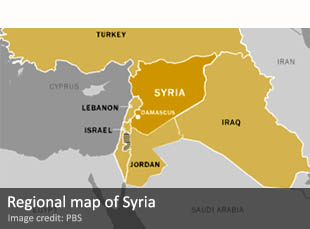
Nearly three years into the Syrian Civil War, it is becoming increasingly clear that the opposition forces are far more fragmented than the government side. Many of the rebel factions are now largely concerned with fighting each other for control of territory and other key assets, including oil installations and cross-border trade routes. Amidst the chaos, thousands of foreign fighters are flooding into the country, motivated by ideology or money. It is estimated that between 6,000 and 11,000 foreign fighters have entered Syria since the war, causing United States intelligence officials to speak of “a growing presence of foreigners” in the ranks of armed factions. At least 300 British citizens are estimated to have traveled to Syria with the intent of joining the Civil War, according to The Times of London. Most of them are young Islamist radicals who are intent on helping topple the administration of Syrian President Bashar al-Assad, according to the paper. Another British newspaper, The Daily Telegraph, reported recently that four British citizens —all London residents— died recently in Syria’s largest city, Aleppo, while fighting alongside government troops in support of President Assad. They were fighting against the al-Nusra Front, an opposition group with strong links to al-Qaeda. Meanwhile, The New York Times said on Wednesday that “dozens of Americans” have entered or tried to enter Syria to join various rebel factions in their fight against the government. The paper cited unnamed “American intelligence officials” in alleging that the Americans are a “small subset” of a larger group of “roughly 600” Western-born Islamists who have entered Syria from Western Europe, North America and Australia since 2011. The ongoing conflict has also attracted hundreds of Russian fighters, according to reports. Foreign Policy magazine notes the “rising flow” of radical Islamists from the Russian Federation to Syria in recent months. Read more of this post

Analysis: FBI monitors foreign diplomats far more than NSA

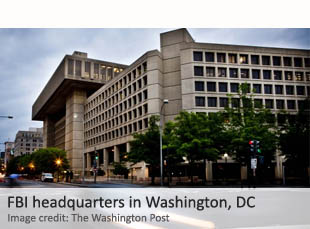
FBIBy JOSEPH FITSANAKIS | intelNews.org
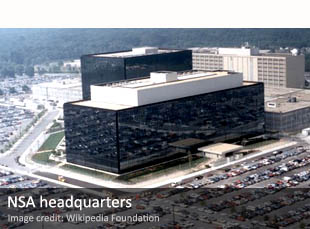
Over the past several months, the Edward Snowden affair has turned the typically reclusive National Security Agency into a news media sensation. The signals intelligence agency, which is tasked by the United States government with communications interception, is said to have spied on a host of foreign government officials and diplomats. But in an article published this week in Foreign Policy, the American military historian and author Matthew Aid reminds us that American intelligence operations against foreign diplomats do not usually involve the NSA. They are typically carried out by the Federal Bureau of Investigation, which has been in the business of monitoring the activities of foreign diplomats on US soil long before the NSA even existed. The author of Intel Wars and The Secret Sentry states in his article that the FBI’s cryptologic operations targeting foreign envoys are today far more sensitive and the NSA’s. The vast majority of these operations take place on US soil. There are currently over 600 foreign embassies, consulates and diplomatic missions in the US, maintained by 176 countries. They include over 200 consulates located in cities ranging from Miami to Los Angeles and from San Francisco to Boston. New York alone hosts over 100 permanent diplomatic missions at the United Nations headquarters. Aid points out that “every one of these embassies and consulates is watched by the FBI’s legion of counterintelligence officers” in varying degrees. Additionally, the Bureau relies on the close cooperation of large American telecommunications providers in its effort to intercept the landline and cellular communications “of virtually every embassy and consulate in the United States”. FBI communications technicians also intercept the personal telephone calls and emails of foreign diplomats on a regular basis, adds Aid. Sometimes the Bureau employs specially trained teams of agents who physically break into embassies and consulates, in what is known in intelligence lingo as ‘black bag jobs’. Read more of this post

Announcement: Intelligence educators invite papers for conference

IAFIE conferenceBy IAN ALLEN | intelNews.org
Intelligence educators from around the world are invited to participate in the 10th anniversary conference of the International Association for Intelligence Education (IAFIE) this coming July. The Association was formed in June 2004, as a result of a gathering of more than 60 intelligence studies trainers and educators at the Sixth Annual International Colloquium on Intelligence at Mercyhurst College in Erie, Pennsylvania. This group, from various intelligence disciplines including national security, law enforcement, competitive intelligence, and others, recognized the need for a professional association on intelligence, a new and diverse field of academic study that forms the basis of what has since become known as ‘intelligence studies’. Today, IAFIE is internationally recognized as one of the foremost groups working to advance research, knowledge and professional development in intelligence education. Mercyhurst University will be the hosting institution of IAFIE’s conference, which will take place from July 14 to 16. The theme for the conference is “Theory and Practice in Intelligence Education and Training”. The organizers invite ideas for papers with a focus on traditional intelligence studies or for panel discussions on various subjects including the history of intelligence analysis, the role of intelligence education in developing the profession, as well as international perspectives on the discipline and the profession. Other subjects of interest to the conference center on theoretical or practical pedagogical approaches to intelligence education, relevant research initiatives, future trends in the field of intelligence analysis, and explorations of the intersection between intelligence education and intelligence training. IAFIE’s Board of Directors specifies that papers and copies of any audiovisual materials in support of conference submissions are due no later than April 15, 2014. For more information, please refer to the IAFIE website.

British agency spies on foreign diplomats’ hotel reservations

GCHQ center in Cheltenham, EnglandBy JOSEPH FITSANAKIS | intelNews.org
Britain’s signals intelligence agency operates a system that monitors the hotel bookings of international diplomats and foreign government officials around the world, according to information published on Sunday. German newsmagazine Der Spiegel said the revelation came from the personal archive of American intelligence whistleblower Edward Snowden, who has been offered political asylum in Russia. In an article published last weekend, the magazine said the classified program is codenamed ROYAL CONCIERGE, and it is operated by the United Kingdom’s Government Communications Headquarters (GCHQ). The classified documents allegedly show that ROYAL CONCIERGE was launched on an experimental basis in 2010; the program was apparently “so successful” that it was approved for “further development” by GCHQ’s intelligence planners. Since that time, the British signals intelligence agency has been able to compromise the booking systems of at least 350 high-end hotels around the world, which are frequented by international diplomats and foreign government officials. As soon as a room booking is confirmed by an email to an account in a governmental Internet domain, GCHQ receives an alert, allowing it to know the name and arrival details of the guest(s). This information, says Der Spiegel, enables the British “technical operations community” to target the hotel guests according to the intelligence requirements set out by the British government. In some cases, the hotel room’s telephone and fax machine are monitored, while unsuspecting hotel guests have their computers and personal cellphones targeted by GCHQ. Read more of this post

CIA declassifies 1978 Camp David Accord files

Sadat, Carter and BeginBy JOSEPH FITSANAKIS | intelNews.org
The United States Central Intelligence Agency has declassified 1,400 pages of intelligence files relating to the Camp David Accords, the historic peace treaty between Egypt and Israel, which was signed in 1978. The treaty, the first between Israel and an Arab country, was signed on September 17, following thirteen days of high-level negotiations between Egypt and Isarel at the Camp David presidential retreat in the US state of Maryland. The two signatories were Egyptian President Anwar Sadat and Israeli Prime Minister Menachem Begin. The high-level summit was hosted by US President Jimmy Carter. All three heads of state were awarded the Nobel Peace Prize later that year, which they shared for helping bring about the first peace treaty between an Arab nation and Israel. The 250 previously classified documents on the Accords, which were released by the CIA earlier this week, date from January 1977 to March 1979. They include comprehensive political assessments and personality profiles of President Sadat, Prime Minister Begin, and other key personalities participating at the summit, which were given to President Carter to read before the meeting. One of the documents refers to a meeting between Carter and CIA analysts at the Agency’s headquarters in August 1978, during which the American President was coached about how to negotiate with the two Middle Eastern leaders. Or, as the document puts it, Carter was “steeped in the personalities of Begin and Sadat”. The papers also include declassified transcripts of meetings of the US National Security Council, in which the Accords were discussed. Read more of this post

Ex-Mossad officer says US promised to free Israeli spy Pollard

Jonathan PollardBy JOSEPH FITSANAKIS | intelNews.org
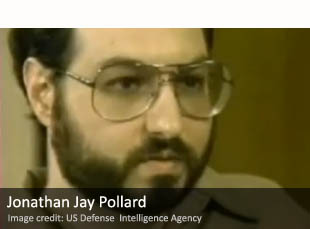
An Israeli former intelligence officer says Israel was promised by the United States that Jonathan Jay Pollard, a convicted spy who betrayed American secrets to Israel in the 1980s, would be freed after 10 years. Rafi Eitan is an Israeli politician, former cabinet minister, and a veteran officer of the Mossad, Israel’s covert-action agency. In 1985, he resigned from the Mossad after assuming responsibility for the loss of Pollard, a United States Navy intelligence analyst who spied for Israel in exchange for money. Pollard, who acquired Israeli citizenship in 1995, has so far served 28 years of a life sentence in a US prison. Many in US counterintelligence consider him one of the most damaging double spies in American history. But he is widely viewed as a hero in Israel, where many conservative Israelis, as well as pro-Israel Americans, are actively pressuring the US administration of President Barack Obama to release him. On Monday, Eitan spoke to Israeli Army Radio on the Hebrew calendar anniversary of Pollard’s 1985 arrest by the Federal Bureau of Investigation. He said in the interview that he had been asked by the Israeli government to appear in Pollard’s trial as his intelligence handler and cooperate with US government prosecutors’ efforts to convict Pollard. According to the former Mossad officer, a backroom deal had been reached between the United States and Israel, whereby Pollard would serve no more than a decade in prison in return for full cooperation with the FBI. However, said Eitan, when the time came for Pollard’s release, the United States “denied there had been a deal”, while the Israeli government failed to protest strongly enough in favor of Pollard’s release. Asked by the interviewer why he thought Washington had reneged on the alleged deal, Eitan said that the Americans displayed “a desire for revenge —to say: ‘you [Israel] were a friendly [country]  and look what you did. So now we will show you’”. The Mossad veteran added that he deeply regretted having helped incriminate Pollard, but is now devoting the final years of his live to help the convicted spy campaign for his release. Read more of this post

News you may have missed #857 (hacking edition)

Mossad sealBy IAN ALLEN | intelNews.org
►►UK spies hacked Belgian phone company using fake LinkedIn page. British spies hacked into the routers and networks of a Belgian telecommunications company Belgacom by tricking its telecom engineers into clicking on malicious LinkedIn and Slashdot pages, according to documents released by NSA whistleblower Edward Snowden. The primary aim, reports the German newsmagazine Der Spiegel, which obtained the documents, was to compromise the GRX router system that BICS controlled, in order to intercept mobile phone traffic that got transmitted by the router.
►►Indonesian hackers behind attack on Australian spy service website. Indonesian hackers are believed to have brought down the website of the Australian Secret Intelligence Service, Australia’s leading spy agency. The page was not working on Monday afternoon after hackers launched a “denial of service” attack. A “404 not found” message typically appears when a website crashes under a “denial of service” attack. The cyber attack is reportedly a response to revelations that Australia had been spying on its closest neighbor through its Jakarta embassy.
►►Hamas blasts alleged Mossad website. Hamas officials released a warning about a website called Holol (“solutions”), claiming it is a ruse set up by Israel’s Mossad intelligence agency to recruit Gazans as informants. The website’s “Employment” page states, “due to our connections with the Israeli Civil Administration, we can help you bypass the bureaucratic tape and procedural processes which prevent you from leaving Gaza”. The site also offers Israeli medical assistance, “due to connections with the Ministry of Health and the Israeli Civil Administration”. Palestinians interested in contacting the website’s officials are asked to provide their full name, telephone number, email, topic of inquiry, and an explanation of why they are asking for help. Last month, Lebanese group Hezbollah accused the Mossad of being behind a website seeking information on Hezbollah’s intelligence wing.