News you may have missed #843 (analysis on Snowden leak)
July 3, 2013 5 Comments
 By IAN ALLEN | intelNews.org |
►►Countries approached by Snowden for asylum and their responses. According to a statement from WikiLeaks, former CIA/NSA employee Edward Snowden has applied for asylum in a total of 21 countries, but with little success so far. Here is a list of the countries he approached and their responses –or lack thereof– so far. Bolivia and Venezuela appear somewhat positive, but Ecuador and Russia have denied any possibility of giving Snowden political asylum. Other countries, including Cuba and China, have yet to issue a response to Snowden’s request.
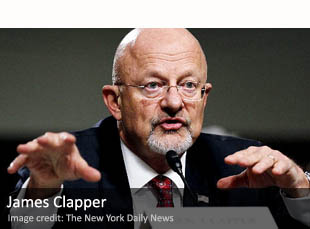
►►US ODNI admits giving ‘erroneous’ answer during Senate testimony. James Clapper, America’s most senior intelligence official, who heads the Office of the Director of National Intelligence, has told a Senate oversight panel that he “simply didn’t think” of the National Security Agency’s efforts to collect the phone records of millions of Americans when he testified in March that it did “not wittingly” snoop on their communications. He had told during his testimony that NSA did “not wittingly” collect “any type of data at all on millions or hundreds of millions of Americans”. But that was before Snowden spilled the beans….
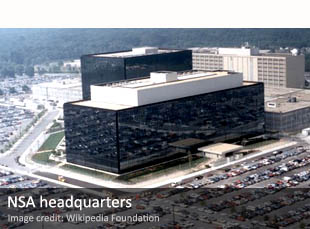
►►Are the Europeans being hypocrites over spying? If you buy the latest reporting out of Europe, France is outraged, simply outraged, at news that the National Security Agency has been eavesdropping on the European Union through its mission in New York and embassy in Washington. All of which is pretty hilarious, given France’s penchant for stealing American defense technology, bugging American business executives and generally annoying US counterintelligence officials. And it’s not just France, either.















 intelNews.org
Bugging device found in Ecuador’s UK embassy where Assange lives
July 4, 2013 by Joseph Fitsanakis 8 Comments
The government of Ecuador has announced the discovery of a “hidden listening device” inside its embassy in London, United Kingdom, where WikiLeaks founder Julian Assange has taken refuge. Ecuador’s Minister of Foreign Affairs, Trade and Integration, Ricardo Patino, said the device was discovered during a security sweep on June 14, in preparation for his official visit there. Speaking during a press conference on Wednesday in Ecuadorean capital Quito, Patino told journalists that the microphone was discovered inside the office of Ambassador Ana Alban, Ecuador’s envoy to the UK. Patino arrived in London two days later and met with Assange, as well as with Britain’s Secretary of State for Foreign Affairs, William Hague, to discuss Assange’s case. The WikiLeaks founder has been hosted inside the Ecuadorean embassy for over a year, resisting extradition to Sweden, where his is facing charges of rape and sexual assault. Assange denies the charges are valid and maintains that the Swedish government is intent on extraditing him to the United States, where he is likely to face more charges over Cablegate. This is the term commonly used to describe the unauthorized release in 2010 by WikiLeaks of thousands of classified cables sent to the US State Department by American diplomatic missions around the world. Patino told journalists on Wednesday that he “regretted to have to inform” them about the discovery, which he characterized as “another instance of declining ethics in the international relations between governments”. Read more of this post
Filed under Expert news and commentary on intelligence, espionage, spies and spying Tagged with Ana Alban, communications interception, eavesdropping, Ecuador, Ecuadorean embassy in the UK, espionage, Julian Assange, News, Ricardo Patino, UK, Wikileaks