News you may have missed #734

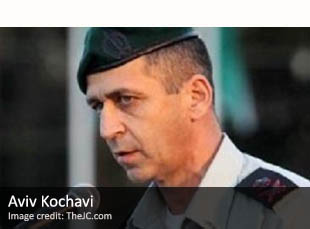
Aviv KochaviBy IAN ALLEN | intelNews.org |

►►Australian spy agency in rent dispute. The Australian government insists there is no dispute over the lease of the new, state-of-the-art headquarters of the Australian Security Intelligence Organisation, which cost nearly A$589 to build. But according to a number of government sources, the property has become the subject of a standoff between the ASIO and Australia’s Department of Finance and Deregulation. The Canberra Times reports that the Finance Department has told ASIO it will have to hand over more money than anticipated because of a blowout to building costs and timing. But the ASIO is refusing to pay more than initially agreed.
►►US unveils spy model of bin Laden compound. The United States intelligence community has unveiled a scale model of the compound in Abbottabad, Pakistan, where Osama bin Laden spent the last few years of his life in hiding. The model was built by the National Geospatial-Intelligence Agency (NGIA) and used by military and intelligence leaders to plan the daring night raid on May 2, 2011, that killed the al Qaeda founder. Its scale is an exact 1:84; every tree, bush, wall, animal pen, trash can and physical structure in the model existed at one time at the original compound in Abbottabad.
►►Israel military intelligence head in secret US visit. Israeli military intelligence chief Aviv Kochavi made a “secret visit” to Washington earlier this month to discuss the upcoming talks between world powers and Iran. An Israeli security official confirmed the visit, which was reported in Israel’s Haaretz newspaper, but could not provide further details. Meanwhile, three senior IDF intelligence officers resigned recently, following what they called “questionable” appointments to key positions. The three colonels held some of the most senior and classified positions in the Israeli military intelligence community.

News you may have missed #733

Stella RimingtonBy IAN ALLEN | intelNews.org |

►►Women in US intelligence seek balance in life. Nada Bakos (photo) was one of many women serving as CIA analysts before 9/11, who then moved to the operations side after the terrorist attacks. She didn’t yet have a family when she accepted her assignment as a targeting officer in Iraq. After a couple of years, as Bakos was deep into her career on the operations side, she decided she wanted to start a family. That was a problem. At least 160 other women feel her pain. Women from the CIA, the National Security Agency, Naval Office of Intelligence and dozens of other agencies met last week at the Women in National Security conference in McLean, Virginia, to try and find a better way.
►►Interview with ex-MI5 Director Stella Rimington. Australian Radio hosts an interesting audio interview with Dame Stella Rimington, who headed MI5, Britain’s domestic intelligence agency, from 1992 to 1995. She speaks about the experience of being the first director of MI5 to be publicly identified and the sometimes sinister invasions to her privacy as a result. Moreover, she says the only thing that surprised her about the Leveson inquiry into phone hacking and the conduct of the British media is that nobody recognized it was going on before.
►►US government think-tank warns against strikes on Iran. The RAND Corporation, a think tank which advises the United States Department of Defense, warned last week Tuesday against an Israeli or American attack on Iran’s nuclear reactors, and recommended that the administration of Barack Obama try to “quietly influence the internal Israeli discussion over the use of  military force”. In 2009, before Stuxnet, a RAND report had argued that the US may be better off focusing on cyber-defense instead of resorting to cyberattacks.

French terrorist Merah planned attack on Indian embassy in Paris

Embassy of India in ParisBy JOSEPH FITSANAKIS | intelNews.org |
Mohamed Merah, the French Muslim who killed seven and injured five people in Toulouse last March, had planned to launch a massive attack on the Indian Embassy in Paris, according to new revelations. Merah was shot dead by French Special Forces on March 22, after killing three French Army personnel on March 15, and four civilians, including two children, on March 19. But according to French newspaper Le Monde, Merah had initially planned to attack the Indian embassy in Paris. Quoting sources from France’s Central Directorate of Interior Intelligence (DCRI) and the Special Forces (RAID), the French daily says that Merah’s handlers in Pakistan had initially tasked him with attacking Indian diplomatic targets in the French capital. “That was the initial target assigned to him by the Taliban, who trained him for holy war […] in Pakistan during the summer of 2011”, a French intelligence source is quoted as saying in Le Monde. By “Taliban”, the source was most likely referring to Lashkar e-Taiba, one of Asia’s largest militant Islamist groups, which is waging a protracted war against the Indian state in Indian-administered Kashmir and elsewhere. Most Lashkar e-Taiba training camps are located in Pakistan, where Merah, who was Algerian-born, traveled in the summer of 2011. However, the paper says that the DCRI, which is said to have employed Merah as an informant, had received prior warning of the plot, and had notified Indian officials, who in turn were able to beef-up security measures at the embassy. Read more of this post

News you may have missed #732 (interview edition)

Thomas DrakeBy IAN ALLEN | intelNews.org |
►►Interview with H. Keith Melton. A well written interview with H. Keith Melton, one of the world’s best-known intelligence historians, who describes himself as “a historical consultant within the US intelligence community”. Melton has been a guest lecturer at the Federal Bureau of Investigation, the National Security Agency and the Joint Military Intelligence College. He also says he is “an ongoing adviser to other US intelligence agencies”.
►►Interview with editor of Eye Spy magazine. An extensive interview with Mark Birdsall, editor of the only independent publication dedicated to espionage and intelligence. He shares the story behind the magazine, his take on the current state of espionage and security, and on global security issues. Among other things, Birdsall says that some claim Eye Spy is “a government organ, [while] others an attempt to glean information that should not be published”. He also states that “it has taken a decade of hard work for the title to get recognition in some intelligence circles”.
►►Interview with NSA whistleblower Thomas Drake. Drake began his NSA career as a contractor in 1991, and formally joined the Agency in 2001, working until 2008 in the Agency’s Signals Intelligence and Engineering directorates. The US government took Drake to court, accusing him of leaking secrets about the NSA to a journalist. But the judge in his case, Richard D. Bennett, refused to sentence him to prison, recognizing that his genuine intention in leaking the secrets was to expose mismanagement at the NSA.

Is US considering transferring convicted arms smuggler to Russia?

Viktor BoutBy JOSEPH FITSANAKIS | intelNews.org |
Former Soviet military intelligence officer Viktor Bout is one of the world’s most notorious weapons dealers. In 2008, Bout, known informally as ‘the merchant of death’, was finally arrested in Bangkok by the United States Drug Enforcement Administration, with the cooperation of the Royal Thai Police. He was eventually extradited to the US and convicted to a 25-year prison term, which he is serving at the Brooklyn Metropolitan Detention Center in New York. Last week, it emerged that the US Bureau of Prisons was about to transfer Bout to the Florence Federal Correctional Facility in Colorado. Widely referred to as ‘Supermax’, the Florence facility houses some of America’s most notorious prison inmates. It seems a proper fit for someone like Bout, who for decades supplied weapons to African warlords, who is accused by the United States of having supplied weapons to the Taliban, and who was arrested while trying to sell arms to the Revolutionary Armed Forces of Colombia (FARC). On Tuesday, however, it was suddenly reported that the Bureau had decided to delay Bout’s transfer to Supermax. Bout’s attorney, Albert Y. Dayan, said he had been notified in a letter that the Bureau was “re-evaluating where to send Bout” and that it was “reconsidering its plan” to send the notorious weapons merchant to the Colorado maximum security facility. As might be expected, Dayan called the news “a credit [to] the Bureau of Prisons and the US Attorney’s office”; but the question, of course, is why did the Bureau decide on the delay, and what does the US Department of Justice know about it? The answer could perhaps be found in an interview given on Wednesday by no other than the US Attorney General, Eric Holder. Read more of this post

News you may have missed #731 (Henry Crumpton edition)

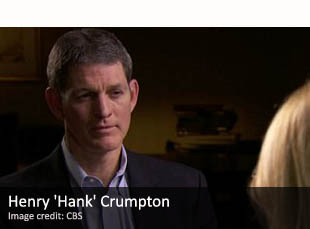
Henry 'Hank' CrumptonBy IAN ALLEN | intelNews.org |
►►Ex-CIA officer says more spies in US than ever before. Henry “Hank” Crumpton, who served as Deputy Director of the CIA’s Counter-Terrorism Center, and led the US intelligence response to 9/11, spoke to CBS’ 60 Minutes about his life as a spy. He told the program that “I would hazard to guess there are more foreign intelligence officers inside the US working against US interests now than even at the height of the Cold War”. IntelNews regulars may recall the last time Crumpton spoke on 60 Minutes.
►►Introduction to Crumpton’s The Art of Intelligence. The introduction to Hank Crumpton’s The Art of Intelligence, which came out earlier this week, has been republished by MSNBC, by arrangement with the Penguin Press, a member of Penguin Group. There are at least 20 pages of the book available on the MSNBC website.
►►Can the FBI understand intelligence? Editorial by Hank Crumpton for Politico, in which he says that “the FBI is still measuring success based on arrests and criminal convictions –not on the value of intelligence collected and disseminated to its customers”. He makes a ten-point argument to claim that the FBI, unlike the CIA, does “not understand intelligence”.

News you may have missed #730

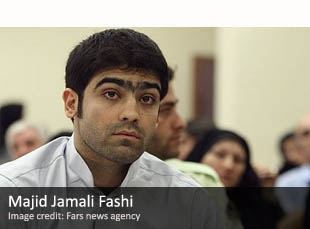
Majid Jamali FashiBy IAN ALLEN | intelNews.org |
►►Iran executes man convicted of killing nuclear physicist. Iran on Tuesday hanged Majid Jamali Fashi, convicted of playing a key role in the 2010 murder of Iranian nuclear scientist Masoud Ali Mohammadi, and of spying for Israel. Mohammadi, a particle physics professor at Tehran University who was killed in a bomb attack outside his home in January 2010.
►►Bahrain sentences man accused of spying for Iran. Bahraini authorities accused the unnamed 47-year-old man of having leaked high-level information on Bahrain’s military, Interior Ministry and US Naval Base. He was allegedly paid more than BD27,000 on behalf of Iran’s Revolutionary Guard by two Iranians who lived in Kuwait. The two Iranians, who worked as diplomats in the Iranian Embassy in Kuwait, were convicted in absentia for selling military, industrial and economic information to Iran between 2002 and last April.
►►NSA declassifies document after publishing it. The National Security Agency last week invoked a rarely-used authority in order to declassify a secret document that was mistakenly posted on the NSA website with all of its classified passages intact. The article (.pdf) is a historical study entitled Maybe You Had to Be There: The SIGINT on Thirteen Soviet Shootdowns of US Reconnaissance Aircraft. It was written by Michael L. Peterson and was originally published in the classified journal Cryptologic Quarterly in 1993.

News you may have missed #729 (intel blunder edition)

Alleged Venezuelan 'spy crossword'By IAN ALLEN | intelNews.org |
►►US drones ‘incidentally’ spy on Americans. A leaked US Air Force document stipulates that a drone that happens to capture surveillance images of Americans may store them for a period of 90 days. The paper appears to justify spying on citizens, as long as it is “incidental”. The document accepts that the Air Force may not record information non-consensually; however it does state: “collected imagery may incidentally include US persons or private property without consent”. The report, dated April 23 was discovered by Steven Aftergood of the Federation of American Scientists and has been put online.
►►Indian intel blunder sparks anger in Pakistan. India’s Research and Analysis Wing (RAW) intelligence agency sparked outrage in Pakistan and self-deprecatory jokes in India itself last week, after it listed ordinary Pakistani shopkeepers as terrorists on a mission to attack some of India’s landmark institutions. RAW, which is considered India’s premier intelligence agency, issued an advisory to state governments in which it said that five trained militants from Pakistan’s banned Lashkar-e-Taiba group had sneaked into India with fake identities to attack a nuclear facility, oil refinery, seaport and defense academy. Within hours after photographs of the five men were released, a Pakistani television channel reported that two of the three men on the list were shopkeepers and one was a guard, all living in Lahore, and that none of them had ever left Pakistan.
►►Venezuelan spies face criticism over ‘crossword puzzle’ plot. Venezuelan government critics, and even some supporters, are ridiculing a Venezuelan state TV host’s allegation that a newspaper crossword puzzle may have had a hidden call for a plot to kill President Hugo Chavez’s elder brother. Intelligence agents questioned Neptali Segovia, the author of the puzzle, after state TV presenter Miguel Perez Pirela pointed out that Wednesday’s crossword contained the word “ASESINEN”, or kill, intersecting with the name of Chavez’s brother, “ADAN”. He noted they were below the word “RAFAGAS”, meaning either gusts of wind or bursts of gunfire.

US resumes controversial weapons sale to Bahrain

Gulf Cooperation Council countriesBy JOSEPH FITSANAKIS | intelNews.org |
The United States has announced that it will resume a controversial weapons deal with the Kingdom of Bahrain, despite its government’s substandard human rights record, which has been internationally criticized in the context of the Arab Spring. The administration of President Barack Obama halted all weapons sales to the oil-rich Gulf state in September of 2011, nearly a year following the eruption of widespread popular protests in the Kingdom. On May 11, however, Washington announced that the weapons sale would go ahead after all, with the exception of some items that could be used against human rights protesters. According to The Christian Science Monitor, one of a handful of American news outlets that covered the story, US officials said that the decision to resume weapons sales to Bahrain was taken “in light of US national security interests”. The paper quotes an unnamed US government official who told reporters that Washington had given the go-ahead to the weapons sale in order to “help Bahrain maintain its external defense capabilities” against Iran. The regime in Bahrain has accused human rights activists of operating under the control of the Iranian government. The Monitor says that the resumption of US military aid to Bahrain has dealt a significant blow to the pro-democracy movement, and appears to have “incensed opposition activists”, who see it “as a signal that that the US supports Bahrain’s repression of opposition protests”. The article quotes one such activist, Mohammed al-Maskati, who describes the weapons deal as a “direct message [from the US] that we support the authorities and we don’t support democracy in Bahrain, we don’t support protesters in Bahrain”. Meanwhile, all eyes are in Saudi Arabia this week, as Arab Gulf leaders are meeting to discuss plans for forming a pan-Arab Gulf union. Read more of this post

Russia charges engineer with spying for foreign agency

The R-30 BulavaBy JOSEPH FITSANAKIS | intelNews.org |
Russian authorities have charged an engineer working at a top-secret military facility in the Urals with espionage, accusing him of passing classified information about Russian ballistic missiles to agents of a foreign government. According to the InterFax news agency, which has strong links with the Russian government, the engineer had disclosed “secret data [and] state secrets concerning the area of strategic defense systems “. The Moscow-based news agency quoted an unnamed “Russian law enforcement official” who said that the accused spy worked at a critical research and development position inside a “restricted government facility that develops missile technology”. The source told InterFax that the alleged spy was working on the Russian R-30 Bulava ballistic missile, which is said to be in its final development stage. The R-30 Bulava (the Russian word for “mace”) is the name for Moscow’s latest-generation submarine-based ballistic missile technology. It is widely considered to be one of the future cornerstones of Russia’s nuclear weapons capability, and is thought to be the most expensive weapons project currently being developed in the country. The missile was approved for production last year, and is expected to come to service this coming October, when it will begin to replace Russia’s Soviet-era stock of submarine-launched nuclear missiles. The program is strongly linked to the country’s Borei-class ballistic-missile-capable nuclear submarines, which are expected to be able to launch the R-30 Bulava while underwater and in motion. Read more of this post

News you may have missed #728 (foiled AQAP bomb plot edition)

YemenBy IAN ALLEN | intelNews.org |
►►UK had central role in foiled bomb operation. The Reuters news agency has quoted unnamed “counterterrorism sources” as saying that the undercover informant in the plot linked to Al Qaeda in the Arabian Peninsula (AQAP) was a British citizen, possibly of Saudi origin. The informant was allegedly working in cooperation with Britain’s two principal spy agencies, MI5 and MI6. The information appears to have leaked even though “British authorities put heavy pressure on theUS government not to discloseBritain’s role in the investigation”, said Reuters.
►►MI5 fears al-Qaeda to expose double agent’s identity. MI5 fears that militant Islamists will attempt to exact revenge on the British spy who penetrated al-Qaeda in theArabian Peninsula, by publishing his photograph on the internet –a move designed to incite extremists to hunt him down. The agent, a British passport holder of Saudi heritage, volunteered to take part in a suicide mission but instead escaped with an underwear bomb designed to blow up aUS airliner. Sources have described the British spy as “gold dust”, adding that he was one of just a handful of agents in the last ten years to have successfully penetrated one of the groups aligned to al-Qaeda’s concept of global Jihad.
►►Analysis: Foiled al-Qaeda plot reveals new world of US spying. There are lots of takes on the meaning of the foiled AQAP plot. This CNN analysis claims that the successful operation shows that “efforts to bolster human intelligence capability and work much more closely with foreign intelligence counterparts are paying off” in several ways. It also suggests that the operation “operation was the “poster child” for the influence of a greatly enhanced analytic community”.

US judge denies release of CIA report on Bay of Pigs invasion

Court documentsBy JOSEPH FITSANAKIS | intelNews.org |
On April 17, 1961, a brigade of 1,300 CIA-funded and -trained anticommunist Cubans mounted a surprise assault on the Caribbean island. But prior intelligence collected by  spies working for Havana, and stiff resistance by pro-Castro troops, resulted in the CIA’s biggest known covert action failure. Approximately 1,200 surviving members of the CIA’s army were captured by pro-Castro forces, many of whom were severely interrogated or executed in subsequent years. The intelligence fiasco led to a five-volume CIA report, whose final volume was authored in the early 1980s by CIA resident historian Jack Pfeiffer. It essentially contains the CIA’s counterargument to a previous report, authored by the Agency’s Inspector General, which placed the blame for the failure on the invasion squarely on the shoulders of the CIA. Volume III of the report was voluntarily released by the CIA in 1998, but was not discovered by researchers until 2005, when an academic found it among the Kennedy Assassination Records Collection at the US National Archives. Following an unsuccessful Freedom of Information Act request, George Washington University’s National Security Archive sued the CIA in 2011, eventually forcing the Agency to declassify Volumes I, II and IV last April. This left Volume V, which is the subject of an ongoing dispute between historians and the CIA. But in a decision aired late last week, US District Court judge Gladys Kessler agreed with the Agency that the volume was not subject to US declassification rules because it had been “rejected for inclusion in the final publication” of the report. According to judge Kessler, the volume written by Dr. Pfeiffer, the CIA historian, was not a finished product, but rather a draft manuscript, and was therefore exempt from public disclosure under the Freedom of Information Act. Read more of this post

News you may have missed #727

Jeffrey Paul DelisleBy IAN ALLEN | intelNews.org |
►►US government-authorized wiretaps increased in 2011. The US Justice Department sought 1,745 secret wiretapping warrants in 2011, an increase of 239 over 2010, according to correspondence sent to Congressional leaders and oversight committees. The secret warrants are governed under the Foreign Intelligence Surveillance Act (FISA) and are used in terrorist and espionage investigations by the FBI. The letter, dated April 30, 2012, also notes that the FBI issued 16,511 National Security Letters (NSLs) to obtain certain records and information in investigations. It further asserts that the requests were for investigations relating to 7,201 different US persons. The number of NSLs declined dramatically from 2010 when the FBI had sought 24,287.
►►Australia axes spy agency funding. Large budget cuts by the Australian Labour government, which is trying to engineer a federal budget surplus, are expected to affect funding for the country’s intelligence agencies. The six agencies of the Australian intelligence community have been given a collective budget of $81 million over four years, a figure that is $20.4 million lower than previous budgets. The government said that savings will be “redirected to support other national intelligence priorities”.
►►Canada spy case adjourned until June. The case of Jeffrey Delisle, a Halifax naval intelligence officer accused of espionage, has been adjourned until next month because his lawyer has not yet received all of the files in the case. Delisle is charged with communicating information to a foreign entity —probably Russia— that could harm national interests. Until 2010, Delisle worked for both Canada’s Chief of Defence Intelligence and at the Strategic Joint Staff, which oversees virtually every major aspect of the military’s domestic and international plans and operations.

News you may have missed #726

Barbara Annette RobbinsBy IAN ALLEN | intelNews.org |
►►Portrait of first female CIA officer to die in line of duty. In 1965, a 21-year-old American woman, Barbara Annette Robbins (photo), was among the victims of a car bombing at the US Embassy in Saigon, South Vietnam. Washington said she was a diplomat. But, at a ceremony last year, the CIA admitted she was an employee of the Agency. This makes her the first woman at the male-dominated CIA killed in the line of duty. She is also the youngest CIA employee ever killed. And she appears to be the first American woman to die in the Vietnam War. The Washington Post has an interesting article about her short life and career.
►►US Jewish leader says release of Israeli spy Pollard ‘inevitable’. The release of Jonathan Pollard, who is serving a life sentence in a US prison for spying on the US for Israel, is “inevitable” and could take place shortly on “technical grounds”, according to Jack Rosen, a prominent Jewish leader and supporter of US President Barack Obama. A New York City real estate executive who hosted Obama at his Upper East Side home for a Democratic Party fundraiser last November, Rosen said that “there are some technical reasons, I’m told, why [Pollard] will be released. I think there’s an inevitability to that happening”.
►►Senior reshuffle at South Korean spy agency. South Korean President Lee Myung-bak reshuffled two top posts at South Korea’s main intelligence agency Monday in a shake-up that also affected five other vice-ministerial posts. Nam Joo-hong, a former well-known security scholar who has so far served as ambassador to Canada, was named the first deputy chief of the National Intelligence Service, while Cha Moon-hee, a veteran intelligence official, was tapped as the agency’s second deputy chief. The spy agency’s first and second deputy chiefs are in charge of its overseas and domestic operations, respectively.

Would be al-Qaeda bomber was Saudi double agent

YemenBy JOSEPH FITSANAKIS | intelNews.org |
The man tasked by al-Qaeda’s Yemeni branch to blow up an airliner bound for the United States last month, was a mole who had been recruited by Saudi intelligence. IntelNews understands that the double agent is a Saudi citizen who volunteered to act as an informant for Saudi authorities. The latter eventually tasked him with traveling to Yemen, joining al-Qaeda in the Arabian Peninsula (AQAP), and convincing its leaders that he was willing to carry out a suicide mission against Western targets. It is not known at this point whether the Saudis kept the United States Central Intelligence Agency in the loop from the moment the mole was sent to Yemen to join AQAP. What is known is that the man did indeed manage to penetrate AQAP and was eventually entrusted with attacking a civilian airliner with a custom-built bomb designed to fit seamlessly around his scrotum. However, instead of carrying out the suicide mission as agreed, the man left Yemen for Saudi Arabia and delivered both himself and the bomb to Saudi intelligence. The Saudis eventually notified the CIA of the foiled plot, before forwarding the deactivated explosive device to the Federal Bureau of Investigation, which is now studying it. Thus, initial media reports claiming that the CIA had foiled the attack appear somewhat stretched at this point, in light of the critical role of the Saudi mole inside AQAP. Read more of this post