Israel ‘not to warn US’ on Iran attack, says US intelligence official

White House National Security Adviser Tom DonilonBy JOSEPH FITSANAKIS | intelNews.org |
The Israeli government has reportedly decided not to forewarn the United States if and when it decides to launch military strikes against Iran’s nuclear energy program. Citing a US intelligence insider, the Associated Press reported on Monday that American officials have been given the message “in a series of private, top-level” meetings with senior Israeli leaders. Tel-Aviv’s decision not to notify Washington about a possible attack on Tehran has been allegedly communicated to US officials by none other than Israeli Prime Minister Benjamin Netanyahu and Minister of Defense Ehud Barak. The US intelligence official, who tipped off the Associated Press anonymously, said that the two men have been relaying the same message to a host of American officials who have visited Israel in the past several weeks. The officials include the US Director of National Intelligence James Clapper, Chairman of the Joint Chiefs of Staff Martin Dempsey, as well as several senior American lawmakers. The intelligence source told The Associated Press that Tel Aviv’s decision to keep its cards on Iran close to its chest was solidified following a series of meetings last week between the Israeli leadership and White House National Security Adviser Tom Donilon (pictured). The American official relayed to Netanyahu, Barak and others, the opinion of the White House that a military attack on Iran would be both dangerous and counterproductive. This appears to have further alarmed the Israeli leadership, which last week chastised the United States for voicing criticism of a possible Israeli military attack on Iran, arguing that this criticism effectively “served Iran’s interests”. Read more of this post

News you may have missed #686

Folkert Arie van KoutrikBy IAN ALLEN| intelNews.org |
►►WikiLeaks to publish 5 million StratFor emails. In its latest high-profile data dump, WikiLeaks is to reveal five million internal and external emails from StratFor today. In a press release late Sunday, Wikileaks said the emails “show StratFor’s web of informers, pay-off structure, payment-laundering techniques and psychological methods”, and reveal “how StratFor has recruited a global network of informants who are paid via Swiss banks accounts and pre-paid credit cards. Stratfor has a mix of covert and overt informants, which includes government employees, embassy staff and journalists around the world”.
►►Analysis: Blurred line between espionage and truth under Obama. “There is plenty of authorized leaking going on, but this particular boat leaks from the top. Leaks from the decks below, especially ones that might embarrass the administration, have been dealt with very differently […]. And it’s worth pointing out that the administration’s emphasis on secrecy comes and goes depending on the news. Reporters were immediately and endlessly briefed on the “secret” operation that successfully found and killed Osama bin Laden. And the drone program in Pakistan and Afghanistan comes to light in a very organized and systematic way every time there is a successful mission”.
►►Nazis had spy in MI5 but failed to use him. Dutchman Folkert Arie van Koutrik was the first German agent to ever infiltrate MI5 when he was employed by them in 1940, just a month before Anthony Blunt, who was later exposed as a Soviet spy. Koutrik had already worked for Abwehr, the German secret service, before the war as a double agent with MI6 in Europe and exposed some of the UK’s top agents. But, incredibly, after he moved to the UK and joined MI5 all contact appears to have broken off.

US spy agencies see no clear evidence of Iran building nukes

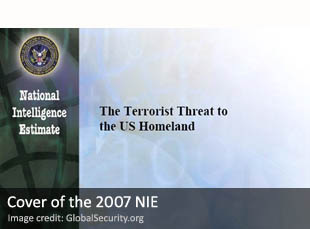
Cover of the 2007 National Intelligence EstimateBy JOSEPH FITSANAKIS| intelNews.org |
The United States intelligence community still believes Iran has no immediate goals to produce nuclear arms, and says that Tehran terminated its atomic weapons program in 2003, according to American officials. This is not to say that Iran is not interested in potentially building nuclear weapons. Most intelligence analysts agree that Iran’s long-term goal is to explore the possibility of establishing a nuclear arsenal. However, putting aside the broad concurrence of opinion about Iran’s long-term goal, very little is clear about the current state of Tehran’s nuclear program. Iran maintains that its goal is peaceful, namely to invest in nuclear energy so as to free up large quantities of oil for exports. It is important to stress that the consensus among America’s intelligence agencies is that this is in fact Iran’s immediate goal. This was pronounced in the 2007 National Intelligence Estimate (NIE), a publicly available annual report cooperatively authored by the heads of all 16 US intelligence agencies. The 2007 report stated “with high confidence that in fall 2003, Tehran halted its nuclear weapons program”. The US intelligence community has come under sustained criticism from many who have denounced the 2007 and subsequent NIEs as mistaken, or even reckless. Last Friday, however, a New York Times article citing “current and former American officials” said that the consensus among US intelligence analysts remains “that there is no hard evidence that Iran has decided to build a nuclear bomb”. According to the article, the US intelligence community’s consensus remains “broadly consistent” with the 2007 and 2010 NIEs. Read more of this post

News you may have missed #685

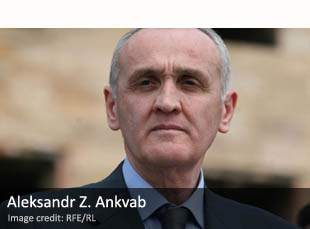
Aleksandr Z. AnkvabBy IAN ALLEN| intelNews.org |
►►Abkhazia President survives assassination attempt. Unidentified assassins tried on Wednesday to kill Aleksandr Z. Ankvab, the president of Abkhazia, a Russian-backed rebel enclave of Georgia. The assailants used automatic rifles, grenade launchers and a powerful roadside bomb in an attack that raised fresh questions about Moscow’s ability to preserve order there.
►►Groups object to CIA declassification charges. Open government advocates are protesting a recently adopted CIA policy that allows the agency to charge up to $72 an hour to review requests to declassify secret records. The effect “will be to price the public out of submitting” requests for “mandatory declassification review,” the American Library Association, Sunlight Foundation and more than 30 other organizations said in a letter Thursday to CIA Director David Petraeus.
►►Analysis: Fallout from Syrian colonel’s abduction in Turkey. The smokescreen surrounding the abduction of Syrian Col. Hussein Harmush, who defected to Turkey in June 2011 before being handed over to the Syrian secret service in September 2011, has begun to clear in recent weeks following a judicial probe. Claims that Turkey’s spy agency, the National Intelligence Organization (MİT), was involved in handing Harmush over to Syria were finally confirmed on February 2 when the Adana Chief Public Prosecutor’s Office issued a written statement saying one MİT agent had been arrested for questioning and further MİT officials had been called to testify as “suspects” in the scandalous repatriation case.

US Special Forces now fighting the LRA in four African countries

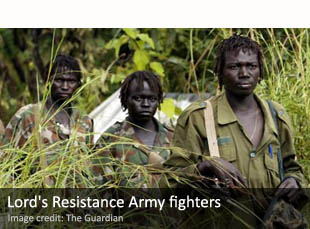
Lord's Resistance ArmyBy JOSEPH FITSANAKIS | intelNews.org |
American troops fighting one of Africa’s most notorious rebel groups are now officially stationed across four African countries, a move that highlights the expansion of Washington’s military presence in the continent. Last October, the administration of US President Barack Obama announced the deployment of 100 US Special Forces members to Uganda, to fight an insurgency group known as the Lord’s Resistance Army (LRA). Founded in the 1980s, the LRA is widely considered the world’s most brutal Christian terrorist group. Its leader, Joseph Kony, who is wanted along with four of his commanders by the International Criminal Court for crimes against humanity, is seen as a prophet by his followers. Washington had initially said that the Special Forces members would act as “advisors” to the Ugandan government, which has sustained the majority of the LRA’s attacks over the years. But Rear Admiral Brian L. Losey, the US Special Operations’ senior commander for Africa, said on Wednesday that, in addition to Uganda, American forces are currently stationed in military bases in Nzara, South Sudan, Obo, Central African Republic, and Dungu, Democratic Republic of the Congo (DRC). Speaking to Western reporters on the telephone, Rear Admiral Losey said that counterinsurgency activity directed at the LRA “will increase in frequency” during the spring and summer, and hinted that the Christian rebel group would soon be forced to go on the defensive. It is important to note that this official acknowledgement does not mark the beginning of Washington’s military involvement in activities against the LRA. In 2009, The New York Times revealed that the US Department of Defense assisted in the planning of a major offensive against the LRA. Read more of this post

News you may have missed #684

Boris KarpichkovBy IAN ALLEN | intelNews.org |
►►Pakistan sacks health workers who helped CIA locate bin Laden. Seventeen local health workers have been fired in Abbottabad for their part in a CIA scheme to try to confirm the presence of Osama bin Laden in the northern Pakistani town. The low-ranking health department employees were punished for helping Dr Shakil Afridi, who was assigned by the CIA to set up a fake vaccination scheme in Abbottabad, ahead of the US military operation that found and killed the al-Qaida leader there.
►►Estonia arrests couple for spying for Russia. Estonian prosecutors said Aleksei Dressen, who works for Estonia’s security police, and his wife, Viktoria Dressen, were arrested at Tallinn airport as she was boarding a flight to Moscow on February 22. Aleksei Dressen allegedly went to the airport to give his wife a folder that contained classified information. Meanwhile, in neighboring Lithuania, the government has released the names of 238 citizens who were reservists for the KGB during the Cold War.
►►KGB defector talks to British newspaper. Since fleeing to Britain in the late 1990s Boris Karpichkov has preferred to keep a low profile —unlike another, better-known Moscow agent who fled to London, one Alexander Litvinenko. He says he ran audacious disinformation operations against the CIA and broke into and planted bugs in the British embassy in Riga. But in 1995 he grew unhappy with the increasingly corrupt FSB (the KGB’s successor), which, he says, failed to pay him. He spent several months in a Moscow prison before slipping into Britain on one of the false passports he was given as a KGB officer. He hasn’t been back to Russia since.

WikiLeaks document to expose Swedish Foreign Minister as US spy

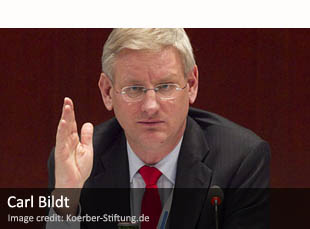
Carl BildtBy JOSEPH FITSANAKIS | intelNews.org |
International whistleblower website WikiLeaks says it intends to publish a classified document that allegedly exposes Sweden’s current Foreign Minister as a spy for the United States. According to Swedish newspaper Expressen, which says it has seen the document in question, Carl Bildt, Sweden’s Minister of Foreign Affairs, is shown to have operated as an informant for the United States since the mid-1970s. The revelation, which is allegedly included in a classified diplomatic cable sent from the American embassy in Stockholm to the US Department of State, is likely to cause a major political crisis in Sweden and end the career of Carl Bildt, a popular politician who served as Sweden’s Prime Minister between 1991 and 1994. In an article published on Wednesday, Expressen cites an anonymous WikiLeaks source that claims Bildt “cooperated with the American government in a manner that is in direct violation of Swedish law”. The paper also states that, according to the incriminating document, Bildt was initially recruited by US intelligence through Republican political strategist Karl Rove, who is known to have been “an old personal friend” of the Swedish politician. According to the Expressen report, WikiLeaks has decided to publicize the leaked diplomatic cable as a warning against the Swedish government, which is said to be considering extraditing WikiLeaks founder Julian Assange to the United States. Read more of this post

News you may have missed #683

Lech WalesaBy IAN ALLEN | intelNews.org |

►►Walesa scorns new claims he was communist informant. Poland’s former President and Solidarity founder Lech Walesa has brushed off new claims that crucial documents concerning his alleged collaboration with Poland’s communist secret services may be stored in the Polish parliament’s archives. “I know that if there are any papers on me that are unknown, they are only toilet paper”, he said in an interview with Polish television network TVN. Rumors and accusations that Walesa, an anti-communist union leader was in fact a secret communist informant have been circulating for years in Poland.
►►Israeli embassy in Singapore dismisses Barak assassination plot. The Israeli embassy in Singapore confirmed Friday that Defense Minister Ehud Barak had visited the city-state, but dismissed reports of an assassination plot targeting him. Kuwaiti newspaper Al Jarida wrote recently that Barak had been targeted for assassination by three members of a Hezbollah militant cell during his trip to Singapore from February 12-15.
►►Moves to question Turkish spy chiefs quashed. State prosecutors have abandoned an attempt to question Turkey’s spy chiefs over past secret contacts with Kurdish militants, after government moves to curb their investigation of the intelligence agency (MİT). State media said on Monday that prosecutors lifted an order summoning MİT head Hakan Fidan. Nice to be reminded who is really in charge in 21st-century ‘democratic’ Turkey.

Turkey denies reports of intelligence officers arrested in Syria

Turkish-Syrian borderBy JOSEPH FITSANAKIS | intelNews.org |
The Turkish government has denied reports in the Israeli media that dozens of Turkish intelligence officers have been arrested and are under interrogation in neighboring Syria. Israeli newspaper Ha’aretz reported over the weekend that at least 40 Turkish intelligence officers had been captured by the Syrian military and were being questioned. The paper also claimed that Syrian military interrogators had extracted “confessions” from the captured Turkish officers, according to which they were operating on instructions to “carry out bombings” in Syria, and other operations aimed to “undermine the country’s security”. Citing Syrian sources, Ha’aretz also said that the Turkish intelligence officers “admitted” having been trained by Israeli intelligence agency Mossad, and that the Mossad also trains members of the opposition Free Syrian Army. The Israeli daily also said that Ankara and Damascus have been involved in “intensive negotiations” over the fate of the 40 Turkish intelligence officers. According to Ha’aretz, Syria has offered to release the Turks, providing Ankara extradites scores of Syrian defectors —most of them from the military— who have been given political asylum in Turkey during the past few months. Damascus reportedly also insists that Turkey takes immediate steps to prevent the smuggling of weapons and military supplies to the Free Syrian Army through its territory. But in a brief press statement on Monday, a Ministry of Foreign Affairs spokesman said that the report in Ha’aretz was “incorrect”. Turkish newspaper Zaman also quoted anonymous Turkish intelligence sources who flatly refuted the reports from Israel. Read more of this post

Analysis: The How and Why of Modern Assassinations

Bomb blast site in New Delhi, IndiaBy JOSEPH FITSANAKIS | intelNews.org |
Reports on the discovery last week of a synchronized plan to attack Israeli diplomats in India, Georgia, and Thailand, are still unfolding. At least four people —including the wife of an Israeli diplomat— were injured in New Delhi, when a bomb ripped through a van belonging to the Israeli embassy there. Another bomb was defused by Georgian counterterrorist forces after it was found fastened under an Israeli diplomatic vehicle in Tbilisi. And in Bangkok, two Iranian nationals were arrested after a bomb they were manufacturing exploded prematurely in a rented house in the Thai capital. In an interview I gave this past weekend to The Journal, one of Ireland’s most popular newsmagazines, I noted that the use of targeted assassinations as a means of achieving broader political goals is, of course, not new. But there are definite trends that we have been able to see developing during the past decade or so. For starters, even though the methods of assassination vary greatly, there are common trends one can point out, particularly in the organizational infrastructure of state-sponsored assassination operations. There is, to be precise, an increasing complexity in the way these operations are planned prior to their execution by specialized hit teams. I told The Journal’s interviewer, Susan Ryan, that the increasing sophistication of these types of operations can be appreciated by comparing older examples with case studies that are more recent. Take, for instance, the Black September killings, conducted by Israeli intelligence in response to the 1972 massacre of Israeli athletes at the Munich Olympics. Read more of this post

News you may have missed #682

Lieutenant General Ronald BurgessBy IAN ALLEN | intelNews.org |

►►Is there a Mossad base near Iran? The London-based Sunday Times has published an interview with a man claiming to be an Azerbaijan-based agent of Israeli intelligence agency, who confirmed the existence of such a base. The man, identified in the article as “Shimon,” told the paper that there were dozens of Israeli Mossad agents working out of the base. The meeting between the agent and the London Times‘ reporter took place in Baku, near the Israeli Embassy, the report said.
►►Analysis: CIA report on Soviet bioweapons still secret. It has been three decades since the Reagan administration accused the Soviet Union and Vietnam of using chemical weapons known as yellow rain. We still do not know how the US came to this conclusion, but have good reason to believe that it was based on flawed or distorted intelligence. A classified critique of the intelligence behind those charges, written several years ago for the Central Intelligence Agency, could shed light on what happened. Last year, Matthew Meselson, a Harvard expert on chemical and biological weapons, filed a Freedom of Information Act request to get the report released. He was turned down.
►►US official says Iran unlikely to strike first. Lieutenant General Ronald Burgess, director of the US Defense Intelligence Agency, said the Iranian military is unlikely to intentionally provoke a conflict with the West. He said Iran probably has the ability to “temporarily close the Strait of Hormuz with its naval forces”, as some Iranian officials have threatened to do if attacked or in response to sanctions on its oil exports by the US and European Union. But, he added, “Iran is unlikely to initiate or intentionally provoke a conflict or launch a preemptive attack”.

News you may have missed #681

Vladimir NesteretsBy IAN ALLEN | intelNews.org |

►►Mossad ‘bolsters activity in Tunisia’. The Mossad has bolstered its activity in several Tunisian cities since the start of the revolt that ousted President Zine El Abidine Ben Ali last January, Tunisian magazine Al-Musawar has reported. According to the magazine, the Israeli intelligence agency has been working with its US-based counterpart, the CIA, to revive its spy network in post-revolution Tunisia.
►►US ‘used quake’ to send Special Forces into Pakistan. The US Pentagon used the Kashmir earthquake of 2005 to send operatives from the Joint Special Operations Command (JSOC) into Pakistan, reveals a new book by D.B Grady and Marc Ambinder, entitled The Command: Deep Inside the President’s Secret Army. The authors claim that dozens of CIA operatives and contractors entered Pakistan using valid US passports and posing as construction and aid workers, thus avoiding the requisite background checks from Pakistan’s Inter-Services Intelligence spy agency.
►►Russian officer convicted of spying for CIA. A Russian military court last week convicted Lt. Col. Vladimir Nesterets of providing the CIA with secret information on Russia’s new intercontinental ballistic missiles and sentenced him to 13 years in prison. The officer pleaded guilty to passing on that classified information in exchange for money, said the Federal Security Service, the main agency that replaced the Soviet-era KGB. Russia’s RIA Novosti news agency quoted the officer’s wife, Irina, as saying she could not understand the guilty plea because her husband had told her he did nothing wrong and had not betrayed his country.

News you may have missed #680

General Ziauddin KhawajaBy IAN ALLEN | intelNews.org |
►►Did Pakistani ex-leader know bin Laden’s hideout? General Ziauddin Khawaja, who was head of Pakistan’s Inter Services Intelligence directorate (ISI) from 1997 to 1999, claims Pakistan’s former President, Pervez Musharraf, knew bin Laden was in Abbottabad.
►►Sweden expels Rwanda diplomat for spying. Sweden has expelled a Rwandan diplomat for allegedly spying on Rwandan exiles there, according to the Associated Press. The diplomat, Evode Mudaheranwa, was sent back to Rwanda last week, according to a sources close to the Swedish government. Mudaheranwa was the Rwandan embassy’s second-highest-ranking official. The Swedish action comes as amid charges that Rwandan President Paul Kagame’s government sends agents overseas to silence critics.
►►Mossad continues to use foreign passports. Agents of Israel’s Mossad intelligence agency are still using foreign passports to conduct undercover operations in other countries, according to a report in The Sunday Times of London. The paper says that new evidence shows that foreign nationals residing in Israel are willingly allowing the Mossad to use their passports. The Times interviewed several Israelis who revealed details of how they were approached by intelligence officials about the possibility of volunteering their passports for the Mossad.

Spy activity heats up in Berlin, recent arrests show

Syrian embassy in BerlinBy IAN ALLEN | intelNews.org |
During the Cold War, Berlin was considered one of the world’s paramount intelligence hotspots —a gathering place for spies from Western Europe, the Soviet bloc, America, and beyond. But recent developments in the German capital show that the city’s illustrious espionage heritage is far from over. On Wednesday, German authorities announced the arrest of a 56-year-old man on charges of spying on Western Saharan opposition activists operating on German soil. The man, who has been identified only as “Mohammed B.”, is reportedly a German-Moroccan dual citizen, and the statement by the German prosecutor’s office hints that he is an accredited intelligence officer. According to the official press release by the prosecutor, Mohammed B. was arrested for operating as an unregistered agent of the Moroccan intelligence services. His main targets appear to have consisted of activists involved with the POLISARIO Front, the main political vehicle of the Western Saharan independence movement, which seeks to separate the territory from Moroccan control. POLISARIO, along with its military wing, the Sahrawi People’s Liberation Army, was founded after 1975, when Morocco unilaterally annexed the former Spanish colony. A police spokesman in Berlin said German authorities searched Mohammed B’s apartment, as well as businesses and houses belonging to “two other suspects”, who do not appear to have been apprehended. The arrest took place exactly a week after the German government summarily expelled four Syrian diplomats, whom it accused of engaging in “activities incompatible with their diplomatic status” —code language for espionage. Read more of this post

Israeli-Iranian ‘dirty war’ nearing point of no return

Bomb blast in New DelhiBy JOSEPH FITSANAKIS | intelNews.org |
The ongoing intelligence war between Israel and Iran appears to be reaching unprecedented levels following the exposure earlier this week of a simultaneous bombing campaign against Israeli targets in Europe and Asia. The wife of Israel’s Defense Attaché in New Delhi, India, was among four people injured on Monday, after a magnetic bomb attached to her car exploded just 500 yards from the gates of the Israeli embassy. Three thousand miles away, in Tbilisi, Georgia, a sharp-eyed employee of the Israeli embassy there discovered a bomb attached to a diplomatic car; the device was eventually diffused by Georgian counterterrorist authorities. A few hours later, the government of Thailand announced that two Iranian nationals had been detained following an explosion at a rented house in the capital Bangkok, which critically injured one of the arrestees. A second man was reportedly arrested in Bangkok’s Suvarnabhumi International Airport while he was trying to board a flight to Malaysia. At least two other men, also Iranian nationals, remain at large, though Thai officials suspect they have already fled to Iran. (Update: Thai authorities have confirmed the bombers’ targets were Israeli diplomats). Speaking anonymously to Bloomberg news agency, US intelligence officials said that operations directed at Israeli targets were also “disrupted” in Baku, the capital of Azerbaijan, as well as in Bulgaria. Observers have also noted that the attack that injured the wife of the Israeli diplomat was carried out in one of Israel’s strongest allies in Asia, thus delivering a two-fold message to both Tel Aviv and New Delhi. India’s Home Affairs Minister, Palaniappan Chidambaram, told journalists yesterday that the attack in the Indian capital was conducted by a “well trained” motorcyclist, who attached “a magnetic device” to the car before speeding away. Read more of this post