Analysis: Taliban-Haqqani alliance marks new phase in Afghan war
May 10, 2016 1 Comment
 An expanding alliance between two of the most powerful armed groups in Afghanistan, the Taliban and the Haqqani Network, is reshaping regional power dynamics and possibly altering the course of the ongoing Afghan war. It was last summer when it was announced that Sirajuddin Haqqani, the leader of the notorious Haqqani Network based in southeastern Afghanistan, had been appointed deputy leader of the Taliban. The move, which brought together two groups that traditionally acted autonomously, was seen as largely symbolic at the time. But observers are now suggesting that the two groups are actively integrating more than ever before, and that their increasing cooperation is drastically changing the dynamics of the bloody Afghan war.
THE HAQQANI NETWORK
The Haqqani Network dates from the mid-1970s, when a group of pro-royalist Pashtuns took up arms against the government of Mohammad Daud Khan, a former cabinet minister who in 1973 led a coup that overthrew the country’s king, Mohammad Zahir Shah. The group, founded by Jalaluddin Haqqani, was actively supported by Pakistan, which perceived Khan’s government as pro-Soviet. As it became increasingly clear that the Soviet Union would invade the country, Pakistan’s assistance to the Haqqani Network was augmented by support from Saudi Arabia and the United States. During the Afghan-Soviet War of the 1980s, the Haqqani Network formed a major backbone of the anti-Soviet resistance. The group, and the Pashtun tribes that form its base in Afghanistan and Pakistan, have remained in a state of war against various invaders ever since. Today the Haqqani Network is led by Jalaluddin’s son, Sirajuddin Haqqani, who has closely followed in his father’s footsteps. He has continued to pledge allegiance to the Taliban by recognizing its commander-in-chief, Mullah Akhtar Mansour, as the Leader of the Faithful —essentially the Emir of the Islamic caliphate. At the same time, however, like his father, Siraj has maintained the Haqqani Network as an autonomous entity that operates based on its own command structure and tactical priorities.
THE HAQQANI-TALIBAN ALLIANCE
The deepening cooperation between the Haqqani Network and the Taliban must be examined within the context of the failed efforts to broker a peace treaty between the Afghan government and the Taliban. In early 2016, the Quadrilateral Coordination Council, set up by the United States, China, Pakistan and the Afghan government, sought to bring the Taliban to the negotiation table, so that an official peace treaty could be put in place between them and Kabul. Throughout that time, however, the Afghan government has become increasingly weaker, faltering under the weight of its own ineptitude, corruption and sectarian divisions. The growing discontent against it among the people, as signified by the rise in mass immigration by young Afghans, has weakened Kabul’s trustworthiness as a national actor and strengthened the Taliban. At the same time, the Taliban, although strong, are not unilaterally capable of solidifying their power across the country unless they have the support of the many autonomous tribes and clans. For that reason, Taliban leader Mullah Mansour has spearheaded a policy of consolidation between his forces and regional groups, including the Haqqani Network.
The latter are also extremely capable militarily, having maintained a powerful armed force since the late 1970s, with its own heritage, traditions and command structure. During the 1980s, they were trained and supplied with ample war materiel by Saudi, Pakistani and American intelligence agencies, while also developing their own funding channels abroad. Today, Siraj Haqqani’s mother, who is an Arab, and many of his brothers, are located in the Persian Gulf, and are able to pursue alliances between the Network and oil-rich Arab donors. The group also maintains a large network of shell companies that operate internationally and bring in a substantial revenue to the group. Consequently, due to their strong financial backing, Haqqani forces are well-trained, well-supplied and have near-unparalleled military capabilities in the region. They are currently one of a handful of groups that have shown to be capable of striking at the heart of the Afghan government inside Kabul. Alongside their military prowess, Haqqani forces maintain an efficient, parallel administrative infrastructure in southeastern Afghanistan, which includes a justice  system, job centers, taxation offices and community militias. The administrative and military efficiency of the Haqqani Network only adds to the strength of the Taliban and places them in a renewed position of power vis-à-vis Kabul.
THE PAKISTANI FACTOR
Along with the Haqqanis and the Taliban, the Pakistanis have also gained strength in the past year as a regional actor. There is little doubt that the Haqqani Network, which operates a series of bases inside Pakistan’s North Waziristan region, maintains close connections with Inter-Services Intelligence directorate (ISI), Pakistan’s powerful spy agency. These links, which were forged in the 1980s during the Afghan-Soviet War, continue unabated and often —though not always— allow the Pakistanis to use the Haqqani Network as a proxy group to advance their interests in Afghanistan. Islamabad does not want India to dominate the region and has done more than any other regional actor to maintain the Taliban, Haqqanis, and other Pashtun groups as strong rivals to the central government in Kabul. By strengthening the role of the Haqqanis, which, unlike the Taliban, the US officially classifies as a terrorist group, Islamabad is making it more difficult for Washington to reach out to the Taliban in search of a comprehensive peace treaty. This development spells more violence and war in Afghanistan for the foreseeable future, as local and regional actors appear to be positioning themselves for a showdown between the Afghan government and its tribal rivals.
► Author: Joseph Fitsanakis | Date: 10 May 2016 | Permalink
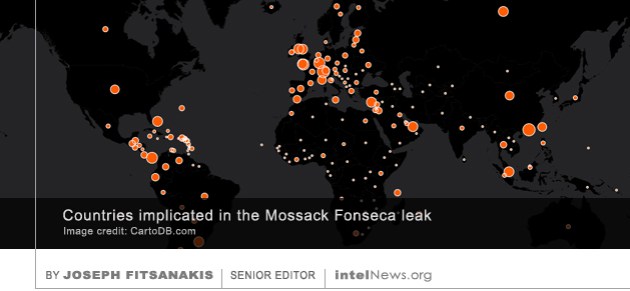 Aside from their immediate shock value, the Panama Papers reveal the enormous extent of tax evasion on a worldwide scale. This unprecedented phenomenon is inextricably tied with broader trends in globalized finance-capitalism that directly threaten the very survival of the postwar welfare state. National intelligence agencies must begin to view offshore tax evasion as an existential threat to the security of organized government and need to augment their economic role as part of their overall mission to protect and secure law-abiding citizens.
 countries. On Sunday, following a year-long analysis of the data, the reporting partners began publishing revelations from the Panama Papers, and say they will continue to do so for several days to come.
 statements, which means they have not been paying taxes in their country of citizenship or residency. Thus, there are now thousands of Mossack Fonseca clients in
 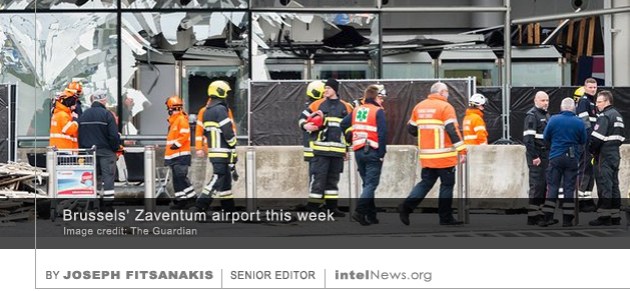 In the past year, the Islamic State has claimed responsibility for at least nine terrorist attacks on foreign capitals. The growing list, which features Jakarta, Tunis, Paris, Beirut, Ankara, and Kuwait City, now includes the Belgian capital, Brussels. At least 34 people died in the attacks that rocked Brussels’ Zaventum airport and Maelbeek metro station on March 22, while another 300 were injured, 60 of them critically. This week’s bombings officially constitute the bloodiest terrorist attacks in Belgium’s history, prompting the country’s government to declare three days of national mourning.
 Ever since 2008, when we launched intelNews, we have monitored daily developments in the highly secretive world of intelligence while providing an expert viewpoint removed from sensationalism and conspiratorial undertones. As 2015 is about to conclude, we take a look back at what we think are the ten most important intelligence-related developments of the past 12 months. Regular readers of this blog will surely agree that we witnessed our fair share of significant intelligence-related stories this year. Some of them made mainstream headlines, while others failed inexplicably to attract the attention of the news media. In anticipation of what 2016 may bring, we present you with our selection of stories, which are listed below in reverse order of significance. This is part two in the series;
  Ever since 2008, when we launched intelNews, we have monitored daily developments in the highly secretive world of intelligence while providing an expert viewpoint removed from sensationalism and conspiratorial undertones. As 2015 is about to conclude, we take a look back at what we think are the ten most important intelligence-related developments of the past 12 months. Regular readers of this blog will surely agree that we witnessed our fair share of significant intelligence-related stories this year. Some of them made mainstream headlines, while others failed inexplicably to attract the attention of the news media. In anticipation of what 2016 may bring, we present you with our selection of stories, which are listed below in reverse order of significance. This is part one in the series; part two is available
 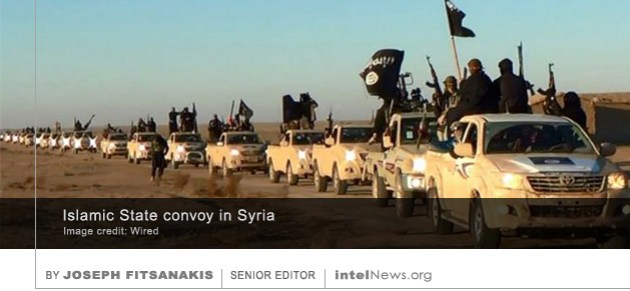 Much emphasis has been given to the Islamic State’s Western recruits, but there is almost nothing known about Westerners fighting against the Islamic State in Iraq and Syria. Last week, an investigative website published the first substantial study on the subject, focusing on volunteers who are citizens of the United States. Entitled “The Other Foreign Fighters”, the study focuses on those Americans who have voluntarily traveled to the Middle East to take up arms against the group, which is also known as the Islamic State in Iraq and Syria (ISIS). It was authored by Nathan Patin, an independent researcher who often publishes his work through Bellingcat, a website specializing in open-source investigations.
 There are many unpredictable aspects of the Syrian conflict, but the downing of the Russian bomber by Turkish jets on Tuesday was not one of them. Indeed, given the simultaneous military campaigns taking place in a relatively small swath of territory by Russian, American, French, Syrian, Iranian, and other forces, it is surprising that such an incident did not happen earlier. Nevertheless, the downing of a Russian Sukhoi Su-24 by Turkish jets marked the first attack on a Russian fighter aircraft by a North Atlantic Treaty Organization (NATO) member state since 1953. Although this incident is not by itself sufficient to provoke an armed conflict between Turkey and Russia, it illustrates the main danger confronting the world in Syria: namely a conflagration between regional powers, many of which are armed with nuclear weapons.
 destroyed. But they differ drastically on what should follow. The Kremlin is adamant that President al-Assad, whom it considers its strongest ally in the Middle East, should remain in power. The Turks, on the other hand, view the Syrian president as an existential threat, due to his support for Kurdish militancy throughout the region.
 Hollande and his American counterpart Barack Obama went out of their way to avoid mentioning the Russian plane incident, and briefly commented on it only after they were asked to do so by reporters. This does not mean that Russia will not respond; but it will most likely do so behind the scenes, probably by increasing its support for the PKK and other Kurdish separatist groups.
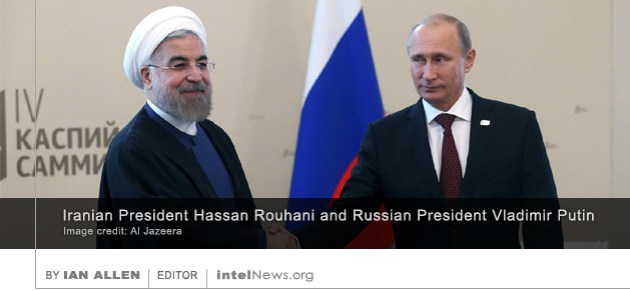 The governments of Russia and the Islamic Republic of Iran are arguably the two most important allies of Syrian President Bashar al-Assad. But the Russian-Iranian alliance over Syria is not as solid —and may not be as durable— as some believe. On Monday, Iranian news agency ISNA reported that Iran’s minister for intelligence condemned Russia’s increased military involvement in Syria and said it would weaken Iran’s security. The minister, Mahmoud Alavi,
 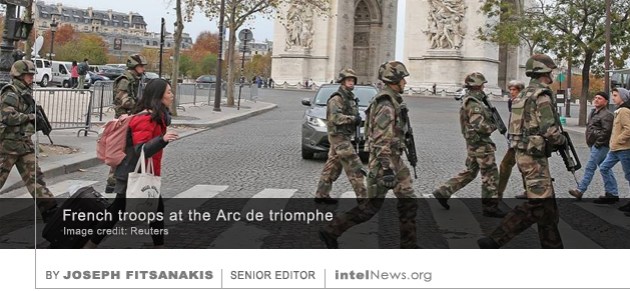 Paris is still reeling from Friday’s unprecedented carnage, which left at least 130 people dead and over 350 wounded. The six separate incidents included the first known suicide bombings in the country’s history and marked the deadliest coordinated attacks on French soil since World War II. The magnitude of the attacks prompted the French government to close the country’s borders and declare a nationwide state of emergency —the first since 1961. The shock from the mass killings is today reverberating throughout Europe, a continent that had not seen such a deadly incident since the Madrid train bombings of 2004, when a group of al-Qaeda-inspired militants killed 191 people in the Spanish capital. A response from France and its Western allies is to be expected. However, the West should pause and think very carefully before deepening its engagement in a chaotic and unpredictable war that is like nothing it has ever experienced. Specifically, Western leaders should consider the following:
 a venue where “a party of perversity” was taking place. Europe’s response to this phenomenon is dismissal and indifference. Most Westerners are still at a loss trying to understand the basic differences between Sunni and Shia Islam, let alone the ideological and spiritual underpinnings of groups like the Islamic State, Jabhat al-Nusra, and others. The idea that radical Islam can be defeated before it is understood is naïve and dangerous.
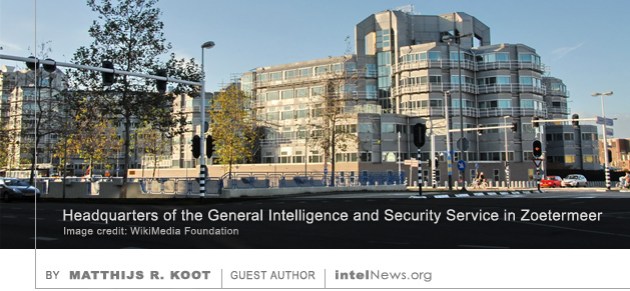 On July 2, 2015, the Dutch government released for public consultation a long-awaited bill that overhauls the Dutch Intelligence and Security Act of 2002. Known also as Wiv2002, the Act is the legal framework for the operations of the General Intelligence and Security Service (AIVD) and the Military Intelligence and Security Service (MIVD). The bill is a complete rewrite of the present law, and includes expansions of power, as well as changes to the approval regime and oversight. The below provides a brief overview focused on the interception and hacking powers.
 An American former supreme allied commander of the North Atlantic Treaty Organization has warned that a possible Greek exit from the Eurozone “could become a geopolitical nightmare” for the European Union and NATO. James Stavridis, a retired four-start US Navy admiral, who served as NATO’s 16th Supreme Allied Commander Europe from 2009 to 2013, said solving the Greek crisis should not be left to the central bankers. In an article
  n in Syria and Iraq, the continuing crises in Ukraine and in Libya, as well as the financial meltdown in Greece. So there is a recognition that their intelligence agencies must continue to work together on several pressing issues.
 routine practice. However, I do believe that this regimen can easily be changed to address particular needs, through what is called a “presidential finding”, basically a direct order issued by the president of the United States to target an individual foreign leader.
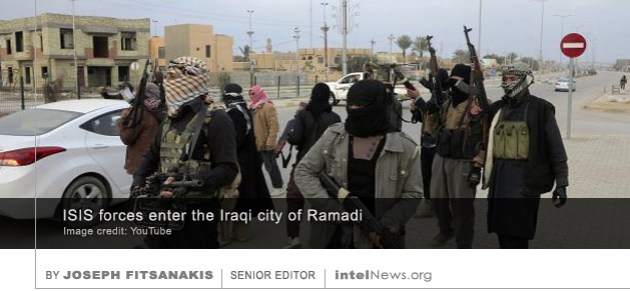 The capture by Islamic State forces of the Iraqi city of Ramadi, on May 17, has given the organization a fortified urban base less than an hour’s drive from Baghdad. Its near-simultaneous takeover of the central Syrian city of Palmyra, points to the organization’s permanence and demonstrates its widening operational span, which now ranges from Western Libya to the Iranian border. Without an all-out war effort by outside forces, such as Iran, or the United States, it is difficult to see how the Islamic State could be stopped from permanently establishing itself as a major actor in the region, especially since no outside force appears willing to confront it directly.
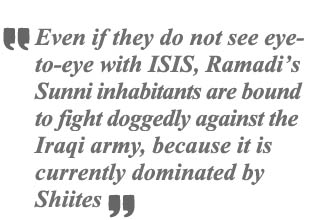 pacified. Iraqi government forces will almost certainly face a protracted armed campaign by a mixture of heavily armed groups in the city. Some of these groups are led by ISIS, some are inspired by al-Qaeda, while others are motivated by a broader anti-Shiite sentiment, which is currently the predominant political ideology in Anbar Province.
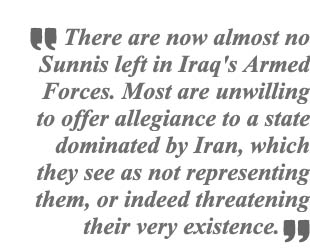 are aligned to it. Iraqi Sunnis believe that if they lose the fight against the Iraqi military they will be extinct as a people, which explains why they are fighting with more zeal and determination than their Shiite compatriots.
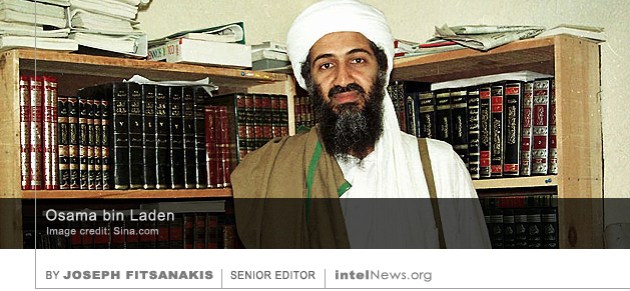 The release this week of material from Osama bin Laden’s personal stack of books and documents, which were confiscated from his Abbottabad compound, is timely as it is important. The decision by the United States Office of the Director of National Intelligence (ODNI) to declassify the documents was almost certainly in response to recent claims that bin Laden was being kept under house arrest by the Pakistani intelligence services at the time of his assassination. American journalist Seymour Hersh, who made the






 intelNews.org
EgyptAir Flight MS804: Was it a terrorist attack?
May 19, 2016 by Joseph Fitsanakis 3 Comments
Was this a terrorist attack? It will be several hours before this question can be conclusively answered. However, there are some early indicators that can help shed some light on the incident.
1. What has happened to the plane? The plane has almost certainly crashed into the sea. It has now been five hours since it disappeared from the radar. The eastern Mediterranean is not like the vast Indian Ocean, where Malaysia Airlines Flight 370 literally disappeared in March 2014, never to be found. In the case of EgyptAir MS804, if the plane had landed at a regional airport, the sighting would have been reported immediately —even if it was in rebel-held Syrian regions, or Islamic State-controlled territory in Iraq.
2. If the plane has indeed crashed, what brought it down? The possibility of a mechanical failure cannot be excluded. However, the plane is relatively new; it was built in France in 2003 and is less than 13 years old, which may mean that a serious mechanical failure is relatively unlikely. Additionally, weather conditions over the eastern Mediterranean were reportedly “clear and calm” at the time when the plane vanished from the radar. Last but not least, it must be stressed that there was reportedly no distress call made by the pilots or crew before the flight disappeared from radar screens. Which brings us to the next question, namely:
3. Was this a terrorist attack? American and European intelligence agencies, including France’s own DGSE, have warned repeatedly in previous weeks that the Islamic State was “planning new attacks […] and that France [was] clearly targeted”. The Islamic State is currently one of very few terrorist organizations that have the technical expertise and momentum to compromise security measures at a European airport. Moreover, the Islamic State has declared war on France, has attacked the country numerous times, and has stated repeatedly that it intends to continue and even intensify its efforts. The group has remained silent since early this morning, when EgyptAir announced the disappearance of flight MS804. However, it typically waits for several hours, and sometimes days, before assuming responsibility for high-profile attacks.
4. If it was a terrorist attack, how was the plane brought down? It is important to note that the plane is believed to have been flying at 37,000 feet when it vanished from radar screens. This means that, assuming that a non-state actor caused the aircraft’s disappearance, the attack must have been perpetrated from inside the plane. At least three of the 10-member crew are believed to be armed security guards. If that is the case, a team of hijackers would have to have been sizeable enough and sufficiently armed to overpower three armed security guards. What is more likely is that a bomb may have been planted on the plane, either in Paris or Cairo (the plane was returning to Cairo, having left from there for Paris earlier on Wednesday). The last time that the Islamic State assumed responsibility for downing an airliner, it did so by planting a bomb aboard the plane with the help of a ground worker in Egypt who had secretly joined the militant group.
5. If it was a terrorist attack, what does it mean? Should the Islamic State assume responsibility for this attack, it will make it increasingly difficult for France —and possibly other Western European nations— to resist putting boots on the ground in Iraq and Syria. Moreover, if a bomb was planted on the plane at Paris’ Charles De Gaulle airport, it will mean that the Islamic State, or possibly another militant group, has found a way to beat what are perhaps the most stringent airline travel security measures in all of Europe. It could be that the group behind this possible terrorist attack has found a unique and thus far unforeseen way to defeat the latest technological measures used to secure airline travel. Such a possibility could spell even more massive changes for the world’s airline industry, which is already reeling from all sorts of financial and administrative pressures in the post 9/11 era.
Filed under Expert news and commentary on intelligence, espionage, spies and spying Tagged with Analysis, Cairo (Egypt), Egypt, EgyptAir, EgyptAir Flight MS804, France, Joseph Fitsanakis, Paris, Paris-Charles de Gaulle airport, terrorism