Revealed: Unlike other Western nations, France began Afghan evacuations in May
August 26, 2021 2 Comments
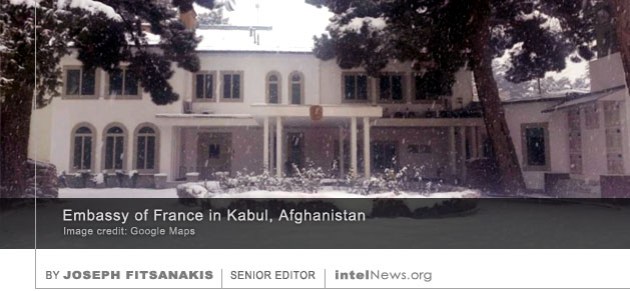
UNLIKE OTHER WESTERN NATIONS, which are currently scrambling to evacuate their citizens and Afghan embassy workers amidst the chaotic takeover of Afghanistan by the Taliban, France began its evacuations back in May. It was then that the French government put in motion a complex operation to evacuate Afghans who had worked for its diplomatic facilities, as well as their families. It is believed that around 600 Afghans were evacuated in May, with several dozen more evacuations following in June and July.
The French government is now being praised from all sides for its “anticipatory planning”. Back in May, however, there was far more criticism than praise. On July 5, in an interview with France’s state-owned international television outlet, France24, Etienne Gille, director of the French aid charity Amité Franco-Afghan, derided the evacuations of Afghans by the French government as “premature”, saying they would hurt the aid work on the ground. In May, a German diplomat, who spoke anonymously to France’s Monde newspaper, criticized France for its decision to evacuate Afghans, and said Germany would not leave Afghanistan, but would instead invest €400 million to fortify civil society there.
Why was the French response so different from those of other Western nations? Britain’s former ambassador to France, Lord Peter Ricketts, has offered one explanation. He told British newspaper The Telegraph that the main reason behind France’s anticipatory planning was its distance from the United States. Britain, which has “stronger ties to Washington” compared to France, relied largely on the White House’s assessments on the situation in Afghanistan. France, on the other hand, maintains a “relative distance” from the United States, and was thus able to “act quickly on its own conclusions”, Lord Peter said. He added that Paris “just got on with it without feeling the need to coordinate closely with the US”.
Speaking recently about France’s decision to move forward with evacuations in May, the country’s Foreign Affairs Minister, Jean-Yves Le Drian, said: “France does not forget those who have worked for us”. The French government is still evacuating some of its diplomats, as well as Afghans, but the bulk of the evacuations have been completed.
► Author: Joseph Fitsanakis | Date: 26 August 2021 | Permalink
 surprised observers with its range of weapons, such as long-range missiles with a reach that is in excess of 150 miles. This constitutes a strategic surprise for Israel. So far (May 13, 2021), Hamas has fired about 1,500 missiles at Israel, most of which have been intercepted by Israel’s air defense system called the Iron Dome.
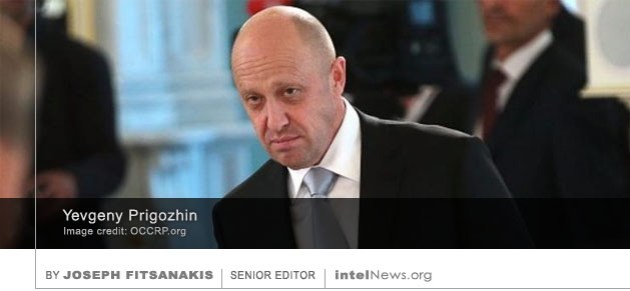 WITHOUT MUCH FANFARE LAST week, the Federal Bureau of Investigation placed on its most wanted list
 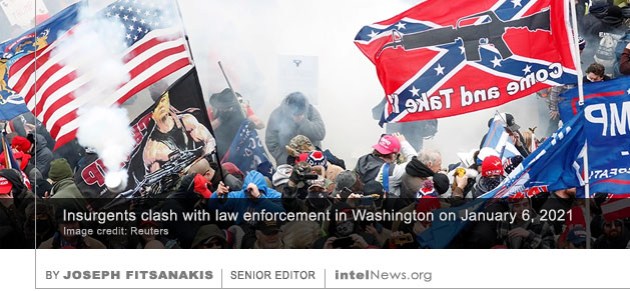 WITH DOWNTOWN WASHINGTON RESEMBLING a large military encampment, a repeat of last week’s shocking assault on the Capitol Complex is highly improbable. But America could witness escalating levels of violence across many states, as supporters of the January 6 insurrection continue to organize themselves into a coherent armed movement. Their ability to threaten American national security will depend on whether they can overcome major internal divisions. It will also be determined by the speed with which United States authorities will respond to the rise of what is quickly becoming a dangerous militant movement.
 THE INSURGENTS WHO STORMED the United States Capitol Building Complex on January 6 may have unwittingly provided cover for teams of foreign spies, who could have stolen or compromised sensitive electronic equipment. This largely neglected security-related aspect of the attack is discussed in an
  THE FEDERAL BUREAU OF Investigation and the New York Police Department gave Capitol Police officials specific warnings that supporters of United States President Donald Trump were determined to engage in serious violence on January 6, according to federal officials. The FBI even made contact with known far-right radicals across the United States in early January, and warned them not to travel to Washington for the pro-Trump rally that resulted in the bloody attack on the US Capitol,
 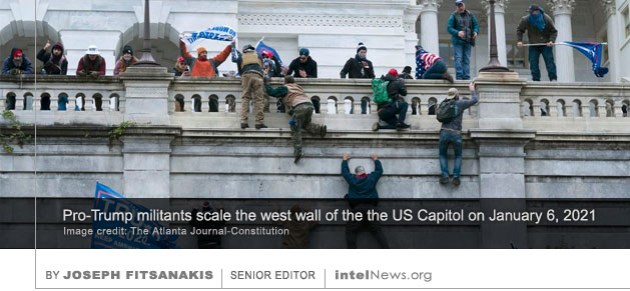 IF WEDNESDAY’S ATTACK ON the United States Capitol Complex was part of a coup d’état, then the American political system should be considered safe for the time being. The mob that ransacked the Capitol was disordered, leaderless, and appeared to have no coordination, or even direction. However, the broader militant movement that it represents is evolving very rapidly. If left unchecked, it will be able to turn its weaknesses into strengths and spell major trouble ahead for the already stormy waters of American politics. The nation’s law enforcement and security agencies must therefore prepare for a period of widespread insurrection, some of which will be armed and lethal in nature. Insurrectionist acts are likely to occur across the nation, and may last for months, if not longer.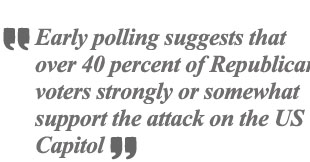
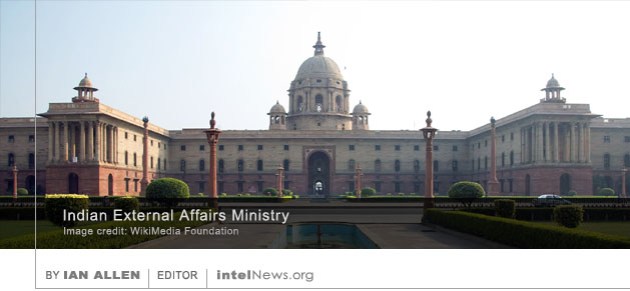 INTELLIGENCE COOPERATION BETWEEN THE United States and India has reached historic levels in the closing months of 2020, and is driven by the two countries’ mutual distrust of China. This development is particularly noteworthy for India, which has traditionally maintained a non-aligned stance in military and intelligence matters for much of its existence. New Delhi’s increasingly close relationship with Washington is
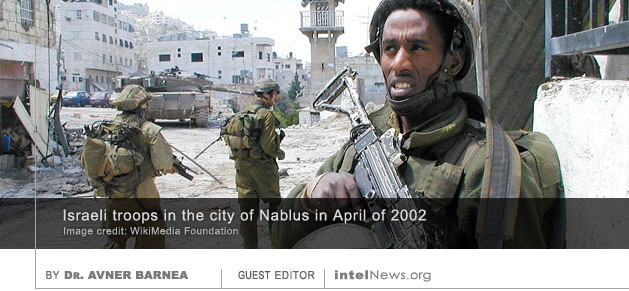 On the 20th anniversary of the outbreak of the second intifada (October 2000), the debate arises again in Israel as to whether the Palestinian move was an initiative of Chairman Arafat and the Palestinian Authority or whether it was a spontaneous evolution on the Palestinian side that largely surprised not only Israel but also the Palestinians.
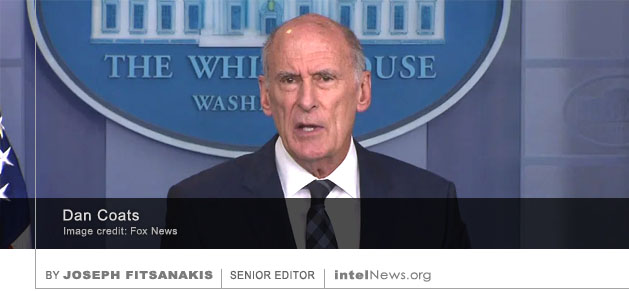 The former United States Director of National Intelligence, who served in the administration of President Donald Trump as the highest-ranking intelligence official until 2019, has warned that American democracy may not survive the upcoming presidential election. In a stark
 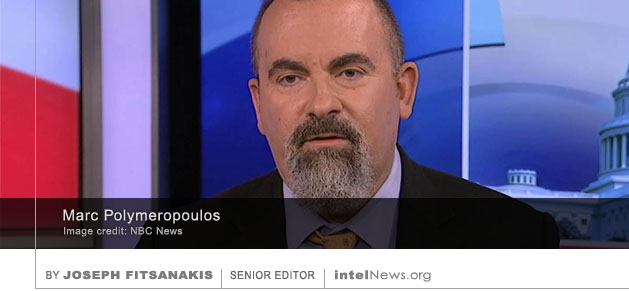 Intelligence insiders, including a former senior Central Intelligence Agency operations officer who spent decades in the Middle East, have described the establishment of official relations between Israel and some Gulf States as “the biggest change in the region in decades”.






 intelNews.org
Afghanistan chaos could revive CIA’s counterterrorism mission, say observers
August 30, 2021 by Joseph Fitsanakis Leave a comment
THE RAPID TAKEOVER OF Afghanistan by the Taliban, and the potential descent of that country into an even deeper chaos, could force the United States Central Intelligence Agency to revive its counterterrorism mission, which it has been trying to put on the back-burner in recent years. This is discussed in an insightful article published last Friday in The New York Times by Julian Barnes, Adam Goldman and Mark Mazzetti (author of The Way of the Knife: The CIA, a Secret Army, and a War at the Ends of the Earth).
The three reporters cite anonymous “current and former officials” who claim that the spiraling instability of Afghanistan “could draw the CIA back into a complex counterterrorism mission for years to come”. This comes as American officials are “reworking plans to counter threats that could emerge from Afghanistan’s chaos”, according to the report. Their ultimate fear is that Afghanistan could emerge as a beehive for militants of all backgrounds and stripes, just as Syria did in the 2010s, and before it Afghanistan in the 1990s. Even if the Taliban want to stop this from happening, the CIA has no faith in their ability to do so, the authors note.
But what can the CIA do in that regard? The spy agency has lost its extensive system of stations and outposts throughout Afghanistan. Its networks of agents inside the war-torn country have crumbled, and it doesn’t even have access to a US or other Western diplomatic facility from which to operate in-country. It will therefore need to negotiate with neighboring countries in order to establish facilities that can allow it to run agents and operations inside Afghanistan. This will not be easy, given the influence of Pakistan, Russia and China in the broader region.
The article cites a number of “senior US officials” who argue that the CIA’s priorities will not necessarily change after what happened in recent weeks in Afghanistan. Yes, there may be more urgency on counterterrorism following the victory of the Taliban, they say. They note, however, that US intelligence agencies are perfectly capable of handling “multiple priorities at once”. But the article also quotes Don Hepburn, who served both in the CIA and the Federal Bureau of Investigation, who says that focusing on both state and non-state actors with the same intensity is not necessarily as simple as it sounds: “The agency is being drawn in many, many directions”, he cautions.
► Author: Joseph Fitsanakis | Date: 30 August 2021 | Permalink
Filed under Expert news and commentary on intelligence, espionage, spies and spying Tagged with Afghanistan, Analysis, CIA, counterterrorism