Ukraine jails North Koreans in missile espionage case

One of the two North Koreans being led to courtBy JOSEPH FITSANAKIS | intelNews.org |
A court in Ukraine has jailed two North Korean citizens on charges of trying to obtain secret technical information about missile engines. A Ukrainian government official said on Monday that the North Koreans had each been sentenced to eight years in prison, and that “they will serve their sentence in Ukraine”. Speaking to Russian-language Ukrainian daily Segodnya, the official said that Ukrainian authorities had expected that Pyongyang would request extradition of its two citizens, but that the North Korean government’s reaction had been “passive”. According to the paper, the two convicted men, who have not been named, were employed by the North Korean trade mission in Belarusian capital Minsk. It was from there that, several months ago, they arrived by train to Kiev, where they tried —unsuccessfully— to recruit a number of locals as informants. One of the latter tipped off Ukrainian authorities, who placed the two North Koreans under surveillance. Eventually, the two suspects were arrested in a rented garage in the Ukrainian city of Dnipropetrovsk, while photographing technical documents with a pair of handheld miniature digital cameras. The Segodnya report stated that the documents consisted of doctoral dissertations, marked ‘confidential’, which described highly technical methods of designing effective solid- and liquid-fuel supply systems for missile engines. Some of the documents concerned the technical specifications of computer software to assist in the design of missile fuel supply systems, said the paper. The confidential documents had reportedly been taken from the Yuzhnoye Design Bureau, a cornerstone of the Soviet —and now the Ukrainian— space industry, which in the early 1960s developed the R-16 (known in the West as SS-7), the first inter-continental ballistic missile (ICBM) successfully deployed by the Soviet Union. Read more of this post

Belarus announces arrest of alleged Lithuanian spy ring members

Belarus and LithuaniaBy IAN ALLEN | intelNews.org |
The government of Belarus has announced the arrest of an espionage ring allegedly operating out of the Lithuanian embassy in Belarusian capital Minsk. It appears that the alleged ring consisted of at least one Lithuanian embassy official, identified only as “Mr. F” in Belarusian state documents, as well as an undisclosed number of Belarusian nationals. A brief statement published on the website of the Belarusian State Security Committee, the KGB, said that the Lithuanian official, who is said to be a military attaché at the embassy, was arrested along with several Belarusian members of the alleged spy ring. The arrests reportedly took place soon after members of the spy ring were caught in the act of exchanging information; the KGB press office added that “electronic equipment” and “spy gadgets” of an undisclosed nature were confiscated from the arrestees. Little is known at this point about the precise focus of the accused spies; the KGB claims that they were “engaged in efforts to gain information in the military sphere”. Media reports from Minsk suggest that the activities of the alleged ring were particularly focused on bilateral security arrangements between Belarus and Russia. Belarus, a former Soviet republic, is today one of Russia’s staunchest allies in Europe; since 1994, the country has been ruled by Russophile President Alexander Lukashenko, who often accuses other former Soviet republics —including Lithuania— of stooping to the West. Read more of this post

News you may have missed #743 (espionage edition)

Vladimir LazarBy IAN ALLEN | intelNews.org |
►►Denmark professor jailed for spying. Timo Kivimäki a Finnish professor of international politics in Copenhagen, Denmark, has been sentenced to five months in prison for spying, following a trial held behind closed doors, from which even the verdict was not released. Several Russian diplomats left Denmark after the start of the spy case and, according to Danish media, Kivimäki’s lawyer, Anders Nemeth, had attempted to have them return to act as witnesses.
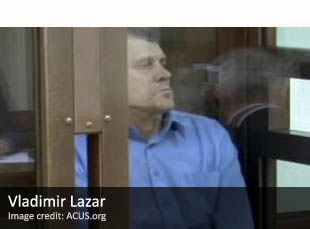
►►Retired Russian colonel convicted of spying for US. A Russian court has ruled that retired Colonel Vladimir Lazar spied for the US, and sentenced him to 12 years in prison. Lazar will be sent to a high-security prison and stripped of his military rank, the Federal Security Service said in a statement. Prosecutors said Lazar purchased several computer disks with more than 7,000 images of classified maps of Russia from a collector in 2008 and smuggled them to neighboring Belarus, where he gave them to an alleged American intelligence agent.
►►India arrests military intel staffer for spying. The soldier, identified only as Shivdasan, worked for the Indian Army’s Technical Support Division, which is a newly founded unit within Indian Military Intelligence. He was reportedly trapped by the Indian Directorate of Revenue Intelligence in an elaborate operation that involved a “double agent” and a relative of the soldier in Dubai.

Scandinavian phone company helps ex-Soviet republics spy on citizens

TeliaSonera CEO Lars NybergBy JOSEPH FITSANAKIS | intelNews.org |
A highly profitable cellular telecommunications company, which is jointly owned by a Swedish-Finnish public-private consortium, is enabling some of the world’s most authoritarian regimes to spy on their own citizens, according to a new report. TeliaSonera AB, the dominant telephone company and mobile network operator in Sweden and Finland, is currently active in nearly 20 countries around the world. In 2011, it posted a net profit of nearly $3 billion, 25 percent of which came from the company’s operations in countries of the former Soviet Union. They include some of TeliaSonera’s most lucrative franchises, such as Geocell in Georgia, Kcell in Kazakhstan, Ucell in Uzebekistan, Tcell in Tajikistan, and Azercell in Azerbaijan, among others. But a new investigation by Sweden’s public broadcaster, Sveriges Television AB  (SVT), accuses TeliaSonera of knowingly giving some of the world’s most oppressive governments the means to spy on their own citizens. The report, which is available online in English, effectively states that TeliaSonera is directly complicit in some of the world’s most severe human rights abuses. The accusation is bound to cause embarrassment among senior officials in the Swedish government, which owns nearly 40 percent of TeliaSonera’s stock. The SVT investigation singles out Uzbekistan, Belarus and Azerbaijan, where TeliaSonera operates monopoly cellular networks on behalf of the state, “in exchange for lucrative contracts”. While running the networks, TeliaSonera allegedly grants local intelligence agencies complete and real-time access to the all telephone calls, pen-register data, and content of text messages exchanged by users. This, says the SVT report, has in turn facilitated several arrests of pro-democracy activists and political dissidents in countries like Belarus and Azerbaijan. Read more of this post

News you may have missed #707

Gareth WilliamsBy IAN ALLEN | intelNews.org |
►►Russian colonel charged with spying for the US. Russia charged a reserve colonel with espionage on Tuesday, for selling what officials said were classified topographical maps to the United States Department of Defense. The officer, Vladimir Lazar, purchased a disk with over 7,000 topographical images of Russian territory from a collector he met on the Internet in 2008, smuggled it into neighboring Belarus and gave it to a Russian citizen working for the United States, the prosecutor general’s office said in a statement. An investigation found that the materials could be used for planning military operations, including missile strikes. Officials did not disclose when Lazar was arrested or give his current whereabouts.
►►FBI denies Russian spy tried to sexually entice US cabinet official. On April 1, British newspaper The Independent quoted C. Frank Figliuzzi, the assistant FBI director for counterintelligence, saying that the recently discovered Russian illegals spy ring, which included Anna Chapman, was “getting close enough to a sitting US cabinet member that we thought we could no longer allow this to continue”. Now the FBI says that Figliuzzi “was misquoted”, and that “there is no allegation or suggestion in the complaint that Anna Chapman or anyone else associated with this investigation attempted to seduce a US Cabinet official”.
►►London police admits ‘errors’ in MI6 officer’s death investigation. A coroner was given a wrong name for a witness in the case of an MI6 officer Gareth Williams, whose body was found in a bag in a London flat in August of 2010. The Metropolitan Police said “administrative errors” led to the coroner being given three different names for Elizabeth Guthrie. She is expected to be questioned about her contact with the MI6 officer in the months before his death. At a pre-inquest hearing last week coroner Dr Fiona Wilcox said “there has been some confusion” over the identity of the witness.

News you may have missed #576 (Europe edition)

GCHQ

GCHQ

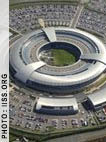
►►Inside Britain’s signals intelligence agency. This account of the work of Britain’s General Communications Headquarters is a bit basic, but it’s not every day that the GCHQ grants access to a journalist to its Cheltenham base.
►►Czech telecoms to share data with intel services. The Czech Interior Ministry has placed a clause in the planned amendment to the electronic communications law, under which operators of communication networks will have to provide data on cell phones and the Internet to the civilian and military counterintelligence.
►►Dutch F-16 pilot suspected of espionage. A Dutch former F-16 pilot suspected of espionage, identified only as Chris V., had more state secrets in his possession than he previously admitted to, according to public prosecutors in The Hague. The pilot was arrested last April and stands accused of leaking state secrets to a colonel from Belarus.

Hundreds of European mercenaries ‘fighting for Gaddafi’

Libya

Libya

By JOSEPH FITSANAKIS | intelNews.org |
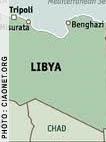
Hundreds of European mercenaries, including large numbers of European Union citizens, have voluntarily enrolled in the armed forces of the Libyan government, and are fighting under the command of Colonel Muammar al-Gaddafi. According to criminologist Michel Koutouzis, the Greek CEO of a French-registered consulting firm with connections to Libya, up to 500 European soldiers-of-fortune have been hired by the Libyan government to provide “special services”, particularly in heavy weaponry and attack helicopters. Koutouzis says that most of the European mercenaries, who sell their services for thousands of dollars a day, come from Eastern Europe, especially Poland, Belarus, Ukraine and Serbia, but there are also French, British and Greek nationals currently in Libya. He also claims that Gaddafi is supported by serving military personnel from Russia, Syria and Algeria. It is believed that the Gaddafi camp is also employing thousands of non-specialist mercenaries from various African nations, including Somalia, Mali, Niger, Chad, and the Central African Republic. Unconfirmed reports have surfaced in the American press that the Gaddafi forces are employing female snipers from Colombia. Read more of this post

Experts see nation-state behind sophisticated computer virus attack

Ahmadinejad

By IAN ALLEN | intelNews.org |
Computer forensics specialists are split as to the purpose and initial target of a sophisticated computer virus that infected computers used in the Iranian government’s nuclear energy program. The virus, named Stuxnet, was discovered in Iran in June by a Belarusian computer security firm doing business in the Islamic Republic. It has since infected at least 100,000 computer systems in countries such as Brazil, India, Russia and the United States. But the primary target of the virus appears to have been the Iranian nuclear energy program, specifically computers located at the Islamic Republic’s nuclear reactor facility in Bushehr and the uranium enrichment plant in Natanz. Several commentators, including Wired magazine, dispute the existence of any evidence pointing to a clear target inside Iran.  But Israeli media maintain that computers at Natanz were the primary target of Stuxnet, and that subsequent infections at computer labs at Bushehr were in fact an unintended side effect. Read more of this post

News you may have missed #427

  • Did Belarus KGB murder opposition activist? The death of Belarussian opposition activist and journalist Oleg Bebenin has thrown a murky light on both the circumstances of his demise and those who might be behind it. Some point the finger at Minsk’s modern-day KGB, whose leadership was reshuffled earlier this year by President Alexander Lukashenko.
  • Colombian agency behind domestic spying honey trap. Former Colombian detective Alba Luz Florez has revealed that she seduced a national police captain as a way of infiltrating the Colombian Supreme Court, during a 2007 domestic spying operation by the country’s scandal-besieged Administrative Department of Security.
  • Ex-MI6 worker jailed for trying to sell secrets. A British court has jailed Daniel Houghton, a former employee of MI6, Britain’s external spy agency, for trying to sell secret intelligence documents to the Dutch secret services. Interestingly, the Dutch notified MI6 after they were approached by Houghton, who has dual British and Dutch citizenship.

Russian intelligence arrests, extradites fmr Kyrgyz interior minister

Moldomusa Kongantiyev

Kongantiyev

By JOSEPH FITSANAKIS | intelNews.org |
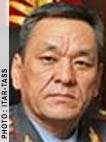
If there were any doubts that Russia is aggressively courting the new interim government in Kyrgyzstan, they were dispelled earlier today with the announcement that Russian authorities arrested the Central Asian republic’s former interior minister. Kyrgyzstan’s National Security State Service (NSSS) announced that Moldomusa Kongantiyev was arrested on Sunday in Moscow, by agents of Russia’s Federal Security Service (FSB), and will be extradited to Bishkek, where he will face charges of using state repression against demonstrators. Kongantiyev had escaped to Russia in mid-April, after he was abducted and viciously beaten by Kyrgyz opposition demonstrators, who released him after his family paid a significant amount of money as ransom. IntelNews hears that Kongantiyev suspected that Moscow planned to extradite him to Kyrgyzstan, and that some of the supporters of the deposed regime in Russia offered to hide him. But their attempt to smuggle him out of a hospital in Moscow, where he was receiving medical care, was thwarted by the FSB, after a tip from  NSSS. Read more of this post

West German spy service employed former Nazis, documents show

Reinhard Gehlen

Reinhard Gehlen

By JOSEPH FITSANAKIS| intelNews.org |
West Germany’s intelligence service employed hundreds of former Nazi criminals from 1956 until at least 1971, according to internal documents. The links between the German Federal Intelligence Service (BND), the main foreign intelligence agency of the German government, and the remnants of the German Nazi party, are well known; even its first director, Reinhard Gehlen, was a former General of the Wehrmacht. But documents dating to the 1960s, which were leaked last week to the Frankfurter Allgemeine Zeitung, show that Gehlen, who worked as a CIA agent after 1945, was aware of his officers’ Nazi past, as were his American counterparts. The Nazi connections were internally revealed in detail after 1963, when Gehlen set up an internal BND investigation office, called Unit 85, to unmask potential Soviet moles inside the agency. Read more of this post

News you may have missed #0270

  • S. Korean court orders damages in alleged spy case. Lee Soo-geun was a senior North Korean government apparatchik, who defected to the South and joined its intelligence service in 1967. Later, however, when he attempted to flee to a third country, he was arrested by South Korean counterintelligence agents, charged with working as a double agent, and shot. But now a court in Seoul has concluded that Lee’s confession was extracted by force, and has ordered that damages be paid to Lee’s niece, who was imprisoned for allegedly helping him.
  • Belarus reshuffles KGB leadership. Last week, Belorussian President Alexander Lukashenko carried out a major reshuffle in the country’s State Security Committee (KGB), a surprise move which affected all KGB deputy chairs and regional department heads. Retired KGB lieutenant colonel Valery Kostka explains the reasoning behind the reshuffle.

Bookmark and Share

News you may have missed #0164

Bookmark and Share

News you may have missed #0111

  • Obama supports extending USA PATRIOT Act domestic spy provisions. The move confirms the US President’s support for the Act, whose warrantless communications monitoring provisions he approved with his Senate vote in 2008.
  • Poland jails alleged Belarusian spy. The man, known only as “Sergei M.” was sentenced Wednesday to five-and-a-half years in prison by a Warsaw district court for spying against Poland between 2005 and 2006. Meanwhile in Belarus four local army officers are still on trial, accused of spying for Poland.
  • Tolkien was trained as a British spy. Novelist JRR Tolkien, whose day occupation was in linguistics research, secretly trained as a British government spy in the run up to World War II, new documents have disclosed.

Bookmark and Share

News you may have missed #0014

  • Belarus releases US lawyer jailed for industrial espionage. Emmanuel Zeltser who spent a year in jail in Belarus, is a lawyer with “a vast knowledge of organized crime, particularly the practice of money laundering”.
  • US Pentagon supplying intelligence to Pakistani armed forces. IntelNews has been keeping an eye on the intelligence side of the ongoing Pakistani offensive in the country’s North-West Frontier Province. Chinese intelligence involvement has already been established, and there have been allegations of Indian and Israeli involvement. It has now emerged that the US military has resumed surveillance flights over Pakistan, a clear sign of increased US-Pakistani intelligence collaboration.
  • US Congressional intel committee issues warnings. The US House Permanent Select Committee on Intelligence has approved, as expected, the 2010 fiscal intelligence authorization bill, but it said that “funding for cybersecurity programs may need to be reduced or slowed until the future direction for cybersecurity is better defined”. It also urged US intelligence agencies to expand ethnic diversity among employees and improve training on foreign languages.