Malaysia immigration probe reveals growing insider threat to passport security
June 3, 2016 Leave a comment
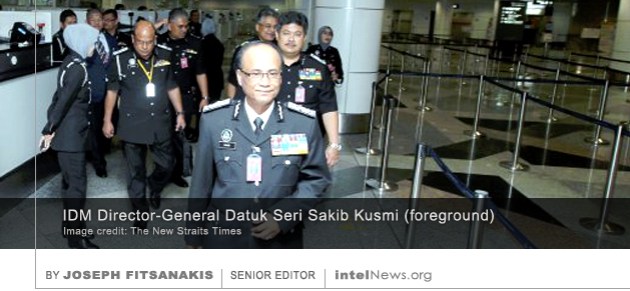 As many as 100 Malaysian immigration officers are implicated in a widening investigation involving the deliberate sabotage of the country’s electronic passport control system. The investigation, which began over three months ago, focuses on a criminal ring of immigration personnel at the Kuala Lumpur International Airport (KLIA), one of Southeast Asia’s major travel hubs. Reports suggest that 15 members of the alleged ring are in prison awaiting trial. Another 14 immigration officers have been suspended without pay, while 20 more staff members are under investigation by the intelligence subdivision of the Immigration Department of Malysia (IDM). On Wednesday, IDM Director-General Datuk Seri Sakib Kusmi said that the scope of the investigation had widened, and that 63 immigration officers would be transferred from the IDM’s headquarters in Putrajaya to KLIA, to replace members or suspected members of the criminal ring.
The officers implicated in the investigation are accused of deliberately sabotaging the automated passport control system used at KLIA. Known as myIMMs, the system allows passport control officers to validate the authenticity of international travelers’ passports, and to confirm that the latter have not been reported lost or stolen. It is believed that the myIMMs system was deliberately made to crash at least once a day, in order to allow human traffickers and other organized criminals to smuggle individuals in and out of Malaysia. With the system going offline, KLIA passport control officers were forced to screen passengers manually, which is now believed to have permitted countless individuals using forged and stolen passports to go through security undetected. The deliberate sabotage of myIMMs is believed to have been going on since 2010, and investigators are at a loss in trying to estimate the numbers of people who have been able to bypass computerized passport checks.
One investigator said Australia’s ABC news network that the criminal ring’s handlers were located overseas and would send immigration officers instructions via coded messages. The primary ring members had recruited IDM administrative staff, technology staff, and even software vendors, who were involved in sabotaging the system. The practice of organized criminal and terrorist groups using forged passports is both long and documented. But news of a criminal group that is able to set up an extensive ring of immigration officers, who then sabotage an electronic passport verification system at a major international transport hub, is rare and extremely alarming. It reveals a new form of insider threat, namely compromised immigration and passport control officers, who are bribed to facilitate the work of criminal groups and terrorist organizations.
► Author: Joseph Fitsanakis | Date: 03 June 2016 | Permalink
 Australian law enforcement and intelligence agencies routinely use paid informants in Indonesia and Pakistan as part of a decade-old covert war against human traffickers in the Indian Ocean. This information has been revealed by The Australian newspaper in response to











 intelNews.org
French-Swiss firm allegedly bribed Islamic State to keep its factory working in Syria
September 25, 2017 by Joseph Fitsanakis Leave a comment
In 2011, soon after the Syrian Civil War broke out, various militant groups began operating in the area around one of LafargeHolcim’s plants, located in in north-central Syria, 10 miles south of the Syrian-Turkish border. In June of 2016, French newspaper Le Monde published allegations that LafargeHolcim’s subsidiary, Lafarge Cement Syria (LCS), which owns the plant, bribed various militias to stay away from its factory. According to the paper, at least €20,000 (approximately $24,000) went to the Islamic State, which eventually conquered the area around the LafargeHolcim plant. The article further claimed that LCS managers in Syria sent detailed emails to LafargeHolcim executives in Europe about their dealings with various militias, including the Islamic State. LafargeHolcim approved the use of funds to bribe the militias, said Le Monde, in order to allow the factory to remain operational and to avoid having their employees taken hostage.
The newspaper’s allegations prompted the Office of the Public Prosecutor in Paris to launch a preliminary investigation in October of the same year. Eventually, an official complaint was filed by the French Ministry of Finance, which argued that the activities of LCS may have constituted illicit financial relations between a French-owned company and a terrorist group. An official investigation was opened in June of 2017 into whether LafargeHolcim illegally financed terrorist groups through its subsidiaries, Lafarge and LCS. Investigators are also examining claims that the company presented the French government with forged accounting documents in order to hide the bribes it gave to various Syrian armed groups.
Last week, investigators heard from the first time from witnesses, three of whom were LCS employees in 2014, when the company first made contact with Islamic State militants. They allegedly told prosecutors that the French-Swiss company paid approximately $20,000 a month to various armed groups, including al-Qaeda, al-Nusra Front, and the Islamic State. Prosecutors did not discuss details about the witnesses’ testimonies, but Le Monde said it spoke to individuals with direct knowledge of the investigation, who said that the witnesses’ testimonies were particularly damning for LafargeHolcim. The probe continues.
► Author: Joseph Fitsanakis | Date: 25 September 2017 | Permalink
Filed under Expert news and commentary on intelligence, espionage, spies and spying Tagged with bribing, corruption, France, Islamic State, Lafarge Cement Syria, LafargeHolcim, News, Switzerland, Syria