News you may have missed #750 (US edition)

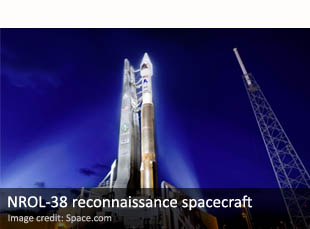
NROL-38 reconnaissance spacecraftBy TIMOTHY W. COLEMAN | intelNews.org |
►►US spy agency launches new satellite. The US National Reconnaissance Office, the agency tasked with overseeing America’s intelligence satellites, successfully placed a new spy satellite into orbit. The Christian Science Monitor reports that the NROL-38 reconnaissance spacecraft was launched from Cape Canaveral Air Force Station in Florida. The satellite launch, sitting atop an Atlas 5 rocket, was streamed live via Webcast for several minutes before being terminated due to national security restrictions and the classified nature of the mission. Particulars regarding the capabilities or specific purpose of the spy satellite were not provided. However, just a few days before, the US Air Force’s highly classified space plane known as the  AX-37B returned to Vandenberg Air Force Base in California.
►►FBI takes on larger domestic intelligence role. The US Federal Bureau of Investigation, under a newly devised action plan, will be afforded a greater role in domestic intelligence efforts in the US, according to a recent Washington Post article.  Senior level field agents at the bureau are expected to serve as representatives for the Office of the Director of National Intelligence (ODNI), the agency created after 9/11 to oversee activities of all US intelligence efforts. The Post quotes CIA spokeswoman Jennifer Youngblood, who —remarkably, considering CIA/ODNI relations in recent years— said that the agency has not opposed the ODNI’s move to elevate FBI agents in the US, and that “the program is working well”.
►►CIA declassifies 9/11 documents. The CIA released this past week hundreds of pages of declassified documents related to the September 11, 2001, attacks, which detail the agency’s budgetary woes leading up to the deadly strikes and its attempts to track al-Qaeda leader Osama bin Laden. The National Security Archive at George Washington University says it obtained the documents through a Freedom of Information Act request. The documents are heavily redacted and offer little new information about what the US knew about the al-Qaeda plot before 2001.
US and Israel behind computer virus that hit Iran, say sources

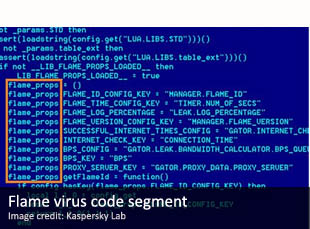
Flame virus code segmentBy JOSEPH FITSANAKIS | intelNews.org |
Flame, a sophisticated computer malware that was detected last month in computers belonging to the Iranian National Oil Company and Iran’s Ministry of Petroleum, was created by Israel and the United States, according to a leading American newspaper. Quoting “officials familiar with US cyber-operations”, The Washington Post reported on Wednesday that the malware, which is said to be “massive in size”, is part of a wider covert program codenamed OLYMPIC GAMES. The paper said that the US portion of the program is spearheaded by the National Security Agency, which specializes in cyberespionage, and the CIA’s Information Operations Center. The Post further claims that OLYMPIC GAMES has a three-fold mission: to delay the development of the Iranian nuclear program; to discourage Israeli and American officials from resorting to a conventional military attack on Iran; and to buy time for those officials who favor addressing the Iranian nuclear stalemate with diplomatic pressures coupled with sanctions. According to one “former intelligence official” quoted in The Post, the scale of OLYMPIC GAMES “is proportionate to the problem that’s trying to be resolved”. Russian antivirus company Kaspersky Lab, which first spotted the Flame virus in May, said that it is “one of the most complex threats ever discovered”. It is over 20 megabytes in size, consisting of 650,000 lines of code. In comparison, Stuxnet, a computer super-virus that was detected by experts in 2010, and caused unprecedented waves of panic among Iranian cybersecurity experts, was 500 kilobytes in size. Read more of this post

News you may have missed #749

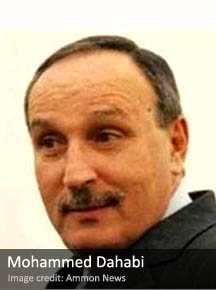
Mohammed DahabiBy IAN ALLEN | intelNews.org |
►►Why did CIA Director secretly visit Czech Republic? The CIA Director, David Petraeus, is known to make frequent secret trips to places like Pakistan, Afghanistan, or Iraq. But why was his recent trip to the Czech Republic kept secret? Photographs published in a Czech daily paper showed the CIA director and his team boarding a military plane at Prague’s Ruzyne Airport, headed for their next destination, Sofia, Bulgaria. But neither the US Embassy in Prague, nor the CIA will respond to questions by Czech media about Petraeus’ secretive visit to the former Soviet Bloc nation.
►►Jordan’s ex-spy chief on trial for corruption. Jordan’s former spy chief, General , who headed the General Intelligence Department (GID) from 2005 to 2009, has gone on trial in Amman on charges of corruption, which carry a maximum sentence of life imprisonment. In a case highlighting corruption in the country’s vaunted intelligence community, the prosecutor said Dahabi’s wealth had quadrupled during his years in office, reaching almost $40 million by the end of 2011. The money, he said, was held in several foreign currency accounts in a leading domestic bank.
►►CIA still refuses to comment on Predator drone attacks. The Central Intelligence Agency continues to refuse to confirm or deny the covert military use of drones to kill suspected terrorists overseas. This is despite numerous public comments on the CIA’s drone attacks in far-flung locales such as Yemen from various government officials, including former CIA Director Leon Panetta and US President Barack Obama. The development comes as 26 members of Congress asked Obama, in a letter, to consider the consequences of drone killing and to explain the necessity of the program.

News you may have missed #748 (US edition)

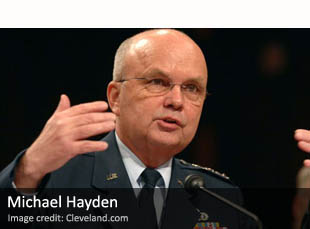
Michael HaydenBy IAN ALLEN | intelNews.org |
►►US lawmakers probe China companies over spy concerns. In letters sent last week to Chinese communications hardware firms Huawei Technologies and ZTE Corporation, a group of senior members of the US House of Representatives Intelligence Committee have outlined concerns about the companies’ ties with the Chinese government, including the role of a “party committee” at Huawei. The lawmakers have also asked about Huawei’s relationships with five US consulting firms and requested an expansive collection of documents, including the contracts between the firms and Huawei.
►►Lone Senator resists Bush/Obama NSA wiretapping plan. The Obama administration wanted a quick, no-questions-asked-or-answered renewal of broad electronic eavesdropping powers that largely legalized the Bush administration’s illegal warrantless wiretapping program. That’s despite President Barack Obama’s campaign promise to revisit and revise the rules to protect Americans’ rights. Everything seemed to be going to plan after a Senate committee approved the re-authorization in secret last month. But Senator Ron Wyden (D-Oregon) has stepped in to stop the bill because the government refuses to say how often the spy powers are being used.
►►What did Hayden tell Obama in January 2009? In December of 2008, a meeting took place between the incoming US Presiden Barack Obama and the departing CIA Director Michael Hayden. Several days later, on January 15, Hayden told journalists that Obama had privately assured him that “no plans to launch a legal inquiry” into the CIA’s use of controversial interrogation methods during the Bush administration. Now, several years later, Salon has published an insider’s account of what was said in that meeting between Obama and Hayden, as well as during the days that followed.

Western spy agencies ‘sharing intelligence’ with Syrian rebels

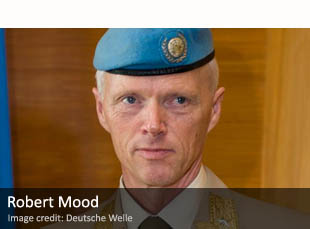
Robert MoodBy JOSEPH FITSANAKIS | intelNews.org |
A British newspaper has cited defense sources claiming that British and American intelligence agencies are passing vital information to Syrian rebels fighting to overthrow the country’s government. British tabloid The Daily Star quoted “a British defense source” who said that most of the raw intelligence on Syria is picked up by sophisticated British and American satellites monitoring Syrian communications. Once gathered and assessed by intelligence analysts in Washington and London, the information is passed on to operatives of the United States Central Intelligence Agency and Britain’s MI6, who are allegedly operating on the ground in Syria. They in turn communicate actionable intelligence to rebel leaders in Syria, who are fighting the government of Syrian President Bashar al-Assad. According to the British tabloid, information passed on to rebel leaders includes detailed satellite imagery of Syrian pro-government troop movements around the country, as well as the contents of intercepted communications between senior Syrian military commanders and their subordinates in the field. The Star quotes one unnamed British government source who claims that the satellites are so sophisticated that they allow British and American eavesdroppers to identify the individuals whose voices are heard in the intercepted communications, with the aid of advanced voice recognition systems. The intelligence has reportedly enabled rebel commanders to evacuate locations targeted by government forces, and may also have allowed the rebels to organize successful counterstrikes in response to offensives conducted by troops loyal to Damascus. Washington-based publication The Hill contacted the CIA and the White House but their spokespersons refused to comment on what they called “an ongoing intelligence operation” in Syria. A spokesman from the British Foreign and Commonwealth Office would only tell The Star that “all actions remain on the table”.   Read more of this post

CIA ‘seriously damaged’ China’s overseas spy network, sources say

Ministry of State Security branch office in Hubei Province, ChinaBy JOSEPH FITSANAKIS | intelNews.org |
A high-level Chinese security official, who was arrested earlier this year in China for spying for the United States, compromised several Chinese agents operating on American soil, according to sources. Reuters news agency, which broke the initial story of the Chinese official’s arrest earlier this month, published last week a lengthy update on the spy affair. The article quoted “two sources with direct knowledge on the matter”, who claimed the issue was considered serious enough in Beijing to prompt the personal intervention of Chinese President Hu Jintao. Jintao, who is also General Secretary of the Communist Party of China, personally ordered an investigation into the case, said Reuters. The investigation focused on China’s Ministry of State Security (MSS), China’s primary intelligence agency, where the accused spy was reportedly working at the time of his arrest. Although Chinese media have remained silent on the issue, the arrested official is said to have worked as a senior aide to MSS Vice Minister Lu Zhongwei. The Reuters article alleges that the investigation, which is said to be continuing, has concluded that the aide had been a paid informant of the US Central Intelligence Agency, and that the information he provided to the CIA included “political, economic and strategic intelligence”. But the sources also told Reuters that some of the government secrets that the MSS aide gave the CIA related to China’s network of spies operating on American soil. The latest Reuters article strengthens the widespread view that the latest espionage scandal caused serious damage to China’s espionage network in the US. Some observers now argue that this represents China’s most damaging espionage scandal since 1985, when Yu Qiangsheng, a senior Chinese intelligence official, defected to the United States. Read more of this post

U-2 pilot captured by USSR in 1960 to receive posthumous Silver Star

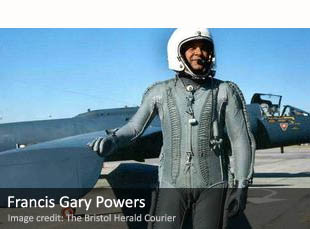
Francis Gary PowersBy JOSEPH FITSANAKIS | intelNews.org |
An American Central Intelligence Agency pilot, who was criticized during the Cold War for allowing Soviet forces to capture him alive during the 1960 U-2 incident, is to be posthumously awarded a military decoration for valor. Francis Gary Powers was one of several pilots who participated in Project HOMERUN, a joint effort by the CIA and the National Security Agency that surreptitiously gathered signals and photographic intelligence on Soviet military sites. The program, which has been described by some historians as one of the most successful intelligence projects in US history, relied on the U-2’s ability to fly beyond 70,000 feet over the Soviet Union, thus avoiding detection or attack by Soviet forces. But this impression was false; in reality, Soviet radars had been able to detect nearly every U-2 flight over Soviet territory. Eventually, on May 1, 1960, Soviet forces were able to shoot down one of the U-2 flights using a surface-to-air missile. Shortly after the USSR announced that an American plane had been shot down over Soviet territory, the US administration of President Dwight Eisenhower pretended that the plane was a NASA weather research aircraft that had “drifted into Soviet airspace” when the pilot had “lost consciousness”. At that point, however, Washington had no idea that the CIA pilot, Francis Gary Powers, had been captured alive by Soviet forces. This was later announced by Soviet Premier Nikita Khrushchev, who scored a major diplomatic coup for the Soviets. Following his arrest, Powers spent nearly two years in a Moscow prison before being exchanged for Soviet KGB spy Rudolf Abel, who had been captured in the US in 1957.  Recently declassified documents show that some CIA analysts had refused to believe that the USSR was capable of shooting down a U-2 aircraft, and thought that Powers had voluntarily defected to the Soviet Union. Read more of this post

News you may have missed #744

Navi PillayBy IAN ALLEN | intelNews.org |
►►Source says Mikhailov ‘will not be exchanged’ with US. There are rumors going around that the US might consider exchanging Russian arms merchant Viktor Bout, who is serving a 25-year sentence in a New York prison, for one or more CIA spies currently being held in Russian prisons. Russian news agency RIA Novosti has cited a “high ranking official in the Russian security services”, who suggests that Bout “might be exchanged”, but not with Valery Mikhailov, a Russian former counterintelligence officer, who was sentenced this week to 18 years in prison for allegedly spying for the CIA.
►►CIA preparing to pull back from Iraq. The US Central Intelligence Agency is preparing to cut its presence in Iraq to less than half of wartime levels, according to The Wall Street Journal, which cites “US officials familiar with the planning”. Under the plans being considered, says the paper, the CIA’s presence in Iraq would be reduced to 40% of wartime levels, when Baghdad was the largest CIA station in the world with more than 700 agency personnel. Interestingly, the plan would also reduce the US intelligence presence in the region as neighboring Syria appears to be verging on civil war.
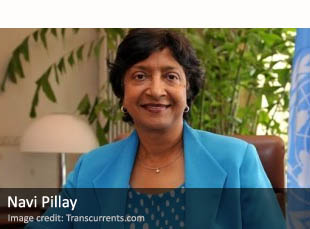
►►Senior UN official blasts US drone strikes. The United Nations High Commissioner for Human Rights, Navi Pillay, has said US drone attacks in Pakistan “raise serious questions about compliance with international law, in particular the principle of distinction and proportionality”. She also voiced concerns that the strikes were being conducted “beyond effective and transparent mechanisms of civilian or military control”. IntelNews provided this opinion on the matter, in 2009.

Russian colonel was ‘most successful CIA spy’ in recent years

Valery Mikhailov, left, with his attorneyBy JOSEPH FITSANAKIS | intelNews.org |
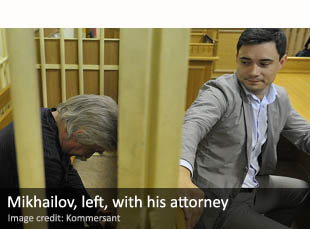
Before the dust could settle from last month’s closed-door trial of Vladimir Lazar, and the arrest of an unnamed missile engineer on charges of espionage, Russia claims to have exposed yet another spy. Valery Mikhailov, a retired Russian counterintelligence officer, has been given an 18-year prison sentence for allegedly spying on behalf of the United States Central Intelligence Agency. In disclosing Mikhailov’s sentence yesterday, Moscow District Military Court officials were deliberately vague about Mikhailov’s alleged espionage activities, and provided limited information on the precise charges against him. But reporters, who were not allowed to attend Mikhailov’s trial, were told that he voluntarily approached CIA officers in Russia in 2001 and offered to spy on his country on behalf of the US, in exchange for regular payments in cash. Russian government prosecutors said that, from 2001 until 2007, when his activities were detected by Russia’s Federal Security Service (FSB), Mikhailov gave his American handlers access to over a thousand copies of secret or top-secret documents. Most of these, according to reports in the Russian media, had been prepared by FSB analysts for top-level Russian government officials, including the President, Prime Minister, and members of the Security Council of the Russian Federation. Russian government prosecutors say that Mikhailov was arrested following an extensive period of surveillance by the FSB, which allegedly resulted in the capture of an American CIA courier. The latter was apprehended while surreptitiously collecting classified documents copied by Mikhailov. Following his arrest, Mikhailov is said to have admitted that he earned over $2 million from his espionage activities. Read more of this post

US State Department silent on ‘massive’ China spy revelations

Hillary ClintonBy JOSEPH FITSANAKIS | intelNews.org |
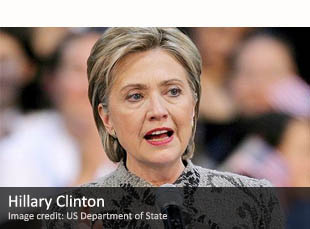
The United States Secretary of State, Hillary Clinton, has declined to comment publicly on the arrest of a senior Chinese government aide, who is said to have conducted “massive” spying for Washington. According to Reuters news agency, who broke the story last week, the aide was arrested several months ago, but both the US and China have chosen to keep the issue under wraps in order “to prevent a fresh crisis in relations” between the two countries. Reuters cited “three sources [with] direct knowledge of the matter”, who said that the aide was employed at a critical post in the office of a vice minister in China’s Ministry of State Security (MSS). The MSS is China’s foremost intelligence agency, with responsibility for both domestic and international intelligence collection. According to the sources quoted by Reuters, the unnamed aide was arrested “sometime between January and March” of 2012 and stands accused of supplying his American handlers with classified information on Chinese espionage activities abroad. According to the report, the accused spy had been working for the US “for several years” and his case could represent the worst breach of China’s MSS in two decades; according to one source, the damage inflicted to the MSS’ operations by this case “has been massive”. Reuters said that the aide, who speaks English, was recruited by the US Central Intelligence Agency, and was paid “hundreds of thousands of US dollars” to provide “political, economic and strategic intelligence” to American intelligence officers. Read more of this post

News you may have missed #741

Glenn CarleBy IAN ALLEN | intelNews.org |
►►MI6 role in rendition could be concealed in new bill. Libyan government officials Sami al-Saadi and Abdel Hakim Belhaj, who allege that they were taken by rendition by Britain to Libya eight years ago, are expected to begin legal proceedings against the British government and Jack Straw, Britain’s former foreign secretary, next month. However, after pressure from the security services, MI5 and MI6, the British government is preparing to publish a Justice and Security Bill that could allow these cases to be held in their entirety behind closed doors.
►►Aussie spy agency defends new headquarters. The Australian Security Intelligence Organisation says its new headquarters in Canberra is not at risk of being spied upon, despite the use of a lot of glass. ASIO director general David Irvine told a senate committee on Thursday it would be impossible for someone with a high resolution camera on the other side of Lake Burley Griffin to spy on the nation’s spies. Australian Greens senator Scott Ludlam had asked whether the design of the “glass palace” could threaten the secrecy of its work.
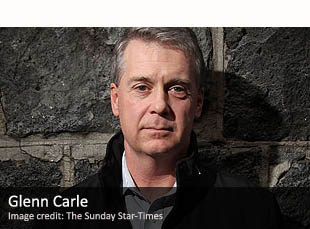
►►Good interview with ex-CIA officer Glenn Carle. In this interview, Carle, a retired CIA case officer who wrote The Interrogator: An Education, says his former employers have called his publisher asking them to pulp his book; they rang every major network to prevent him going on air. They are, he says several times, “vicious” and have perpetrated a stain on America’s national character.

News you may have missed #740

Timo KivimäkiBy IAN ALLEN | intelNews.org |
►►Denmark professor accused of spying challenges court secrecy. Timo Kivimäki, a Finnish humanities professor at the University of Copenhagen, is accused of spying for the Russians and is being tried at the city court in the Danish city of Glostrup behind closed doors, meaning no information about the trial, including the precise charges, can be disseminated. But following demands from both Kivimäki’s lawyer and the Danish media, he has been granted permission to appeal against the decision to hold the trial in secret.
►►Analysis: CIA’s links with Hollywood are longstanding. Some US officials are suggesting that the producers of a new motion picture, which deals with the raid that killed al-Qaeda founder Osama bin Laden, received “extremely close, unprecedented and potentially dangerous collaboration” from the Obama administration, and particularly the US Intelligence Community. In light of this, a well-researched article in The Los Angeles Times reminds readers that the close connection between the movie industry and the US military and intelligence community goes back decades. The US military has been using movies to drive up recruitment since the 1920s; and the CIA these days even posts potential movie story lines on its website.
►►CIA funds helped launch literary journal. The Paris Review has been hailed by Time magazine as the “biggest ‘little magazine’ in history”. At the celebration of its 200th issue this spring, current editors and board members ran down the roster of literary heavyweights it helped launch since its first issue in 1953. Philip Roth, V. S. Naipaul, T.C. Boyle, Edward P. Jones and Rick Moody published their first stories in The Review; Jack Kerouac, Jim Carroll, Jonathan Franzen and Jeffrey Eugenides all had important early stories in its pages. But as American novelist Peter Matthiessen has told interviewers –most recently at Penn State– the journal also began as part of his CIA cover.

News you may have missed #739

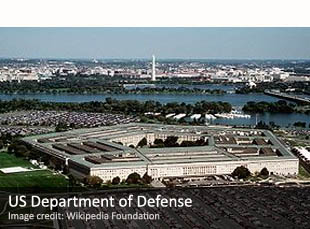
The US Department of DefenseBy IAN ALLEN | intelNews.org |
►►US Supreme Court to consider case on secret wiretapping. The Supreme Court has agreed to consider blocking a constitutional challenge to the government’s secret wiretapping of international phone calls and emails. At issue is whether Americans who have regular dealings with overseas clients and co-workers can sue to challenge the sweep of this surveillance if they have a “reasonable fear” their calls will be monitored. The case, to be heard in the fall, will put a spotlight on a secret surveillance program that won congressional approval in the last year of President George W. Bush’s presidency.
►►Analysis: Why is CIA applauding DoD’s intel grab? Last month, Director of National Intelligence James Clapper and Secretary of Defense Leon Panetta announced the creation of a new US espionage agency: the Defense Clandestine Service, or DCS. The new agency is expected to expand the Pentagon’s espionage personnel by several hundred over the next few years, while reportedly leaving budgets largely unchanged. The news nonetheless surprised some observers in Washington because the move appeared, at least initially, to be a direct challenge to the Central Intelligence Agency, whose National Clandestine Service leads the country’s spy work overseas. Then came a second surprise: former CIA officers and other intelligence experts started applauding. The question is why.
►►FBI forms secretive online surveillance unit. On May 22, CNet’s Declan McCullagh revealed that the FBI had quietly formed a new Domestic Communications Assistance Center (DCAC), tasked with developing new electronic surveillance technologies, including intercepting Internet, wireless, and VoIP communications. According to McCullagh, DCAC’s goal is “to invent technology that will […] more readily eavesdrop on Internet and wireless communications”. Read more of this post

News you may have missed #737

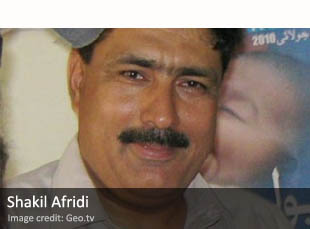
Shakil AfridiBy IAN ALLEN | intelNews.org |
►►Turkey suspects bird of being Israeli spy. News agencies are poking fun at Turkish authorities, who say they believe that they have found a bird used for espionage purposes by Israel. An investigation was reportedly launched in Ankara several days ago, after a farmer discovered a dead Merops Apiaster, commonly known as the European Bee-Eater, in his field. The bird had a ring reading “Israel” on one of its legs. The reports undoubtedly lend a certain degree of irony to the announcement that Israel Aerospace Industries (owned by the Israeli government) is in fact developing insect drones for indoor surveillance.
►►CIA discloses names of 15 killed officers. The CIA has disclosed the names of 15 of its operatives killed in the line of duty over the last 30 years, the result of a new effort to honor fallen officers. Fourteen of the dead already had a star inscribed in their memory on the CIA’s wall of honor in the lobby of the old headquarters building on the agency’s Langley, VA, campus. But their names had been withheld. In a closed agency ceremony Monday their names were added to the Book of Honor, which accompanies the stars. In addition, a new star was added this year for Jeffrey R. Patneau, who died at age 26 in Yemen in 2008 from injuries sustained in a car accident. He was the 103rd CIA officer recognized as having died in the line of duty.
►►Pakistan convicts doctor who helped CIA find bin Laden. A Pakistani court imposed a 33-year sentence Wednesday on Shakil Afridi, a doctor who assisted the CIA hunt for Osama bin Laden. Afridi, a government surgeon in the semiautonomous Khyber Agency along the border with Afghanistan, was convicted of treason for using a vaccination drive to try to gather DNA samples at the compound where bin Laden was in hiding. His conviction prompted dismay among US officials, who said that the punishment will lead to cuts in aid. According to a Pakistani prison official, Afridi “has been kept away from other prisoners to avert any danger to his life”.

News you may have missed #736

Abdel Baset al-MegrahiBy IAN ALLEN | intelNews.org |
►►Convicted Lockerbie bomber dies. Abdelbaset al-Megrahi, a former Libyan intelligence officer who was the only person ever convicted in the 1988 Lockerbie bombing, died at home in Tripoli Sunday, nearly three years after he was released from a Scottish prison to the outrage of the relatives of the attack’s 270 victims. He was 60. Scotland released Mr. al-Megrahi on Aug. 20, 2009, on compassionate grounds to let him return home to die after he was diagnosed with prostate cancer. Anger over the release was further stoked by subsequent allegations that London had sought his release to preserve business interests in the oil-rich North African nation, strongly denied by the British and Scottish governments.
►►Federal appeals panel to hear CIA leak case. A federal appeals panel in the United States will hear the case of ex-CIA officer Jeffrey Sterling, who has been charged with leaking classified information about Iran’s nuclear program to New York Times reporter James Risen. Prosecutors say Sterling was a key source in Risen’s 2006 book, State of War. They are also challenging the court’s decision to strike two government witnesses and allow disclosure of the identities of covert CIA operatives to Sterling’s lawyers.
►►New study of British Empire’s spies published. British newspaper The Guardian has published a review of William Beaver’s newly published book, Under Every Leaf: How Britain Played The Greater Game From Afghanistan to Africa. Much of the book concerns the creation in the mid-1850s of the British War Office Intelligence Department. According to the review, the book does much to restore the “missing dimension” to Britain’s military-imperial history between 1855 and the creation of her modern intelligence agencies in the early 1900s.