Hezbollah uncovered CIA network in Lebanon, admit US officials

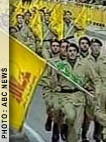
Hezbollah rally

Hezbollah rally

By JOSEPH FITSANAKIS | intelNews.org |
In June of this year, Lebanese militant group Hezbollah claimed it had rooted out three of its members who were allegedly spying for the United States Central Intelligence Agency. The US State Department refused to comment on the allegations, and the US embassy in Lebanon issued a statement denying Hezbollah’s accusation. But the Associated Press now says that the Lebanese Shiite group’s claims were accurate, and that the CIA has had to significantly scale back its operations in Lebanon, as a result of Hezbollah’s counterintelligence success. The news agency cites current and former US officials, who say that the Agency’s operations in Lebanon were “badly damaged” after Hezbollah identified and captured several CIA ‘assets’. It appears that the militant group, which controls large parts of southern Lebanon, was able to capture CIA agents —local ‘assets’ recruited by CIA case officers to spy on behalf of Washington— but not actual CIA officers. Still, according to the Associated Press, the operational blow suffered by the Agency’s station in the Near Eastern country has been substantial, and local CIA case officers “have secretly been scrambling to protect their remaining spies […] before Hezbollah can find them”. The agency quotes an unnamed government source, who claims that the damage to the CIA’s network of agents in Lebanon has been “greater than usual”. Many attribute the Shiite group’s counterintelligence success to a relatively new counterespionage apparatus, which Hezbollah’s leader, Sheik Hassan Hasrallah often calls the “spy combat unit”. The group, which is said to have gone operational in 2004, is responsible for essentially decimating Israel’s intelligence network in southern Lebanon, having conducted over 100 arrests since 2009.   Read more of this post
Revealed: Afghan government at war with ‘CIA vigilante group’

Afghanistan

Afghanistan

By JOSEPH FITSANAKIS | intelNews.org |
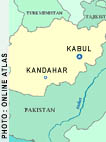
Very little has been written about the Kandahar Strike Force, a controversial CIA-funded vigilante group operating in Afghanistan’s Kandahar, Zabul and Uruzgan provinces. In 2009, The New York Times reported that the late Ahmed Wali Karzai, notorious drug lord and younger brother of Afghan President Hamid Karzai, helped the CIA run the group. But ever since Wali Karzai’s assassination, in July of this year, the CIA-operated group appears to be engaged in a brutal war, not with the Taliban and al-Qaeda, but with provisional Afghan authorities. The Christian Science monitor spoke to the former leader of the Kandahar Strike Force, Atal Afghanzai, who is currently in prison, having been convicted of shooting dead a senior Afghan police commander in broad daylight. The group is made up of elite members of Afghanistan’s regular army, selected by CIA case officers and trained by US Special Forces personnel in Kandahar’s Camp Gecko, a former al-Qaeda base built by Osama bin Laden’s forces in 1996. The group operates outside the institutional parameters of the Afghan government, and answers directly to the CIA, says The Monitor, which claims to have corroborated this information with “US diplomats, other Western officials, and Afghan authorities”. The group’s imprisoned former leader told the newspaper that he and his men were paid directly by the CIA, and that they were transported by United States Blackhawk helicopters to various locations around the country, where they were expected to conduct “raids on Taliban targets at a moment’s notice”. Afghanzai claims that the group’s operations were so effective that they received letters of appreciation by no other than Hamid Karzai. But the idyllic relationship between the Kandahar Strike Force and the Afghan government appears to have ended, as members of the group are now accused of “extrajudicial killings, torture, rape, and larceny”. Read more of this post

News you may have missed #629

William Hague

William Hague

►►CIA urged to be more open about climate change. America’s intelligence establishment has come out with a bold new suggestion: maybe it’s time the CIA stopped treating climate change as a secret. A new report from the Defense Science Board –a US government agency– urges the CIA to step outside its traditional culture of secrecy and begin sharing the intelligence it has been gathering on climate change.
►►Three Czechs to be tried for spying in Zambia. The fate of three Czech nationals, who are awaiting trial in Zambia on suspicion of spying, remains highly uncertain. The three face 25 years in prison for having taken photographs of an old plane displayed outside a military base in Lusaka. The Czech Foreign Ministry has tried in vain to intervene on their behalf and is now sending a special envoy to the country to present the case in person.
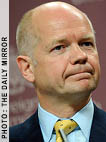
►►First-ever speech on MI6 by a UK Foreign Secretary. In the first speech given by a British Foreign Secretary on the activities of MI6, William Hague (pictured) called today for a line to be drawn under the controversy over the involvement of its agents in the abuse of terror suspects, and argued that the spy agency thwarts terrorists and foreign agents hundreds of times a year.

News you may have missed #628 (analysis edition)

Michael Scheuer

Michael Scheuer

►►Should intelligence agencies chase tax evaders? Three years ago, Germany’s foreign intelligence service, the BND, paid a whistleblower close to $7 million for DVDs containing information on thousands of secret accounts at a leading Liechtenstein bank. The discs contained data on 4,527 Liechtenstein foundations and financial entities, 1,400 of which were owned by Germans. But should a spy agency like the BND take part in the unglamorous and politically charged business of collecting information on tax cheats?
►►UK ex-spy chief says Google makes spies work harder. The rise of the web and Google means Britain’s spies have to work harder to produce genuinely secret intelligence, according to Sir David Pepper, the former director of GCHQ, Britain’s signals intelligence agency. He said “the Google effect” of so much information being readily available online had “very substantially” raised the “threshold for producing intelligence” for MI5, MI6 and GCHQ.
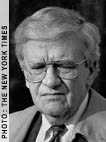
►►Ex-CIA official says America ‘creates its own enemies’. Americans are in the crosshairs of terrorists worldwide purely due to Washington’s policy in the Muslim world, according to former CIA officer Michael Scheuer, who spoke to Russia Today. Scheuer, author of Through Our Enemies’ Eyes, worked for the CIA for over 20 years and at one time was the chief of the agency’s ‘Bin Laden unit’.

News you may have missed #626

Katia Zatuliveter

Katia Zatuliveter

►►Analysis: On largely forgotten CIA officer Jim Thompson. The CIA’s longtime man in Southeast Asia, Jim Thompson, fought to stop the agency’s progression from a small spy ring to a large paramilitary agency. He was in many ways unique, but by the 1950s and early 1960s he would become part of a larger, growing, and much less idealistic machine, one that would expose his naiveté –and punish him for it. Interesting historical analysis from Foreign Policy.
►►Court blocks naming NATO official who had affair with alleged Russian spy. We have written before that Katia Zatuliveter, who is accused by British MI5 of being a spy for Russia, has admitted having a four-year affair with Liberal Democrat MP Mike Hancock, as well as with a Dutch diplomat and a NATO official. The latter, a German diplomat, was pictured in a newspaper last week. However, his face was obscured because of the terms of a court order that means he cannot be identified.
►►Promises made about Colombia’s new spy agency. Colombia’s disgraced DAS intelligence agency has finally been dissolved. Now the government’s senior National Security adviser, Sergio Jaramillo, has said that Colombia’s new intelligence service will focus on combating “government infiltration by criminal organizations”. I guess it doesn’t hurt to be ambitious.

Analysis: CIA Open Source Center monitors Facebook, Twitter, blogs

CIA HQ

CIA HQ

By JOSEPH FITSANAKIS | intelNews.org |
The Associated Press has been given unprecedented access to the United States Central Intelligence Agency’s Open Source Center, which is tasked with, among other things, monitoring social networking media. The Center, which was set up in response to the events of 9/11, employs several hundred multilingual analysts. Some are dispatched to US diplomatic missions abroad, but most work out of “an anonymous industrial park” in the US state of Virginia, which the Associated Press agreed not to disclose. The analysts, who are jokingly known in CIA OSINT (open-source intelligence) parlance as “ninja librarians”, engage in constant mining of publicly available information. The latter ranges from articles found in scholarly journals, to civilian television and radio station programs, as well as information available on the Internet. According to the Associated Press report, the Center began paying particular attention to social networking websites in 2009, when Facebook and Twitter emerged as primary organizing instruments in Iran’s so-called “Green Revolution”. The term describes the actions that Iranians opposed to President Mahmoud Ahmadinejad took to protest the disputed election results that kept him in power. Since that time, the CIA’s Open Source Center has acquired the ability to monitor up to five million tweets a day, and produces daily snapshots of global opinion assembled from tweets, Facebook updates and blog posts. Its executive briefings reportedly find their way to President Barack Obama’s Daily Brief on a regular basis. The Associated Press was given access to the Center’s main facility, and interviewed several of its senior staff members, including its Director, Doug Naquin. He told the news agency that the CIA Open Source Center had “predicted that social media in places like Egypt could be a game-changer and a threat to the regime”, but had been unable to foresee the precise development of Internet-based social activism in the Arab world. Read more of this post

News you may have missed #624

Viktor Bout

Viktor Bout

►►Russia angry at Viktor Bout’s US guilty verdict. Moscow has reacted angrily to the guilty verdict handed down to Russian arms dealer Viktor Bout by a court in the United States. Bout, a former Soviet military intelligence (GRU) officer, was arrested in a sting operation in Bangkok, Thailand, in March of 2008. At the time of his arrest, he and his two collaborators were negotiating a complex weapons deal with two informants posing as representatives of the Revolutionary Armed Forces of Colombia (FARC), Latin America’s largest leftist paramilitary group.
►►Symposium examined Reagan’s use of intelligence. The CIA released more than 200 declassified documents it prepared for US President Ronald Reagan during a symposium last week at the Ronald Reagan Presidential Library in Simi Valley, California. The CIA conference, entitled “Ronald Reagan, Intelligence, and the End of the Cold War“, included a discussion by American and Soviet former spies.
►►Suspected Chinese spy loses bid to rejoin Canada civil service. Haiyan Zhang, worked as a senior communications analyst with the Privy Council Office in Ottawa. She was fired when Canada’s spy agency questioned her “loyalty to Canada” over suspicion she was spying for China. Now she has lost her fight to return to the civil service.

News you may have missed #621

Pakistan

Pakistan

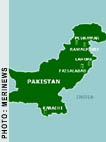
►►Pakistan denies spying on German forces in Afghanistan. Pakistani officials have rejected a German newspaper report that the country’s secret service spied on German security forces in Afghanistan. Without citing its sources, mass-selling weekly Bild am Sonntag reported on Sunday that Germany’s BND foreign intelligence agency warned its interior ministry that Pakistan had spied on 180 German police officers deployed in Afghanistan to train locals.
►►CIA expert says US government lacks security operating system. Industry is not providing the US government with the basic tools it needs to build a secure information infrastructure, according to Robert Bigman, chief of the CIA’s Information Assurance Group. “What we need is a secure operating system”, he said during a panel discussion at the Security Innovation Network showcase in Washington last month. “We gave up some time ago on the battle to build a secure operating system, and we don’t have one”.
►►US increased spy spending in 2011. The US Congress appropriated $54.6 billion for intelligence programs in the 2011 fiscal year, the Office of the Director of National Intelligence disclosed last week. The amount, which does not include what was spent on military intelligence, is a slight increase from the year before but could be the end of the upward trend, says CNN’s Security Clearance blog.

News you may have missed #617

Ilan Grapel

Ilan Grapel

►►Analysis: Is the CIA Still an Intelligence Agency? Early September 2011, a former intelligence official commented to The Washington Post that, “The CIA has become one hell of a killing machine”. He then attempted to retract, but his words were on record. But is that really what it should be: a hell of a killing machine?
►►US National Security Agency helps Wall Street battle hackers. The National Security Agency, a secretive arm of the US military, has begun providing Wall Street banks with intelligence on foreign hackers, a sign of growing US fears of financial sabotage. While government and private sector security sources are reluctant to discuss specific lines of investigations, they paint worst-case scenarios of hackers ensconcing themselves inside a bank’s network to disable trading systems for stocks, bonds and currencies, trigger flash crashes, initiate large transfers of funds or turn off all ATM machines.
►►Israel okays deal with Egypt to free alleged spy. Israel’s security cabinet unanimously approved an agreement Tuesday for the release of Israeli-American law student Ilan Grapel (pictured), who has been in jail in Egypt since June 12 on spying allegations that were later reduced to incitement. In exchange, Israel will release 22 Egyptian prisoners, most of them Bedouin from the Sinai jailed for smuggling drugs or weapons.

Analysis: United States and Germany spy on each other

BND seal

BND seal

By JOSEPH FITSANAKIS | intelNews.org |
Newly released documents reveal that the Central Intelligence Agency has maintained an active program of espionage against Germany in the post-Cold War era, and experts say that Germany reciprocates the ‘favor’. According to an article in the latest issue of German newsmagazine Focus, the US intelligence community, led by the CIA, has been keeping tabs on Germany’s intelligence agencies since the 1950s, and continues to do so today. The magazine’s editors say they are in possession of internal government documents, which describe constant CIA monitoring on the Bundesnachrichtendienst (BND), Germany’s main external intelligence agency. The CIA’s spying extends to Germany’s counterintelligence agency, known as the Federal Office for Protection of the Constitution (Bundesamt für Verfassungsschutz). CIA operations against the Office have reportedly included the interception of telephone calls, some of which involved high-level conversations between German and British or French intelligence officials. Focus claims that CIA spying against the BND actually intensified following German reunification in 1990, as the American agency kept tabs on German intelligence officers with former Nazi or communist past. According to one report, the CIA was able to verify that at least two BND officers with service in the Nazi SS had joined a NATO sabotage unit. The magazine spoke to an unnamed former BND counterintelligence officer, who said he was not in the least surprised by the revelations. Commenting yesterday on the Focus report, Washington-based reporter Jeff Stein argued that a little friendly spying is to be expected among allied intelligence services. The veteran intelligence correspondent spoke to an unnamed former CIA officer, who told him that the espionage between Washington and Berlin has not been “a one-way street” —the BND also spies on the CIA and other American intelligence agencies. Read more of this post

News you may have missed #615

Clair E. George

Clair E. George

►►Ex-KGB spy Litvinenko’s widow seeks donations. The widow of Alexander Litvinenko has appealed for donations to help expose her husband’s murderers. Marina Litvinenko said she has to know the truth about the Russian ex-KGB spy’s death in London on November 23, 2006. He died of radioactive Polonium 210 poisoning in London’s University College Hospital. He had fallen ill shortly after drinking tea during a meeting with former KGB contacts at a West End hotel.
►►Memorial ceremony for controversial CIA figure. Clair George, who died in August from cardiac arrest at 81, has a rare status in CIA lore. He was the first high-ranking agency official to be found guilty of felony charges while carrying out official duties. Despite the public outrage about CIA actions during the Iran-Contra affair, George remained a popular figure among agency alumni because they believe his loyalty never faltered.
►►Taiwan intelligence agency accused of wasting money. Taiwan’s military-intelligence body has come under fire after one of its agents returned as a Le Cordon Bleu-certified chef following a so-called undercover mission in France. The agent, whose U$42,000 tuition for the cooking classes in France was sponsored by the military, has now lent his Le Cordon Bleu certificate to someone else for a fee, according to reports.

News you may have missed #612 (analysis edition)

Cevat Ones

Cevat Ones

►►What is a senior CIA clandestine officer doing at NYPD? Three months ago, one of the CIA’s most experienced clandestine operatives started work inside the New York Police Department. His title is special assistant to the deputy commissioner of intelligence. On that much, everyone agrees. Exactly what he’s doing there, however, is much less clear.
►►Iranian plot shows even super spies have bad days. The alleged Iranian plot to assassinate the Saudi ambassador to the United States may have revealed the biggest secret of all –intelligence agencies mess up and do not always live up to the James Bond ideal.
►►Former spy makes plea for peace in Turkey. Cevat Ones, former deputy chief of MİT, Turkey’s leading spy agency, speaks candidly to Canada’s Globe & Mail newspaper about the state of Turkey’s internal security and foreign policy.

News you may have missed #611

Kalevi Sorsa

Kalevi Sorsa

►►Diplomat says Finland’s ex-prime minister was Stasi agent. Finnish former diplomat Alpo Rusi said last week that Kalevi Sorsa, Finland’s longest serving prime minister, who led the country in the 1970s and 1980s, is on a secret list of 18 high-profile Finns with links to the Stasi, East Germany’s Cold-War security service. West German intelligence handed the file to its Finnish counterpart in 1990, but the Finnish Supreme Court ruled last year that the list would not be made public.
►►Nazi criminal spied for West Germany. A wiretap operation conducted in the early 1960s by the CIA against the BND, West Germany’s foreign intelligence service, revealed that the BND employed a senior Nazi war criminal, Franz Rademacher, to spy for it in Syria, CIA records show.
►►US government aims to build ‘data eye in the sky’. Social scientists are trying to mine the vast resources of the Internet — Web searches and Twitter messages, Facebook and blog posts, the digital location trails generated by billions of cell phones to “predict the future”.

News you may have missed #609

Ilan Grapel

Ilan Grapel

►►Questions over Chinese spy hang over Putin visit. The arrest of a Chinese spy in Moscow has cast a cloud over Vladimir Putin’s two-day visit to Beijing. Tong Shengyong was arrested last October for allegedly trying to buy plans to the Russian S-300 anti-aircraft missile system. But perplexingly, the news of his arrest only emerged last week, in what appears to have been a deliberate leak by Russia’s Federal Security Service (FSB).
►►Egypt steps up charges against suspected Israel spy. Egypt’s State Security Prosecutor has added additional criminal offenses against alleged Israeli spy Ilan Grapel. Meanwhile, there are indications that Egypt seeks the release of 78 Egyptian prisoners held in Israeli jails in return for Grapel. Israel may agree with the proposal.
►►CIA to be last out of Afghanistan. US Special Forces and the CIA are girding for the moment when Afghanistan’s security rests once again with them, working together with Afghan forces against the Taliban. Recent remarks from the White House suggest the CIA and special operations forces will be hunting al-Qaida and working with local forces long after most US troops have left.

News you may have missed #608 (analysis edition)

Anwar al-Aulaki

Anwar al-Aulaqi

►►Spying on the United Nations. “Here is one of the well-known but seldom spoken truths about the United Nations: The international organization, which was founded in the name of peace and security, is also a hotbed of spying and clandestine operations, where someone might very well be listening to your conversations and monitoring your emails —-or perhaps reading your speeches in advance […]. The CIA is prohibited from domestic intelligence-gathering but, since the United Nations is considered foreign soil, it is authorized to run covert actions there”.
►►Secret panel can put Americans on ‘kill list’. American militants like Anwar al-Aulaqi, who was killed by a CIA drone strike in Yemen late last month, are placed on a kill or capture list by a secretive panel of senior US government officials, which then informs the President of its decisions, according to officials. There is no public record of the operations or decisions of the panel, which is a subset of the White House’s National Security Council.
►►Blowback from CIA’s bin Laden vaccination ruse gets worse. If it wasn’t clear before, it is now: the fake vaccination program that the CIA set up before the Osama bin Laden raid really went awry. Not only did this plan not work –no bin Laden family DNA was obtained– but it also hobbled polio immunization drives and forced Save the Children to evacuate staffers from Pakistan out of fear of a backlash.