News you may have missed #481

  • Who brought down the CIA website last Thursday? US Federal officials as of Monday afternoon were still investigating the cause of a Thursday cyber incident that knocked offline the public website of the CIA and its unclassified e-mail system. The interference was isolated to CIA networks. Some cyber experts say the disruption may have been caused by a denial of service attack perpetrated by pranksters to show off their skills, rather than an act committed by a foreign government.
  • Israeli cabinet minister to visit jailed spy in US. Israel’s Communications Minister Moshe Kahlon is to make a visit next week to see Jonathan Pollard, an American serving a life term in a US jail for spying on the US for Israel. Israeli media claim that Kahlon will give Pollard a “verbal message” from Israel’s Prime Minister Benjamin Netanyahu.
  • Egypt’s spies dragged from shadows. New evidence of spying and torture by Egypt’s General Intelligence Services (GIS) has piled pressure on the country’s military rulers to abolish the agency. After breaking into the GIS Cairo headquarters and ransacking archives, activists posted videos showing a torture chamber with a bloodstained floor and equipped with chains.

News you may have missed #473

  • Cyprus recognizes Palestine as independent nation. The Israeli assessment is that other European Union countries, including Britain, Sweden, Belgium, Finland, Germany, Denmark, Malta, Luxembourg, Austria and perhaps others are considering a similar move.
  • Top NZ intel scientist had falsified CV. British-born Stephen Wilce was hired as chief of New Zealand’s Defence Technology Agency in 2005, having got top level security clearance. Last year, he had to resign after it emerged that he had made a series of false claims about his past. But the question is how he passed security checks when he applied for the post in 2005.
  • Report uncovers widespread FBI intelligence violations. A new report by the San Francisco-based Electronic Frontier Foundation has found widespread violations in FBI intelligence investigations from 2001 to 2008. The EFF report suggests that FBI intelligence investigations have compromised the civil liberties of Americans to a greater extent than was previously assumed.


News you may have missed #420

  • Nokia and Siemens deny helping Iranian spying. Isa Saharkhiz, a one-time reporter for the Islamic Republic News Agency, is suing Nokia Siemens Networks in US federal court, claiming the companies facilitated his capture and torture at the hands of the Iranian government. The European-based consortium denies the allegations.
  • New Aussie spy agency HQ ‘on time and on budget’. The new ASIO $606 million  (USD $540 million) headquarters in Parkes, Canberra, is progressing on time and on budget, with completion scheduled for mid-2012. Meanwhile, the 270 construction workers on site have been vetted for security clearance, must pass security checkpoints each day, and have signed papers not to discuss anything that happens on site.
  • US Pentagon spends big on outsourced spy imagery. The production and maintenance of US spy satellites used to be in government hands, but now this critical aspect of national security is routinely outsourced. The National Geospatial-Intelligence Agency (NGA), the Department of Defense’s operator of military spy satellites, recently awarded $7.3 billion in contracts for its EnhancedView commercial imagery program.

News you may have missed #408

  • Russian military spy supervised Czech prisons. Robert Rakhardzho, a Russian spy whose relationship with a Czech female Army major prompted the resignation of three senior Czech military officials, worked as a psychologist at the Czech Prison Service headquarters until last September. Rakhardzho is now hiding in Russia.
  • US undercover feds able to easily obtain fraudulent passports. Gregory Kutz, an investigator for the US Government Accountability Office, testified last week to a Senate panel about how his team of undercover Federal agents was able to get the State Department to issue five of the seven e-Passports it requested using fraudulent information. The government apparently failed to detect such basic red flags as a fake driver’s license.
  • Russia widens powers of KGB successor agency. Russian president Dmitry Medvedev has signed a law widening (again) the powers of the Federal Security Service, the KGB’s main successor agency. The new law allows the FSB to issue warnings to people suspected of preparing to commit “crimes against Russia’s security”. Perpetrators face fines or up to 15 days detention.

Bookmark and Share

European Union targeted by Colombian intelligence, documents show

DAS seal

DAS seal

By JOSEPH FITSANAKIS | intelNews.org |
Several members of the European Parliament have voiced concern over the recent disclosure in Colombia of an alleged operation to undermine the European Union’s parliamentary and human rights bodies. The operation is reportedly mentioned in internal documents belonging to Colombia’s Administrative Department of Security (DAS), which were recently confiscated by the office of the Colombian Attorney General. The confiscated documents describe a clandestine program codenamed Operation EUROPE, which aims to wage a “legal war” intended to discredit and “neutralize the influence of the European judicial system, the European Parliament’s human rights subcommittee, and the office of the United Nations High Commissioner for Human Rights”. Read more of this post

Has US Pentagon revived Bush-era domestic spy program?

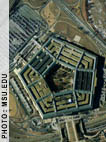
US Pentagon

US Pentagon

By JOSEPH FITSANAKIS | intelNews.org |
A little-known US Department of Defense counterintelligence is suspected to have resuscitated a notorious Bush-era domestic surveillance program, which was banned by Congress for being too obtrusive. In 2002, the then Deputy Secretary of Defense, Paul Wolfowitz authorized the Threat and Local Observation Notice (TALON), a US Air Force intelligence collection program aimed to gather data on potential threats to American armed forces personnel in the US and abroad. But the initiative was allegedly shelved by the Bush administration, after it emerged that TALON intelligence collection focused largely on political policing against lawful antiwar groups. But now new reports suggest that an obscure unit under the Pentagon’s Defense Intelligence Agency (DIA), called the Defense Counterintelligence and Human Intelligence Center (DCHC), is creating a new system of consolidated databases whose focus closely resembles that of TALON. Read more of this post

US intel wants to automate analysis of online videos

IARPA logo

IARPA logo

By IAN ALLEN | intelNews.org |
A new project funded by the US intelligence community’s research unit aims to automate the collection and analysis of videos from YouTube and other popular online platforms, with the intent of unearthing “valuable intelligence”. The program is called Automated Low-Level Analysis and Description of Diverse Intelligence Video (ALADDIN). It is directed by the Intelligence Advanced Research Projects Activity (IARPA), whose mission is to work under the Director of National Intelligence to create hi-tech applications for America’s intelligence agencies. Few people are aware of the existence of IARPA, which was quietly established in 2007, is based at the University of Maryland, and is staffed mostly by CIA personnel. The research body’s latest project apparently aims to equip the US intelligence community with the ability to scan “for the occurrence of specific events of interest” embedded in online video files, and then “rapidly and automatically produce a textual English-language recounting [and] describing the particular scene, actors, objects and activities involved”. Read more of this post

News you may have missed #373 (CIA edition)

Bookmark and Share

Analysis: Europe Offers Different Counterterrorism Approach

Counterterrorism

Counterterrorism

By JOSEPH FITSANAKIS | intelNews.org |
I have in the past posed the intriguing question of whether US intelligence agencies should learn from the French approach to counterterrorism. This issue has now come up again in an interesting Washington Post essay, which examines the different approaches to Islamic militancy by American and European intelligence organizations. Some of these differences are undoubtedly contextual: there are no First Amendment rights in Europe, and European law enforcement and intelligence organizations enjoy a somewhat wider legal latitude in which to operate domestically. Moreover, the Europeans, especially the French and the British, have a longer experience than the Americans in dealing with armed insurgencies. But there are also critical differences in tactics. Importantly, the European approach to Islamic militancy has not only been more pro-active than the American, but also a lot more discreet and clandestine. Read more of this post

Author gets subpoenaed to reveal CIA sources

James Risen

James Risen

By JOSEPH FITSANAKIS | intelNews.org |
The US government has issued a subpoena against a journalist who authored a book on the CIA’s operations during the years of the Bush administration. The move has surprised many, because the book in question, State of War: The Secret History of the CIA and the Bush Administration, by New York Times journalist James Risen, has been out since 2006. The subpoena, which Risen received last Monday, requests him to testify before a grand jury about his confidential sources for chapter 9 of his book (pages 193-218), entitled “A Rogue Operation”, in which he describes in relative detail an attempt by the CIA to sabotage the Iranian nuclear weapons program. In the chapter, Risen writes of a thwarted CIA operation to pass to the Iranians a series of faulty nuclear bomb design documents. To do this, the Agency apparently recruited a Russian former nuclear scientist, who had defected to the United States. The unnamed scientist was told to travel to Vienna, Austria, in early 2000, and offer to sell the documents to the Iranians. Read more of this post

News you may have missed #338

  • US intel on Iran suffering from information overload? The US National Intelligence Estimate was due last fall but has been delayed at least twice amid efforts to “incorporate information from [Iranian] sources who are still being vetted”. Some say that significant new material has come from Iranian informants, who are motivated by antipathy toward the Iranian government and its suppression of the opposition.
  • Canada’s ex-intel boss slams new anti-terrorism measures. Reid Morden, the former director of the Canadian Security Intelligence Service, has urged the country’s Conservative government to re-think its plans to re-introduce controversial anti-terrorism measures initially adopted in the wake of 9/11.
  • Wiretapping scandals continue in Colombia. Caracol TV reports that Colombian security agency DAS has asked opposition Senator Piedad Cordoba to hand over evidence of her claims that President Alvaro Uribe ordered DAS to spy on her.

Bookmark and Share

News you may have missed #335

  • Leading al-Qaeda expert to leave FBI. J. Philip Mudd, one of the US intelligence community’s leading al-Qaeda analysts, has quietly retired from the FBI, where he was the National Security Branch’s associate executive director. He will be replaced by 23-year FBI veteran Sean Joyce.
  • Three more domestic spying programs revealed. The US Department of Homeland Security has acknowledged the existence of three more government programs charged with spying on American citizens in the aftermath of 9/11. The programs, Pantheon, Pathfinder and Organizational Shared Space, used a variety of software tools to gather and analyze information about Americans.
  • NSA Utah facility contractors shortlisted. We have mentioned before that for contractors in northern Utah, where the NSA is preparing to build a million-square-foot facility, at Camp Williams, it’s party time. Five of them, including three from Utah, have now been shortlisted by the government.

Bookmark and Share

News you may have missed #330

  • Pakistan released captured Taliban behind CIA’s back. IntelNews has not joined the chorus of commentators who have been claiming that the relationship between Pakistan’s Inter-Services Intelligence (ISI) directorate and the CIA has warmed up. It now appears that even as the ISI was collaborating with the CIA, it quietly freed at least two captured senior Afghan Taliban figures.
  • Kiwi activists accuse police of spying. New Zealand’s Peace Action Wellington has submitted an Official Information Act (OIA) request relating to domestic police surveillance, after accusing the police of “heavily spying on and running operations on protest groups”. It is not the first time that similar accusations have been directed against the country’s police force.
  • CIA suspected existence of Israeli nukes in 1974. Israel will neither confirm nor deny the rumored existence of its nuclear arsenal. But the CIA, which has kept an eye on Israel’s nuclear weapons project since at least the early 1960s, was convinced of its existence by 1974, according to a declassified report.

Bookmark and Share

Situation report on the al-Haramain wiretap case

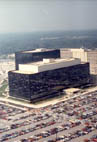
NSA Headquarters

NSA HQ

By IAN ALLEN | intelNews.org |
Max Fisher of The Atlantic Wire provides an excellent situation report on the recent decision by a US district court, which faulted the US government for unconstitutionally wiretapping a US-based Saudi charity. The charity, al-Haramain, was taken to court in September 2004 by the US government, which accused it  of having links to terrorist groups. But the charity has now successfully demonstrated that the National Security Agency (NSA) engaged in illegal spying against it, under the Bush administration’s STELLAR WIND warrantless spying program. Drawing from articles by a number of commentators, Fisher explains why the case took five years to conclude, pointing to the difficulty the plaintiffs had to prove that the NSA spied on the charity. Normally, this is close to impossible, as the NSA is not in the habit of disclosing information on its operations. Read more of this post

News you may have missed #320

  • Wikileaks alleges US government surveillance. British quality broadsheet The Guardian is one of a handful of mainstream media outlets to seriously examine the allegation of Wikileaks, that its editor and co-founder, Julian Assange, became the target of “half a dozen attempts at covert surveillance in Reykjavik”, by individuals who said they represented the US Department of State. The article, written by Joseph Huff-Hannon, also cites intelNews.
  • Saudi charity wins wiretap case against NSA. The Saudi-based charity Al-Haramain was taken to court in September 2004 by the US government, which accused it of maintaining terrorist links. But the charity has successfully demonstrated that the National Security Agency engaged in warrantless spying on it. However, the judge limited liability in the case to the government as an institution, rejecting the lawsuit’s effort to hold individual US government officials personally liable.
  • Kremlin accused of KGB-style honey-traps. The Kremlin has been accused of sanctioning a Soviet-style honey-trap campaign against opposition politicians and journalists using entrapment techniques based on money, drugs and women. The allegations follow the release of a string of videos on the web purporting to show an opposition politician, a political analyst and the editor of the Russian edition of Newsweek magazine in compromising situations.

Bookmark and Share