News you may have missed #785 (interview edition)

Stella RimingtonBy IAN ALLEN | intelNews.org |
►►Interview with first-ever NSA Compliance Director. John DeLong, the first-ever compliance director at the US National Security Agency, has given an interview to NextGov. In it, he says that “we’re nothing if we lose the confidence of the American people”. He is referring to frequent allegations, by whistleblowers and others, that the Agency is increasingly spying on Americans’ communications. As Compliance Director, DeLong is responsible for ensuring that the NSA abides by US law, which forbids it from intercepting electronic messages exchanged between US citizens or persons.
►►Ex-MI5 boss offers comment on WikiLeaks. Former MI5 Director-General Dame Stella Rimington has criticized “the indiscriminate pouring out into the public domain of streams of leaked documents by Julian Assange and his WikiLeaks organization”. But she also said that the US government should have taken better steps to prevent WikiLeaks from acquiring the information in the first place. Speaking at an international archiving conference in Brisbane, Australia, Dame Stella said that while the WikiLeaks saga could prompt the US government to come up with better databases, it would more likely encourage it to be even more secretive. This, she added, “must be absolutely the opposite effect of what WikiLeaks was seeking”.
►►Interview with NSA whistleblower. Filmmaker Laura Poitras interviews William Binney, a 32-year veteran of the US National Security Agency, who helped set up STELLAR WIND, the NSA’s top-secret domestic spying program, which was put in place after 9/11. The program was so controversial that it nearly caused top Justice Department officials to resign in protest in 2004. Binney, who resigned over STELLAR WIND in 2001, and began speaking out publicly in the last year, explains how the program he created for foreign intelligence gathering was turned inward on America.

Interview with NSA whistleblower

News you may have missed #773

Tamir PardoBy IAN ALLEN | intelNews.org |
►►Conflicting reports on CIA-ISI meeting. Lieutenant General Zahir ul-Islam, who heads Pakistan’s premier intelligence agency, the ISI, held talks in Washington with his CIA counterpart General David Petraeus, between August 1 and 3. It was the first time in a year that the chief of the ISI made the trip to the US, signaling a possible thaw in relations. Depending on the source, the meeting was either “substantive, professional and productive”, or “made no big strides on the main issues”.
►►Senior Mossad official suspected of financial misconduct. A senior Mossad official is suspected of financial misconduct and has been forced to take a leave of absence until Israeli police complete an investigation into his alleged deeds, Israeli media reported on Sunday. The official, a department head in Israel’s spy organization, has reportedly denied any wrongdoing, but sources said he would likely not be reinstated in light of investigation findings and is effectively being forced to retire. The nature of the official’s alleged misconduct has not been reported, but it is said that the official in question has close ties to Mossad Director Tamir Pardo, who appointed him to his position last year.
►►Ex-NSA official disputes DefCon claims by NSA chief. William Binney, a former technical director at the NSA, has accused NSA director General Keith Alexander of deceiving the public during a speech he gave at the DefCon hacker conference last week. In his speech, Alexander asserted that the NSA does not collect files on Americans. But Binney accused Alexander of playing a “word game” and said the NSA was indeed collecting and indexing e-mails, Twitter writings, Internet searches and other data belonging to Americans. “The reason I left the NSA was because they started spying on everybody in the country. That’s the reason I left”, said Binney, who resigned from the agency in late 2001.

News you may have missed #763

RedHack posterBy IAN ALLEN | intelNews.org |

►►Taiwan ex-colonel nabbed for spying for China. Cheng Lin-feng, a retired Lieutenant Colonel in the Taiwanese army, and civilian Tsai Teng-han, were taken in by Taiwanese police last week on suspicion of spying for China. Cheng was allegedly recruited by Chinese intelligence when he travelled to the mainland to do business, Taiwan’s Ministry of National Defense said in a statement, adding that he had been investigated ever since a tip-off in 2009. A court spokesman said that details of case will be held until the investigation is completed.
Russian law brands foreign-funded NGOs ‘foreign agents’. Russia’s Lower House of Parliament has approved a bill that brands non-governmental organizations receiving funding from abroad as “foreign agents”, a law that activists fear the Kremlin will use to target critics. The bill is almost certain to be approved by the Upper House before being signed into law by President Vladimir Putin, who last year accused the US State Department of funding protests against him. The bill is seen by many analysts as setting up a legal infrastructure for a crackdown on the opposition. Meanwhile, official statistics show that wiretapping in the Russian Federation has nearly doubled over the past five years. The main driver of the rise, analysts say, involves the myriad of Russia’s rival security services spying on each other.
►►Turkish hackers release names of police informants. Members of Turkey’s Marxist cyberactivist group RedHack have dumped online a 75-megabyte text file with thousands of emails from Turkish police informants. The group said it released the information in retaliation against ultra-nationalist hackers who have been threatening opposition academics and journalists. RedHack, which has been using ‘defacement hacking’ to promote a Marxist political agenda since its founding, in 1997, is included on the Turkish government’s list of terrorist organizations. In March of this year, RedHack stole data from the Turkish police’s network, forcing the police to shut down all its servers.

News you may have missed #748 (US edition)

Michael HaydenBy IAN ALLEN | intelNews.org |

►►US lawmakers probe China companies over spy concerns. In letters sent last week to Chinese communications hardware firms Huawei Technologies and ZTE Corporation, a group of senior members of the US House of Representatives Intelligence Committee have outlined concerns about the companies’ ties with the Chinese government, including the role of a “party committee” at Huawei. The lawmakers have also asked about Huawei’s relationships with five US consulting firms and requested an expansive collection of documents, including the contracts between the firms and Huawei.
►►Lone Senator resists Bush/Obama NSA wiretapping plan. The Obama administration wanted a quick, no-questions-asked-or-answered renewal of broad electronic eavesdropping powers that largely legalized the Bush administration’s illegal warrantless wiretapping program. That’s despite President Barack Obama’s campaign promise to revisit and revise the rules to protect Americans’ rights. Everything seemed to be going to plan after a Senate committee approved the re-authorization in secret last month. But Senator Ron Wyden (D-Oregon) has stepped in to stop the bill because the government refuses to say how often the spy powers are being used.
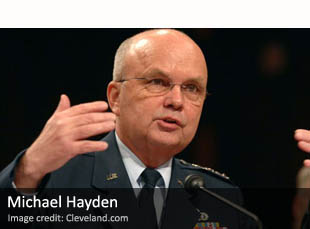
►►What did Hayden tell Obama in January 2009? In December of 2008, a meeting took place between the incoming US Presiden Barack Obama and the departing CIA Director Michael Hayden. Several days later, on January 15, Hayden told journalists that Obama had privately assured him that “no plans to launch a legal inquiry” into the CIA’s use of controversial interrogation methods during the Bush administration. Now, several years later, Salon has published an insider’s account of what was said in that meeting between Obama and Hayden, as well as during the days that followed.

News you may have missed #739

The US Department of DefenseBy IAN ALLEN | intelNews.org |

►►US Supreme Court to consider case on secret wiretapping. The Supreme Court has agreed to consider blocking a constitutional challenge to the government’s secret wiretapping of international phone calls and emails. At issue is whether Americans who have regular dealings with overseas clients and co-workers can sue to challenge the sweep of this surveillance if they have a “reasonable fear” their calls will be monitored. The case, to be heard in the fall, will put a spotlight on a secret surveillance program that won congressional approval in the last year of President George W. Bush’s presidency.
►►Analysis: Why is CIA applauding DoD’s intel grab? Last month, Director of National Intelligence James Clapper and Secretary of Defense Leon Panetta announced the creation of a new US espionage agency: the Defense Clandestine Service, or DCS. The new agency is expected to expand the Pentagon’s espionage personnel by several hundred over the next few years, while reportedly leaving budgets largely unchanged. The news nonetheless surprised some observers in Washington because the move appeared, at least initially, to be a direct challenge to the Central Intelligence Agency, whose National Clandestine Service leads the country’s spy work overseas. Then came a second surprise: former CIA officers and other intelligence experts started applauding. The question is why.
►►FBI forms secretive online surveillance unit. On May 22, CNet’s Declan McCullagh revealed that the FBI had quietly formed a new Domestic Communications Assistance Center (DCAC), tasked with developing new electronic surveillance technologies, including intercepting Internet, wireless, and VoIP communications. According to McCullagh, DCAC’s goal is “to invent technology that will […] more readily eavesdrop on Internet and wireless communications”. Read more of this post

Israel accused of spying on Turkish fighter-pilot communications

Turkish Air Force F-16sBy JOSEPH FITSANAKIS | intelNews.org |
Authorities in Turkey have reportedly initiated a classified program to encrypt communications between Turkish fighter pilot trainees and their ground command centers, after it emerged that their conversations were being intercepted by Israeli intelligence. The allegations were aired earlier this week by Turkey’s Habertürk newspaper, which said that Israeli military intelligence had managed to “wiretap” (sic) for over a year radio exchanges between the Turkish pilots and their ground instructors. The Ankara-based newspaper claims that the Israelis had specifically targeted the 3rd Main Jet Base Group Command, in Konya, in Turkey’s Central Anatolia region. Konya, the birthplace of Turkey’s Minister of Foreign Affairs, Ahmet Davutoğlu, hosts one of the country’s most active naval bases, where hundreds of pilots undergo initial training in flying F-16 fighter jets. Upon completing their training, they are required to undergo intensive combat readiness training, before entering the ranks of the Turkish Air Force (TSK) as full fighter pilots. According to Habertürk, the aim of the Israeli interceptors was to uncover “details about the TSK’s training programs and flight strategies”. The paper claims that the discovery of the Israeli communications interception program prompted Turkish engineers to begin developing software specifically designed to encode communications between fighter jets and ground command facilities. Read more of this post

News you may have missed #710

Jonathan PollardBy IAN ALLEN | intelNews.org |
►►MI6 officer murder inquest to be held in secret. Britain’s Foreign Secretary William Hague has ordered that key evidence in the inquest into the death of MI6 officer Gareth Williams is to be heard in secret. Williams, who was found dead in a padlocked sports bag in the bath of his London apartment 20 months ago, was on secondment to MI6 from GCHQ, the British government’s signals intelligence agency, and had worked closely with the American security services.
►►GCHQ warns it is losing terrorists on the internet. Speaking of the GCHQ, the organization says that modern internet technology has left them unable to intercept calls which use new technology instead of traditional phone systems. Britain’s Daily Telegraph quotes “senior intelligence sources with detail knowledge of the problem”, who say that GCHQ technical experts have seen their access to telephone intercept information “eroded” by the use of the technologies such as Voice Over Internet Protocol, or VoIP, which route telephone calls over the world wide web.
►►Israel pressures Obama to release Jewish spy. Israel’s Prime Minister Benjamin Netanyahu has again called on the United States to release convicted spy Jonathan Pollard after the former US Navy intelligence analyst was hospitalized this week. Pollard, an American of Jewish descent, was sentenced to life in prison 25 years ago for leaking classified documents to Israel. Many Israelis believe the sentence was too harsh and officials often demand his release. But Democratic and Republican administrations in the US have repeatedly refused Israeli appeals to release the convicted spy.

News you may have missed #675

Maria del Pilar HurtadoBy IAN ALLEN | intelNews.org |
►►Panama refuses to extradite Colombian ex-spy chief. Panama’s foreign ministry cited the Inter-American Convention on Human Rights, an international accord on asylum and Panamanian law, as reason for denying Colombia’s request to extradite Maria del Pilar Hurtado, who faces charges in Bogota over an illegal wiretapping scandal. Currently enjoying asylum in Panama are former presidents of Guatemala, Jorge Serrano Elias; and Ecuador, Abdala Bucaram; as well as erstwhile Haitian military strongman Raoul Cedras.
►►Russian spy chief to visit Syria. Russian Foreign Minister Sergei Lavrov said on Saturday he and Foreign Intelligence Service (SVR) head Mikhail Fradkov will visit Syria and meet with President Bashar al-Assad on February 7. The visit will be made on instructions from Russian President Dmitry Medvedev. Lavrov did not reveal any details of the upcoming the visit.
►►US spy chief: ‘we don’t know if Iran is building a bomb’. At a hearing of the Senate Select Committee on Intelligence last Tuesday, James Clapper, the US Director of National Intelligence, released the following statement: “We assess Iran is keeping open the option to develop nuclear weapons, in part by developing various nuclear capabilities that better position it to produce such weapons, should it choose to do so.  We do not know, however, if Iran will eventually decide to build nuclear weapons”.

News you may have missed #672

Osama bin LadenBy IAN ALLEN | intelNews.org |
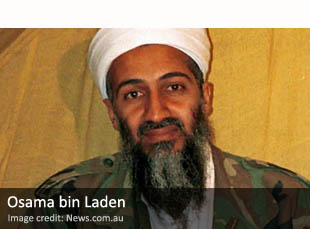
►►CIA claims bin Laden death photos would trigger violence. The Central Intelligence Agency says releasing images of a dead Osama bin Laden “could trigger violence, attacks, or acts of revenge against the United States”. Disclosing such images, including one showing the bullet wound to bin Laden’s head, the government said, “plausibly and logically pose a particularly grave threat of inflaming anti-American sentiment and resulting in retaliatory harm”. The agency made that argument Wednesday in a Freedom of Information Act lawsuit brought by Judicial Watch, which claims the CIA should release the photos taken by US forces. The American public, Judicial Watch said, has a “right to these historical artifacts”.
►►Kuwait accused of tapping phones of prominent citizens. According to the report published in Kuwaiti media, the country’s State Security Department purchased an integrated intelligence system from a former Soviet country last year, and placed it in a restricted zone inside the headquarters’ building. But last July, everything in the isolated room, including staff members hired specifically to operate the devices, vanished without an explanation, said sources. An investigation is currently ongoing to unearth the mystery behind the devices’ disappearance, and also examine information which hint that the devices could have been used by a certain unnamed individual to spy on prominent Kuwaitis.
►►Did US FDA spy on whistleblowers? The US Food and Drug Administration electronically spied on whistleblowers who alerted the Obama administration and Congress of alleged misconduct in the agency, according to a complaint filed in a US federal court. Named as defendants in the lawsuit are the FDA and several of its employees, the Surgeon General, the Health and Human Services Secretary, among others.

News you may have missed #662: UK edition

Edward VIII and Wallis Simpson with Adolf HitlerBy IAN ALLEN | intelNews.org |
►►Hacked StratFor info exposes thousands of intel officials. Customer user data obtained from StratFor by Anonymous last month includes the private details of 221 British military officials and 242 NATO staff. Civil servants working at the heart of the UK government —including several in the Cabinet Office as well as advisers to the Joint Intelligence Organisation, which acts as the British Prime Minister’s eyes and ears on sensitive information— have also been exposed.
►►Book claims MI5 tapped phones of King Edward. According to a new biography of Tommy Robertson, who pioneered Britain’s wartime counterintelligence operations, MI5 agents tapped the phones of King Edward VIII and his brother the Duke of York, at the height of the ‘abdication crisis’. Edward VIII was infatuated with –and, in 1936, gave up his throne to marry– American divorcee and socialite Wallis Simpson, who was suspected by many in the British government of having Nazi sympathies.
►►UK spy watchdog wants to stop court disclosure of state secrets. The parliamentary watchdog for Britain’s spies, the Intelligence and Security Committee (ISC), is lobbying the government to introduce sweeping curbs that could prevent UK courts from examining intelligence material. The committee claims that its proposed new powers would ensure that intelligence obtained from foreign agencies, such as the CIA, is never publicly disclosed. This proposal clearly goes back the case of Binyam Mohamed; he was detained in Pakistan, where he was questioned by MI5, and eventually ended up in Guantánamo Bay, where he says he was tortured. In late 2009, British courts clashed with David Miliband, the then foreign secretary, over the publication of a summary of US intelligence material relating to Mohamed.

Did cell phone companies help India spy on the United States?

Page from the Lords of Dharamraja document leakBy JOSEPH FITSANAKIS | intelNews.org |
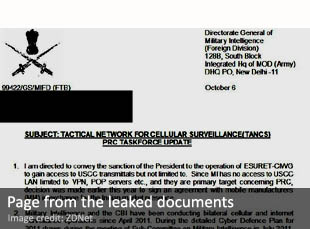
Leaked documents acquired by a computer hacker collective appear to show that international cell phone manufacturers helped Indian intelligence agencies spy on the United States, in return for access to the Indian cellular phone market. The documents, which are written in English, were posted online on Saturday by a group of Indian hackers calling themselves Lords of Dharamraja. In a statement, the group said they obtained the documents by breaking into the computer servers of Indian Military Intelligence, after managing to acquire the source code of Symantec Corporation, makers of Norton antivirus software. According to the documents, the companies arm-twisted to assist Indian intelligence agencies to spy on the US included Apple, Nokia, and Research in Motion, the company that builds BlackBerry devices. The documents also appear to show that Indian intelligence agencies were particularly eager to spy on the United States-China Economic and Security Review Commission. Established by the US Congress in 2000, the Commission is tasked with researching and reporting on the national security implications of bilateral trade between the US and China. Allegedly, the cellular telephone makers provided Indian intelligence agencies with backdoor access to personal phones used by Commission members. These back doors allegedly allowed the Indian Military Intelligence Directorate and India’s Central Bureau of Investigation to spy on Commission members beginning in April of 2011. Read more of this post

News you may have missed #657

Israel and IranBy IAN ALLEN | intelNews.org |
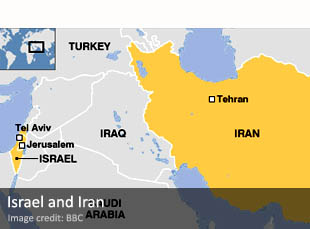
►►Israeli company exported Internet-monitoring hardware to Iran. Israel bans all trade with its enemy, Iran. It turns out, however, that Israeli Internet-monitoring equipment has been finding its way to Iran for years, through Denmark. An Israeli company shipped the equipment to Denmark, where workers stripped away the packaging and removed the labels, before forwarding it to Iran. Now Israeli trade, customs and defense officials say they “did not know” that the systems were ending up in Iran.
►►Court decision revives NSA lawsuits. The 9th US Circuit Court of Appeals has ruled that the case of Jewel v NSA, which claims that after the 2001 terrorist attacks the NSA began large-scale monitoring of digital traffic, with the assistance of AT&T and others, can proceed. At the same time, the court denied leave to continue on a linked case against AT&T, for aiding and abetting the surveillance. The court upheld the 2008 Foreign Intelligence Surveillance Act (FISA) revision, voted for by the current president, which grants the telecommunications companies retroactive immunity from any actions carried out during the period.
►►Czechs charged with espionage in Zambia sent home. Three Czech citizens, who were detained in Zambia on October 12, 2011, and charged with espionage, have returned home, the Czech Foreign Ministry said Sunday. A ministry spokesman declined to give any details on the return of the three Czechs, who were arrested after they were found taking pictures near military sites.

Analysis: The strange world of cyberspy vendor conferences

ISS WorldBy JOSEPH FITSANAKIS | intelNews.org |
It is common knowledge among intelligence observers that espionage activity around the world is on the increase, having in some cases surpassed Cold-War levels. The main facilitator of this phenomenon is technological, namely the ease of access to classified information afforded by relatively safe cyberespionage techniques. In our 21st-century, therefore, the spy v. spy game takes place largely online. Ironically, however, many of the government agencies engaged in offensive cyberintelligence operations against each other buy the required software and hardware from the same vendors. The latter are private companies, headquartered in Milan, London, Johannesburg, Montreal, and other cities around the world, which periodically participate in industry trade shows. These gatherings are eerie, secretive meetings, frequented by international spies representing various governments, and are strictly closed to outsiders. Vernon Silver, of Bloomberg, which has done an admirable job lately tracking the operations of these secretive vendors, has penned a fascinating exposé of one such bizarre trade show, called ISS World. Known informally as ‘Wiretappers Ball’, ISS (short for Intelligence Support Systems) World convenes several times a year in various cities around the world. One recent show, which took place in Malaysia, hosted nearly 1,000 attendees from 56 countries, writes Silver: “unlike trade shows, this one had no social events [and] no corporate-sponsored cocktail parties”. Instead, merchants of communications interception technologies offered demonstrations to agents of various governments, of what is called “offensive IT intelligence”. These demonstrations, conducted by appointment only in darkened conference rooms, center on technologies that can hack cell phones, break into email accounts, unscramble encrypted Skype calls, and surreptitiously access targeted web cams. Read more of this post

News you may have missed #653: India edition

Research and Analysis WingBy IAN ALLEN | intelNews.org |
►►India’s external intel agency gets wiretapping powers. India’s government has given the country’s external intelligence agency, the Research and Analysis Wing (RAW), the right to intercept domestic phone calls, emails and voice and data communications. This is the first time that RAW has been authorized to intercept communications inside the country. Should Indian citizens be bracing for more political policing?
►►India uncovers alleged Pakistan honey trap operation. A lieutenant colonel in the Indian Army was reportedly caught in a ‘honey trap’ by Pakistani intelligence agencies, as a result of which he was forced to spy for them against Indian interests, according to Indian media. The officer was allegedly in Bangladesh this past summer to attend a course at a military academy, when he was trapped by Pakistan’s Inter-Services Intelligence (ISI), sources said. What is it with Indian government employees and honey trap operations?
►►Indian arrested for spying for Pakistan. Indian police in Rajasthan said it arrested Pawan Kumar Sharma, a clerk working at the regional Sub-Divisional Magistrate’s office in Suratgarh town, on charges of spying for Pakistan. Authorities said Sharma is suspected of spying for Pakistan’s Inter-Services Intelligence (ISI) directorate for the past year-and-a-half, using a prepaid cell phone provided by the ISI.

Analysis: India’s spies keep tabs on political opponents, not terrorism

IB seal

IB seal

By JOSEPH FITSANAKIS | intelNews.org |
She is America’s rising ally in South Asia and is widely regarded as the world’s largest democracy. But India’s political system is highly chaotic and often repressive. This is aptly reflected in the operations of the Intelligence Bureau, India’s foremost domestic intelligence agency. One would think that the IB has its hands full with India’s countless domestic security concerns, which include increasingly popular and active Maoist insurgents, as well as mounting religious and political tensions in the predominantly Muslim states of Jammu and Kashmir, located in the country’s north. But one of India’s most respected English-language newspapers, The Hindu, cites “highly placed intelligence sources” who allege that most of the IB’s intelligence collection activities are targeted against the Indian government’s political opponents, not terrorism. According to the unnamed sources, “less than a third of the IB’s estimated 25,000-strong manpower [sic] is dedicated to what might be described as national security tasks”. Conversely, over two-thirds of the organization’s staff is reportedly tasked with “providing the government raw information and assessments on its increasingly bleak political prospects”, claims the paper. Examples of political policing by the IB include monitoring public meetings led by Rahul Gandhi, parliamentarian and leader of the National Congress, which is India’s main political opposition group. Another target of the IB’s alleged political policing campaign is anti-corruption activist Anna Hazare, who has become internationally known for spearheading popular protests against government sleaze in New Delhi and elsewhere. According to The Hindu, intelligence on political figures is collected by the IB’s state-of-the-art communications interception systems, which were purchased from Western hardware manufacturers following the sophisticated 2009 Mumbai Attacks by the Pakistani militant group Lashkar-e-Taiba. Read more of this post