Comment: Are Clinton’s Cyberattack Protests Hypocritical?

Hillary Clinton

Hillary Clinton

By JOSEPH FITSANAKIS* | intelNews.org |
The Chinese have accused the US government of hypocrisy in criticizing Beijing for its alleged role in organized hacking attacks, which recently drove Google to abandon its operations in China. Speaking last Thursday, US Secretary of State Hillary Clinton argued that “[c]ountries or individuals that engage in cyberattacks should face consequences and international condemnation”. But a subsequent editorial in government-owned The People’s Daily essentially said that China is not the only country that engages in cyberwarfare; the US does it too. Is this true? Most likely, yes. Read more of this post

News you may have missed #0259

Bookmark and Share

Comment: Did Russian Intelligence Hack Climate-Change Emails?

Tomsk, Siberia

Tomsk, Siberia

By JOSEPH FITSANAKIS* | intelNews.org |
For over a fortnight, the world’s news services have focused on the so-called ‘Climategate’, the hundreds of University of East Anglia’s Climatic Research Unit emails that were hacked from the university’s server and leaked onto the Internet. The stolen emails, some of which date back to 1996, have reignited conspiracy theories about the role of human activity in climate change. But there is surprisingly little discussion about who hacked into the university’s server and stole the personal emails.

Read more of this post

Details emerge on Israeli bombing of Syrian nuke reactor

Ibrahim Othman

Ibrahim Othman

By JOSEPH FITSANAKIS | intelNews.org |
German newsmagazine Der Spiegel has published a most detailed examination of the background to Operation ORCHARD, the 2007 Israeli air attack on what is thought to have been a Syrian nuclear reactor. The attack was carried out by Israeli fighter jets in the night of September 6, 2007, at Al-Kibar, a site deep in the Syro-Arabian Desert, twenty miles from Deir al-Zour. Neither Syria nor Israel have commented on the attack, which is widely thought to have targeted Syria’s so-called Al-Kibar nuclear reactor. Der Spiegel’s article is based on interviews with nuclear and security experts, as well as “with individuals involved in the operation, [and] have only now agreed to [speak], under conditions of anonymity”, according to the authors. The article claims that the initial tip about Al-Kibar was given to the Israelis in 2004 by the US National Security Agency, which “detected a suspiciously high number of telephone calls between Syria and North Korea”. Read more of this post

News you may have missed #0118

  • Second spy operation against media revealed in Bulgaria. A few months ago, Bulgarian public opinion was shocked by revelations about Operation GALLERY (a.k.a. Operation GALERIA), a project by Bulgarian State Agency for National Security (DANS) aimed to intimidate the country’s press. Now a second domestic spying program has been discovered by the appropriately named Bulgarian Parliamentary Committee for Controlling DANS.
  • US military cannot analyze surveillance footage influx. The heaps of intelligence footage gathered by US military spy drones and surveillance cameras are already more than analysts can handle. So DARPA, the US military’s research arm, is looking for a software program that will automate the analysis process.

Bookmark and Share

News you may have missed #0112

  • Obama refuses to halt CIA probe. Arguing that “nobody’s above the law”, the US President has rejected a request by seven former heads of the CIA to end the inquiry into abuse of suspects held by the Agency.
  • Naval intel agent caught spying on famous Philippine artist. Philippine prizewinning poet, critic and dramatist Bienvenido Lumbera says he will file a complaint against the Philippines armed forces over the apprehension of a Naval Intelligence Security Force agent, who was caught spying outside his home. The country’s government is supposedly concentrating (with US logistical, intelligence and combat assistance) on fighting the Muslim separatist Moro ethnic group (including the Abu Sayyaf Group) in the south, but it is apparently spying on artists and intellectuals on the side.

Bookmark and Share

News you may have missed #0109

  • Somali pirates have spies in London shipbroking. A report compiled by European military intelligence agencies says that Somali pirates operating in the Gulf of Aden and more recently the Indian Ocean have well-placed informers in London, a world center for shipbroking and maritime insurance. They also regularly use satellite phones and GPS tracking systems to zero in on their targets.
  • Canada denies entry visa to Russian official due to KGB ties. Mikhail Margelov, who heads the foreign affairs committee of the Russian parliament, was invited to participate in the Inter-Parliamentary Forum of the Americas (FIPA) in Ottawa. But upon applying for an entry visa he was warned it could be denied because of his KGB ties. Observers say this episode may be indicative of a shift in Russo-Canadian relations.

Bookmark and Share

News you may have missed #0088

Bookmark and Share

Has Skype’s VOIP encryption been broken?

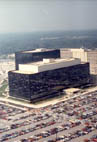
NSA HQ

NSA HQ

By IAN ALLEN | intelNews.org |
I have explained before that the US National Security Agency (NSA) and other intelligence agencies have found it impossible to intercept Skype’s instant messaging and voice traffic. Like other voice-over-Internet protocol (VOIP) communications providers, Skype uses technology that converts audio signals to data, and transports them through most of the Internet infrastructure in binary, rather than audio, format. Furthermore, Skype uses very complex algorithms to encrypt its customers’ communications. Skype has repeatedly pointed to the technical complexities of VOIP communications, arguing that it is often technically impossible to facilitate communications interception requests by government authorities. There are rumors among communications interception specialists that the NSA is offering billions to anyone who can come up with a reliable eavesdropping model for Skype. Remarkably, on August 25, a Swiss software developer released what he claims is the source code of a program for tapping into encrypted Skype communications. I don’t know whether the source code (essentially a trojan) is effective. He claims it is. If this is confirmed, then several people in Fort George F. Meade, Maryland, will be really close paying attention.

Bookmark and Share

News you may have missed #0079

  • Berlin football club cancels deal over Stasi controversy. FC Union Berlin has dumped its main sponsor, International Sport Promotion, over allegations that its CEO, Juergen Czilinsky, was a member of the Stasi, the East German secret police.
  • US officials targeted by fake emails. Malicious emails claiming to be from the US Department of Homeland Security, but which actually originate from Latvia and Russia, are being sent to Pentagon and state and local officials in the US. Similar news emerged from Australia last week.
  • Emirates expel Thai ex-premier. Ousted former Thai premier Thaksin Shinawatra was expelled by the United Arab Emirates (UAE) on Tuesday, and has gone to Montenegro. Interestingly, Montenegrin authorities have supplied Thaksin with a Montenegrin passport.

Bookmark and Share

Australian diplomats targeted by fake email

David Irvine

David Irvine

By IAN ALLEN | intelNews.org |
The Australian government has issued a warning to its diplomats around the world about a fake email, which it says could be part of an organized cyberespionage campaign. The email began appearing in Australian diplomatic staff’s email inboxes late last month. It is titled “Australia-China Free Trade Agreement Negotiations Update” and its sender(s) reportedly targeted Australian diplomats specializing in Australia’s economic and security relations with China. The email’s title and focus has led some observers to speculate that it originated from groups with Chinese intelligence connections. But the Australian government remains silent on the matter, saying simply that the source of the suspicious email “is under investigation”. Earlier this month, David Irvine, the recently appointed director of the Australian Security Intelligence Organisation, identified cyberespionage as “a growing national security risk”.

Bookmark and Share

News you may have missed #0062

  • Hacking, Lock-Picking, Booze and Bacon. Excellent illustrated review of some of the highlights of DefCon 17, the world’s largest hacking convention, which took place in Las Vegas, Nevada.
  • Were NC terror suspect’s stories an exaggeration? There are more doubts over the genuineness of the Afghan exploits of Daniel Boyd, who was recently arrested along with seven others in North Carolina on domestic terrorism charges.
  • Ex-DHS boss comes out in support of controversial NSA project. Michael Chertoff, who directed the US Department of Homeland Security under the Bush Administration, has come out in support of EINSTEIN 3, a rumored joint project between the NSA and US telecommunication service providers, which requires the latter to route government data carried through their networks to the NSA, via secret rooms installed in exchange sites. Critics have condemned the project as “antithetical to basic civil liberties and privacy protections” in the United States.

Bookmark and Share

News you may have missed #0061

  • Finland police identify body of WWII Soviet spy. Police believe a body found near Kouvola, Finland, to be the World War II remnants of a Soviet spy. The man apparently parachuted to his death. The body will be offered to the Russian Embassy for repatriation –an offer that is expected to be refused.
  • Hacker conferences attract spies, thieves. Interesting account of Defcon conference anecdotes by CNET correspondent Elinor Mills, who has been attending Defcon since 1995.
  • Interesting interview with lawyer behind CIA lawsuit. McClatchy news agency has published a rare interview with Brian Leighton, the lawyer representing retired Drug Enforcement Agency (DEA) officer Richard A. Horn, who in 1994 claimed that CIA agents illegally wiretapped his conversations while he was stationed in Burma.

Bookmark and Share

News you may have missed #0024

  • Guantánamo prisoner asked to spy on homeland radicals. Umar Abdulayev, from Tajikistan, who has been held in Guantánamo for seven years, claims in court filings that he was visited by Tajik intelligence agents in Guantánamo, who asked him to spy on Tajik Muslim radicals in exchange for his release. Abdulayev has refused the offer and has asked for asylum at a third country.
  • We were not hacked, says NZ spy agency. A New Zealand Government Communications Security Bureau (GCSB) spokesman has denied the agency’s website was hacked on July 9. Those visiting the GCSB website on that day were presented with an error message.
  • Saudi charity lawyers ask federal judge to outlaw NSA wiretap program. Saudi-based charity Al-Haramain was taken to court in September 2004 by the US government, which accused it of maintaining terrorist links. But its lawyers have managed to reverse the case, and may now be close to getting a US federal judge to rule against warrantless NSA wiretapping.
  • Cyber attacks came from 16 countries. South Korea’s National Intelligence Service (NIS) officials have disclosed that the cyberattacks that paralyzed major South Korean websites last weekend were mounted from at least 16 different countries. Earlier this week, NIS said it believed North Korea or pro-Pyongyang forces were behind the attacks, which also affected US government websites.

Bookmark and Share

French energy giant denies it spied on Greenpeace

ÉDF's Paris HQ

ÉDF's Paris HQ

By IAN ALLEN | intelNews.org |
Earlier this month, intelNews reported that senior security officials at France’s state-owned electricity service provider were among several people charged by French authorities with spying on Greenpeace and other environmental groups. Now, several days after the launch of an official investigation into the matter, the company, Électricité de France (ÉDF), continues to blame the scandal on renegade and overzealous security personnel. Speaking to French newspaper Le Monde on April 21, ÉDF’s director of security, Jean-Marc Sabathé, insisted that the company’s senior management had not been consulted about the spying operation. ÉDF has already suspended two security officials, Pierre Durieux and Pierre Francois, who hired private investigations firm Kargus Consultant to infiltrate environmental organizations that oppose the expansion of ÉDF’s nuclear energy reactor plants throughout France. Read more of this post