South African intel officials faked threats to increase spy budget
June 15, 2012 2 Comments
 By JOSEPH FITSANAKIS | intelNews.org |
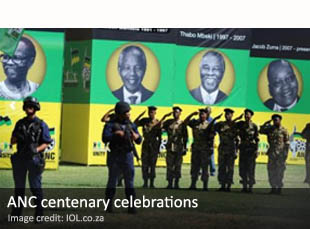
The tendency of some spy agencies to overstate security threats in order to secure governmental funds is hardly novel. But officials in the South African Secret Service appear to have gone a step further: they allegedly paid some of their informants to make bogus threats against the government, in order to prompt an increase in counterterrorist funding. According to Pretoria News, which is owned by The Independent, South Africa’s largest newspaper consortium, the bogus threats were aimed at creating “a false impression of imminent, unprecedented attacks on black people and African National Congress (ANC) members”. The ultimate goal of the perpetrators, says the paper, was to benefit personally from an increase in counterterrorist funding, which is said to run at around R600 million (US$72 million) per year. The plan was carefully designed to coincide with the run-up to the ANC’s centennial celebrations, which took place in January of this year. In one case, an informant was paid by Secret Service officials to record a video message threatening an uprising by whites against the country’s black-majority government, unless the latter put an end to the occupation of white-owned farmland by landless peasants. One video, which made “chilling threats” against black Africans and members of the ANC, was made publicly available on YouTube, causing widespread concern and prompting the government to beef up security measures around ANC facilities in several areas of the country. The threats also led to an extensive government investigation. Read more of this post











 intelNews.org
News you may have missed #749
June 21, 2012 by Ian Allen Leave a comment
►►Why did CIA Director secretly visit Czech Republic? The CIA Director, David Petraeus, is known to make frequent secret trips to places like Pakistan, Afghanistan, or Iraq. But why was his recent trip to the Czech Republic kept secret? Photographs published in a Czech daily paper showed the CIA director and his team boarding a military plane at Prague’s Ruzyne Airport, headed for their next destination, Sofia, Bulgaria. But neither the US Embassy in Prague, nor the CIA will respond to questions by Czech media about Petraeus’ secretive visit to the former Soviet Bloc nation.
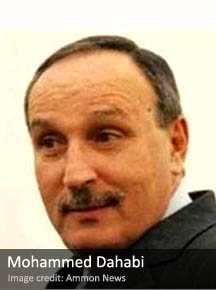
►►Jordan’s ex-spy chief on trial for corruption. Jordan’s former spy chief, General , who headed the General Intelligence Department (GID) from 2005 to 2009, has gone on trial in Amman on charges of corruption, which carry a maximum sentence of life imprisonment. In a case highlighting corruption in the country’s vaunted intelligence community, the prosecutor said Dahabi’s wealth had quadrupled during his years in office, reaching almost $40 million by the end of 2011. The money, he said, was held in several foreign currency accounts in a leading domestic bank.
►►CIA still refuses to comment on Predator drone attacks. The Central Intelligence Agency continues to refuse to confirm or deny the covert military use of drones to kill suspected terrorists overseas. This is despite numerous public comments on the CIA’s drone attacks in far-flung locales such as Yemen from various government officials, including former CIA Director Leon Panetta and US President Barack Obama. The development comes as 26 members of Congress asked Obama, in a letter, to consider the consequences of drone killing and to explain the necessity of the program.
Filed under Expert news and commentary on intelligence, espionage, spies and spying Tagged with 0 CIA still refuses to comment on Predator drone attacks, 0 Jordan's ex-spy chief on trial for corruption, 0 Why did CIA Director secretly visit Czech Republic?, assassinations, CIA, corruption, Czech Republic, David Petraeus, General Intelligence Department (Jordan), Jordan, lawsuits, Mohammed Dahabi, News, news you may have missed, Predator drones, secret meetings, United States