News you may have missed #795

Shakil AfridiBy IAN ALLEN | intelNews.org |
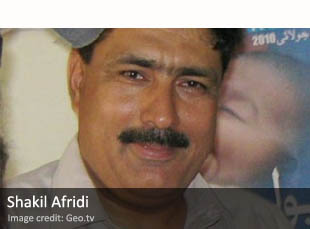
►►US ‘cannot verify authenticity’ of Afridi interview. The US says it cannot verify an alleged interview by Shakeel Afridi, a Pakistani medical doctor who helped the CIA find Osama bin Laden. In May, a Pakistani court sentenced Afridi to 33 years in jail after he was arrested following the killing by US troops of bin Laden in May 2011 at his compound in the town of Abbottabad. US television channel Fox News said Tuesday it had obtained an exclusive phone interview with Afridi from behind bars, in which he detailed months of torture by Pakistan’s shadowy Inter-Services Intelligence.
►►Evidence suggests US covered up Soviet massacre in Poland. New evidence appears to back the idea that the US administration of President F.D. Roosevelt helped cover up Soviet guilt for the 1940 Katyn massacre, in which more than 22,000 Poles were killed by the Soviets on Stalin’s orders. Historians said documents, released by the US National Archives, supported the suspicion that the US did not want to anger its wartime ally, Joseph Stalin. The documents show that American prisoners of war sent coded messages to Washington in 1943 saying that the killings must have been carried out by the Soviets, rather than the Nazis. Information about the massacre was suppressed at the highest levels in Washington, say historians.
►►Yemen President sacks intel agency heads. Yemeni President Abd-Rabbu Mansour Hadi has sacked the heads of the National Security Agency and  Military Intelligence, just a few hours after two suicide car bombs targeted the country’s Defense Minister in the capital Sana’a killing at least 12 people. The National Security Agency’s Ali Mohammed al-Anisi has been replaced with Ali Hassan al-Ahmadi, while the head of Military Intelligence, Mujahid Ali Ghuthaim, has been replaced with Ahmed Muhsin al-Yafiee. Hadi took office in February this year after year-long street protests forced former President Ali Abdullah Saleh to step down as part of an UN-backed power transfer deal in return for immunity from prosecution.

CIA declassifies internal review on Iraq ‘intelligence failure’

Report cover pageBy JOSEPH FITSANAKIS | intelNews.org |
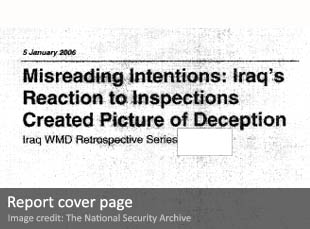
An internal report on the alleged failure of the Central Intelligence Agency to accurately read the intentions of the Iraqi regime in the run-up to the 2003 invasion by the United States, has been declassified. The report, entitled Misreading Intentions: Iraq’s Reaction to Inspections Created Picture of Deception, was authored in 2006, classified ‘secret’. It was prepared by the CIA’s Directorate of Intelligence (DI), the part of the Agency that is responsible for collating and assessing gathered intelligence in order to assist the decisions of US policy-makers on key foreign issues. The report describes what it sees as the DI’s intelligence failure to assess the true state of Iraq’s purported weapons of mass destruction program in the run-up to the US invasion. It says that invalid predispositions and “analytic liabilities” among CIA analysts prevented the Agency from seeing the issue of weapons of mass destruction from the viewpoint of the Iraqi government. Although heavily redacted, the report seems to state that CIA analysts spent little time examining the view, held by many at the time, that the Iraqi regime had in fact terminated its WMD program by 1995. Furthermore, Agency analysts failed to realize in time that, although it had terminated its WMD program, the Iraqi regime maintained a deliberate policy of ambivalence about the purported existence of the program, in order to save face, deter potential adversaries and appear more dangerous than it actually was. Such a policy of deception was well within the character of the Iraqi regime and should have been detected by American intelligence experts, says the report. Read more of this post

Judge orders CIA to release files on drug kingpin Pablo Escobar

Pablo EscobarBy JOSEPH FITSANAKIS | intelNews.org |
In the late 1980s, it was nearly impossible to sit through a primetime news bulletin without coming across the name ‘Pablo Escobar’. Born in 1949 in the town of Rionegro, Colombia, Escobar rose to become the leader of the Medellín cartel, history’s most notorious narcotics smuggling ring. By 1986, the Medellín cartel controlled over 80 percent of the global cocaine market, shipping daily around 15 tons of the drug (worth an estimated street value of $500,000) to the United States. In 1989, Forbes magazine included Escobar on his list of the world’s richest persons, with an estimated net worth of $3 billion. By that time, the Medellín cartel had become powerful enough to directly threaten the very institutional integrity of the Colombian state. At the same time, Escobar carefully cultivated his ‘Robin Hood’ image by regularly building hospitals, schools, and churches in some of Colombia’s most impoverished regions. He was thus able to surround himself with a sea of grateful and devoted supporters, who directly depended on his generosity for their livelihood. They also shielded him from the reach of the Colombian and United States government forces, which repeatedly went after him without success. Eventually, the Colombian government, in association with the US Drug Enforcement Administration and the Central Intelligence Agency, managed to stop Escobar by creating a rival organization called Los PEPES —a Spanish-language acronym that stands for ‘People Persecuted by Pablo Escobar’. Los PEPES, which consisted of members of rival drug smuggling cartels, as well as trained mercenaries belonging to Colombian rightwing militias, went after Escobar’s closest associates with indescribable ruthlessness. They hunted down and eventually tortured and killed several of his relatives, advisors and bodyguards. Ultimately, in 1993, they helped the Colombian National Police corner Escobar and shoot him dead at a Medellín barrio. The celebrations in Washington and Bogotá didn’t last long; as soon as Los PEPES disbanded, many of its leading members regrouped to found the United Self-Defense Forces of Colombia (AUC), a rightwing paramilitary group that has since killed thousands of civilians in Colombia’s bitter civil war. The AUC, which funds its operations through kidnappings and drug trafficking, is today a designated terrorist group by most Western governments, including the United States and the European Union. Read more of this post

News you may have missed #782 (history edition)

John A. McConeBy IAN ALLEN | intelNews.org |
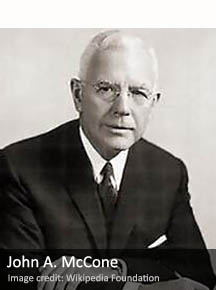
►►Did US DCI McCone authorize CIA assassinations? By the CIA’s own admission, we do know the Agency was involved in attempts to kill or overthrow several Third World leaders during the Cold War. But the doctrine of plausible deniability meant there is no paper trail identifying those who ordered such operations. Evidence is reasonably clear that Allen W. Dulles, who served as Director of Central Intelligence (DCI) for nearly nine years, sanctioned them. But what about John A. McCone (pictured), whom Kennedy appointed as DCI in 1961? Is it possible that the CIA carried out assassination plots without his approval or even in the face of his disapproval? Newly discovered notes from a cryptic telephone call McCone made to Secretary of State Dean Rusk on August 21, 1962, support the claim that, while McCone opposed any open discussion of assassination proposals, he did not oppose the efforts as a matter of principle.
►►Ronald Reagan was FBI informant (Note: this is not new information, but it helps to refresh one’s memory from time to time). In the early stages of the Cold War, FBI Director J. Edgar Hoover feared a ‘Kremlin-controlled conspiracy’ to infiltrate Hollywood and use the world’s largest producer of motion pictures to manipulate public opinion against America. In 1945, Ronald Reagan, then an actor, passed along some political gossip of special interest to Hoover. Eventually, Reagan served as an informer in the Bureau’s investigation of alleged communist infiltration of the radio and television industry. He was listed as “Confidential Informant T-36”. Agents described him as “reliable”.
►►Senior Black Panther member was FBI informant. Prominent 1960s Black Panther Party member Richard Masato Aoki, who gave the Black Panthers some of their first firearms and weapons training, was an undercover FBI informer in California, a former agent and FBI report reveal. Aoki’s role inside the Black Panthers was discovered by Seth Rosenfeld while researching his book Subversives: The FBI’s War on Student Radicals, and Reagan’s Rise to Power, which was published today by Farrar, Straus and Giroux. Aoki’s life in the Black Panthers was documented in a 2009 film, Aoki and a 2012 biography titled Samurai Among Panthers. Neither mentioned his work with the FBI. Rosenfeld said Aoki had contended in a 2007 interview it wasn’t true he was an informant, but added: “people change. It is complex. Layer upon layer”.

Did Czechoslovakian spies plan to blackmail British leader?

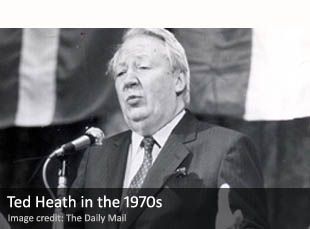
Ted HeathBy JOSEPH FITSANAKIS | intelNews.org |
In 1975, Czechoslovakian intelligence officer Josef Frolík, who had defected to the United States, published a book titled The Frolik Defection: The Memoirs of an Intelligence Agent. Among several revelations in the book was an alleged plot by the ŠtB, Czechoslovakia’s Cold-War-era secret intelligence service, to sexually blackmail British Conservative politician Edward “Ted” Heath. According to Frolík, the ŠtB had concluded that Heath, a lifelong bachelor and Britain’s Prime Minister from 1970 to 1974, was gay. Based on this —highly questionable— belief, Jan Mrázek, an ŠtB officer working out of the Czechoslovakian embassy in London, had allegedly devised a plan in the mid-1960s, which aimed to expose Heath to homosexual blackmail. Frolík claims in his book that Mrázek developed the plot around Heath’s well-known preoccupation with classical music. Specifically, he planned to recruit Czechoslovakian classical organist Jiří Reinberger, who would be instructed to meet the British conservative politician in London and invite him to Prague for a concert. While there, the ŠtB hoped that a romantic affair would ensue, under the watchful eye of Czechoslovakian spies, who would make sure to capture the more intimate moments of the two men on camera. The audiovisual evidence would, the ŠtB believed, convince Heath to spy for Czechoslovakian intelligence. According Frolík, the plan was put to action but was eventually scrapped after MI5, Britain’s counterintelligence agency, warned Heath that a trip to Czechoslovakia would expose him to blackmail by that country’s intelligence service. When Frolík’s book came out, Heath, who had stepped down from his post as Britain’s Prime Minister and leader of the Conservative Party, dismissed the story as a fabrication, and threatened to sue the author. But was Frolík telling the truth? Read more of this post

News you may have missed #750 (US edition)

NROL-38 reconnaissance spacecraftBy TIMOTHY W. COLEMAN | intelNews.org |
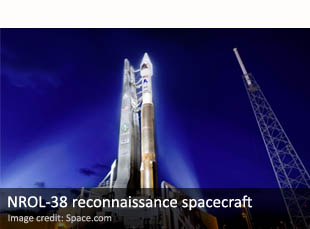
►►US spy agency launches new satellite. The US National Reconnaissance Office, the agency tasked with overseeing America’s intelligence satellites, successfully placed a new spy satellite into orbit. The Christian Science Monitor reports that the NROL-38 reconnaissance spacecraft was launched from Cape Canaveral Air Force Station in Florida. The satellite launch, sitting atop an Atlas 5 rocket, was streamed live via Webcast for several minutes before being terminated due to national security restrictions and the classified nature of the mission. Particulars regarding the capabilities or specific purpose of the spy satellite were not provided. However, just a few days before, the US Air Force’s highly classified space plane known as the  AX-37B returned to Vandenberg Air Force Base in California.
►►FBI takes on larger domestic intelligence role. The US Federal Bureau of Investigation, under a newly devised action plan, will be afforded a greater role in domestic intelligence efforts in the US, according to a recent Washington Post article.  Senior level field agents at the bureau are expected to serve as representatives for the Office of the Director of National Intelligence (ODNI), the agency created after 9/11 to oversee activities of all US intelligence efforts. The Post quotes CIA spokeswoman Jennifer Youngblood, who —remarkably, considering CIA/ODNI relations in recent years— said that the agency has not opposed the ODNI’s move to elevate FBI agents in the US, and that “the program is working well”.
►►CIA declassifies 9/11 documents. The CIA released this past week hundreds of pages of declassified documents related to the September 11, 2001, attacks, which detail the agency’s budgetary woes leading up to the deadly strikes and its attempts to track al-Qaeda leader Osama bin Laden. The National Security Archive at George Washington University says it obtained the documents through a Freedom of Information Act request. The documents are heavily redacted and offer little new information about what the US knew about the al-Qaeda plot before 2001.

News you may have missed #737

Shakil AfridiBy IAN ALLEN | intelNews.org |
►►Turkey suspects bird of being Israeli spy. News agencies are poking fun at Turkish authorities, who say they believe that they have found a bird used for espionage purposes by Israel. An investigation was reportedly launched in Ankara several days ago, after a farmer discovered a dead Merops Apiaster, commonly known as the European Bee-Eater, in his field. The bird had a ring reading “Israel” on one of its legs. The reports undoubtedly lend a certain degree of irony to the announcement that Israel Aerospace Industries (owned by the Israeli government) is in fact developing insect drones for indoor surveillance.
►►CIA discloses names of 15 killed officers. The CIA has disclosed the names of 15 of its operatives killed in the line of duty over the last 30 years, the result of a new effort to honor fallen officers. Fourteen of the dead already had a star inscribed in their memory on the CIA’s wall of honor in the lobby of the old headquarters building on the agency’s Langley, VA, campus. But their names had been withheld. In a closed agency ceremony Monday their names were added to the Book of Honor, which accompanies the stars. In addition, a new star was added this year for Jeffrey R. Patneau, who died at age 26 in Yemen in 2008 from injuries sustained in a car accident. He was the 103rd CIA officer recognized as having died in the line of duty.
►►Pakistan convicts doctor who helped CIA find bin Laden. A Pakistani court imposed a 33-year sentence Wednesday on Shakil Afridi, a doctor who assisted the CIA hunt for Osama bin Laden. Afridi, a government surgeon in the semiautonomous Khyber Agency along the border with Afghanistan, was convicted of treason for using a vaccination drive to try to gather DNA samples at the compound where bin Laden was in hiding. His conviction prompted dismay among US officials, who said that the punishment will lead to cuts in aid. According to a Pakistani prison official, Afridi “has been kept away from other prisoners to avert any danger to his life”.

News you may have missed #730

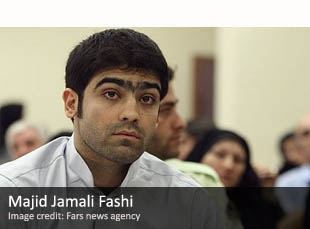
Majid Jamali FashiBy IAN ALLEN | intelNews.org |
►►Iran executes man convicted of killing nuclear physicist. Iran on Tuesday hanged Majid Jamali Fashi, convicted of playing a key role in the 2010 murder of Iranian nuclear scientist Masoud Ali Mohammadi, and of spying for Israel. Mohammadi, a particle physics professor at Tehran University who was killed in a bomb attack outside his home in January 2010.
►►Bahrain sentences man accused of spying for Iran. Bahraini authorities accused the unnamed 47-year-old man of having leaked high-level information on Bahrain’s military, Interior Ministry and US Naval Base. He was allegedly paid more than BD27,000 on behalf of Iran’s Revolutionary Guard by two Iranians who lived in Kuwait. The two Iranians, who worked as diplomats in the Iranian Embassy in Kuwait, were convicted in absentia for selling military, industrial and economic information to Iran between 2002 and last April.
►►NSA declassifies document after publishing it. The National Security Agency last week invoked a rarely-used authority in order to declassify a secret document that was mistakenly posted on the NSA website with all of its classified passages intact. The article (.pdf) is a historical study entitled Maybe You Had to Be There: The SIGINT on Thirteen Soviet Shootdowns of US Reconnaissance Aircraft. It was written by Michael L. Peterson and was originally published in the classified journal Cryptologic Quarterly in 1993.

US judge denies release of CIA report on Bay of Pigs invasion

Court documentsBy JOSEPH FITSANAKIS | intelNews.org |
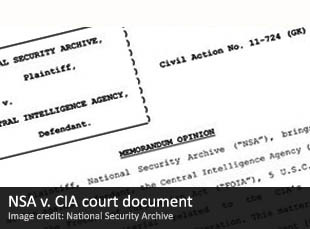
On April 17, 1961, a brigade of 1,300 CIA-funded and -trained anticommunist Cubans mounted a surprise assault on the Caribbean island. But prior intelligence collected by  spies working for Havana, and stiff resistance by pro-Castro troops, resulted in the CIA’s biggest known covert action failure. Approximately 1,200 surviving members of the CIA’s army were captured by pro-Castro forces, many of whom were severely interrogated or executed in subsequent years. The intelligence fiasco led to a five-volume CIA report, whose final volume was authored in the early 1980s by CIA resident historian Jack Pfeiffer. It essentially contains the CIA’s counterargument to a previous report, authored by the Agency’s Inspector General, which placed the blame for the failure on the invasion squarely on the shoulders of the CIA. Volume III of the report was voluntarily released by the CIA in 1998, but was not discovered by researchers until 2005, when an academic found it among the Kennedy Assassination Records Collection at the US National Archives. Following an unsuccessful Freedom of Information Act request, George Washington University’s National Security Archive sued the CIA in 2011, eventually forcing the Agency to declassify Volumes I, II and IV last April. This left Volume V, which is the subject of an ongoing dispute between historians and the CIA. But in a decision aired late last week, US District Court judge Gladys Kessler agreed with the Agency that the volume was not subject to US declassification rules because it had been “rejected for inclusion in the final publication” of the report. According to judge Kessler, the volume written by Dr. Pfeiffer, the CIA historian, was not a finished product, but rather a draft manuscript, and was therefore exempt from public disclosure under the Freedom of Information Act. Read more of this post

News you may have missed #718 (GCHQ edition)

GCHQ center in Cheltenham, EnglandBy IAN ALLEN | intelNews.org |
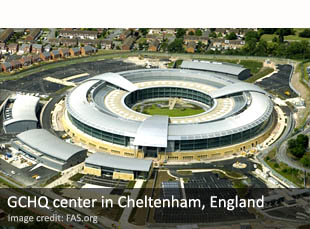
►►GCHQ releases Alan Turing papers. Britain’s signals intelligence agency, GCHQ has released two mathematical papers written by cryptographer Alan Turing after keeping the works secret for over half a century. The intelligence agency believes the handwritten papers were produced by Turing during his time at Bletchley Park, the World War II code-breaking center. The year 2012 marks the centenary of Alan Turing’s birth. Turing, whose work heavily contributing to the Allied war effort, committed suicide in 1954 by taking cyanide. Turing had been convicted of homosexuality, which was then a crime, and was given the choice between prison or chemical castration. The UK government officially apologized over Turing’s treatment in 2009, over 50 years after his death.
►►Britain’s GCHQ sued for ‘racism’. Alfred Bacchus, 42, claims he was bullied by bosses while he was a senior press officer at the Government Communications Headquarters in Cheltenham. He says he wanted to publish an official report in 2010 into race bias inside GCHQ which warned that not enough ethnic minority staff were being recruited to help fight terrorism. It found that black and Asian intelligence officers at GCHQ complained of a racist culture in which they were insulted by white colleagues and challenged over their loyalty to Britain.
►►Ex-GCHQ chief wants more surveillance of Facebook and Twitter. Sir David Omand, an ex-Cabinet Office security chief and former director of Britain’s GCHQ electronic eavesdropping agency, said it was essential that monitoring of social media was put on a proper legal footing. A report by the think-tank Demos, which Sir David co-authored, said existing laws regulating the interception of communications by police and intelligence agencies needed to be overhauled to meet the complexities of social media. However, the ability of state security agencies and the police to intercept social network communications such as tweets must be placed on a clear legal footing, the report says.

News you may have missed #686

Folkert Arie van KoutrikBy IAN ALLEN| intelNews.org |
►►WikiLeaks to publish 5 million StratFor emails. In its latest high-profile data dump, WikiLeaks is to reveal five million internal and external emails from StratFor today. In a press release late Sunday, Wikileaks said the emails “show StratFor’s web of informers, pay-off structure, payment-laundering techniques and psychological methods”, and reveal “how StratFor has recruited a global network of informants who are paid via Swiss banks accounts and pre-paid credit cards. Stratfor has a mix of covert and overt informants, which includes government employees, embassy staff and journalists around the world”.
►►Analysis: Blurred line between espionage and truth under Obama. “There is plenty of authorized leaking going on, but this particular boat leaks from the top. Leaks from the decks below, especially ones that might embarrass the administration, have been dealt with very differently […]. And it’s worth pointing out that the administration’s emphasis on secrecy comes and goes depending on the news. Reporters were immediately and endlessly briefed on the “secret” operation that successfully found and killed Osama bin Laden. And the drone program in Pakistan and Afghanistan comes to light in a very organized and systematic way every time there is a successful mission”.
►►Nazis had spy in MI5 but failed to use him. Dutchman Folkert Arie van Koutrik was the first German agent to ever infiltrate MI5 when he was employed by them in 1940, just a month before Anthony Blunt, who was later exposed as a Soviet spy. Koutrik had already worked for Abwehr, the German secret service, before the war as a double agent with MI6 in Europe and exposed some of the UK’s top agents. But, incredibly, after he moved to the UK and joined MI5 all contact appears to have broken off.

News you may have missed #685

Aleksandr Z. AnkvabBy IAN ALLEN| intelNews.org |
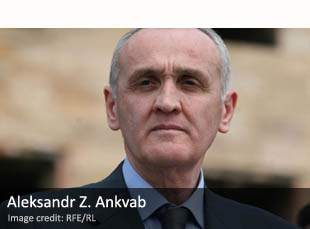
►►Abkhazia President survives assassination attempt. Unidentified assassins tried on Wednesday to kill Aleksandr Z. Ankvab, the president of Abkhazia, a Russian-backed rebel enclave of Georgia. The assailants used automatic rifles, grenade launchers and a powerful roadside bomb in an attack that raised fresh questions about Moscow’s ability to preserve order there.
►►Groups object to CIA declassification charges. Open government advocates are protesting a recently adopted CIA policy that allows the agency to charge up to $72 an hour to review requests to declassify secret records. The effect “will be to price the public out of submitting” requests for “mandatory declassification review,” the American Library Association, Sunlight Foundation and more than 30 other organizations said in a letter Thursday to CIA Director David Petraeus.
►►Analysis: Fallout from Syrian colonel’s abduction in Turkey. The smokescreen surrounding the abduction of Syrian Col. Hussein Harmush, who defected to Turkey in June 2011 before being handed over to the Syrian secret service in September 2011, has begun to clear in recent weeks following a judicial probe. Claims that Turkey’s spy agency, the National Intelligence Organization (MİT), was involved in handing Harmush over to Syria were finally confirmed on February 2 when the Adana Chief Public Prosecutor’s Office issued a written statement saying one MİT agent had been arrested for questioning and further MİT officials had been called to testify as “suspects” in the scandalous repatriation case.

News you may have missed #682

Lieutenant General Ronald BurgessBy IAN ALLEN | intelNews.org |
►►Is there a Mossad base near Iran? The London-based Sunday Times has published an interview with a man claiming to be an Azerbaijan-based agent of Israeli intelligence agency, who confirmed the existence of such a base. The man, identified in the article as “Shimon,” told the paper that there were dozens of Israeli Mossad agents working out of the base. The meeting between the agent and the London Times‘ reporter took place in Baku, near the Israeli Embassy, the report said.
►►Analysis: CIA report on Soviet bioweapons still secret. It has been three decades since the Reagan administration accused the Soviet Union and Vietnam of using chemical weapons known as yellow rain. We still do not know how the US came to this conclusion, but have good reason to believe that it was based on flawed or distorted intelligence. A classified critique of the intelligence behind those charges, written several years ago for the Central Intelligence Agency, could shed light on what happened. Last year, Matthew Meselson, a Harvard expert on chemical and biological weapons, filed a Freedom of Information Act request to get the report released. He was turned down.
►►US official says Iran unlikely to strike first. Lieutenant General Ronald Burgess, director of the US Defense Intelligence Agency, said the Iranian military is unlikely to intentionally provoke a conflict with the West. He said Iran probably has the ability to “temporarily close the Strait of Hormuz with its naval forces”, as some Iranian officials have threatened to do if attacked or in response to sanctions on its oil exports by the US and European Union. But, he added, “Iran is unlikely to initiate or intentionally provoke a conflict or launch a preemptive attack”.

News you may have missed #672

Osama bin LadenBy IAN ALLEN | intelNews.org |
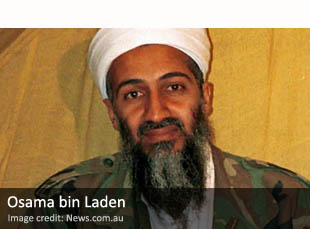
►►CIA claims bin Laden death photos would trigger violence. The Central Intelligence Agency says releasing images of a dead Osama bin Laden “could trigger violence, attacks, or acts of revenge against the United States”. Disclosing such images, including one showing the bullet wound to bin Laden’s head, the government said, “plausibly and logically pose a particularly grave threat of inflaming anti-American sentiment and resulting in retaliatory harm”. The agency made that argument Wednesday in a Freedom of Information Act lawsuit brought by Judicial Watch, which claims the CIA should release the photos taken by US forces. The American public, Judicial Watch said, has a “right to these historical artifacts”.
►►Kuwait accused of tapping phones of prominent citizens. According to the report published in Kuwaiti media, the country’s State Security Department purchased an integrated intelligence system from a former Soviet country last year, and placed it in a restricted zone inside the headquarters’ building. But last July, everything in the isolated room, including staff members hired specifically to operate the devices, vanished without an explanation, said sources. An investigation is currently ongoing to unearth the mystery behind the devices’ disappearance, and also examine information which hint that the devices could have been used by a certain unnamed individual to spy on prominent Kuwaitis.
►►Did US FDA spy on whistleblowers? The US Food and Drug Administration electronically spied on whistleblowers who alerted the Obama administration and Congress of alleged misconduct in the agency, according to a complaint filed in a US federal court. Named as defendants in the lawsuit are the FDA and several of its employees, the Surgeon General, the Health and Human Services Secretary, among others.