News you may have missed #536 (US edition)

James Risen

James Risen

By IAN ALLEN | intelNews.org |
►►US federal agencies sitting on decade-old FOIA requests. In the United States, as Freedom of Information Act (FOIA) requests are growing, a new study has found that eight government agencies are sitting on requests filed over ten years ago. According to the Knight Open Government Survey, conducted by the National Security Archive at George Washington University, the single oldest request is now 20 years old. FOIA requires agencies to process and respond to a request within 20 business days. ►►US journalist seeks to avoid testifying at CIA agent’s trial. A sizeable percentage of FOIA requests are filed by journalists, who are also on the receiving ends of most intelligence-related ‘leaks’ in the United States. One of those journalists, James Risen, of The New York Times, has been subpoenaed by the Obama administration to testify at the trial of Jeffrey Sterling. Sterling is a former CIA employee, who has been arrested under the Espionage Act for allegedly revealing details about Operation MERLIN to Risen. MERLIN was a botched US effort to provide Iran with a flawed design for building a nuclear weapon, in order to delay the alleged Iranian nuclear weapons program. Times lawyers argue that the First Amendment should shield Risen from having to testify at Sterling’s trial. ►►US intel research agency works on 3-D holographs. Also in the United States, IARPA, the US intelligence community’s technical research wing, has announced that it is working on a system that lets intelligence analysts collaborate with each other using “interactive 3-D holographic displays”. Through this system, IARPA hopes that intelligence personnel could take simultaneous virtual strolls through real-life target locations, help plan raids, etc.

US helped France go nuclear to keep Europe divided, documents show

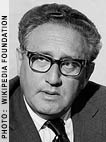
Henry Kissinger

Henry Kissinger

By JOSEPH FITSANAKIS| intelNews.org |
The government of the United States secretly helped France expand its nuclear arsenal, in order to promote its rivalry with Britain, according to newly declassified documents. The clandestine assistance to France, which tested its first nuclear bomb in Africa in 1960, began during the Richard Nixon administration, and was actively directed by Henry Kissinger, Nixon’s senior National Security Advisor. The documents, which were obtained by researchers at the George Washington University and the Woodrow Wilson International Center for Scholars, include a 1973 memorandum authored by Kissinger, in which he writes: “We want to keep Europe from developing their unity as a bloc against us. If we keep the French hoping they can get ahead of the British, this would accomplish our objective”. Toward that goal, the US ought to provide the French with information that will make them “drool but doesn’t give [them] anything but something to study for a while”. By doing so, Washington would be able to force Britain to stop “behaving shitty” and conform to American foreign policy objectives: “if they know we have another option, they might buck up”, writes Kissinger. Read more of this post
News you may have missed #520

  • CIA director returns from Pakistan empty-handed. CIA Director Leon Panetta’s surprise visit to Pakistan last week yielded little, according to US officials. Panetta bypassed the protocol of first meeting with the president and prime minister, and instead met with Pakistan’s military and intelligence directors.
  • Chinese spying devices found in Hong Kong cars. A Hong Kong newspaper has alleged that the Chinese authorities have been secretly installing spy devices on all dual-plate Chinese-Hong Kong vehicles since July of 2007. Photographic evidence is here.
  • NSA releases over 50000 pages of documents. The US National Security Agency has announced that it has declassified and released to the US National Archives and Records Administration over 50,000 pages of historic records, covering a time-frame from before World War I through the 1960s.

News you may have missed #499 (CIA edition)

Australian Labour Party leader worked for Soviets, claims historian

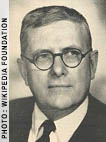
H.V. Evatt

H.V. Evatt

By IAN ALLEN | intelNews.org |
One of Australia’s leading intelligence historians has said that Herbert V. Evatt, who led the Australian Labour Party in the 1950s, operated as a secret agent for the Soviet Union. Dr Desmond Ball, professor at the Australian National University’s Strategic and Defence Studies Centre, made the claim following last week’s release in London of previously classified documents relating to Australian intelligence. The documents, which came from the archives of MI5, Britain’s domestic intelligence agency, reveal that Australian Prime Minister Robert Menzies was convinced that Evatt was a Soviet agent. His fear appears to have culminated two days before the national election of November 22, 1958, when he privately expressed the fear that Evatt would destroy Australian counterintelligence documents on the Soviet Union if the Labour Party was elected to power. With this in mind, he ordered the Australian Security Intelligence Organization (ASIO) to share top-secret documents on the Soviet Union with London and Washington. Following Menzies’ directive, the ASIO provided Britain’s MI5 and MI6, as well as America’s CIA with two sets each of a number of intelligence reports acquired through KGB defector Vladimir Petrov. Read more of this post

News you may have missed #492 (history edition)

  • Holocaust spy’s memoir gets movie treatment. The extraordinary memoir of Jan Karski, a Polish resistance fighter who gave the first eyewitness report on the Holocaust to the Allies, is to be made into a film by the producer of The King’s Speech. In 1943, Karski escaped from Nazi-occupied Poland and went to London with a hidden microfilm, revealing the persecution of Europe’s Jews by the Third Reich.
  • British spy files shed light on Nazi saboteurs in the US. Declassified British intelligence files describe the activities of Nazi sabotage teams sent to the US in June 1942 to undermine the American war effort. A detailed new account of the German mission, code-named Pastorius, is provided in a report written in 1943 by MI5 intelligence officer Victor Rosthchild.
  • New information on Evdokia Petrova’s defection. New information has emerged on the 1954 defection to Australia of Evdokia Petrova, wife of Vladimir Petrov, who was the most senior Soviet intelligence official to have defected to the West until that time.

MI5 concealed report on Soviet penetration from CIA

Kim Philby

Kim Philby

By IAN ALLEN | intelNews.org |
British counterintelligence officials decided to conceal from their American counterparts a report detailing Soviet spy penetration of the UK, because it showed London’s permissive attitude towards intelligence infiltration. The secret report, entitled “Survey of Russian Espionage in the UK 1935-1955”, was authored by the D Branch of MI5, which was tasked with countering Soviet intelligence operations on British soil. It was declassified on Monday by Britain’s National Archives, 55 years after it was initially authored. The survey was apparently commissioned following the embarrassing defections of Guy Burgess and Donald Maclean, MI5 and MI6 officers respectively, who escaped to Moscow in 1951, after several years of spying for the Soviet Union. Its pages detail the cases of over 50 Soviet intelligence operatives and double agents who were believed at the time to be mostly at large in the UK or abroad. But senior MI5 officials decided to limit the report’s distribution, fearing that it revealed too many weaknesses in Britain’s counterintelligence posture. Instead, they decided to print only about 25 copies of the report, which were to be distributed strictly within MI5. Read more of this post

News you may have missed #485

  • Gaza engineer describes abduction my Mossad. Dirar Abu Sissi, who was abducted by Israeli spy agency Mossad from the Ukraine on February 19, has described details of his abduction in a report issued Monday by the Gaza-based Palestinian Center for Human Rights.
  • Gaddafi regime fed names of jihadists to the CIA and MI6. Diplomatic cables obtained by WikiLeaks paint eastern Libya as a fertile ground for radical extremism. One source told US officials in 2008 that for young men from Derna, a city east of Benghazi, “resistance against coalition forces in Iraq was an important act of ‘jihad’ and a last act of defiance against the Gaddafi regime”.
  • Investigators say secret CIA files could aid Chile. Chile’s truth commission has determined that 3,065 opponents of US-supported Chilean dictator Augusto Pinochet were killed in the 1970s. Most of these cases were investigated, and some 600 military figures and civilian collaborators have been put on trial. Now campaigners are trying to get the CIA to open its files on Pinochet.

Analysis: Understanding WikiLeaks

WikiLeaks

WikiLeaks

By JOSEPH FITSANAKIS| intelNews.org |
The WikiLeaks cablegate revelations appear to be subsiding in the new year, and so is the public debate about their meaning and consequences. And yet, as calmer moods prevail, now is the appropriate time to probe the WikiLeaks phenomenon. To do so constructively, it is necessary to move beyond a mere political assessment of WikiLeaks. The question of whether the website, its founder, and its hundreds of volunteers, are criminals, heroes, terrorists, or dissidents, cannot even begin to be answered until WikiLeaks is understood, first and foremost. By ‘understood’, I don’t mean empathize. I mean comprehending WikiLeaks as an ideological paradigm, a technological vehicle reflective of the personal philosophies of its members, but also representative of a much wider sociotechnical trend. Click here to read my analysis brief published today by the Research Institute for European and American Studies.

Some underreported WikiLeaks revelations

WikiLeaks

WikiLeaks

By JOSEPH FITSANAKIS | intelNews.org |
There is little point in recapping here the bulk of disclosures contained in the ongoing WikiLeaks revelations. The news sphere is jam-packed with them —and perhaps this is the real story in the WikiLeaks revelations, namely the fact that espionage and intelligence issues have near-monopolized the global news cycle for the first time since the post-Watergate Congressional investigations of the 1970s. But it is worth pointing out a handful of news stories on the WikiLeaks revelations that have arguably not received the media coverage that they deserve. Undoubtedly the most underreported disclosure concerns a 2007 meeting between US officials and Meir Dagan, the then Director of Israel’s Mossad intelligence agency. During the meeting, Dagan apparently “presented US with five-step program to perform a coup in Iran“.  But there are other underreported disclosures. Take for instance the revelation that US Secretary of State Hillary Clinton personally authorized US diplomats to engage in all-out and indiscriminate spying on senior United Nations officials. Although there is nothing here that will surprise seasoned intelligence observers, the breadth of intelligence collection that US diplomats are instructed to engage in (which includes collecting credit card numbers and biometric data of UN officials) is astonishing and certainly unprecedented. Moreover, it should be noted that many senior UN officials are in fact American, which leads to the intriguing question of whether US diplomats are routinely required to engage in intelligence collection against American UN officials. Read more of this post

News you may have missed #451 (history edition)

News you may have missed #450

  • Nuke bomb material found in Georgia black market. Highly enriched uranium that could be used to make a nuclear bomb is on sale on the black market along the fringes of the former Soviet Union, according to evidence emerging from a secret trial in the Republic of Georgia.
  • CIA Director warns against leaks. Asserting that lives have been endangered and sources compromised by “a damaging spate of media leaks” in recent months, CIA Director Leon E. Panetta reminded the spy agency’s employees Monday that unauthorized disclosures of classified information “cannot be tolerated”.
  • US issues new unclassified information policy. The White House has issued an executive order to establish a uniform policy for handling “controlled unclassified information” (CUI), which is information that is restricted from disclosure because it involves personal privacy, proprietary data or law enforcement investigations not relating to national security.

News you may have missed #431

News you may have missed #428 (history edition)

  • US government study of Soviet-era spy services released. A historiographic blog has released a study by the US Federal Office of Criminal Investigations on Practices and Methods of East-Bloc Intelligence Services, which examines the spy craft and operations of Soviet-aligned secret services active in Germany.
  • Simon Wiesenthal worked for Mossad, claims book. A new book claims that famous Israeli Nazi hunter Simon Wiesenthal worked as an informant for Israel’s Mossad spy agency. Written by Tom Segev, the book, entitled Wiesenthal: The Life and Legends, claims that Wiesenthal gave the Mossad valuable information during Operation DAMOCLES.
  • UK spies did ‘very bad things’ in Cold War, says Le Carre. But even though they assassinated individuals and engaged in “a lot of direct action”, “decent humanitarian instincts came into play” in Western intelligence agencies’ operations, claims the former MI5 and MI6 spy and novelist. Raw Story‘s Daniel Tencer offers an interesting response.

Comment: What Can the US Do To Stop WikiLeaks?

Julian Assange

Julian Assange

By JOSEPH FITSANAKIS | intelNews.org |
Ever since whistleblower site WikiLeaks published 77,000 classified US military documents on the war in Afghanistan, several pundits have urged US government agencies, including the Pentagon, to take action. Late last week, former George W. Bush speechwriter Marc Thiessen urged the Pentagon to unleash its “cyber capabilities to prevent WikiLeaks from disseminating those materials”. Some columnists have even suggested that US intelligence services should “come up with an up-to-date photo of [WikiLeaks founder Julian] Assange and distribute it to […] SEAL sharpshooters”. Pentagon representatives have also stepped up their rhetoric, warning that “[i]f doing the right thing isn’t good enough for [WikiLeaks], we will figure out what alternatives we have to compel them to do the right thing”.

Read more of this post