News you may have missed #553 (Canada edition)

Northrop Frye

Northrop Frye

►►Analysis: Are Chinese spies getting an easy ride in Canada? Carl Meyer, of Embassy magazine, asks why Canada’s counterintelligence agencies are unwilling or unable to bring Chinese spies to court in recent years. Readers of this blog may recall controversial comments made last year by the director of CSIS, Richard Fadden, who claimed that some Canadian politicians work for foreign powers.
►►Canadian agency ‘illegally spying on Canadians’. Canada’s ultra-secret Communications Security Establishment, which engages in electronic communications interception, is prohibited from spying on Canadian citizens. But a new Canadian government report appears to instruct it to engage in mining ‘metadata’ from digital communications of Canadians. Readers of this blog may remember that, in 2009, a court permitted for the first time the CSE and the Canadian Security Intelligence Service to eavesdrop on Canadian nationals traveling overseas.
►►RCMP spied on Canadian academic Northrop Frye. Speaking on spying on Canadians… Read more of this post

Nixon White House may have bugged Pentagon leadership

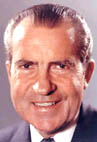
Richard Nixon

Richard Nixon

By JOSEPH FITSANAKIS | intelNews.org |
Everyone familiar with American political history knows about the ‘White House Plumbers’, a covert special investigations unit established during the Presidency of Richard Nixon, and tasked with spying on his political opponents. The unit’s bungled attempt to burgle the Watergate offices of the Democratic National Committee, in 1972, eventually led to Nixon’s resignation. But the Watergate burglary was but one of many operations conducted by the ‘Plumbers’, who were one of several ‘dirty tricks’ units managed by the Nixon White House. Now, nearly 40 years after the Watergate scandal erupted, veteran intelligence correspondent Jeff Stein provides new information that suggests the Nixon White House may have bugged the Pentagon telephones of senior American military officials. Stein managed to track down Dave Mann, a former member of the Pentagon’s Counterintelligence Force, who in 1971 stumbled upon a classified report claiming that listening bug signals had been detected emanating from offices in the Joint Chiefs of Staff. The signals had been picked up by a technical surveillance countermeasures (TSCM) team during a routine sweep of the Pentagon, in search of unauthorized interception devices. Mann run some tests to verify the TCM team’s report, and discovered that the bug signals originated from the personal office telephone line of General William Westmoreland, who was then the US Army’s Chief of Staff. He also discovered that the telephone of his assistant had been compromised, as well as the telephone lines belonging to the US Army’s assistant secretary, its logistics director, and at least one general. Mann’s personal conclusion was that the phone lines were most likely bugged with the cooperation of the Chesapeake and Potomac Telephone Company, which was at that the time considered an operational wing of the FBI, under Director J. Edgar Hoover. Read more of this post
News you may have missed #547

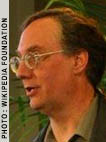
Imtiaz Ahmad

Imtiaz Ahmad

By IAN ALLEN | intelNews.org |
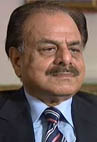
►►Finland cancels visa of ex-KGB general. We reported recently on the case of Mikhail Golovatov, a former commander of the Soviet KGB’s Alpha Group, who is wanted in Lithuania for alleged war crimes against the country’s secession movement in the early 1990s. Last week, Austria arrested Golovatov, but released him 24 hours later, claiming that his Lithuanian-issued European arrest warrant was “too vague” to justify his continued detention. There are now reports that the Finnish embassy in Moscow has annulled the Schengen visa it had previously issued to the former KGB officer. In a statement, Finnish officials said they would not have granted Golovatov a visa in the first place, except there had been “a spelling mistake in Golovatov’s first name”, which made them think he the applicant was not General Golovatov of KGB fame. Hmmm…. ►►Georgian ‘spy photographers’ to be released. In a bizarre twist to the ‘photojournalist spies’ saga in Georgia, the government has announced that the three will be released under an agreed plea-bargain deal, because they had given the authorities “information of particular importance for national security” about Russian intelligence operations in Georgia. The three have allegedly “revealed the identities of Russian spies working in the country as well as the names of their Georgian collaborators and cover organizations operating on behalf of Moscow”. The three, Zurab Kurtsikidze, Irakli Gedenidze and Giorgi Abdaladze, are all professional photojournalists, who are accused by Tbilisi of spying for Moscow. ►►Pakistani ex-spy director says US owes Pakistan. Imtiaz Ahmed (often spelled Ahmad) is the former Director General of Pakistan’s main domestic intelligence agency, the Intelligence Bureau (IB). In a recent interview, he accused the United States of using the ‘war on terrorism’ as a strategic pretext for capturing energy resources and limiting China’s economic growth. He also said that the US owes the Pakistani intelligence agencies, because without them it could not have accomplished its task in the Afghan war against the Soviet Union. IntelNews readers may remember the last time Ahmad had made headlines, when he revealed a series of CIA operations against Pakistan’s nuclear program.

Security minister, ex-spy directors arrested in Hungary

Gyorgy Szilvasy

Gyorgy Szilvasy

By JOSEPH FITSANAKIS | intelNews.org |
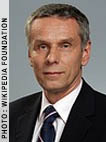
One former government minister and two former directors of Hungary’s domestic intelligence service have been arrested on suspicion on espionage, according to reports. On June 28, Hungarian police arrested Lajos Galambos, who was Director of Hungary’s National Security Office (NBH) from 2004 to 2007. Three days later, on July 1, police forces arrested Sandor Laborc, who succeeded Galambos as NBH director, and Gyorgy Szilvasy (pictured), who was minister in charge of overseeing the civilian security services from 2007 to 2009. All three served in key government positions during the socialist government of former Prime Minister Ferenc Gyurcsany. Despite repeated media request, government prosecutors have refused to disclose the precise nature of the charges against the three officials, except to say that they are suspected of having committed “crimes against the state”. One Hungarian daily, Tabloid Blikk, suggested that the arrests are linked to the Egymasert Public Foundation, headed by wanted fugitive Robert Jakubinyi.  Egymasert was found last year to have been used to facilitate money laundering and the illegal sale of shares. But other reports interpret the high-level arrests as a form of political payback for the so-called ‘UD Zrt affair’, also known as ‘the Hungarian Watergate’, which rocked Hungarian public opinion in 2008. Read more of this post

News you may have missed #523

  • Archbishop of Canterbury branded ‘subversive’ by MI5. A senior officer of MI5, Britain’s domestic intelligence agency, labeled Rowan Williams ‘a subversive’ in the 1980s, over his involvement with a group of leftwing campaigners.
  • Pakistan ambassador defends arrest of bin Laden informants. Pakistan Ambassador to the United States Husain Haqqani has defended his country’s decision to round up more than 30 people, some of whom may have helped US intelligence track down Osama bin Laden. Meanwhile, the US government is still bankrolling the Pakistani intelligence services. No changes there.
  • US weighs harsher penalties in wake of CIA/FBI hacker attacks. Under a new White House proposal, the 10-year maximum sentence for potentially endangering national security would double, and so would the five-year sentence for computer thefts up to $5,000. Also, the one year maximum for accessing a government computer —either to deface it or download an unimportant file— could become a three-year sentence.

US Senate to review allegations CIA tried to smear professor

Juan Cole

Juan Cole

By IAN ALLEN | intelNews.org |
The Intelligence Committee of the United States Senate will review allegations, made on Friday by a former CIA officer, that the spy agency tried to gather derogatory information about an American university professor who is critical of the ‘war on terrorism’. According to its chairwoman, Senator Dianne Feinstein, the Committee may “take further action”, depending on its preliminary findings. The allegations surfaced last Friday in an article by New York Times reporter James Risen. Acting on a tip by an unnamed source, Risen spoke to former CIA officer Glenn L. Carle, who confirmed that the Agency “at least twice” displayed an interest in gathering discrediting information about University of Michigan history professor Juan Cole. Dr Cole, who specializes in Middle Eastern history and speaks fluent Arabic, Persian, and Urdu, has been consistently critical of US foreign policy in the Middle East through his writings on his influential blog, Informed Comment. Carle, who made the allegations to The New York Times, retired from the CIA in 2007, after a career that spanned two decades in the Agency’s National Clandestine Service. In the last few years of his public service, Carle was a senior counterterrorism official at the US National Intelligence Council, which operates under the Office of the Director of National Intelligence. Read more of this post

News you may have missed #516

  • UK government will continue to spy on Muslims says official. Britain’s Home Secretary, Theresa May, says she does not see “anything wrong with identifying people who are vulnerable to being taken down a certain route”.
  • UK government outed IRA double agent. Senior Irish Provisional Army volunteer Denis Donaldson, who spied for the British government, was deliberately outed by the government to send a message to the IRA that he was expendable, and that it had another, more valuable informant within the IRA leadership ranks. The revelation is contained in a leaked US diplomatic document published by whistleblower website WikiLeaks. Donaldson was shot dead shortly after his role as an MI5 informant was revealed.
  • Legendary CIA airline now in danger of crashing. There was a time, not so long ago, that CIA-linked contractor Evergreen International Aviation was doing quite well for itself. Today, the venerable intelligence-helpers have fallen on hard times. The other day, it had to unload its 200 million square foot maintenance facility in southern Arizona in order to help pay off its debts.

News you may have missed #512

News you may have missed #507

  • Pakistani media reveal name of CIA station chief. Mark Carlton, the purported CIA station chief in Islamabad, was named by a Pakistani newspaper and a private television news network over the weekend, the second holder of that post in less than a year to have his cover blown by the media.
  • How an immigrant from Taiwan came to spy for China. Well-researched article on Tai Shen Kuo, a Taiwanese-born American citizen who is serving time in an Arizona prison for spying on the US for China.
  • Domestic surveillance grew in US in 2010. The level of domestic US intelligence surveillance activity in 2010 increased from the year before, according to a new Justice Department report to Congress. Moreover, the secretive Foreign Intelligence Surveillance Court approved all 1,506 government requests to electronically monitor suspected “agents” of a foreign power or terrorists on US soil.

News you may have missed #483

  • Ex-CIA chief criticizes ‘too much cybersecurity secrecy’. In an article published in the new issue of the US Air Force’s Strategic Studies Quarterly, former CIA and NSA Director, General Michael “I-want-to-shut-down-the-Internet” Hayden, argues that the US government classifies too much information on cybersecurity vulnerabilities.
  • Renault arrests security chief over spy hoax. Dominique Gevrey, a ex-military intelligence agent, who is French car maker Renault’s chief of security, has been arrested in Paris, just before boarding a flight to Guinea in West Africa. He is accused of concocting the spying allegations which shook the French car giant –-and the entire motoring world-– last January. Meanwhile, Renault has apologized to the three senior executives who were fired after being accused of selling secrets about the company’s electric car strategy to “foreign interests”.
  • Analysis: Gadhafi’s spies keep watch in Libyan rebel capital. “Pro-Gaddafi spies are blamed for assassinations, grenade attacks, and sending rebels threatening text messages. Rebels believe that Gaddafi’s forces are all around them. They lurk outside the Benghazi courthouse that serves as the Capitol for the liberated east, sometimes armed with cameras. They sit in vans outside hotels that house journalists and aid workers, and silently watch who comes and goes”.

News you may have missed #471 (ex-spy edition)

  • Interview with ex-CIA analyst David Kanin. Interesting extended discussion with Dr. Kanin, who was a CIA analyst for 31 years, who suggests the US is currently on the retreat, both politically and economically.
  • New book by ex-CIA agent Everett. Watergate uncovered many high-level secrets, including the identity of CIA agent James A. Everett, whose cover was blown in Congressional hearings during the White House scandal and its fallout. Now Everett shares his story of recruitment and training by the CIA in his book The Making and Breaking of an American Spy.
  • Ex-MI5 officer questions UK spying priorities. The cascade of revelations in the UK about undercover police officers spying on environmental groups, suggest Britain needs a sense of perspective on threats to the nation, argues former MI5 intelligence officer Annie Machon.

Colombians blast Panama for sheltering ex-spy director

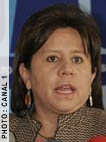
María del Pilar Hurtado

María Hurtado

By IAN ALLEN| intelNews.org |
Public prosecutors in Colombia have strongly criticized the Panamanian government for granting political asylum to one of Colombia’s former spy directors, who is facing charges of spying on opposition figures. María del Pilar Hurtado directed the highly disreputable Administrative Department for Security (DAS) from 2007 to 2008. But on October 31, she apparently left Colombia unobstructed, despite being among the chief subjects of a high-level investigation into political spying by DAS. Hours later, she surfaced in Panama, where she formally requested political asylum. The latter was granted on November 19, causing the amazement of public prosecutors in Bogota, who have accused the Panamanian government of subverting (what little is left of) Colombian justice. Hurtado is among 18 senior officials in the administration of Alvaro Uribe, a close ally of the United States and hardline proponent of Washington’s ‘war on drugs’. Critics of DAS accuse him of authorizing a massive program of political surveillance, which targeted the former Presidents, Supreme Court judges, prominent journalists, union leaders, human rights campaigners, and even European politicians. Read more of this post

News you may have missed #427

  • Did Belarus KGB murder opposition activist? The death of Belarussian opposition activist and journalist Oleg Bebenin has thrown a murky light on both the circumstances of his demise and those who might be behind it. Some point the finger at Minsk’s modern-day KGB, whose leadership was reshuffled earlier this year by President Alexander Lukashenko.
  • Colombian agency behind domestic spying honey trap. Former Colombian detective Alba Luz Florez has revealed that she seduced a national police captain as a way of infiltrating the Colombian Supreme Court, during a 2007 domestic spying operation by the country’s scandal-besieged Administrative Department of Security.
  • Ex-MI6 worker jailed for trying to sell secrets. A British court has jailed Daniel Houghton, a former employee of MI6, Britain’s external spy agency, for trying to sell secret intelligence documents to the Dutch secret services. Interestingly, the Dutch notified MI6 after they were approached by Houghton, who has dual British and Dutch citizenship.

Has US Pentagon revived Bush-era domestic spy program?

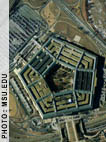
US Pentagon

US Pentagon

By JOSEPH FITSANAKIS | intelNews.org |
A little-known US Department of Defense counterintelligence is suspected to have resuscitated a notorious Bush-era domestic surveillance program, which was banned by Congress for being too obtrusive. In 2002, the then Deputy Secretary of Defense, Paul Wolfowitz authorized the Threat and Local Observation Notice (TALON), a US Air Force intelligence collection program aimed to gather data on potential threats to American armed forces personnel in the US and abroad. But the initiative was allegedly shelved by the Bush administration, after it emerged that TALON intelligence collection focused largely on political policing against lawful antiwar groups. But now new reports suggest that an obscure unit under the Pentagon’s Defense Intelligence Agency (DIA), called the Defense Counterintelligence and Human Intelligence Center (DCHC), is creating a new system of consolidated databases whose focus closely resembles that of TALON. Read more of this post

News you may have missed #376

  • Dubai plans more cameras after Mossad operation. Dubai will beef up its surveillance capability by installing more cameras around the city-state after the Israeli hit squad that murdered a senior Hamas operative was caught on a hotel video. As intelNews has reported before, Mossad has really helped the Gulf surveillance industry.
  • Iran hangs ‘spy’ with alleged US connections. Iran hanged Sunni militant leader Abdolmalek Rigi last weekend for allegedly having connections with foreign secret services, including “intelligence officers of the US and Israel working under the cover of NATO and certain Arab countries” as well as “anti-revolutionary expatriate groups such as the MEK”, the People’s Mujahedeen Organization of Iran.
  • Analysis: FBI use of Muslim informers now part of daily life. Gathering information on people in Muslim communities in the United States has become part of daily life. After 9/11, all data is considered useful. But, Stephan Salisbury of The Philadelphia Inquirer asks, is that how America should be?

Bookmark and Share