New documents reveal massive NSA surveillance capabilities

General Keith AlexanderBy JOSEPH FITSANAKIS | intelNews.org |
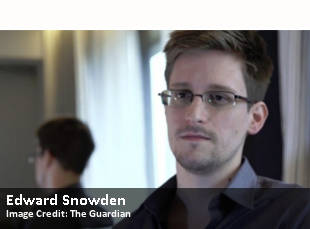
Documents provided by American former intelligence technician Edward Snowden show that the United States National Security Agency has unprecedented surveillance capabilities, which allow it to monitor nearly every online activity of targeted Internet users. Snowden, a self-styled whistleblower, who is currently in Russia, provided British newspaper The Guardian with an NSA training presentation. The visually based presentation explains the inner workings of an intelligence collection program called XKeyscore, which the NSA describes as its “widest-reaching” digital collection program. The system allows NSA data collectors to sift through massive online databases containing millions of individual users’ browsing histories, emails and chats —what the NSA calls digital network intelligence (DNI). According to the training presentation, authorized NSA analysts are able to target individual Internet users by entering their name, email address, IP address or telephone number. The presentation states that, upon entering the identifying information, an NSA analyst can tap into “nearly everything a typical user does on the Internet”, including the content and metadata of emails, website browsing and search terms used. Snowden told The Guardian that an NSA analyst only needs to know a user’s personal email address in order to “wiretap anyone [while] sitting at [his] desk, from you or your accountant to a federal judge or even the President”. What is more, it appears that NSA analysts are able to target individual Internet users by simply “filling in an […] on-screen form”, and by giving only a very broad justification for the probe. Additionally, individual digital collection operations are not approved by a court or senior NSA officers. According to Snowden, all an NSA analyst has to do is suspect that the targeted online user is in contact with “a foreign target”. Meanwhile, NSA Director Keith Alexander was jeered by participants during his keynote speech at the Black Hat Technical Security conference in Las Vegas on Wednesday. Read more of this post

News you may have missed #846

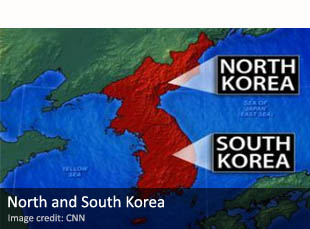
North and South KoreaBy IAN ALLEN | intelNews.org |
►►Cuba confirms it hid weapons on seized N. Korean ship. Cuba has admitted being behind a stash of weapons found on board a North Korean ship seized in the Panama Canal. The ship was seized by Panama last week after “undeclared military cargo” was found hidden in a shipment of sugar. United Nations sanctions prohibit the supply of arms to North Korea in the continuing dispute over its nuclear program. But the Cuban foreign ministry said the ship was carrying “obsolete arms” from Cuba “for repair” in North Korea.
►►British undercover officers stole identities of dead children. Britain’s Metropolitan Police Service, which is responsible for policing most of the city of London, has admitted that its undercover police officers expropriated the identities of at least 43 dead children. But police officials refused to inform the children’s families at the time, saying the practice was considered “essential to protect covert officers who were working inside dangerous extremist groups”.
►►Snowden has ‘thousands’ of damaging NSA documents. The Guardian’s Glenn Greenwald, who first reported on the disclosures of former CIA employee Edward Snowden, has said that the self-styled whistleblower has “literally thousands of documents” in his possession, which are essentially an “instruction manual for how the NSA is built”. The information could allow someone to evade or mimic NSA surveillance tactics, the journalist said.
News you may have missed #844 (analysis on Snowden leak)

Edward SnowdenBy IAN ALLEN | intelNews.org |
►►Daniel Ellsberg: Snowden was right to flee US. “Many people compare Edward Snowden to me unfavorably for leaving the country and seeking asylum, rather than facing trial as I did. I don’t agree. The country I stayed in was a different America, a long time ago”, says Pentagon Papers whistleblower Daniel Ellsberg. And he continues: “I hope that he finds a haven, as safe as possible from kidnapping or assassination by US Special Operations forces, preferably where he can speak freely”.
►►NSA ‘in bed’ with German intelligence says Snowden. The fugitive US whistleblower Edward Snowden alleged on Sunday that the National Security Agency was “in bed together” with German intelligence despite claims by politicians in Chancellor Angela Merkel’s coalition that they were shocked by the extent of American spying in Germany. Snowden claimed that the NSA provided German intelligence, with analysis tools to help the organization monitor data flowing through Germany.
►►Can Snowden fly from Moscow to Caracas without being stopped? How can Snowden get from Moscow’s Sheremetyevo Airport, where he’s been holed up for nearly two weeks, to Venezuela, Bolivia or Nicaragua, which have indicated that they are willing to offer him political asylum? Former CIA analyst Allen Thomson took to Google Earth to answer the question of whether there’s a route Snowden might take that would allow him to fly from Moscow to, say, Caracas without crossing, as he puts it jokingly, the airspaces of “los Yanquis and their running dogs”.

World reaction to Snowden’s spying revelations continues

Edward SnowdenBy JOSEPH FITSANAKIS | intelNews.org |
Governments around the world continue to issue sharp official reactions to the revelations of large-scale spying by the United States, as Washington attempts to minimize the diplomatic fallout from the disclosures. The President of the European Commission, Jose Manuel Barroso, told a session of the European Parliament on Tuesday that, if confirmed, the claims of US espionage against European Union institutions would be “very disturbing”. He was referring to allegations, aired last week by German newsmagazine Der Spiegel, that America spies on the communications of many of its allies, including European Union (EU) agencies, with the same intensity it spies on China and Iraq. The claims were based on documents supplied by American whistleblower Edward Snowden, a former technical expert with the Central Intelligence Agency, who is currently believed to be in Russia. Numerous EU officials have contacted the US with requests for clarification, while EU ambassadors are scheduled to hold a meeting in Brussels, Belgium, on Thursday, to discuss how to commonly respond to Der Spiegel’s revelations. Some of the strongest criticisms against US intelligence policies have been issued by German officials, as some business figures in the country are raising concerns about US economic espionage against German financial interests. Christian Social Union politician Hans Michelbach reminded participants in a German parliamentary session this week that the EU may be a political ally of the US, but “is indeed a strong competitor in the global economy”. He added that business circles in Berlin are concerned that US intelligence collection aimed at German businesses would give Washington “dishonest advantages”. In Italy, the country’s Minister of Foreign Affairs, Emma Bonino, attended a special parliamentary session on Thursday, in which she assured those present that the Italian embassy in Washington was not being spied upon by US intelligence services. She noted that Italy’s “secret services have not unearthed elements of espionage in our [Washington] embassy”. The government of India, meanwhile, expressed strong concerns on Wednesday over reports that US intelligence services have especially targeted nearly 40 diplomatic missions in Washington, including that of India. Ministry of External Affairs spokesman Syed Akbaruddin said New Delhi would “take up the issue with US authorities”. But the strongest reactions to Snowden’s revelations have come from the government of Bolivia. Read more of this post

News you may have missed #843 (analysis on Snowden leak)

James ClapperBy IAN ALLEN | intelNews.org |
►►Countries approached by Snowden for asylum and their responses. According to a statement from WikiLeaks, former CIA/NSA employee Edward Snowden has applied for asylum in a total of 21 countries, but with little success so far. Here is a list of the countries he approached and their responses –or lack thereof– so far. Bolivia and Venezuela appear somewhat positive, but Ecuador and Russia have denied any possibility of giving Snowden political asylum. Other countries, including Cuba and China, have yet to issue a response to Snowden’s request.
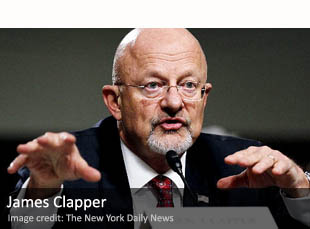
►►US ODNI admits giving ‘erroneous’ answer during Senate testimony. James Clapper, America’s most senior intelligence official, who heads the Office of the Director of National Intelligence, has told a Senate oversight panel that he “simply didn’t think” of the National Security Agency’s efforts to collect the phone records of millions of Americans when he testified in March that it did “not wittingly” snoop on their communications. He had told during his testimony that NSA did “not wittingly” collect “any type of data at all on millions or hundreds of millions of Americans”. But that was before Snowden spilled the beans….
►►Are the Europeans being hypocrites over spying? If you buy the latest reporting out of Europe, France is outraged, simply outraged, at news that the National Security Agency has been eavesdropping on the European Union through its mission in New York and embassy in Washington. All of which is pretty hilarious, given France’s penchant for stealing American defense technology, bugging American business executives and generally annoying US counterintelligence officials. And it’s not just France, either.

US spies on Germany, EU agencies, as much as on China and Iraq

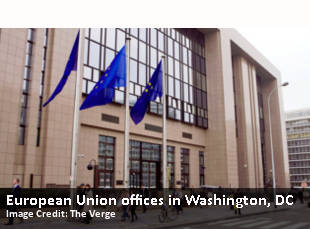
European Union offices in Washington, DCBy JOSEPH FITSANAKIS | intelNews.org |
America spies on the communications of German and other European Union agencies with the same intensity it spies on China and Iraq, documents show. German newsmagazine Der Spiegel aired these claims on Sunday, based on documents it said it obtained from American whistleblower Edward Snowden. Snowden, a former technical expert with the Central Intelligence Agency, remains holed up inside the transit section of Moscow’s Sheremetyevo International Airport, as Russian authorities have rejected repeated requests by Washington to extradite him to the US. According to Spiegel, American intelligence operatives placed interception equipment in the offices of the European Union’s representation in Washington, DC, before infiltrating the building’s computer network. Similar methods were aimed at the EU’s official representation to the United Nations in New York, and even in Brussels, Belgium, where the EU is headquartered. In a separate article, also published on Sunday, Der Spiegel said the National Security Agency, America’s foremost communications interception agency, monitors data from over half a billion communications exchanges taking place in Germany each month. The data is derived from telephone calls, emails, mobile text messages, and even chat transcripts, said the newsmagazine. The information appears to suggest that United States communications intelligence agencies are far more active in Germany than in any other of the EU’s 28 member states. Late on Sunday, a spokeswoman at the Office of the German Federal Prosecutor told Spiegel that the question of whether German citizens’ rights have been violated by illegal American intelligence activities is currently being looked at, and that “criminal charges” relating to the spying revelations “appear likely”. Read more of this post

Germany probes UK spy program revealed by CIA whistleblower

Sabine Leutheusser-SchnarrenbergerBy JOSEPH FITSANAKIS | intelNews.org |
Germany wants to know whether its citizens were spied on under a British government surveillance program revealed by American intelligence whistleblower Edward Snowden. The program, codenamed Project TEMPORA, was disclosed earlier this week by Snowden, a former technical assistant for the United States Central Intelligence Agency (CIA). Snowden remains holed up at Moscow’s Sheremetyevo International Airport, as Russian authorities have rejected repeated requests by Washington to extradite him to the US. According to British newspaper The Guardian, which first wrote about Project TEMPORA on June 21, Britain’s General Communications Headquarters (GCHQ) has been able to “plug into the cables that carry internet traffic into and out” of the United Kingdom. The agency, which is tasked with communications interception, has therefore collected and stored massive quantities of foreign telephone call data and email messages, and has shared much of it with its US counterpart, the National Security Agency. On June 25, Germany’s Federal Minister of Justice, Sabine Leutheusser-Schnarrenberger, wrote a letter to her British counterpart, Chris Grayling, asking for immediate clarification on the precise legal basis for Project TEMPORA. In her letter, which was copied to the British Home Secretary, Theresa May, the German cabinet minister also inquires whether TEMPORA has been authorized by the appropriate judicial authorities. She argues that “European institutions should shed light on this [issue] immediately” and warns her British colleagues that she plans to raise the subject during the July 2013 meeting of European  Union Justice and Home Affairs ministers, which will be held in Brussels, Belgium. Read more of this post

Australia fears Asia backlash over PRISM surveillance revelations

David IrvineBy JOSEPH FITSANAKIS | intelNews.org |
The government of Australia is concerned that American whistleblower Edward Snowden may leak classified information that could damage Australia’s relations with its Asian neighbors, including China and Malaysia. Early this month, Snowden, a former technical assistant for the United States Central Intelligence Agency (CIA), disclosed the existence of PRISM, a clandestine electronic surveillance program operated by the US National Security Agency (NSA). Information provided by Snowden to British newspaper The Guardian suggests that Washington routinely shares PRISM intelligence with Canada, New Zealand, the United Kingdom and Australia. These four countries, along with the United States, are signatories to the so-called UKUSA agreement, a multilateral accord for cooperation in signals intelligence (SIGINT) collection, which was established secretly in 1946. Australian media reported on Wednesday that the Australian Parliament’s Joint Committee on Intelligence and Security had been briefed by senior intelligence officials on Australia’s role in PRISM. The Sydney Morning Herald said that David Irvine, Director of the Australian Security Intelligence Organisation, and Ian McKenzie, who heads Australia’s Defence Signals Directorate, were among those who briefed the parliamentary Committee. Its members were reportedly told that the disclosures about PRISM were likely to damage Canberra’s relations with several Asian countries, in ways that are difficult to predict. One unidentified Australian intelligence official told The Herald that Snowden had “very wide access” to classified information held by the NSA, and that some of it probably includes “much detail of communications intelligence cooperation between the US and Australia”. One source went as far as to say that Snowden’s disclosures have already “damaged […] Australia’s intelligence capabilities”. Read more of this post

Snowden flees to Russia despite US passport revocation

Edward SnowdenBy JOSEPH FITSANAKIS | intelNews.org |
An American former intelligence contractor, who leaked classified information about intelligence operations, was able to leave Hong Kong for Russia on Sunday, despite having his United States passport revoked. Earlier this month, Edward Snowden, a former technical assistant for the Central Intelligence Agency, disclosed the existence of PRISM, a clandestine electronic surveillance program operated by the US National Security Agency (NSA). Shortly before leaking information about US intelligence operations to the world’s media, Snowden traveled to Hong Kong, a territory under the control of the People’s Republic of China. Last week, Washington charged Snowden, a self-described whistleblower, under the Espionage Act, and revoked his American passport, in an attempt to prevent him from leaving Hong Kong. But reports emerged on Sunday that Snowden had boarded an Aeroflot flight from Honk Kong to Russian capital Moscow, despite the revocation of his American passport. US authorities claim that Snowden’s transfer to Moscow occurred after Washington revoked his American passport, which raises the question of how the former CIA employee was able to exit Chinese territory. Several reports suggest that Snowden was accompanied by “unidentified diplomats” as he left Hong Kong for Moscow. Previously, the US had applied considerable diplomatic pressure on China, requesting Snowden’s extradition. But Hong Kong allowed the American fugitive to board a plane to Moscow, saying it had been given “no legal basis to restrict Mr. Snowden from leaving”. Read more of this post

Skype set up secret project to enable government snooping

SkypeBy IAN ALLEN | intelNews.org |
Skype, the world-famous company that provides Internet-based communications between registered users, set up a secret project five years ago to facilitate persistent requests by government agencies to listen in on users’ phone calls. The New York Times revealed the secret project, codenamed Project CHESS, on Wednesday, citing individuals with inside knowledge of the program, who asked to remain anonymous so as “to avoid trouble with the intelligence agencies”. For many years, it was believed that the US National Security Agency (NSA) and other intelligence agencies had found it impossible to intercept Skype’s instant messaging and voice traffic. This was because, like other voice-over-Internet protocol (VOIP) communications providers, Skype uses technology that converts audio signals to data, and transports them through most of the Internet infrastructure in binary, rather than audio, format. Furthermore, Skype uses very complex algorithms to encrypt its customers’ communications. The company had repeatedly pointed to the technical complexities of VOIP communications in arguing that it was often technically impossible to facilitate communications interception requests by government authorities. In 2009, rumors began to circulate in the cybersecurity community that Skype’s VOIP encryption system had been cracked. It now seems that, around that time, the company, which was then still owned by eBay, was already negotiating with the United States government in order to help intelligence agencies gain access to its users’ communications. Read more of this post

Analysis: PRISM revelations harm US political, financial interests

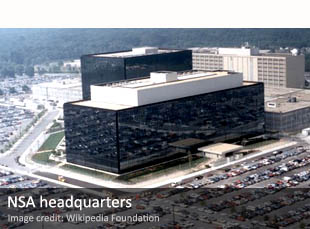
NSA headquartersBy JOSEPH FITSANAKIS | intelNews.org |
Ever since June 6, when Edward Snowden, a former United States Central Intelligence Agency (CIA) technician, exposed a vast communications spying system called PRISM, observers have focused on the ramifications of this controversy inside America. But in an excellent analysis written for ComputerWorld magazine’s New Zealand edition, Taylor Armerding points out that Snowden’s revelation could result in extensive international blowback for the United States, in both the political and economic realms. Armerding quotes Toronto University political science professor Ron Deibert, who argues that this latest revelation of massive communications interception activity by the National Security Agency (NSA) carries with it “unintended consequences […] that will undermine US foreign policy interests”. Deibert points out that the spy scandal has the potential to undercut America’s role and influence in global Internet governance. In the words of renowned security expert Bruce Schneier, many around the world are beginning to view the US as “simply too untrustworthy to manage the Internet”. Even policymakers and ordinary users friendly to Washington are worried about what they perceive as the “huge disadvantages” of their dependence on US-managed Internet networks that host the content of social media sites, cloud computing databases, or telecommunications exchanges, says Deibert. But the biggest potential damage to US interests, argues Armerding, is not political, but economic. “It is not just personal information that is being swept into the NSA’s massive databases”, he notes; “it is corporate data as well”. Indeed, the vast foreign and domestic spying represented by PRISM poses a direct threat to the global competitiveness of the American technology sector. Read more of this post

Swiss parliament halts US tax deal following CIA espionage claims

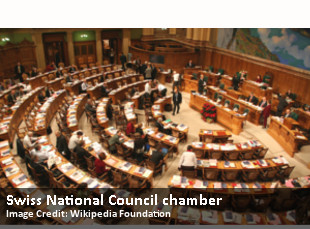
Swiss National Council chamberBy JOSEPH FITSANAKIS | intelNews.org |
The lower house of the Swiss parliament has voted to stop considering a legislation designed to help the United States identify tax evaders, just days after a former Central Intelligence Agency (CIA) employee revealed an espionage operation targeting a Swiss bank executive. The legislation, which was drafted by the government of Switzerland, is aimed at addressing demands by Washington for Swiss banks to turn over to US authorities the identities of American tax dodgers. It is believed that tens of thousands of wealthy Americans manage to evade their tax obligations each year by exploiting strict Swiss banking privacy laws, which effectively shield them from US internal revenue authorities. The legislation has already been approved by the upper house of the Swiss Federal Assembly (the Council of States), but it needs to be cleared by the lower house (the National Council) before it can be officially enacted. Interestingly, the legislation was halted in the lower house just days after American intelligence whistleblower Edward Snowden revealed a US espionage operation aimed at recruiting a Swiss bank official. Snowden, a former technical assistant for the CIA, disclosed the existence of PRISM, a clandestine national security electronic surveillance program operated by the United States National Security Agency (NSA). In addition to PRISM, Snowden, 29, spoke about a CIA operation in 2007, when he was allegedly stationed under diplomatic cover at the CIA station in Geneva, Switzerland. Read more of this post

UK/US spy agencies targeted heads of state at London G20 meeting

NSA/GCHQ listening station in Menwith HillBy JOSEPH FITSANAKIS | intelNews.org |
British and American intelligence agencies targeted the communications of heads of state and other senior officials during a G20 summit held in London in 2009, according to documents. The summit was hosted by the then British Prime Minister Gordon Brown and was attended by delegates from 20 major world economies, including then Russian President Dmitry Medvedev, who was specifically targeted in the spy operation. British newspaper The Guardian, which published the information, said that delegates had their personal computers and cellular telephones monitored during a joint effort by the US National Security Agency (NSA) and Britain’s General Communications Headquarters (GCHQ). The two agencies, which are tasked with intercepting communications signals on behalf of their respective governments, maintain a jointly administered listening base inside the Royal Air Force station in Menwith Hill near Harrogate, North Yorkshire. According to one of the documents, entitled “Russian Leadership Communications in support of President Dmitry Medvedev at the G20 summit in London —Intercept at Menwith Hill station”, the listening facility was utilized to spy on the communications of the Russian President during his stay in London. The targeting began as soon as President Medvedev and the Russian delegation arrived in the British capital on April 1, and continued for several days. The top-secret document, which was shared between British, American, Australian, Canadian, and New Zealand intelligence services, noted “a change in the way Russian leadership signals have been normally transmitted” through satellite links from the Russian embassy in London. Another set of documents, also published by The Guardian, indicate that some G20 summit delegates were “tricked into using Internet cafes [that] had been set up by British intelligence agencies” in order to intercept their email communications. Read more of this post

UK planned to spy on 2009 Commonwealth heads of state meeting

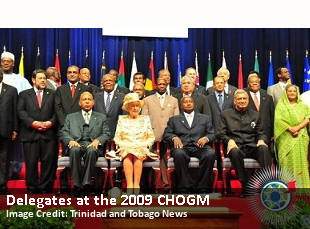
Delegates at the 2009 CHOGMBy JOSEPH FITSANAKIS | intelNews.org |
British intelligence agencies had plans to spy on a British Commonwealth meeting, which was attended by Queen Elizabeth and the President of France, among other heads of state. The plans to spy on the meeting, which was held in 2009, are revealed in a document disclosed to The Guardian newspaper by American whistleblower Edward Snowden. Earlier this month, Snowden, a former technical assistant for the United States Central Intelligence Agency (CIA), disclosed the existence of PRISM, a clandestine national security electronic surveillance program operated by the United States National Security Agency (NSA). The Guardian said on Sunday that it had in its possession a page from an internal classified document given to NSA by Britain’s General Communications Headquarters (GCHQ), which is tasked with collecting signals intelligence. The document apparently outlines plans to spy on international delegates in order to “give UK ministers an advantage in talks with their Commonwealth counterparts”. Some “key intelligence [collection] requirements” at the summit, which took place in 2009 in Trinidad, included “intelligence on South Africa’s views on Zimbabwe”, as well as “climate change reporting”. The document, says The Guardian, also sets out a schedule for various British intelligence agencies to arrive and begin operations in the South American island-nation. GCHQ is instructed to initiate its surveillance activities following the arrival of the international delegates. On the other hand, the Secret Intelligence Service (SIS, also known as MI6), which is Britain’s primary external intelligence agency, is expected to set up operations in Port of Spain several days prior to the event. Read more of this post

News you may have missed #842 (world reaction to Snowden leak)

Edward SnowdenBy IAN ALLEN | intelNews.org |
►►Chinese media focus on Snowden leaks. The front pages of Chinese state media were covered Thursday with the allegations of ex-CIA employee Edward Snowden, who says the US government has been hacking computers in China for years. Speaking to media in Hong Kong, where he is currently staying, Snowden said the US has been hacking computers in Hong Kong and mainland China since 2009. He said targets include public officials, businesses and the Chinese University of Hong Kong. Those claims by Snowden were the top story on most of China’s major news portals on Thursday
►►Switzerland furious about Snowden’s charge that CIA spies on Swiss banks. One of the many lurid details in The Guardian’s remarkable interview with NSA whistleblower Edward Snowden was his account of what initially prompted him to leak: namely a CIA tour in Switzerland, where CIA officers recruited Swiss banking officials. The Snowden disclosure could not come at a worse time for the Swiss government, which is trying to convince parliament to back its emergency plan that would allow Swiss banks to turn over data on tax evaders to the US government.
►►Is Russia considering giving asylum to Snowden? Asked if the 29-year-old could claim asylum from Russia, a spokesman for President Vladimir Putin told the newspaper Kommersant: “If such a request is received, it will be considered”. Any attempt by the Kremlin to give refuge to Mr Snowden, amid calls for his prosecution under the US Espionage Act, is likely to infuriate the White House and provoke a major diplomatic standoff.