News you may have missed #401

Bookmark and Share

News you may have missed #355

Bookmark and Share

Analysis: An Economic Security Role for European Spy Agencies?

Economic espionage

Economic spying

By JOSEPH FITSANAKIS | intelNews.org |
Last February, Spain’s intelligence service began investigating alleged suspicious efforts by foreign financial speculators to destabilize the Spanish economy. According to newspaper El País, the Spanish government asked the country’s Centro Nacional de Inteligencia (CNI) to probe links between speculative moves in world financial markets and a series of damaging editorials “in the Anglo-Saxon media”. There are indications that the National Intelligence Service of Greece (EYP) is following in the CNI’s footsteps. In February, when Athens and Brussels began to realize the magnitude of the financial crisis threatening the European common currency, several news outlets suggested that the EYP was cooperating with Spanish, Irish and Portuguese intelligence services in investigating a series of coordinated speculative attacks on money markets, most of which allegedly originated from London and Washington. Read more of this post

News you may have missed #307

Bookmark and Share

News you may have missed #293

  • US DHS monitors websites. According to a document released by the US Department of Homeland Security, Cryptome, Wired‘s Danger Room blog, and WikiLeaks, are among websites the DHS systematically monitors “in order to provide situational awareness and establish a common operating picture”. IntelNews wants to take this opportunity to say ‘hi’ to members of the DHS lurking around.
  • Russian spy lived in Dayton, stole secrets. Iowa-born and -bred communist and US Army engineer, George Koval, was a master at blending in. And, as it turns out, he was also a master spy for the Soviet Union. He did just that while working on the Manhattan Project in Dayton for six months in 1945.
  • Niger army suspends constitution. No word yet in Niger about the elections promised by the military coup plotters who appear to have staged a successful coup. For those who may not know, in international politics, Niger means uranium –lots of it. It’s also worth asking what ten agents of Bulgaria’s counterterrorism unit were doing in Niger on the day of the coup.

Bookmark and Share

News you may have missed #0286

  • More on CIA spies working for corporations. Author Eamon Javers provides more information about his new book, in which he examines the increasing phenomenon of CIA agents working for private corporations on the side.
  • Rio Tinto spy controversy thickens. Anglo-Australian mining company Rio Tinto says it is “extremely worried” about four of its staff, who were arrested last July by Chinese authorities and have now been formally charged with espionage.
  • Court keeps White House spy emails secret. Two weeks ago, US President Barack Obama declared in his State of the Union address that “it’s time to require lobbyists to disclose each contact they make on behalf of a client with my administration or Congress”. This does not appear to apply to telecommunication industry lobbyists, who campaigned in favor of facilitating warrantless communications interception through the National Security Agency’s STELLAR WIND program.

Bookmark and Share

News you may have missed #0250

  • Pakistanis ask US to quit drone strikes. A Pakistani intelligence official has told the Associated Press that the response to the December 30 suicide bombing that killed seven CIA agents should not include intensifying unmanned drone strikes inside Pakistan. However, the CIA has reportedly “stepped up drone strikes” since the bombing.
  • Bush, Obama administrations guilty for neglecting info sharing. Thomas E. McNamara, former head of the US federal Information Sharing Environment, says the Bush and Obama administrations are both guilty of either losing interest or not focusing at all on promoting information sharing among often-secluded US government agencies.
  • China ends probe into Rio Tinto espionage case. Chinese prosecutors have now taken over the case of Stern Hu, the jailed boss of Anglo-Australian mining corporation Rio Tinto, after officials ended their investigation. Hu was arrested last July on espionage charges.

Bookmark and Share

Comment: Did Russian Intelligence Hack Climate-Change Emails?

Tomsk, Siberia

Tomsk, Siberia

By JOSEPH FITSANAKIS* | intelNews.org |
For over a fortnight, the world’s news services have focused on the so-called ‘Climategate’, the hundreds of University of East Anglia’s Climatic Research Unit emails that were hacked from the university’s server and leaked onto the Internet. The stolen emails, some of which date back to 1996, have reignited conspiracy theories about the role of human activity in climate change. But there is surprisingly little discussion about who hacked into the university’s server and stole the personal emails.

Read more of this post

News you may have missed #0197

Bookmark and Share

News you may have missed #0182

  • China to keep Rio Tinto boss in prison. The Chinese government has extended (again) by two months a probe into Stern Hu, the jailed boss of Anglo-Australian mining corporation Rio Tinto. Hu was arrested by the Chinese last July on espionage charges.
  • Czech spy agency objects to outing Cold War agents. Recently a Czech research center published an extensive list of names of agents of StB, the country’s main intelligence agency in the communist era. But StB’s post-communist successor, the ÚZSI, condemned the airing of the names, calling it “a massive violation of protection of sources that is part of intelligence work, which also may have a negative impact on the Czech Republic’s [current] interests”.
  • Iran reportedly creates new domestic spy agency. A radical dissident Iranian group in Paris, with known ties to Washington, claims the Iranian regime has undertaken “the largest overhaul of the [country’s] intelligence structure since 1989”.

Bookmark and Share

Thatcher’s son was informant for South African spy service

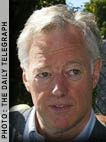
Sir Mark Thathcer

Sir Mark Thathcer

By JOSEPH FITSANAKIS | intelNews.org |
The son of Britain’s former Prime Minister, Margaret (now Baroness) Thatcher, has admitted turning informer to a South African intelligence agency, in connection to a coup plot in central-west Africa which he was accused of having helped finance. In 2004, Sir Mark Thatcher was arrested by members of an elite anticorruption squad in South Africa, for his alleged role in a failed coup against Teodoro Obiang Nguema Mbasogo, the longtime dictator of energy-rich Equatorial Guinea. Several South African and European mercenaries, including Simon Mann, a British former Special Forces officer, and Nick du Toit, a South African arms dealer, were arrested in Zimbabwe during the planning stages of the failed coup. It soon became understood that the plotters wanted to replace Obiang with exiled opposition leader Severo Moto Nsa, probably in return for access to lucrative oil contracts. Read more of this post

News you may have missed #0119

  • CIA opens center on climate change. The CIA Center on Climate Change and National Security is a small unit led by senior specialists from the Directorate of Intelligence and the Directorate of Science and Technology. It focuses on “the national security impact of phenomena such as desertification, rising sea levels, population shifts, and heightened competition for natural resources”. Methinks the emphasis will probably be on the latter.
  • Brazilian political figures spied on after dictatorship. Senior Brazilian politicians, religious leaders and activists were spied on illegally for 16 years after the 1964-1985 military regime, according to recent allegations in the country’s press. Major surveillance targets included Brazil’s current President Luiz Inacio Lula da Silva, opposition leader and Sao Paulo Governor Jose Serra, Cardinal Claudio Hummes, and others.
  • New book examines life of Franco-sympathizer British spy. Jimmy Burns has written a biography of his father, Tom Burns, an anti-communist sympathizer of Spanish dictator Francisco Franco, who organized the British intelligence network in Spain during and after World War II.

Bookmark and Share

News you may have missed #0116

  • Australia blocks Chinese mining investment on security grounds. The Australian government has for the second time this year vetoed a multi-billion dollar mining project involving a Chinese company, on national security grounds (did someone say Rio Tinto?). The veto follows news earlier this month that the Australian Security Intelligence Organisation (ASIO) investigated the Australian subsidiary of Chinese telecommunications company Huawei Technologies because of its rumored links with China’s intelligence establishment.
  • Declassified files reveal massive FBI data-mining project. An immense FBI data-mining system billed as a tool for hunting terrorists is being used in hacker and domestic criminal investigations, and now contains tens of thousands of records from private corporate databases, including car-rental companies, large hotel chains and at least one national department store, according to declassified documents.
  • Book by Danish special forces soldier reveals dirty tricks. A Danish court has turned down an appeal by the country’s military to ban the publication of a book by Thomas Rathsack, former member of Jaegerkorps, an elite army unit. Among other things, the book reveals systematic breach of Geneva Convention directives by members of the unit deployed in Iraq and Afghanistan.

Bookmark and Share

CIA furious over UK-Libyan bomber release deal

Al-Megrahi

Al-Megrahi

By JOSEPH FITSANAKIS | intelNews.org |
The CIA has threatened to stop sharing intelligence with UK spy services in protest over the recent release from a Scottish prison of a Libyan intelligence agent convicted for the 1988 bombing of Pan Am flight 103, according to a British newspaper. Abdelbaset al-Megrahi, who is now back home in Tripoli, was released by British authorities on August 19 on compassionate grounds, after medical tests allegedly showed he is suffering from terminal cancer. Many observers, including former CIA agent Robert Baer, voiced suspicion about the reasons behind al-Megrahi’s release, while several British newspapers, including The London Times, alleged that the release was part of a lucrative oil exploration deal between British Petroleum (BP) and the Libyan government. Now an article in British newspaper The News of the World claims that the CIA leadership has vowed to terminate intelligence cooperation with the UK over the Libyan’s release. Read more of this post

Ex-MI6 spy at center of Lockerbie prisoner release deal

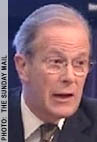
Sir Mark Allan

Sir Mark Allan

By JOSEPH FITSANAKIS | intelNews.org |
A British former intelligence official has been identified as having had a major role in the recent release from a Scottish prison of a Libyan intelligence agent convicted for the 1988 bombing of Pan Am flight 103.  Abdelbaset al-Megrahi, who is now back home in Tripoli, was released by British authorities on August 19 on compassionate grounds, after medical tests allegedly showed he is suffering from terminal cancer. Many observers, including former CIA agent Robert Baer, voiced suspicion about the reasons behind al-Megrahi’s release, while several British newspapers, including The London Times, alleged that the release was part of a lucrative oil exploration deal between British Petroleum (BP) and the Libyan government. Now The Sunday Mail has identified Sir Mark Allen, a former senior intelligence official who works for BP, as “the driving force” behind al-Megrahi’s release. Read more of this post