Hezbollah uncovered CIA network in Lebanon, admit US officials
November 22, 2011 1 Comment
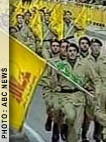
Hezbollah rally
By JOSEPH FITSANAKIS | intelNews.org |
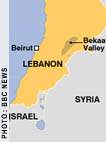
In June of this year, Lebanese militant group Hezbollah claimed it had rooted out three of its members who were allegedly spying for the United States Central Intelligence Agency. The US State Department refused to comment on the allegations, and the US embassy in Lebanon issued a statement denying Hezbollah’s accusation. But the Associated Press now says that the Lebanese Shiite group’s claims were accurate, and that the CIA has had to significantly scale back its operations in Lebanon, as a result of Hezbollah’s counterintelligence success. The news agency cites current and former US officials, who say that the Agency’s operations in Lebanon were “badly damaged” after Hezbollah identified and captured several CIA ‘assets’. It appears that the militant group, which controls large parts of southern Lebanon, was able to capture CIA agents —local ‘assets’ recruited by CIA case officers to spy on behalf of Washington— but not actual CIA officers. Still, according to the Associated Press, the operational blow suffered by the Agency’s station in the Near Eastern country has been substantial, and local CIA case officers “have secretly been scrambling to protect their remaining spies […] before Hezbollah can find them”. The agency quotes an unnamed government source, who claims that the damage to the CIA’s network of agents in Lebanon has been “greater than usual”. Many attribute the Shiite group’s counterintelligence success to a relatively new counterespionage apparatus, which Hezbollah’s leader, Sheik Hassan Hasrallah often calls the “spy combat unit”. The group, which is said to have gone operational in 2004, is responsible for essentially decimating Israel’s intelligence network in southern Lebanon, having conducted over 100 arrests since 2009. Read more of this post









 intelNews.org
News you may have missed #636
November 26, 2011 by Ian Allen 2 Comments
Lebanon
►►Careless codeword may have cost CIA its Lebanon network. Hezbollah have reportedly just rolled up the CIA’s network of spies in Lebanon. If so, it’s because of one of the stupidest, least secure code words in history. According to ABC News, Hezbollah operatives figured out that CIA informants, who had infiltrated the Iranian proxy group, were meeting with their agency handlers at a Beirut Pizza Hut. How could Hezbollah deduce that location? “The CIA used the codeword ‘PIZZA’ when discussing where to meet with the agents,” ABC reports.
►►UK spy chiefs to be publicly questioned for first time. The heads of British intelligence agencies are set to be questioned for the first time in public, under plans to make spies more accountable. The directors of MI5, MI6 and GCHQ will face Parliamentarians on the Intelligence and Security Committee. Although, they have recently begun to make rare public appearances, and deliver speeches, it will be the first time the intelligence agency heads will face public cross-examination over their activities.
►►Documents reveal largest domestic spy operation in Canadian history. Police organizations across Canada co-operated to spy on community organizations and activists in what the Royal Canadian Mounted Police called one of the largest domestic intelligence operations in Canadian history, documents reveal. Information about the extensive police surveillance in advance of last year’s G8 and G20 meetings in southern Ontario comes from evidence presented in the case of 17 people accused of orchestrating street turmoil during the summits.
Filed under Expert news and commentary on intelligence, espionage, spies and spying Tagged with 0 Careless codeword may have cost CIA its Lebanon network, 0 Documents reveal largest domestic spy operation in Canadian history, 0 UK spy chiefs to be publicly questioned for first time, Beirut, Canada, CIA, civil liberties, domestic intelligence, GCHQ, Hezbollah, Intelligence and Security Committee (UK), intelligence oversight, Lebanon, MI5, MI6, News, news you may have missed, Royal Canadian Mounted Police, surveillance, UK, UK House of Commons, United States