News you may have missed #0194

Bookmark and Share

French spies saw Hitler danger in 1924, document shows

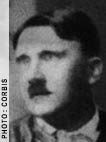
Hitler in 1924

Hitler in 1924

By JOSEPH FITSANAKIS | intelNews.org |
At the same time when British intelligence was employing Benito Mussolini, and US diplomats were describing segments of the German Nazi party as “moderate [with] appeal to all civilized and reasonable people”, French intelligence reports were identifying Adolf Hitler as a “fascist […] demagogue” and “the German Mussolini”. This emerges from a 1924 report by an anonymous French intelligence operative, which is due to be declassified along with thousands of similar documents currently stored in the French National Archives, according to French newspaper Le Monde. Read more of this post


News you may have missed #0192

  • Ex-agent reveals botched CIA operation in Siberia. Former CIA operative Mike Ramsdell has described a botched post-Cold War CIA operation in Siberia, which almost cost him his life. Another, apparently unrelated, botched CIA operation in Siberia was revealed last August.
  • How secret Operation WEDGE ended Czechoslovak communism. “There are dozens of conspiracy theories about the Eastern European revolutions of 1989: that it was all the work of the CIA, the KGB, or a cabal of Western banks with mafia connections. Most are hokum. But in Czechoslovakia there really was a conspiracy behind the theory”.
  • Secret US-Japanese nuclear deal comes to light. IntelNews has previously discussed this secret arrangement, which reportedly allows US military vessels and aircraft carrying nuclear weapons to enter Japanese territorial waters, as long as Japan is protected by the US nuclear umbrella.

Bookmark and Share

News you may have missed #0182

  • China to keep Rio Tinto boss in prison. The Chinese government has extended (again) by two months a probe into Stern Hu, the jailed boss of Anglo-Australian mining corporation Rio Tinto. Hu was arrested by the Chinese last July on espionage charges.
  • Czech spy agency objects to outing Cold War agents. Recently a Czech research center published an extensive list of names of agents of StB, the country’s main intelligence agency in the communist era. But StB’s post-communist successor, the ÚZSI, condemned the airing of the names, calling it “a massive violation of protection of sources that is part of intelligence work, which also may have a negative impact on the Czech Republic’s [current] interests”.
  • Iran reportedly creates new domestic spy agency. A radical dissident Iranian group in Paris, with known ties to Washington, claims the Iranian regime has undertaken “the largest overhaul of the [country’s] intelligence structure since 1989”.

Bookmark and Share

News you may have missed #0176

  • Hungarian Cold War double agent dies at 71. István Belovai, a former Lieutenant-Colonel in the Hungarian People’s Army Military Strategic Service (HPAMSS), who secretly began working for the US in 1984, has died in Denver, Colorado. Belovai revealed to the CIA details of the so-called Conrad spy ring. He was arrested by Hungarian security agents in 1985 and fled to the US upon his release from prison, in 1991, after being warned that his life was in danger.
  • US military spies to train Iraqi counterparts. The 201st Battlefield Support Battalion is training Iraqis on how to “coordinate spying from human sources, intercept cell phone and other electronic messages, do counterintelligence work, manage linguists, and monitor and target enemy positions, among other specialized tasks”.
  • Swiss secret service chief calls for more spies. Markus Seiler, the head of the new Swiss Federal Intelligence Service, which combines the country’s foreign and domestic intelligence services, has called Switzerland “a stomping ground for secret services”, and has called for more counterintelligence personnel. He has also said that the intelligence services plan a greater presence in Swiss embassies around the world.

Bookmark and Share

CIA documents shed light on eventful 1956 Soviet visit to Britain

Hugh Gaitskell

Hugh Gaitskell

By JOSEPH FITSANAKIS | intelNews.org |
A batch of declassified CIA reports obtained by the BBC sheds light on the diplomatic angle of a historic and eventful Soviet high-level visit to Britain in 1956. In April of that year, First Secretary of the Communist Party of the USSR, Nikita Khrushchev, and Nikolai Bulganin, Chairman of the Council of People’s Commissars, arrived in Britain aboard Russian warship Ordzhonikidze, which docked at Portsmouth harbor. Their eight-day tour of Britain marked the first-ever official visit by Soviet leadership to a Western country. The tour ended badly, however, after a botched CIA/MI6 undersea operation, aiming to explore the then state-of-the-art Ordzhonikidze, ended in the disappearance of MI6 diver Lionel “Buster” Crabb. The body of Crabb, one of several MI6 agents involved in the operation, was never recovered. In 2007, Eduard Koltsov, a retired Russian military diver, said he killed a man he thinks was Crabb, as he was “trying to place a mine” on the Soviet ship. Read more of this post

News you may have missed #0175

  • South Korean spy agency now regards North as ‘international affairs’. The Seoul-based National Intelligence Service (NIS) has relocated its unit that monitors North Korea under a department dealing with international affairs. The change, described as a “paradigm shift” by one South Korean official, apparently reflects President Lee Myung-bak’s view that the North Korean issue should be dealt more “from the international geopolitical perspective”.
  • Robbery of S. African intel agent was planned, say officials. The robbery by five men of a woman said to be an agent of South Africa’s National Intelligence Agency “was conducted as though it was very well planned”, according to police.
  • Interview with ex-West German spy master. Radio France Internationale has aired an interview with Hans-Georg Wieck, chief of the West German Secret Service (BND) between 1985 and 1990. Among other things, Wieck claims that BND had “well-placed” agents in East Germany, as well as in spy services of other communist, including the KGB.

Bookmark and Share

News you may have missed #0174

  • West feared German reunification in 1989, documents show. The fall of the Berlin Wall 20 years ago caused major anxiety in not only Eastern, but also Western capitals, to the point of outright opposition to a possible German unification, according to documents published last Friday by the National Security Archive.
  • Convicted CIA agents also in Norway. At least two of the 22 (not 23, as the article mistakenly states) CIA agents convicted last week for the 2003 abduction from Italy of Muslim cleric Hassan Mustafa Osama Nasr, were also active in Norway, according to Norwegian daily Stavanger Aftenblad.
  • Shin Bet tried to recruit alleged Israeli terrorist. Jack Teitel, an American-born Jewish settler who was recently arrested for allegedly having murdered two Palestinians, was asked by Israel’s internal intelligence agency to inform on extremist Israeli groups after the attacks, the agency said Friday.

Bookmark and Share

News you may have missed #0162

  • South Korean 1967 spy case was “trumped up”, report finds. A national truth commission set up by South Korea’s primary intelligence organization, the National Intelligence Service, has concluded that the so-called Tongbaengnim spy ring case was “grossly trumped up”. The case culminated in a public show-trial of 194 South Korean academics, artists and students, accused of spying for North Korea.
  • CIA torture sparked rift with FBI. The Associated Press is reporting what intelNews readers have known since July 20; namely that the CIA’s use of “harsh interrogation techniques” against captured terror suspects made FBI interrogators wary of the legality of the methods. As a result, FBI agents were barred from the interrogations.
  • Analysis: Friendship is no bar to espionage. As relations between Taiwan and China improve, would it be reasonable to expect that China will temper espionage activity against Taiwan, and vice-versa?

Bookmark and Share

News you may have missed #0161

  • No new clues in released Cheney FBI interview. Early in October, a US federal judge ordered the FBI to release the transcript of an interview with former US vice-president Dick Cheney, conducted during an investigation into who leaked the identity of CIA operative Valerie Plame. There were rumors that the classified transcript pointed to George W. Bush as the source of the incriminating leak. But the released interview transcript contains nothing of the kind.
  • Sir Hollis not a Soviet agent, says MI5 historian. “Sir Roger Hollis was not merely not a Soviet agent, he was one of the people who would least likely to have been a Soviet agent in the whole of MI5″, according to Professor Christopher Andrew, author of the recently published In Defense of the Realm. Dr. Andrew’s comments were in response to the book Spycatcher, by former MI5 officer Peter Wright, which alleges that Sir Hollis, former head of MI5, had been a KGB agent.
  • New report says nuclear expert’s death was not suicide. A new autopsy into the death of British nuclear scientist Timothy Hampton has concluded that “he did not die by his own hands”, as previously suggested. The post-mortem examiner said Hampton “was carried to the 17th floor from his workplace on the sixth floor” of a United Nations building in Vienna, Austria, “and thrown to his death”.

Bookmark and Share

New research reveals extent of East German spying in Canada

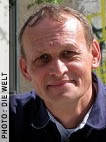
Helmut Muller-Enbergs

Muller-Enbergs

By JOSEPH FITSANAKIS | intelNews.org |
Previously unknown aspects of East German intelligence-gathering operations in Canada will be presented this coming Saturday at the annual conference of the Canadian Association for Security and Intelligence Studies in Ottawa. The new data was unearthed in Berlin by Helmut Müller-Enbergs, a researcher with Germany’s Office of the Federal Commissioner Preserving the Records of the Ministry for State Security of the German Democratic Republic (BStU). His findings show that the Stasi (Hauptverwaltung Aufklärung), the main foreign intelligence department of the German Democratic Republic (GDR), was able to gain “deep insights into the domestic and foreign affairs of Canada”. The feat appears impressive when considering that the GDR had no embassy in Canada until 1987. Read more of this post

News you may have missed #0159

  • US Congress wants to change locks in document safes. Some Congress members have revived “a decade-old debate” on replacing security locks on government safes for storing classified documents with new electromechanical locking mechanisms. According to one independent security consultant, existing mechanical locks in classified document safes “can be penetrated surreptitiously within 20 minutes”, and older barlock containers still in use “can be penetrated within seconds”.
  • A US spy in wartime Ireland. The interesting story of Major Martin S. Quigley, one of three US spies sent by the Office of Strategic Services (OSS, CIA’s forerunner) to Ireland, on a mission to find out whether the country’s government, which was officially neutral in the War, was actually siding with Nazi Germany.

Bookmark and Share

Mussolini was paid by Britain’s MI5, archives reveal

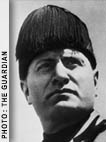
Benito Mussolini

Benito Mussolini

By JOSEPH FITSANAKIS | intelNews.org |
A Cambridge professor has unearthed archived documents showing that money from MI5, Britain’s counterintelligence and security agency, helped Italian fascist dictator Benito Mussolini lunch his political career. Dr. Peter Martland, Fellow at Corpus Christi College, Cambridge, said MI5’s Rome station, which at the time was staffed by 100 British intelligence officers, paid Mussolini £100 a week (around £6,000 or $9,600 a week in today’s money) starting “from the autumn of 1917 [and] for at least a year”. The payments, which were authorized by MI5’s director in Rome, Sir Samuel Hoare (later Lord Templewood), were aimed to assist Mussolini’ newspaper, Il Popolo d’Italia, propagandize in favor of Italy’s continued fighting in World War I on the side of the Allied Powers, of which Britain was also a member. Read more of this post

News you may have missed #0140

  • CIA Intellipedia gurus get Homeland Security Medal. Don Burke and Sean Dennehy, the CIA agents behind Intellipedia, have been awarded a medal for “promoting and expanding information-sharing in the Intelligence Community”. As intelNews noted last August, Intellipedia, the intelligence community’s version of Wikipedia, has grown markedly since its formal launch in 2006. It now averages more than 15,000 edits per day and is home to 900,000 pages and 100,000 user accounts.
  • Cuban Five resentencing delayed. A US federal judge has accepted requests from the lawyers of Antonio Guerrero, a member of the Cuban Five spy ring, to delay their resentencing, after the US government refused to turn over any national security damage assessments in the case. Washington accuses the Five of spying on the US for Cuba. But an appeals court ruled earlier this year that the sentences they received (ranging from 19 years to life) were too long. It appears that Guerrero’s sentence will be reduced from life to 20 years behind bars.
  • Was Christopher Columbus a spy? An independent researcher is raising eyebrows by suggesting that Columbus was a Portuguese spy who knew exactly what he was doing when he supposedly “got lost” in the Atlantic in 1492.

Bookmark and Share

News you may have missed #0135

  • More revelations in “unprecedented” book on MI5 history. More revelations in Christopher Andrew’s In Defense of the Realm include the disclosure that Margaret Thatcher tried to get MI5 to spy on British trade union activists when she was Prime Minister (MI5 refused). Meanwhile, Professor Andrew has begun serializing selected chapters of the book in The London Times, here and here.
  • Court lets Canadian spies snoop on targets overseas. A court ruling has permitted the Canadian Security Intelligence Service and the Communications Security Establishment to eavesdrop on Canadian nationals traveling overseas. Until now, the two agencies could spy on Canadians so long as they were within the country’s borders.
  • CIA endorses cloud computing. The CIA is emerging as one of the US government’s strongest advocates of cloud computing, even though “cloud computing as a term really didn’t hit our vocabulary until a year ago”, according to Jill Tummler Singer, the CIA’s deputy Chief Intelligence Officer. This article, however, fails to mention that the NSA is also moving to cloud computing in a big way.

Bookmark and Share