Ashraf Marwan: Israel’s ‘Angel’ or Egypt’s Double Agent?

Ashraf MarwanASHRAF MARWAN, POPULARLY KNOWN “the Angel,” is regarded as one of the greatest spies in Israeli intelligence history—the man on whom the entire Israeli government relied, and the informant who warned of the Yom Kippur War. Long-standing suspicions that he was actually a double agent have been strongly dismissed.

However, a comprehensive investigation by two Israeli journalists, Ronen Bergman and Yuval Robovitz, published in the popular Israeli newspaper Yedioth Ahronoth under the title “The Angel of Lies”, presents a different picture. Based on thousands of secret documents not yet revealed and rare conversations with people involved in the operation, their report claims that ‘the Angel’ was actually the spearhead of Egypt’s deception plan before and during the war—and that he succeeded beyond all expectations.

A Spy or Double Agent?

Bergman and Robovitz examined whether Ashraf Marwan—advisor to Egyptian President Anwar Sadat and a Mossad agent who died in 2007—was truly the best agent Israel had before the Yom Kippur War. Their findings indicate that a series of serious operational failures, combined with arrogance within the Israeli intelligence community, made Marwan one of the most dangerous spies ever to act against Israel.

They also investigated whether he was genuinely an Israeli agent who contributed meaningfully to Israel’s national security, as claimed by Mossad and by scholar Professor Uri Bar-Joseph, who wrote extensively about the Yom Kippur War intelligence failure and authored the well-known book The Angel: The Egyptian Spy Who Saved Israel. Netflix later produced a film, The Angel, based on Bar-Joseph’s book.

Or, was Marwan, as the journalists argue, a double agent working for Egypt from the beginning—since volunteering for Israeli intelligence in 1970—and who managed to deceive Israel for years, particularly by delaying his warning about Egypt’s impending attack until roughly 12 hours before it began? According to Bergman and Robovitz, Marwan knew about Egypt’s plans weeks earlier but withheld that information, allowing Egypt to launch a surprise attack.

A Public Debate

Following the article’s publication, a public debate erupted between Bergman and Robovitz on one side and Professor Uri Bar-Joseph on the other, over Marwan’s true motives. Whether he was a double agent or a loyal Israeli operative, all agree he played a key role in the intelligence drama preceding the Yom Kippur War. Read more of this post

Russia using nontraditional means to gather intelligence, Finland warns

SUPO FinlandRUSSIA’S NEED TO GATHER intelligence from Scandinavian targets has increased considerably since Finland and Sweden joined the North Atlantic Treaty Organization (NATO), prompting Moscow to seek nontraditional means of collecting intelligence, according to Finland’s spy agency. A new report by the Finnish Broadcasting Company (Yle) relays a warning by the Finnish Security and Intelligence Service (SUPO) that Russian spies are increasingly operating in Scandinavia without relying on diplomatic protection.

Human intelligence (HUMINT) operations are typically carried out of diplomatic facilities by intelligence officers who enjoy various degrees of diplomatic immunity. Such protections are seen as crucial for the safety of intelligence personnel, who tend to engage in illegal activities while stationed abroad. However, the number of Russian intelligence officers who are based in diplomatic facilities in Finland and elsewhere in Scandinavia has “significantly decreased” in recent years, according to the Yle report.

The reason for the decline in numbers rests with the numerous expulsions of Russian diplomatic personnel —which include intelligence officers— that took place throughout Europe in the months following Russia’s February 2022 invasion of Ukraine. Since then, Finland is one of dozens of European countries that have repeatedly denied Russia’s requests for the issuance of diplomatic visas. As a result, Russian embassies and consulates in Finland remain understaffed and mostly devoid of intelligence personnel.

In response to this new reality, the Kremlin has been experimenting with using nontraditional HUMINT collectors. The latter are not based in diplomatic facilities and are not protected by diplomatic immunity. Such nontraditional intelligence collectors operate as “journalists or researchers”, according to SUPO. At the same time, Russian intelligence agencies increasingly target for recruitment Finns who life in Russia, or try to recruit them while they are traveling elsewhere in Europe.

Lastly, Russian intelligence agencies are systematically hiring criminals to carry out specific tasks on behalf of the Kremlin, in return for money. Such criminals include computer hackers, who are attracted by the Russian state. Indeed, the Russian government is systematically “providing favorable conditions” for computer hackers to operate out of Russian territory. They receive money and protection in return for letting the Russian state use them as a cover for cyber espionage, sabotage, and influence operations.

Author: Joseph Fitsanakis | Date: 18 November 2024 | Permalink
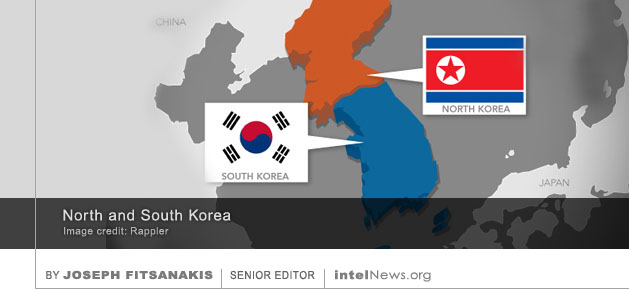
South Korea’s top HUMINT agency probes potentially catastrophic data breach

North South KoreaIN A HIGHLY UNUSUAL move, authorities in Seoul have publicly acknowledged a data leak that may have resulted in the outing of a number of South Korean undercover human intelligence (HUMINT) operatives abroad. The South Korean Ministry of National Defense said on Sunday it was investigating an alleged link of highly sensitive data belonging to the Korea Defense Intelligence Command (KDIC).

Formed under American tutelage in 1946, KDIC is today considered South Korea’s most secretive intelligence agency. It operates under the Defense Intelligence Agency (DIA), which makes it part of the Ministry of National Defense’s chain of command. Unlike DIA’s civilian counterpart, the National Intelligence Service, KDIC rarely surfaces in unclassified news reporting, and it almost never issues press releases. Its operations primarily involve HUMINT activities, thus making it South Korea’s most active HUMINT-focused agency.

Predictably, KDIC’s primary intelligence target is North Korea. The agency gathers much of its intelligence on the North through an extensive network of undercover officers operating with diplomatic credentials. KDIC also handles non-official cover (NOC) operatives, who are located mostly in Asia. There have been periodic claims in the unclassified literature that some KDIC NOCs have operated inside North Korea at times –though such claims remain speculative.

On Saturday, the Seoul-headquartered Yonhap News Agency alleged that classified information relating to KDIC had been “leaked”. According to Yonhap, the leak included personally identifiable information about KDIC official and non-official cover personnel stationed abroad. The report claimed that the leak was discovered by South Korean authorities a month ago, and that the discovery had resulted in the recall of several KDIC undercover operatives serving overseas “due to concerns over their identities being exposed”.

The Yonhap report claimed that, according to an ongoing probe, the leak may have originated from a personal laptop computer belonging to a civilian KDIC employee. The employee has since claimed that the laptop had been hacked, but some investigators believe the suspect may have “intentionally left the laptop vulnerable to hacking by North Koreans”.

According to an official statement released on Sunday by the Ministry of National Defense, the case is “currently under investigation by military authorities”.

Author: Joseph Fitsanakis | Date: 29 July 2024 | Permalink

Interview reveals state of mind of Israeli intelligence prior to October 7 attack

Israeli General Staff MilitaryON MARCH 23, CHANNEL 12 of Israeli television aired a remarkable interview with Sassi Elya, the former director of technology at the Israel Security Agency (ISA). Better known by the acronyms Shin Bet or Shabak, the ISA is Israel’s domestic security service. The interview had initially been scheduled for broadcast as part of the evening news on October 7, 2023. However, its airing was canceled due to the attack on Israel by Hamas, which occurred that morning.
But on March 23, after about 5 months, Channel 12 aired the original interview with Elya. The retired official spoke with glee about the advanced technological capabilities developed by the ISA in order to prevent terrorist attacks against Israel. Elya said Israeli intelligence had built a unique system, known as “the Tool”, which allegedly provided intimate knowledge about the life of every Palestinian living in the West Bank and Gaza. This technologically advanced surveillance system allegedly monitored every move of its targets, all for the purpose of preventing potential terrorist attacks against the Jewish state. Elya claimed that, as a result of this advanced technological system, there was no chance that Israel would be surprised by Palestinian militants. This system was so advanced, he said, that intelligence agencies from all over the world were coming to Israel to learn about it.

Thanks to Channel 12, we can now examine Elya’s interview retrospectively, and especially in light of the ISA’s poor performance on October 7, as well as its failure to warn Israeli authorities about Hamas’ preparations for the attack. Notably, Elya was interviewed again for the same television program. Predictably, he admitted that his prior assessment had been wrong and regretted being so overly confident about the technology.

This case demonstrates the overestimation by Israeli intelligence of its own capabilities, because of arrogance and over-confidence. This approach refutes the basic premise of intelligence work: be skeptical and be modest. Furthermore, this case highlights that Israeli intelligence agencies overly relied on technology (SIGINT) in the lead-up to October 7, while seemingly neglecting the low-tech activity of gathering information through human intelligence (HUMINT).

The system that Elya described in his initial interview as the ultimate counterintelligence tool was reportedly criticized internally by some in the ISA for gathering huge amounts of information without offering sufficient analytical capability. This imbalance between collection and analysis can render an entire surveillance system practically useless. The bottom line is that, almost by accident, we are now aware of the state of mind that the ISA was in before the sudden attack by Hamas on October 7, which cost so many lives as a result of the ISA’s complacency.

► Author: Avner Barnea | Date: 01 April 2024 | Permalink

Dr. Avner Barnea is research fellow at the National Security Studies Center of the University of Haifa in Israel. He served as a senior officer in the Israel Security Agency (ISA). He is the author of We Never Expected That: A Comparative Study of Failures in National and Business Intelligence (Lexington Books, 2021).

Eighth person detained in sprawling Taiwanese probe of Chinese spy ring

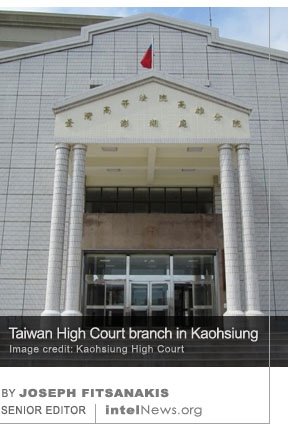
Kaohsiung High Court, TaiwanA SEVENTH PERSON HAS been detained in Taiwan as a result of a broadening investigation into a Chinese spy ring that allegedly provided Beijing with sensitive military intelligence. The existence of the investigation was revealed in January of this year, when the Taiwanese authorities announced the arrests of one retired and six active-duty military officers, all of whom were charged with spying for China.

On January 6 of this year, a retired Taiwanese Air Force colonel, identified only by his last name, Liu, was arrested for spying. According to court documents unsealed at the Taiwan High Court branch in Kaohsiung, Liu retired from the Air Force 2013. Soon afterwards, he began business dealings in China. It was during one of his trips to China when Liu was allegedly recruited by the Chinese government. He then carried out espionage operations on behalf of Beijing for approximately eight years.

Throughout his espionage activities, Liu allegedly used his military contacts to recruit six active-duty Taiwanese Air Force and Navy officers to carry out espionage, in return for monetary payments. The six active-duty military officers were arrested along with Liu on January 6. In April of this year, all seven individuals were formally charged with spying for China, in violation of Taiwan’s Classified National Security Information Protection Act.

Taiwanese government prosecutors alleged that each member of the spy ring received between NT$200,000 and NT$700,000 (approximately US$6,500-23,000) for agreeing to spy for Beijing. As the principal agent, Liu received individual bonuses of between NT$30,000 and NT$100,000 (US$1,000-3,200) each time he gave his Chinese handlers information gathered by one of the members of the spy ring.

On August 16, the Taiwanese government announced that one more individual, referred to as “a field officer” was detained on suspicion of spying for China. The suspect was identified only by his last name, Cheng. He was reportedly arraigned in the Taiwan High Court branch in Kaohsiung, the same court that last January delivered espionage charges against the other seven suspects involved in the spy ring investigation. All eight suspects have been denied bail. Their trial has not yet been set.

Author: Joseph Fitsanakis | Date: 21 August 2023 | Permalink

China arrests government worker who gave CIA ‘core information’ about military

US embassy Rome ItalyA CHINESE GOVERNMENT EMPLOYEE gave “core information” about China’s military to the United States, after he was recruited by a Central Intelligence Agency (CIA) officer in Italy, a Chinese state agency has said. The allegation was made in a statement that was issued on Friday by China’s civilian intelligence agency, the Ministry of State Security (MSS), on its WeChat social media account.

The MSS statement did not specify the period during which the alleged espionage took place. But it named the alleged spy as “Zeng” and described him as a 52-year-old “staff member of a Chinese military industrial group and an important confidential employee” of the Chinese state. According to China’s state-owned newspaper The Global Times, Zeng had been sent to Italy by his employer, presumably in order to pursue graduate studies or receive technical training. While in Italy, Zeng was allegedly accosted by an employee of the United States embassy in Rome, which the MSS identified as “Seth”.

According to the MSS, Seth was a CIA case officer, who befriended Zeng through “dinner parties, outings and trips to the opera”. The Chinese man “developed a psychological dependence” on Seth and was “indoctrinated” by him “with Western values”, the MSS statement claims. Seth eventually convinced Zeng to sign an agreement with the CIA to conduct espionage, after which the Chinese man allegedly received intelligence tradecraft training. Upon returning to China from his stay in Italy, Zeng is alleged to have carried out espionage on behalf of his CIA handlers. The MSS claims Zeng gave his CIA handlers “a great amount of core intelligence” during “multiple secret meetings” with them.

The information Zeng is alleged to have provided to the CIA concerned “key developments about China’s military” to which he had access through his employer. In exchange for this information, Zeng is accused of having received “a huge amount of [financial] compensation” by his CIA handlers. The latter also promised him that they would help his family emigrate to the United States, as per the MSS statement. The spy agency said that Zeng remains in detention while the case is under investigation. The MSS statement also warned other Chinese citizens living or traveling abroad of “the risks and perils” of recruitment by Western spy agencies.

The Reuters news agency said it contacted the United States embassy in Beijing about the MSS allegations, but received no response.

Author: Joseph Fitsanakis | Date: 14 August 2023 | Permalink

U.S., Russian spy agencies publish rival ads encouraging would-be informants

Russia Ukraine WarRIVAL ONLINE CAMPAIGNS BY American and Russian intelligence agencies are encouraging each other’s citizens to contact them, share information and possibly even defect. At least three ads have been  on social media, with the Federal Bureau of Investigation (FBI) issuing the earliest one in February of this year. The Central Intelligence Agency (CIA) and its Russian counterpart, the Foreign Intelligence Service (SVR), are now believed to have published similar ads.
The FBI ad initially appeared on Twitter, directing users to the website of the Bureau’s Washington Field Office. There, a text in Cyrillic urges Russian nationals to “change [their] future” by contacting the FBI. The CIA followed suit on Monday of this week by posting a video on its new channel on Telegraph, a popular social media platform among young Russians. The CIA video portrays frustrated Russian government employees morally torn by the Kremlin’s policies. It concludes with them contacting the CIA through a secure online connection. A narrator’s voice states, “my family will live with dignity thanks to my actions”. Viewers are then assured that their safety is the CIA’s highest priority, should the choose to do the same.

Shortly after the CIA video appeared online, the Russian Ministry of Foreign Affairs’ Director of Information, Maria Zakharova, said that the Russian government would respond “appropriately” to what she called a “CIA provocation”. On Wednesday, a number of Western media outlets reported that the SVR had unveiled a short recruitment video seemingly targeting Americans. The video, shared on Telegram, includes archival news footage of United States military and police personnel, flag-burning demonstrators, and protests against abortions. It concludes with footage of President Joe Biden overlaid with a sniper crosshairs. A narrator states in English: “If you want to help normalcy, help the Foreign Intelligence Service of the Russian Federation”.

Amid the ongoing war in Ukraine, both the United States and Russia are engaging in extensive cyber-enabled operations aimed at each other’s targets. However, these recruitment videos underscore the continued need for highly placed human sources and their central role in multi-platform intelligence collection efforts.

Author: Joseph Fitsanakis | Date: 18 May 2023 | Permalink

United States charges Russian spy who lived in Maryland using forged identity

US Department of JusticeA RUSSIAN INTELLIGENCE OPERATIVE, who lived in Maryland using forged Brazilian identity documents, has been charged with espionage and other crimes by the United States Department of Justice. Victor Muller Ferreira, a Brazilian national, was stopped from entering the Netherlands in June of last year, where he had intended to join the International Criminal Court (ICC) as an intern.
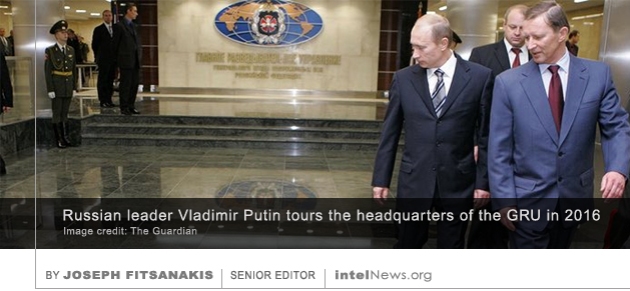
Shortly after Muller was stopped at Amsterdam’s Schiphol International Airport, the Netherlands General Intelligence and Security Service (AIVD) revealed that he was in fact Sergey Vladimirovich Cherkasov, a 36-year-old Russian citizen. According to the AIVD, Cherkasov had worked for over a decade as an intelligence officer for the Main Directorate of the Russian Armed Forces’ General Staff, which is commonly known in the intelligence field as GRU.

A few days after Cherkasov returned to Brazil, a federal court in Guarulhos, a suburb of Sao Paolo, found him guilty of having used the identity of a dead Brazilian citizen to forge identity papers, which he then used to enter and leave Brazil 15 times over 10 years. The 10-year period had started in 2010, when Cherkasov had entered Brazil using his real Russian identity. But when he left the country a few months later, he did so using the forged identity that had allegedly been provided to him by Russian intelligence. Having examined the charges against Cherkasov, the court jailed him for 15 years.

Now the United States Department of Justice has charged Cherkasov with a list of new crimes, including acting as an unregistered agent of a foreign power and repeatedly carrying out visa, bank and wire fraud. The charges resulted from an investigation that was conducted by the Federal Bureau of Investigation’s counterintelligence division, in coordination with the Bureau’s Washington Field Office.

The charges stem from the years 2018-2020, when Cherkasov used his forged Brazilian identity to enroll as Master’s student at the Johns Hopkins University’s School of Advanced International Studies. Cherkasov successfully completed his graduate degree in 2020. Two years later, he left for the Netherlands, where he hoped to enter employment in the ICC.

Author: Joseph Fitsanakis | Date: 27 March 2023 | Permalink

Russia’s spy networks in Europe see greatest post-Cold War setback, experts claim

Russian embassy LondonRUSSIA’S ABILITY TO CONDUCT human intelligence operations in Europe has suffered greater damage in recent years than at any time since 1991, according to some experts. These setbacks have partly been caused by what The Washington Post refers to in a recent article as “a campaign to cripple Russian spy networks”, which is taking place across the continent. This Europe-wide campaign has grown in momentum since the Russian invasion of Ukraine and supplements boarder efforts to arm Ukraine in its war against the Kremlin.

The initial blow against the Kremlin’s spy network was delivered last year, when a wave of mass expulsions of Russian diplomats resulted in more than 400 suspected Russian intelligence officers being ordered to leave various European capitals. According to observes, the expelled Russian diplomats were in reality intelligence officers, who were active across Europe under diplomatic cover. Since that time, European counterintelligence agencies have launched a series of “precision strikes” against what remains of Russia’s human intelligence network across the continent.

The recent wave of expulsions of Russian intelligence personnel was not unprecedented. But it does suggest a degree of collaboration between Europe’s counterintelligence agencies that is difficult to match with historical examples. An interesting element in this collaboration is what The Washington Post describes as a “post-Ukraine shift in mind-set” in countries that had previously taken a softer approach toward the Kremlin. These include Germany, as well as Britain, which since 2018 has “refused on national security grounds over 100 Russian diplomatic visa applications”.

Russia’s response has been noticeably muted, and may mean that Moscow was caught off-guard by this Europe-wide counterintelligence campaign. The Post quotes Antti Pelttari, director of the Finnish Security and Intelligence Service (SUPO), who claims that the Russian capability to conduct human intelligence operations in Europe “has been degraded considerably”. This would imply that the Kremlin’s ability to carry out covert political action, such as political influence campaigns and related psychological operations, has been curtailed. Moreover, it is likely that the Russian intelligence services are unable to adequately assist the Kremlin’s decision-making capabilities with actionable information. Read more of this post

Spy agencies must regulate ethics of manipulation in HUMINT, researcher argues

HUMINTIT IS DIFFICULT TO argue against the widely shared view that clandestine human intelligence (HUMINT) is replete with ethical dilemmas. These are inherent in the process of gathering intelligence via the use of human sources or covert agents. Yet it is possible —indeed desirable— for intelligence agencies to implement well-regulated ethical approaches to clandestine HUMINT, according to Dr. Stephan Lau, a junior professor of psychology and member of the Faculty of Intelligence at the Federal University of Administrative Sciences in Berlin, Germany.

In an article entitled “The Good, the Bad, and the Tradecraft: HUMINT and the Ethics of Psychological Manipulation”, which was published last month in the peer-reviewed journal Intelligence and National Security, Lau argues that the concept of manipulation, which is often central in HUMINT, is nothing new. In fact, he explains, manipulation is a type of social influence that occurs naturally in human interactions, and may even have positive outcomes, depending on the case. Indeed, researchers have analyzed manipulation as a form of beneficial influence, which can help further commonly established social goals and norms. If anything, therefore, argumentative —also known as persuasive— forms of influence are normative aspects of interpersonal negotiation between humans.

COERCIVE INFLUENCE AND MANIPULATION

There is, however, a darker side, Lau explains, which relates to coercive influence —i.e. using threats or force to modify a person’s behavior. The subject becomes even more complicated when manipulation is instrumentalized as “a piece in the toolbox of HUMINT tradecraft”. The author goes on to suggest that manipulative influence in HUMINT can be distinguished between legitimate (harmless) and illegitimate (harmful). It follows that it is possible to attach a degree of ethical responsibility to the actions of case officers, or other covert operators, who engage in clandestine HUMINT activities as part of their work. Read more of this post

Norway arrests alleged Russian illegal who spent years building cover in Canada

José Giammaria Mikhail MikushinAN ALLEGED RUSSIAN DEEP-cover intelligence operative, who was arrested by Norwegian police last week, spent years building his fake cover in Canada, while studying there as a Brazilian citizen, according to reports. Norway’s Police Security Service (PST) announced last week that it had arrested José Assis Giammaria, a 37-year-old Brazilian citizen, on suspicion of entering Norway on false pretenses. According to the PST, Giammaria is in fact a Russian citizen, who has been operating in Norway as a non-official-cover (NOC) intelligence officer.
According to Norwegian authorities, Giammaria worked as a researcher at the Arctic University of Norway. Known as UiT, the university is located in the northern Norwegian city of Tromsø. It has a worldwide reputation for research, and approximately 10 percent of its 17,000 students are international. While there, Giammaria was a volunteer researcher for a UiT GreyZone, a scholarly project that studies contemporary hybrid threats and grey zone warfare. His area of specialization appears to have been Arctic security.

Last Friday, the office of the Norwegian state prosecutor said it believed the suspect’s actual name is Mikhail Mikushin, a Russian citizen born in 1978. In a press statement, a Norwegian government representative said authorities were “not positively sure of his identity”, but it was clear that he was not a Brazilian national. Later on Friday, the Oslo-based Norwegian newspaper Verdens Gang (VG), in association with the investigative website Bellingcat, reported that Mikushin is a military intelligence officer, who holds the rank of colonel in the Main Directorate of the Russian Armed Forces’ General Staff, known as GRU. The newspaper claims that Mikushin left Russia in 2006 with a cover, a term that refers to a fake operational identity used for purposes of espionage. Read more of this post

Reuters investigation focuses on alleged loss of CIA spy networks in Iran

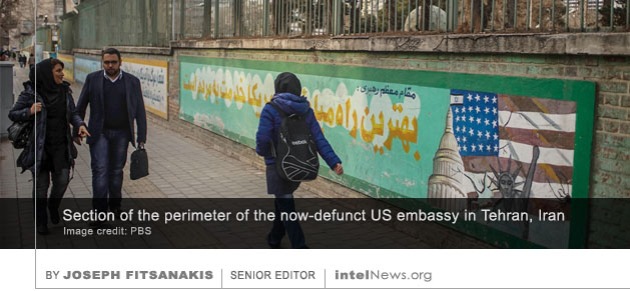
US embassy IranA YEAR-LONG INVESTIGATION by the Reuters news agency attempts to shed light on the alleged arrests of more than a dozen Iranian spies, who claim to have worked for the United States Central Intelligence Agency. Periodically Iran claims to have captured members of alleged CIA spy rings operating across its territory. For instance, in 2019 Iran’s Ministry of Intelligence announced the arrest of a “CIA network” consisting of 17 individuals who worked in the private sector and a number of government agencies.

The news agency said two of its reporters, Joel Schectman and Bozorgmehr Sharafedin, spent dozens of hours interviewing six Iranian former CIA assets, as well as 10 former employees of the United States Intelligence Community, who have “knowledge of Iran operations”. All six of the Iranians interviewed spent between five and 10 years in prison for their CIA connections. Two of them left Iran after serving their prison sentences, and are now refugees in central and northern Europe. At least one of them claims he was never contacted by the CIA after his release in 2019.

According to the Reuters investigation, CIA assets in Iran operate in a high risk environment, given that the United States has not had diplomatic facilities in the Middle Eastern country since 1979. Diplomatic facilities are regularly used to shelter CIA personnel, who recruit, train and handle foreign assets. Despite the absence of such facilities, the CIA is willing to take great risks in running agents inside Iran, because of the country’s geopolitical significance. The agency’s intensity in operating in Iran is matched by the Islamic Republic’s aggressive counterintelligence posture, which, according to the Reuters investigation, has “netted dozens of CIA informants” in recent years.

It is claimed that Iran’s counterintelligence efforts were inadvertently aided by a mass-produced CIA covert communications system, which the spy agency operated until 2013 in at least 20 countries around the world, including Iran. The Internet-based system was intended for use by CIA sources who were not fully vetted, but were still considered useful due to their access to secret information, according to Reuters. This appears to be a major update on a story that was first reported by Yahoo News in 2018. It claimed that that the CIA had suffered a “catastrophic” compromise of the system it used to communicate with spies, which caused the death of “dozens of people around the world” according to sources.

Reuters said it contacted CIA spokeswoman Tammy Kupperman Thorp, who declined to comment on specific allegations. The CIA spokeswoman dismissed the “notion that CIA would not work as hard as possible to safeguard” its assets around the world as “false”. The news agency said it also contacted Iran’s Ministry of Foreign Affairs and its Mission to the United Nations in New York, but received no responses.

Author: Joseph Fitsanakis | Date: 03 October 2022 | Permalink

Research sheds light on Japan’s wartime espionage network inside the United States

Imperial Japanese NavyMUCH HAS BEEN WRITTEN about the wartime intelligence exploits of the Allies against Japan. Such exploits range from the United States’ success in breaking the Japanese JN-25 naval code, to the extensive operations of the Soviet Union’s military intelligence networks in Tokyo. In contrast, very little is known about Japan’s intelligence performance against the Allies in the interwar years, as well as after 1941. Now a new paper by an international team or researchers sheds light on this little-studied aspect of intelligence history.
The researchers, Ron Drabkin, visiting scholar at the University of Notre Dame, K. Kusunoki, of the Japan Maritime Self-Defence Force, and Bradley W. Hart, associate professor at California State University, Fresno, published their work on September 22 in the peer-reviewed journal Intelligence and National Security. Their well-written article is entitled “Agents, Attachés, and Intelligence Failures: The Imperial Japanese Navy’s Efforts to Establish Espionage Networks in the United States Before Pearl Harbor”.
The authors acknowledge that the history of the intelligence efforts of the Imperial Japanese Navy (IJN) has received very little attention by scholars. Consequently, it remains unexplored even in Japan, let alone in the international scholarship on intelligence. There are two main reasons for that. To begin with, the IJN systematically destroyed its intelligence files in the months leading to Japan’s official surrender in 1945. Then, following the war, fearing being implicated in war crimes trials, few of its undercover operatives voluntarily revealed their prior involvement in intelligence work.

Luckily, however, the past decade has seen the declassification of a number of Federal Bureau of Investigation (FBI) counterintelligence files relating to Japanese intelligence operations targeting the United States. Most of these files date from the 1930s and early 1940s. Additionally, a number of related documents have been declassified by the government of Mexico, which is important, given that Mexico was a major base for Japanese intelligence operations targeting the United States. Read more of this post

Alleged Russian spy who used fake Brazilian identity jailed for 15 years

GRUAN ALLEGED RUSSIAN SPY, who used a forged Brazilian identity to travel internationally, has been jailed in Brazil after he was denied entry in Holland, where he had traveled to work as an intern. IntelNews has discussed at length the case of Victor Muller Ferreira, who was outed as a Russian spy by the Netherlands General Intelligence and Security Service (AIVD) in June. According to Dutch officials, Muller’s real name is Sergey Vladimirovich Cherkasov, and he is a Russian intelligence officer.

According to Muller’s biographical note, he was born to an Irish father and a Spanish-speaking mother in Niteroi (near Rio de Janeiro) on April 4, 1989. However, according to the AIVD, Cherkasov was actually born on September 11, 1985, and has been working for at least a decade for the Main Directorate of the Russian Armed Forces’ General Staff, which is commonly known as GRU. Cherkasov was apprehended by the Dutch authorities as he tried to enter Holland via air. He was en route to The Hague, where he was about to join the International Criminal Court (ICC) as a paid intern. He planned to eventually transition into full-time employment in the ICC, where he “would be highly valuable to the Russian intelligence services”, according to the AIVD.

The AIVD reportedly notified the Dutch Immigration and Naturalization Service, which detained Cherkasov upon his arrival at Amsterdam’s Airport Schiphol. The Dutch government promptly declared the alleged GRU officer persona non grata and expelled him back to Brazil “on the first flight out”. Last month, a Brazilian federal court in Guarulhos, a suburb of Sao Paolo, found Cherkasov guilty of identity theft that had lasted for at least a decade. The court found that, during that time, Cherkasov used the identity of a dead Brazilian citizen named Victor Muller Ferreira to enter and leave Brazil 15 times. The 10-year period started in 2010, when Cherkasov entered Brazil using his real Russian identity. But when he left the country a few months later, he did so using the forged identity that had allegedly been provided to him by Russian intelligence. Now, according to the British newspaper The Times, Cherkasov has been jailed for 15 years.

Meanwhile, in a separate development, Richard Moore, director of Britain’s Secret Intelligence Service (MI6), claimed last week that half of all Russian spies operating in Europe under diplomatic cover have been expelled since March of this year. Moore was speaking at the annual Aspen Security Forum in the United States. Such expulsions do not relate to alleged intelligence officers like Cherkasov, who do not operate under diplomatic cover. They are therefore far more difficult to detect than their colleagues, who are officially attached to Russian diplomatic missions around the world.

Author: Joseph Fitsanakis | Date: 25 July 2022 | Permalink

Analysis: HUMINT insights from the Muller/Cherkasov case

AIVD HollandAT A TIME WHEN dozens of countries are routinely expelling record numbers of Russian intelligence officers, news of the unmasking of yet another Russian spy is barely newsworthy. However, the case of Sergey Cherkasov/Victor Muller is different. That is because, unlike the vast majority of Russian spies with blown covers, he did not operate under diplomatic protection. This is not necessarily uncommon —in fact, there are probably dozens of Russian case officers operating internationally without diplomatic cover. What is unusual is that one of them has been publicly unmasked. What is more, the case offers some interesting pointers for those interested in contemporary human intelligence (HUMINT).
The Facts

According to the Netherlands General Intelligence and Security Service (AIVD), which publicized the case last week, a man using a Brazilian passport attempted to enter Holland in April of this year. His passport had been issued under the name Victor Muller Ferreira, allegedly born to an Irish father and a Spanish-speaking mother in Niteroi (near Rio de Janeiro) on April 4, 1989. However, according to the AIVD, the man’s real name is Sergey Vladimirovich Cherkasov, a citizen of Russia, who was born on September 11, 1985. Based on the information released by Dutch intelligence, Cherkasov is an intelligence officer of the Main Directorate of the Russian Armed Forces’ General Staff, which is commonly known as the GRU.

The AIVD claims that the reason for Cherkasov’s visit to the Netherlands was to join the International Criminal Court (ICC) in The Hague, as a paid intern. He eventually planned to transition into full-time employment in the ICC, where he “would be highly valuable to the Russian intelligence services”. The AIVD reportedly notified the Dutch Immigration and Naturalization Service, which detained Cherkasov upon his arrival at Amsterdam’s Schiphol International Airport. The Dutch government declared the alleged GRU officer persona non grata and promptly expelled him back to Brazil “on the first flight out”.


Cherkasov’s Cover and Legend

Cherkasov arrived in Holland with a cover, a term that refers to a fake operational identity used for purposes of espionage. It is unlikely that his cover was natural, meaning that he is probably not Brazilian by birth —though it is possible that at least one of his parents was/is not Russian by birth. What is more likely is that Cherkasov’s cover is contractual, meaning that it was crafted especially for him by the GRU after he was hired as an intelligence officer. This likely happened as many as 10 years ago, when Cherkasov was in his early 20s. Read more of this post