Israeli armed raid in Syria reportedly led to US banning laptops on some flights
November 27, 2017 2 Comments
 A temporary ban issued by United States authorities on laptop computers onboard some commercial flights earlier this year came from a tip by Israeli intelligence, according to a new report. The report was published last week in the American magazine Vanity Fair. It claimed that Israeli commandos carried out a dangerous night-time operation deep inside Syria, in order to acquire physical proof that the Islamic State had built bombs that were not detectable by X-ray screening systems at airports. But some Israeli intelligence officials became infuriated with Donald Trump after the US President allegedly gave Russia background information about the commando operation, according to the article.
The order to temporarily ban electronic devices larger than cellphones was issued by the US government on March 20, 2017. It applied to direct flights to the US departing from a dozen international airports in the Middle East. In June, the New York Times alleged that the ban was aimed at stopping Islamic State operatives from bringing onboard airplanes bombs disguised as laptop batteries. The paper also said that the information about these bombs had been acquired by Israeli government hackers who had penetrated Islamic State computer systems. But now a new report by Vanity Fair claims that Tel Aviv tipped off the Americans following a commando raid deep inside Syrian territory, which acquired physical evidence of the bombs. The magazine alleges that the raid was carried out by the Sayeret Matkal, an elite unit of the Israel Defense Forces, under the supervision of the Mossad, Israel’s external spy agency. Its target was a highly secretive cell of explosives experts, who were led Ibrahim al-Asiri, a Saudi militant who built bombs for the Yemen-based Al-Qaeda in the Arabian Peninsula. The Mossad shared some of the intelligence from that raid with the Central Intelligence Agency, which in turn told President Trump. That led to the decision to ban laptops from selected flights, until X-ray machines at airports were modified to detect the new type of bomb.
The Vanity Fair article repeats earlier claims that President Trump shared intelligence given to him by the Israelis with Russian Foreign Minister Sergei Lavrov and Russian Ambassador to the United States Sergei Kislyak, when he met them in May of this year. According to Israeli sources, Mr. Trump did not tell the Russian officials that Israel was behind the operation. But he allegedly identified the city in Syria where the raid took place, and in doing so placed the life of an Israeli human asset at risk, according to some. The Israeli government will not comment on these allegations. Additionally, Vanity Fair said that one “former Mossad officer with knowledge of the operation and its aftermath” would not say whether the asset in question had been safely exfiltrated from Syria or even whether he or she was still alive.
► Author: Joseph Fitsanakis | Date: 27 November 2017 | Permalink
 Israeli Prime Minister Benjamin Netanyahu reportedly asked the United States President Donald Trump to allow Jonathan Pollard, an American who spied on his country for Israel in the 1980s, to immigrate to Tel Aviv. Pollard, a former intelligence analyst for the US Navy, was released from an American prison in 2015, after serving 30 years for selling US government secrets to Israel. Throughout Pollard’s time in prison, the government of Israel
 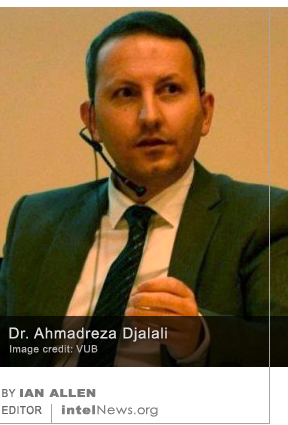 A court in Iran has sentenced a prominent Iranian academic to death for allegedly helping Israel assassinate nuclear scientists and sabotage Tehran’s nuclear program. Four Iranian physicists, who were employed in Iran’s nuclear program, are known to have been
  Israeli spy services were reportedly behind the United States government’s recent decision to purge Kaspersky Lab antivirus software from its computers, citing possible collusion with Russian intelligence. Last month, the US Department of Homeland Security issued a directive ordering that all government computers should be free of software products designed by Kaspersky Lab. Formed in the late 1990s by Russian cybersecurity expert Eugene Kaspersky, the multinational antivirus software provider operates out of Moscow but is technically based in the United Kingdom. Its antivirus and cybersecurity products are installed on tens of millions of computers around the world, including computers belonging to government agencies in the US and elsewhere. But last month’s memorandum by the US government’s domestic security arm alarmed the cybersecurity community by alleging direct operational links between the antivirus company and the Kremlin.
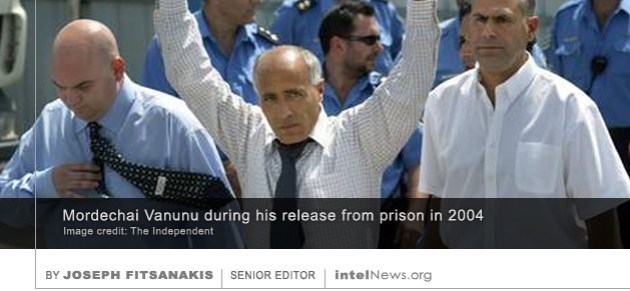 The controversial Israeli nuclear whistleblower Mordechai Vanunu, who was jailed for 18 years for revealing the existence of Israel’s nuclear program, has been invited to go to Norway to be reunited with his new wife. Vanunu was employed at Israel’s top-secret Negev Nuclear Research Center, located in the desert city of Dimona, which was used to develop the country’s nuclear arsenal. But he became a fervent supporter of nuclear disarmament and in 1986 fled to the United Kingdom, where he revealed the existence of the Israeli nuclear weapons program to the London-based newspaper The Times. His action was in direct violation of the non-disclosure agreement he had signed with the government of Israel; moreover, it directly challenged Israel’s official policy of ‘nuclear ambiguity’, which means that the country refuses to confirm or deny that it maintains a nuclear weapons program.
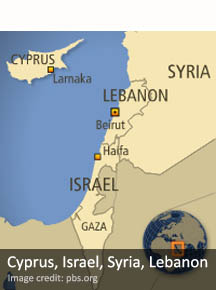 A sophisticated spying device disguised as a rock, which was allegedly planted by Israeli intelligence, was found by Lebanese Army troops on a hill located a few miles from the Lebanese-Israeli border. The discovery was reported early on Saturday by several Lebanese news websites, including Al-Mayadeen and Al-Manar, which are closely affiliated with Hezbollah. Al-Manar
 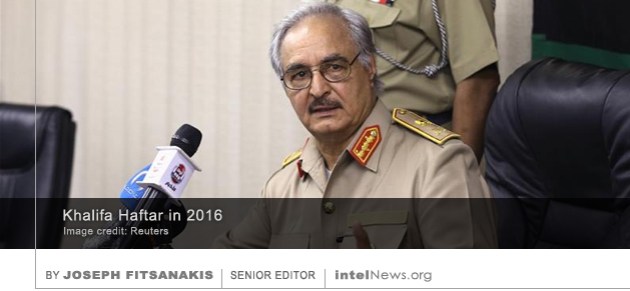 Israel is secretly providing military assistance to Khalifa Haftar, commander of the Libyan National Army, one of the factions in the Libyan Civil War, according to a British-based publication. Libya has remained in a state of war since 2011, when a popular uprising backed by the West and its allies led to the demise of the country’s dictator, Colonel Muammar Gaddafi. Currently the strongest faction in the ongoing Libyan Civil War is the eastern-based Tobruk-led Government, which is affiliated with the Libyan National Army (LNA). The commander of the LNA is Field Marshal Khalifa Haftar, an old adversary of Colonel Gaddafi, who lived in the United States under Washington’s protection for several decades before returning to Libya in 2011 to launch his military campaign.
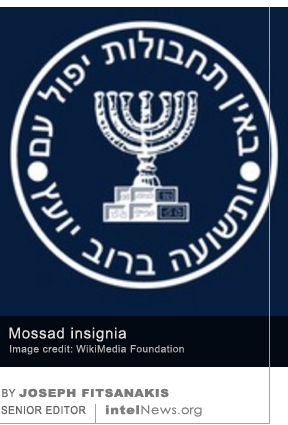 The Mossad, Israel’s primary intelligence agency, is preparing to launch a technology investment fund that will support Israeli-based hi-tech startups, with an eye to utilizing cutting-edge technologies in its spy operations. Israeli spy services are known internationally for their advanced use of technology in intelligence collection and special operations. But the planned investment fund is expected to systematize the Mossad’s use of cutting-edge technological solutions to intelligence challenges. It is
 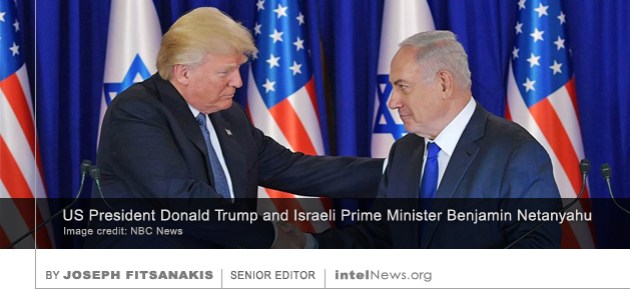 Authorities in Israel have revised their intelligence-sharing protocols with the American government after it became known that United States President Donald Trump inadvertently exposed Israeli secrets to Russia. The alleged exposure of Israeli secrets came earlier this month, during a meeting between Mr. Trump and a delegation of Russian government officials, which included Foreign Minister Sergey Lavrov and Sergey Kislyak, Moscow’s Ambassador to Washington.
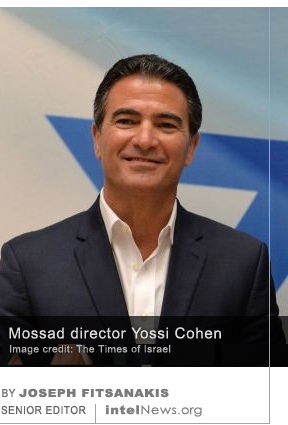 The combined budget of the two primary intelligence agencies of Israel, the Mossad and the Shin Bet, has doubled in the past decade, according to a report issued by the Israeli Ministry of Finance. Shin Bet is Israel’s domestic intelligence service, and is primarily responsible for counterterrorism and counterintelligence. The Mossad is Israel’s primary intelligence service, which means that it collects intelligence from foreign targets. The secretive agency also conducts covert and clandestine operations when authorized to do so by Israel’s government. The two agencies tend to work together with varying degrees of succces, but have distinct budgets.
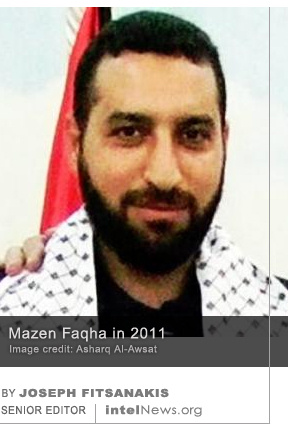 The sophistication behind the killing of a senior Hamas official, who was assassinated in his home in the Gaza Strip on Friday evening, points almost certainly to Israel, according to observers. Mazen Faqha, 38, helped plan several lethal operations by the Palestinian militant group, including a 2002 suicide bombing that killed nine and wounded over 50. Following an extensive manhunt, Israeli authorities arrested Faqha in the West Bank and in 2003 convicted him to nine life sentences. But in 2011, Faqha was among 1,027 Palestinian and Arab-Israeli prisoners that Israel released in exchange for Gilad Shalit, a soldier in the Israel Defense Forces, who was held prisoner by Hamas. Since that time, Faqha had lived in the Gaza Strip, the Hamas-controlled Palestinian enclave that has been under strict Israeli blockade since 2006.
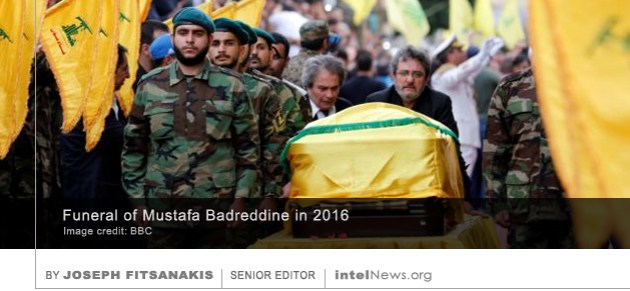 An Israeli military official has repeated claims in the Arab media that the Lebanese Shiite group Hezbollah killed its own military commander in Syria, following a dispute with Iran. Mustafa Amine Badreddine, 55, an expert in explosives and former bomb-maker, was a senior military commander in the military wing of Hezbollah. He rose through the ranks of the organization to become a trusted adviser to Hezbollah’s Secretary General, Hassan Nasrallah. In 2011, the Special Tribunal for Lebanon, set up by the United Nations, charged Badreddine with organizing the assassination of Lebanese Prime Minister Rafik Hariri. Hariri was killed with over 20 other people in a massive bomb blast in Beirut, in February of 2005.
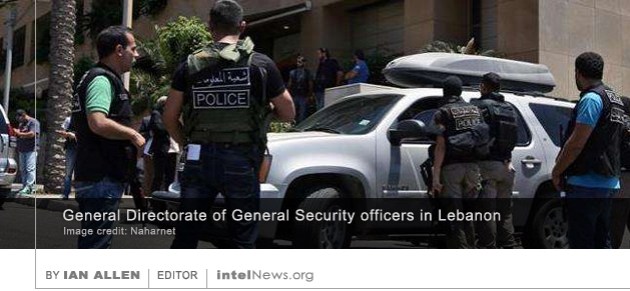 The security services of Lebanon announced on Wednesday that they had arrested five foreign nationals who were allegedly spying of Israel. A brief statement issued by Lebanon’s General Directorate of General Security (GDGS, also known as the General Security Directorate) said the five individuals were members of a “spy ring” set up by the Mossad, Israel’s external intelligence agency. The five —three men and two women— are accused of contacting Israeli embassies in countries in the Middle East, Europe and Asia, with the aim of passing information about domestic Lebanese affairs.
 American intelligence officials allegedly warned their Israeli counterparts not to share intelligence with Washington once Donald Trump becomes president of the United States. The reason was that, according to the US officials, there was no guarantee that the intelligence would not be leaked to Russia. There was also the danger, they claimed, that the compromised intelligence would end up in the hands of Russia’s ally Iran, a regional adversary of Israel. The claim was






 intelNews.org
Egyptian branch of ISIS declares war on Hamas as tensions rise in Sinai
January 12, 2018 by Joseph Fitsanakis 1 Comment
Israeli sources claim that, in the past, Wilayat Sinai has had limited cooperation with Hamas, the militant group that controls the Gaza Strip, a coastal section of the Palestinian territories that borders with Egypt’s Sinai Province. The two organizations are believed to have engaged in limited cross-border arms-smuggling, while some injured Wilayat Sinai fighters have been treated in Gaza Strip hospitals. But the two groups have major ideological differences that contribute to their increasingly tense relationship. The Islamic State objects to participation in democratic elections, which it sees as efforts to place human will above divine law. It has thus condemned Hamas’ decision to participate in the 2006 elections in the Palestinian territories. Additionally, even though it promotes Sunni Islam, Hamas is far less strict in its religious approach than the Islamic State, and does not impose Sharia (Islamic law based on the Quran) in the territory it controls. Furthermore, Hamas suppresses Saudi-inspired Wahhabism and its security forces often arrest ISIS and al-Qaeda sympathizers in the Gaza Strip. In the past month, ISIS accused Hamas of having failed to prevent America’s formal recognition of Jerusalem as the capital of Israel. Additionally, ISIS is opposed to the support that Hamas receives from Iran, a Shiite nation that ISIS regards as heretical.
There are reports that Hamas has been quietly collaborating with Egypt and even Israel in recent months, in order to combat the rise of ISIS in the region. For several months now, the Palestinian group has exercised stricter control over its seven-mile-long border with Egypt. It has rebuilt border barriers that had previously been destroyed and has installed security fences and a digital surveillance system. It has also launched a public-relations effort to shame the families of young men from Gaza who have joined ISIS forces in Sinai. In response to these moves, Wilayat Sinai has publicly urged its supporters to kill members of Hamas and attack the group’s security installations and public buildings. The ISIS-affiliated group has also urged its members to eliminate members of the small Shiite Muslim community in the Gaza strip. According to experts, the decision by Wilayat Sinai to declare war on Hamas means that the group has now virtually surrounded itself with adversaries. The move may also increase informal collaboration between Hamas and the Israeli government, say observers.
► Author: Joseph Fitsanakis | Date: 12 January 2018 | Permalink
Filed under Expert news and commentary on intelligence, espionage, spies and spying Tagged with Africa, Hamas, Israel, News, Palestine, Sinai (Egypt), Wilayat Sinai