News you may have missed #636
November 26, 2011 2 Comments
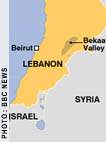
Lebanon
►►Careless codeword may have cost CIA its Lebanon network. Hezbollah have reportedly just rolled up the CIA’s network of spies in Lebanon. If so, it’s because of one of the stupidest, least secure code words in history. According to ABC News, Hezbollah operatives figured out that CIA informants, who had infiltrated the Iranian proxy group, were meeting with their agency handlers at a Beirut Pizza Hut. How could Hezbollah deduce that location? “The CIA used the codeword ‘PIZZA’ when discussing where to meet with the agents,” ABC reports.
►►UK spy chiefs to be publicly questioned for first time. The heads of British intelligence agencies are set to be questioned for the first time in public, under plans to make spies more accountable. The directors of MI5, MI6 and GCHQ will face Parliamentarians on the Intelligence and Security Committee. Although, they have recently begun to make rare public appearances, and deliver speeches, it will be the first time the intelligence agency heads will face public cross-examination over their activities.
►►Documents reveal largest domestic spy operation in Canadian history. Police organizations across Canada co-operated to spy on community organizations and activists in what the Royal Canadian Mounted Police called one of the largest domestic intelligence operations in Canadian history, documents reveal. Information about the extensive police surveillance in advance of last year’s G8 and G20 meetings in southern Ontario comes from evidence presented in the case of 17 people accused of orchestrating street turmoil during the summits.










 intelNews.org
Analysis: How serious a blow did the CIA suffer in Lebanon?
December 2, 2011 by Joseph Fitsanakis Leave a comment
Lebanon
By JOSEPH FITSANAKIS | intelNews.org |
Late last month, the Central Intelligence Agency admitted that a number of its agents in Lebanon had been captured by Hezbollah, the Shiite militant group that controls large parts of the country. The group announced the arrests in the summer, but in was only on November 21 that the Associated Press confirmed the accuracy of Hezbollah’s claims from a US intelligence source. Neither Hezbollah nor the CIA have offered details of the arrests, but it is generally assumed that the captured agents were not officers of the CIA, but rather Lebanese or Iranian citizens who had been recruited as assets by CIA case officers. Regardless, the incident has undoubtedly directly impacted the Agency’s operations in Lebanon, and maybe Iran. The question is, how much? Former CIA operations officer Robert Baer, who spent several years in Lebanon in the 1980s, has penned an analysis article in Time magazine, in which he says that his sources tell him the arrests of the CIA agents represent “a serious compromise”, and that the Agency is “still trying to get to the bottom of [it]”. Baer also provides some new information about the method used by Hezbollah counterintelligence to capture the CIA agents. Last week, ABC News reported that the arrests were caused by careless spy tradecraft on behalf of the CIA. Specifically, according to ABC, “Hezbollah operatives figured out that CIA informants, who had infiltrated the Iranian proxy group, were meeting with their agency handlers at a Beirut Pizza Hut. How could Hezbollah deduce that location? The CIA used the codeword ‘PIZZA’ when discussing where to meet with the agents”. But Baer says that the arrests were not necessarily caused by CIA errors; rather it may have been advanced counterintelligence analysis by Hezbollah that compromised the agents. He claims that Hezbollah is using telephone link analysis, a type of signals intelligence testing that utilizes advanced software “capable of combing through trillions of gigabytes of phone-call data”. The aim of telephone link analysis is to search for unusual communications patterns —such as too many brief calls, or heavy reliance on prepaid cell phones that seem to become disused after only a few calls. Read more of this post
Filed under Expert news and commentary on intelligence, espionage, spies and spying Tagged with Analysis, CIA, Hezbollah, Lebanon, Robert Baer, SIGINT, telephone link analysis, telephony, United States