Controversial Swiss master-spy dies in Ireland

Albert Bachmann

Albert Bachmann

By JOSEPH FITSANAKIS | intelNews.org |
One of Switzerland’s most controversial Cold War figures, who set up a clandestine guerrilla unit to combat a feared Soviet invasion, has died in Cork, Ireland. Swiss newspaper Tages-Anzeiger has said last week that Colonel Albert Bachmann, who headed Switzerland’s military intelligence force, the Untergruppe Nachrichtendienst der Armee (UNA), from 1976 until 1979, died on April 12. Although Bachmann was a communist in his student years, he later headed Projekt-26 (P-26), a clandestine project to set up a ‘left-behind’ force of Swiss guerrillas trained in sharp shooting, bombing and assassination techniques. The guerrilla force was designed to engage the Soviet military if it ever invaded Switzerland. In the late 1970s, Colonel Bachmann also secured government funds to purchase the 200-acre Liss Ard country estate near the Irish town of Skibbereen, in west Cork. The estate was to be used as a base for a Swiss government-in-exile following a feared Soviet invasion of central Europe. Furthermore, the basement of one of the two manors on the estate was designated as a secret depository of Switzerland’s gold reserves, in the event of a Soviet invasion of the Alpine country. Read more of this post

Leaked US cable reveals concern about China spying in Chile

WikiLeaks

WikiLeaks

By JOSEPH FITSANAKIS | intelNews.org |
A leaked US government document reveals strong concerns expressed by the US embassy in Santiago about Chinese intelligence operations in Chile. The document, classified “secret”, and dated August 29, 2005, was released by whistleblower website WikiLeaks. It contains a report sent by the embassy to the US Department of State, concerning Chinese intelligence collection activities in the South American nation. The report points out that the Chinese embassy in the Chilean capital is one of the largest in Latin America, with 22 employees, who are “all good Spanish speakers”. It also notes that Chinese news agency Xinhua maintains three full-time correspondents in Chile, who are “assumed [to be] involved in some kind of collection activity”. But the leaked document focuses mostly on alleged Chinese intelligence collection activities aimed at the Chilean military, which is heavily subsisted by the United States. It suggests that bilateral ties between the Chinese and Chilean military were significantly strengthened in 2004, when, during an official visit to China, the then Chief of the Chilean Army, General Juan Emilio Cheyre, adopted a Chinese proposal to establish a Mandarin-language training program for selected officers of the Chilean military, which became operational shortly after. Read more of this post

News you may have missed #489

  • Russian spies want their stuff back from the FBI. Two of the ten Russians deported from the United States in a spy row last July have demanded that some of the property they were forced to leave behind be returned to them. The claim was lodged on behalf of Vladimir and Lidia Guryev, better known as Richard and Cynthia Murphy.
  • Kuwait sentences three to death for espionage. Two Iranians and a Kuwaiti national, all serving in Kuwait’s army, were condemned to death yesterday for belonging to an Iranian spy ring, which allegedly passed on information to the Iran’s Islamic Revolutionary Guards. A Syrian and a stateless Arab, who are also members of the alleged spy ring, were handed life terms.
  • ‘Foreign spies’ hacked Australian leader’s computer. Chinese hackers seeking information on commercial secrets are suspected of having broken into a computer used by Julia Gillard, the Australian prime minister. Her computer was among 10 machines used by senior government ministers which were compromised by the hackers. According to one source, the Australians were tipped off to the hacking by the CIA and the FBI.

News you may have missed #486

  • Hundreds of US officials to leave Pakistan in Davis deal [unconfirmed]. Pakistani newspaper The Express Tribune claims that 331 US officials in Pakistan have been identified by Islamabad as spies and are “to leave the country”, under a secret deal between Pakistan and the United States. The alleged deal was reportedly struck between the two sides as part of the release of Raymond Davis, a CIA operative who shot dead two people in Lahore.
  • Australian government unveils new spy legislation. The Intelligence Services Legislation Amendment Bill, which has been unveiled by the Australian government, contains changes to the intelligence services and criminal code legislation designed to “improve the operational capabilities of key spy agencies“, according to the country’s Attorney-General.
  • Dutch military intelligence: closed on Sundays. A Dutch government-commissioned report has revealed that the country’s military intelligence service, the MIVD, played no role in the decision, earlier this month, to attempt an evacuation operation by helicopter near the Libyan city of Sirte. The reason is because the evacuation took place on a Sunday, and requests for intelligence went unnoticed at MIVD headquarters.

General arrested in Taiwan’s biggest spy scandal in 50 years

Lo Hsien-che

Lo Hsien-che

By JOSEPH FITSANAKIS | intelNews.org |
A “tall, beautiful and chic” Chinese female operative, who held an Australian passport, appears to be behind Taiwan’s most serious espionage scandal in almost half a century, according to news reports. The scandal centers on the arrest earlier this week of Major General Lo Hsien-che, who heads the Taiwanese military’s Office of Communications and Information. Taiwanese prosecutors said that General Lo is the most senior Taiwanese official to be arrested on espionage charges since the early 1960s. He had apparently been investigated for several months by Taiwanese counterintelligence investigators, who claim that Lo was recruited by Chinese intelligence while stationed in Thailand, between 2002 and 2005. Paris-based Agence France Presse cites The China Times in reporting that the General was lured by a female Chinese operative in her early 30s, who cajoled him with “sex and money”. Read more of this post

Comment: Russian Espionage Steals 2010 Limelight

GRU emblem

GRU emblem

By JOSEPH FITSANAKIS | intelNews.org |
As the first decade of the 21st century is coming to an end, few would dispute that Israeli and American spy agencies have been among the most talked-about intelligence organizations of 2010. The reasons for this are equally undeniable: the United States tops the list because of its political prominence, which inevitably attracts media attention; Israel tops it because of the sheer ferocity of its espionage output throughout the Middle East. And yet there is nothing new about this, since neither the Central Intelligence Agency nor the Mossad are exactly novices when it comes to high-profile media exposures. The same cannot be said with respect to Russian intelligence agencies, which went through a period of prolonged hibernation following the end of the Cold War. Indeed, the year that is about to end demonstrates that the stagnant interlude in Russian espionage may well be in its closing stages.

Read more of this post

German police probe poisoning of ex-KGB colonel

KGB seal

KGB seal

By JOSEPH FITSANAKIS | intelNews.org |
Police in Berlin are investigating a possible attempt to assassinate a Russian former KGB operative and his wife, through mercury poisoning. According to German newsmagazine Focus, Viktor Kalashnikov, a former colonel and authority on military matters for the Soviet KGB, was taken in critical condition to a Berlin hospital along with his wife, Marina. The two were found to have over ten times the highest permissible level of mercury in their blood, which, according to medical experts, points to a deliberate poisoning attempt. Colonel Kalashnikov, who arrived in Germany three months ago, is known as one of the Russian government’s harshest critics. He became famous in the 1990s, when he joined other former KGB operatives —most notably the late Alexander Litvinenko, who was assassinated in 2007, and whose widow is also named Marina— in accusing the Russian administration of Vladimir Putin of manipulating the separatist Chechen movement in order to solidify his vision of “a national security state” in Russia. Read more of this post

Some spy news in the shadow of WikiLeaks’ revelations

Katia Zatuliveter

Katia Zatuliveter

By JOSEPH FITSANAKIS | intelNews.org |
The WikiLeaks revelations continue, and so does the global news storm concerning the whistleblower site. Obviously, the news value of the WikiLeaks disclosures is unquestionable. However, there are notable intelligence-related developments taking place outside the now-familiarWikiLeaks context. Take for instance the recent arrest of what appears to be a Polish spy in Limassol, Cyprus. The unidentified man, who was reportedly detained in the vicinity of a Greek-Cypriot military base on the island, was carrying “a camera containing photos of National Guard posts, a laptop, two mobile phones, five memory cards, a GPS system and three pairs of binoculars”. Another interesting development concerns the arrest on espionage charges of Katia Zatuliveter, a Russian citizen who works as an assistant to British Member of Parliament Mike Hancock. Zatuliveter is expected to be deported on the basis of evidence gathered by MI5, Britain’s counterintelligence service, which has apparently been monitoring her for several months. Interestingly, Mr. Hancock, who is a member of the British House of Commons’ Defence Select Committee, is standing by his assistant. Read more of this post

Taiwan grapples with ‘largest military spy scandal in 20 years’

Taiwan

Taiwan

By IAN ALLEN | intelNews.org |
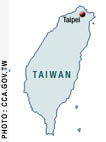
Two Taiwanese double agents have been arrested in Taipei, in connection with what one newspaper editorial described as the most serious case of military espionage to hit the country in two decades. The two men, who have been charged with conspiracy to conduct espionage on behalf of a foreign power, were detained on Tuesday, after they were witnessed exchanging classified information at a busy outdoor location by Taiwanese counterintelligence agents. One of them, identified as Lo Chi-cheng, is allegedly a Colonel in Taiwan’s Military Information Bureau, the most powerful intelligence organization under Taiwan’s Ministry of National Defense. According to Taiwanese officials, he operated for several years as a procurer of classified military information on behalf of his unnamed co-conspirator, a Taiwanese businessman who is reportedly “linked to Taiwan’s intelligence network”. The unnamed businessman, who was also detained Tuesday, would then pass the classified information to a handler from Chinese intelligence. Read more of this post

Mysterious Russian spy goes on trial in Poland

Valentin Korabelnikov

V. Korabelnikov

By IAN ALLEN | intelNews.org |
The trial has started in Warsaw, Poland, of an unnamed Russian citizen accused of working for Russian military intelligence. On October 22, the mysterious Russian, known only as “Tadeusz J.”, appeared before the Regional Court of Warsaw and pleaded not guilty to charges of collecting military intelligence on Poland on behalf of the Russian Defense Ministry’s Main Intelligence Directorate (GRU). The accused has a Polish-sounding name and is fluent in Polish, but is not a Polish citizen. Instead, he lived in Poland under permanent residency status for at least decade. His legal income appears to have come from his ownership of a hunting-rifle accessories store. But he was arrested last February, after a six-month surveillance operation by Poland’s Internal Security Agency (ABW). He was subsequently charged of obtaining classified information on the Polish military through his patronage of elite Polish hunting clubs, whose members included several Polish military officials. Read more of this post

News you may have missed #440 (USA edition)

US Pentagon to ban book by DIA intelligence officer

Operation Dark Heart

Op. Dark Heart

By IAN ALLEN | intelNews.org |
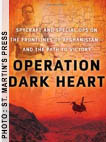
American military officials are in negotiations with a major publishing firm to prevent the distribution of a new book on the Afghanistan War by a US intelligence officer, even though thousands of copies of the book have already been printed. Written by US Army Reserve Lieutenant Colonel Anthony Shaffer, the book, Operation Dark Heart, is a personal memoir of the author’s five-month tour in Afghanistan in 2003, as an officer with the Defense Intelligence Agency (DIA). The Pentagon has admitted that its censors did send Shaffer an official clearance letter, authorizing him to forward the manuscript to a publisher –which he did. But it was only after the book had gone into print, that the Defense Department realized that it had neglected to forward a copy of the manuscript to the DIA, as required by regulations, which stipulate that all US government agencies mentioned in the manuscript must approve it prior to publication. Read more of this post

News you may have missed #418

  • US military pays for intel widely available online. Experts say that the vast majority of the ‘intelligence’ needed by the United States is freely available on the Internet. But that has not stopped a company called Military Periscope from selling its subscription services to the US government, on things such as updates on foreign militaries, peacekeeping missions, weapons databases and terrorist organizations “via monthly CD-ROM delivery”.
  • Son of Russian spies could return to US for school. Tim Foley, the elder son of Donald Howard Heathfield and Tracey Lee Ann Foley, the two deported US residents who were living a double life as Russian spies, may be trying to return to study in the United States, but his younger brother plans to stay in Moscow.
  • German spy chief notes cyberattack surge. Cyberattacks against German corporate and government computers have been on the rise since 2005, according to Heinz Fromm, Director of Germany’s Federal Office for the Protection of the Constitution. He said the attacks “come mainly from Asia, often from China”, and that often “state agencies are involved”.

Analysis: Russian-Czech spy scandals show new direction in Russian espionage

ÚZSI seal

ÚZSI seal

By JOSEPH FITSANAKIS | intelNews.org |
Last July saw the resignations of three Czech Generals, including the head of the president’s military office and the country’s representative to NATO, following revelations that one of their senior staffers had a relationship with a Russian spy.  Intelligence observers have become accustomed to frequent reports of Russian-Czech spy scandals in recent years. But, according to reports from Prague, recent Russian intelligence activity in the Czech Republic may indicate a change of direction by Moscow. Some say that Russia’s new espionage doctrine focuses less on military intelligence in the post-US-missile-shield strategic environment, and more on political and economic espionage. To be sure, Russia’s intelligence presence in the Czech capital remains substantial: Czech counterintelligence sources estimate that at least 60 –that is, one in three– Russian diplomats in Prague are engaged in intelligence-related activities. But the intensity of Russian espionage in Prague is not unique. Read more of this post

News you may have missed #0195

Bookmark and Share