News you may have missed #851

EuropolBy IAN ALLEN | intelNews.org
►►Allegations that NSA has a listening post in Vienna. Both the US and Austrian governments have denied reports claiming to expose a major surveillance operation by the National Security Agency from within a villa in the Austrian capital Vienna. Austrian media reported last week that the US government had decided to end operations at the site because its cover was blown. Meanwhile, the allegations have turned into an Austrian affair of state.
►►Europol fighting unprecedented crime levels. Europe is dealing with an unprecedented surge in organized crime as sophisticated multinational groups, including child sex abusers and counterfeit gangs, expand their networks, according to Rob Wainwright, the British head of the European Union’s criminal intelligence agency, Europol. Wainwright says that thousands of gangs are capitalizing on the rise of smartphone and internet technology.
►►Are NSA revelations helping US tech industry? Edward Snowden’s unprecedented exposure of US technology companies’ close collaboration with national intelligence agencies, widely expected to damage the industry’s financial performance abroad, may actually end up helping. Despite emphatic predictions of waning business prospects, some of the big Internet companies that the former National Security Agency contractor showed to be closely involved in gathering data on people overseas –such as Google and Facebook– say privately that they have felt little if any impact on their businesses.

News you may have missed #850 (Syria edition)

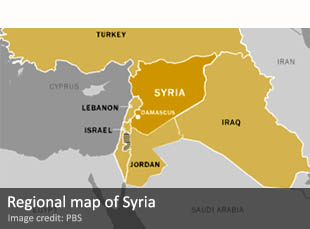
Regional map of SyriaBy IAN ALLEN | intelNews.org |
►►FBI sharpens scrutiny of Syrians in US. The FBI has increased its surveillance of Syrians inside the United States in response to concerns that a military strike against the government of President Bashar al-Assad could lead to terrorist attacks inside the US or against American allies and interests abroad. The US government has also taken the unusual step of warning federal agencies and private companies that American military action in Syria could spur cyberattacks, the officials said. There were no such alerts before previous military operations, like the one against Libya in 2011.
►►French spies provide details Syrian chemical weapons program. As Congress debates whether to authorize a military strike on Syria, the French government has released its declassified intelligence report on the August 21 chemical weapons attack in the eastern Damascus suburbs. While the American report focuses solely on the most recent attack, the French provide a comprehensive look at the nature of the Syrian chemical weapons program. Also, while US officials have conceded that they don’t know if Assad himself ordered the use of chemical weapons, the French assessment rebuts claims that the August 21 attack could have been the work of a rogue officer.
►►Ex-CIA WMD Counterterrorism Unit chief on Syria: “We cannot afford […] miscalculations in regard to Syria. We will launch our missiles and drop our bombs. Then we will announce the end of active operations. That will not signal the end of the war. It will signal its beginning […]. Assad and his Iranian and Hezbollah friends will begin to respond. They will do so on their timetable and only where they perceive the odds to be in their favor. Embassies will be struck. Hostages will be taken. American and Western tourists will be slaughtered. If the opportunity presents itself, we may even feel the impact here in the United States with attacks on prominent landmarks and public places”.
News you may have missed #849 (analysis edition)

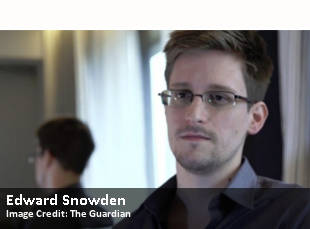
Edward SnowdenBy IAN ALLEN | intelNews.org |
►►Are American spies the next victims of the Internet age? The furor over the NSA’s data collection and surveillance programs has been fierce. But Daniel Prieto, of the Center for Strategic and International Studies, argues that the debate should be focusing on the US intelligence apparatus, transformed in the dozen years since 9/11, can meet the challenges and that the US faces today and into the future. He asks whether the “business model” of US intelligence –how intelligence is gathered, analyzed, and used– is sufficient and sustainable, or whether it needs to evolve to “something different or something more”.
►►What did Edward Snowden get wrong? Everything. Andrew Liepman, senior analyst at RAND Corporation, former career officer at the CIA, and former deputy director of the US National Counterterrorism Center, offers an insider’s view on the Edward Snowden case. He argues that those following the Snowden saga fail to understand that the US government “truly does make strenuous efforts not to violate privacy”. This is not simply because it respects privacy on principle, he says, but also because “it simply doesn’t have the time” to access irrelevant information that is not closely connected to possible espionage or terrorist plots against Americans.
►►Why US diplomatic missions became fortresses. Even during the Cold War, American diplomatic facilities were designed to be welcoming and to project the American values of openness and individual liberty. No more, argues John Campbell, former US Ambassador to Nigeria and Ralph Bunche Senior Fellow for Africa Policy Studies at the Council on Foreign Relations. Nowadays, US diplomatic facilities increasingly showcase “Fortress America”, he argues. And he concludes that, “the need to subordinate so much to security diminishes US soft power by undermining its traditional message of openness and welcome”.

News you may have missed #848

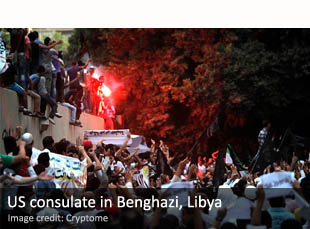
US consulate in Benghazi, LibyaBy IAN ALLEN | intelNews.org |
►►UK officials saw ‘communist spies’ in Japan in 1983. British officials believed in the early 1980s that Japanese institutions had been “slightly” penetrated by communist intelligence services, according to documents declassified last week at the National Archives in London. The documents, from 1983, assert that there were approximately 220 communist intelligence officers working in Japan: 100 for the Soviet Union, 60 for China and 60 for other communist countries.
►►‘Dozens of CIA operatives on the ground’ during Benghazi attack. CNN claims that “dozens of people working for the CIA” were on the ground the night of the attack on the US consulate in Benghazi, Libya, which killed four Americans, including Ambassador Christopher Stevens. The news station adds that, according to one source, the CIA is involved in “an unprecedented attempt to keep [its] Benghazi secrets from ever leaking out”.
►►Australians call for national debate on privatization of intelligence. Dr Troy Whitford, Associate Investigator with the Australian Research Council’s Centre of Excellence in Policing and Security, and lecturer at Charles Sturt University, has called for “a national debate on the extent, cost and consequences of Australia’s security and intelligence outsourcing”. The call was apparently prompted by news that 51% of the intelligence gathering in the US is now carried out by non-government contractors.

News you may have missed #847

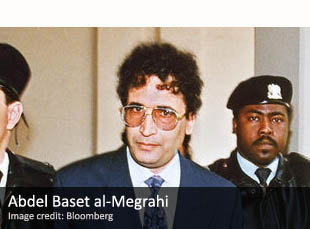
Abdel Baset al-MegrahiBy IAN ALLEN | intelNews.org |
►►Secret letter shows arms deal behind Lockerbie bomber release. An email sent in 2008 by Sir Vincent Fean, the then British ambassador in Tripoli, details how the release by Britain of Lockerbie air disaster bomber Abdelbaset al-Megrahi, was linked to a commercial deal. According to The Daily Telegraph, the email specifies that al-Megrahi would be released once Libya “fulfilled its promise” to buy an £400 million air defense system.
►►Is the US ramping up a secret war in Somalia? The US has expanded its secret war in Somalia, stepping up assistance for federal and regional Somali intelligence agencies that are allied against the country’s Islamist insurgency. It’s a move that’s not only violating the terms of an international arms embargo, according to UN investigators, but it also shows that Washington’s signature victory against al-Qaeda’s most powerful African ally may be in danger of unraveling.
►►Indonesian government ‘angry’ at alleged Western spying. The Indonesian government has reacted strongly to revelations in the Australian media that the country’s President and senior diplomats were spied upon during the 2009 G20 conference in London. The revelations appear to be based on leaks on intelligence-gathering techniques by US whistleblower Edward Snowden.

News you may have missed #846

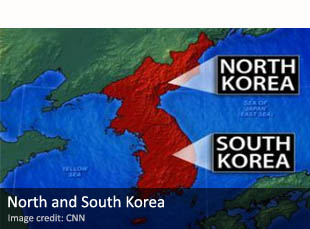
North and South KoreaBy IAN ALLEN | intelNews.org |
►►Cuba confirms it hid weapons on seized N. Korean ship. Cuba has admitted being behind a stash of weapons found on board a North Korean ship seized in the Panama Canal. The ship was seized by Panama last week after “undeclared military cargo” was found hidden in a shipment of sugar. United Nations sanctions prohibit the supply of arms to North Korea in the continuing dispute over its nuclear program. But the Cuban foreign ministry said the ship was carrying “obsolete arms” from Cuba “for repair” in North Korea.
►►British undercover officers stole identities of dead children. Britain’s Metropolitan Police Service, which is responsible for policing most of the city of London, has admitted that its undercover police officers expropriated the identities of at least 43 dead children. But police officials refused to inform the children’s families at the time, saying the practice was considered “essential to protect covert officers who were working inside dangerous extremist groups”.
►►Snowden has ‘thousands’ of damaging NSA documents. The Guardian’s Glenn Greenwald, who first reported on the disclosures of former CIA employee Edward Snowden, has said that the self-styled whistleblower has “literally thousands of documents” in his possession, which are essentially an “instruction manual for how the NSA is built”. The information could allow someone to evade or mimic NSA surveillance tactics, the journalist said.

News you may have missed #845

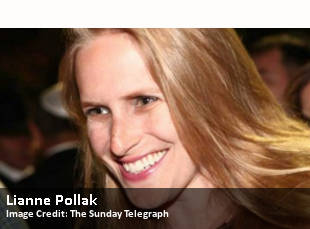
Lianne PollakBy IAN ALLEN | intelNews.org |
►►Mideast envoy Blair’s adviser is former Israeli intel officer. Former British Prime Minister Tony Blair is an official Middle East envoy for the Quartet, the group that represents the US, Russia, the United Nations and Europe. In his role as a mediator in the Israeli-Palestinian dispute, he is supposed to be politically neutral. But it turns out that one of his principal advisors, Lianne Polak, is an Israeli former army intelligence officer who has led intelligence teams in the Israel Defense Forces.
►►Who is the New Egyptian Intelligence Minister? Last week, a presidential order saw the appointment of General Muhammad Farid as the new head of Egypt’s General Intelligence Service. A profile of this unknown person reveals the close ties he had with those at the top of the Mubarak administration. His previous role was as the chairman of the Administrative Control Authority, which deals with investigating corruption in governmental agencies and public funds, as well as fighting organized crime. Farid was appointed to this role in 2004 by Hosni Mubarak.
►►Five unanswered questions about the NSA’s surveillance programs. Although the US government has disclosed some additional details about the programs in response to the leaks, important questions remain about the nature and scope of the surveillance programs. They include: 1. What other data is being collected under the USA PATRIOT Act? 2. How broad are the programs? 3. What’s the legal rationale? 4. Is the NSA still collecting email records? 5. Are there other programs that we don’t know about?

News you may have missed #844 (analysis on Snowden leak)

Edward SnowdenBy IAN ALLEN | intelNews.org |
►►Daniel Ellsberg: Snowden was right to flee US. “Many people compare Edward Snowden to me unfavorably for leaving the country and seeking asylum, rather than facing trial as I did. I don’t agree. The country I stayed in was a different America, a long time ago”, says Pentagon Papers whistleblower Daniel Ellsberg. And he continues: “I hope that he finds a haven, as safe as possible from kidnapping or assassination by US Special Operations forces, preferably where he can speak freely”.
►►NSA ‘in bed’ with German intelligence says Snowden. The fugitive US whistleblower Edward Snowden alleged on Sunday that the National Security Agency was “in bed together” with German intelligence despite claims by politicians in Chancellor Angela Merkel’s coalition that they were shocked by the extent of American spying in Germany. Snowden claimed that the NSA provided German intelligence, with analysis tools to help the organization monitor data flowing through Germany.
►►Can Snowden fly from Moscow to Caracas without being stopped? How can Snowden get from Moscow’s Sheremetyevo Airport, where he’s been holed up for nearly two weeks, to Venezuela, Bolivia or Nicaragua, which have indicated that they are willing to offer him political asylum? Former CIA analyst Allen Thomson took to Google Earth to answer the question of whether there’s a route Snowden might take that would allow him to fly from Moscow to, say, Caracas without crossing, as he puts it jokingly, the airspaces of “los Yanquis and their running dogs”.

News you may have missed #843 (analysis on Snowden leak)

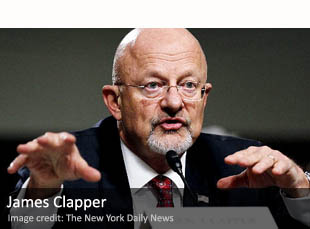
James ClapperBy IAN ALLEN | intelNews.org |
►►Countries approached by Snowden for asylum and their responses. According to a statement from WikiLeaks, former CIA/NSA employee Edward Snowden has applied for asylum in a total of 21 countries, but with little success so far. Here is a list of the countries he approached and their responses –or lack thereof– so far. Bolivia and Venezuela appear somewhat positive, but Ecuador and Russia have denied any possibility of giving Snowden political asylum. Other countries, including Cuba and China, have yet to issue a response to Snowden’s request.
►►US ODNI admits giving ‘erroneous’ answer during Senate testimony. James Clapper, America’s most senior intelligence official, who heads the Office of the Director of National Intelligence, has told a Senate oversight panel that he “simply didn’t think” of the National Security Agency’s efforts to collect the phone records of millions of Americans when he testified in March that it did “not wittingly” snoop on their communications. He had told during his testimony that NSA did “not wittingly” collect “any type of data at all on millions or hundreds of millions of Americans”. But that was before Snowden spilled the beans….
►►Are the Europeans being hypocrites over spying? If you buy the latest reporting out of Europe, France is outraged, simply outraged, at news that the National Security Agency has been eavesdropping on the European Union through its mission in New York and embassy in Washington. All of which is pretty hilarious, given France’s penchant for stealing American defense technology, bugging American business executives and generally annoying US counterintelligence officials. And it’s not just France, either.

News you may have missed #842 (world reaction to Snowden leak)

Edward SnowdenBy IAN ALLEN | intelNews.org |
►►Chinese media focus on Snowden leaks. The front pages of Chinese state media were covered Thursday with the allegations of ex-CIA employee Edward Snowden, who says the US government has been hacking computers in China for years. Speaking to media in Hong Kong, where he is currently staying, Snowden said the US has been hacking computers in Hong Kong and mainland China since 2009. He said targets include public officials, businesses and the Chinese University of Hong Kong. Those claims by Snowden were the top story on most of China’s major news portals on Thursday
►►Switzerland furious about Snowden’s charge that CIA spies on Swiss banks. One of the many lurid details in The Guardian’s remarkable interview with NSA whistleblower Edward Snowden was his account of what initially prompted him to leak: namely a CIA tour in Switzerland, where CIA officers recruited Swiss banking officials. The Snowden disclosure could not come at a worse time for the Swiss government, which is trying to convince parliament to back its emergency plan that would allow Swiss banks to turn over data on tax evaders to the US government.
►►Is Russia considering giving asylum to Snowden? Asked if the 29-year-old could claim asylum from Russia, a spokesman for President Vladimir Putin told the newspaper Kommersant: “If such a request is received, it will be considered”. Any attempt by the Kremlin to give refuge to Mr Snowden, amid calls for his prosecution under the US Espionage Act, is likely to infuriate the White House and provoke a major diplomatic standoff.

News you may have missed #841 (Snowden leak analysis)

Edward SnowdenBy IAN ALLEN | intelNews.org |
►►US officials defend spy programs as safeguards against terror. Intelligence officials sought to convince US House lawmakers in an unusual briefing that the government’s years-long collection of phone records and Internet usage is necessary for protecting Americans —and does not trample on their privacy rights. The parade of FBI and intelligence officials who briefed the entire House on Tuesday was the latest attempt to soothe outrage over NSA programs which collect billions of Americans’ phone and Internet records.
►►Some in US intelligence see Chinese behind Snowden leak. Former CIA officer Bob Baer told CNN that some US intelligence officials “are seriously looking at [the revelations made by Edward Snowden] as a potential Chinese covert action. Hong Kong is controlled by Chinese intelligence”, Baer told CNN Sunday evening. “It’s not an independent part of China at all. I’ve talked to a bunch of people in Washington today, in official positions, and they are looking at this as a potential Chinese espionage case”.
►►Leak highlights risk of outsourcing US spy work. The explosive leak uncovering America’s vast surveillance program highlights the risks Washington takes by entrusting so much of its defense and spy work to private firms, experts say. Edward Snowden, the 29-year-old man whose leak uncovered how spy agencies sift through phone records and Internet traffic, is among a legion of private contractors who make up nearly 30 percent of the workforce in intelligence agencies. From analyzing intelligence to training new spies, jobs that were once performed by government employees are now carried out by paid contractors, in a dramatic shift that began in the 1990s amid budget pressures.

News you may have missed #840

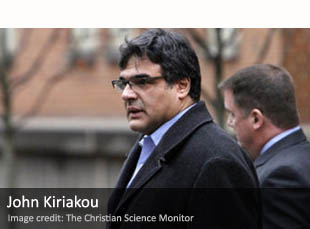
John KiriakouBy IAN ALLEN | intelNews.org |
►►S. Korea prosecutors might seek ex-spy chief’s arrest. Prosecutors said Monday they will decide sometime this week whether to seek an arrest warrant against Won Sei-hoon, who headed South Korea’s National Intelligence Service (NIS) for about four years until early this year. He is suspected of ordering agents to post a slew of politically sensitive comments on the Internet in order to sway public opinion in favor of the ruling party candidate prior to the December 19 national election. Won, who headed the NIS under former President Lee Myung-bak, has been barred from leaving the country pending investigation.
►►CIA self-described whistleblower writes about life in prison. In 2012, former CIA officer John Kiriakou pleaded guilty to violating the Intelligence Identities Protection Act. In January of this year, he was sentenced to 30 months in a low security prison in Loretto, Pennsylvania. In a letter released by his lawyer, Kiriakou describes his day-to-day life behind bars, from his own tiny cell to an almost anthropological study of the lunchroom and the relatively rare prison fights.
►►Comment: End the spy budget secrecy in Israel. Since the establishment of the Israeli state, the security establishment has enjoyed confidentiality with regard to the details of its budget, justified by the need to keep secrets from enemy intelligence services. This lack of transparency has impaired public scrutiny of security expenditure, which represents a large chunk of the Israeli economy. When the watchful eye is distant, the temptation is great to inflate job slots, exaggerate salary increments and hike up pension conditions.

News you may have missed #838 (analysis edition)

Predator droneBy IAN ALLEN | intelNews.org |
►►Delisle spy case barely caused ripples between Canada and Russia. The arrest of Jeffrey Delisle, a Canadian naval officer spying for Russia, did little to discourage Canada from welcoming that country’s defense chief to a Newfoundland meeting of Arctic nations last year. The visit underscored the puzzling lengths to which the Canadian government went to carry on a business-as-usual relationship with the one-time Cold War adversary. Most other planned military contacts between the two nations last year —including participation in the anti-terrorism exercise Operation Vigilant Eagle— also remained curiously normal.
►►Don’t believe the hype on Chinese cyberespionage. Within a day of each other, The Washington Post published a shocking list of US defense programs whose designs have reportedly been stolen by Chinese cyberattacks, and ABC news said the plans for Australia’s spy headquarters were also stolen by Chinese hackers. It makes China sound like a secret-sucking cyber espionage machine, but is that really the case? The knee-jerk interpretation to this disclosure (and others) is that China is a powerhouse of cyber espionage capable of stealing whatever secrets they want and that the US is powerless to stop them. This seems very unlikely.
►►US Predator drone program quietly shifted from CIA to DoD. The White House has quietly shifted lead responsibility for its controversial armed drone program from the CIA to the Defense Department. In a landmark speech last week at National Defense University in Washington, US President Barack Obama offered some clues into the status of the program, opaquely signaling it will now primarily be conducted by the United States military.

News you may have missed #837

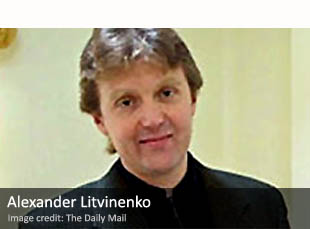
Alexander LitvinenkoBy IAN ALLEN | intelNews.org |
►►Russian ex-spy ‘would testify’ in Litvinenko inquiry. The 2006 murder of former Russian spy Alexander Litvinenko has never been solved and remains the subject of conflicting narratives and still-deepening intrigue over who may have killed him and why. Now a key witness, a US-based former Russian spy who worked with Litvinenko in the months leading up to his death, says he is willing to give evidence at a public inquiry. British police considered him such a vital witness that they visited the US three times to persuade him to give evidence at the inquest.
►►Assange reveals GCHQ messages discussing extradition. Authorities at GCHQ, Britain’s eavesdropping agency, face embarrassing revelations about internal correspondence in which WikiLeaks founder Julian Assange is discussed, apparently including speculation that he is being framed by Swedish authorities seeking his extradition on rape allegations. The records were revealed by Assange himself in a Sunday night interview with Spanish television. A message from September 2012, apparently says: “They are trying to arrest him on suspicion of XYZ. It is definitely a fit-up. Their timings are too convenient right after Cablegate“.
►►North Korean defector accused of spying by his sister. Earlier this year, Yoo Woo-sung, one of the most prominent North Korean defectors living in South Korea, was arrested on charges of espionage. Now court documents have shown that Yoo was arrested after testimony from his sister, who said he had been sent on a mission by North Korea’s secret police to infiltrate the defector community and pass back information about the people he met. The Washington Post reports that defectors from the North are increasingly facing the brunt of this suspicion.
►►Iran hangs two men for spying for Israel and US. Mohammad Heydari was found guilty of passing intelligence on “security issues and national secrets” to Israeli Mossad agents in exchange for cash. Kourosh Ahmadi was convicted of providing intelligence to the CIA, Tehran’s prosecutor’s office said. It is not clear when Heydari and Ahmadi were arrested or where they were tried. Their execution was handed down by Tehran’s Revolutionary Court and confirmed by the Supreme Court, Iran’s Fars news agency reported.