British tip helped French police foil ‘imminent’ terrorist attack
April 19, 2017 2 Comments
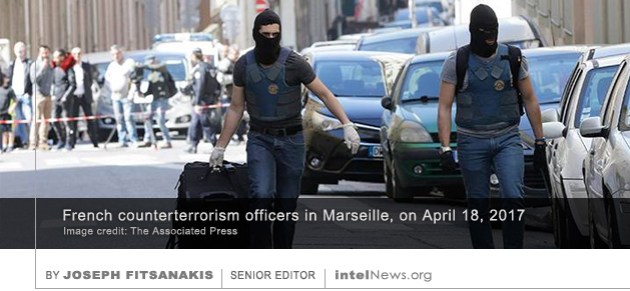 A tip from British intelligence helped French counterterrorist officials arrest two men who are thought to have been in the final stages of planning a large-scale terrorist attack, according to French media. Government sources in Paris say officers from the country’s domestic intelligence agency, DGSE, arrested two men on Monday. Both men are reportedly French citizens from France’s northern regions. They were residing in the southern port city of Marseilles, where they were arrested by the DGSE. They were later named as Merabet Mahiedine, 29, and Clement Baur, 23. It is alleged that Mahiedine has North African roots, but that Baur is a Caucasian convert to Islam. Both were allegedly known to French police for having repeatedly stated views in support of radical Islamist policies.
According to France’s Minister of the Interior, Matthias Fekl, the two men were planning to carry out a large-scale armed attack in Marseilles this week, which is the last before the long-awaited presidential election in the country. Some sources in the French intelligence community claim that the two men planned to kill one of the major candidates in the election. A number of reports suggest that their target was François Fillon, a conservative presidential candidate who served as Prime Minister from 2007 to 2012 under President Nicolas Sarkozy. It is not known why Fillon may have been targeted, though some observers speculate that radical Islamists seek to promote the aspirations of Fillon’s main rival, the far-right candidate Marine LePen, whom they see as someone whose policies would further-radicalize Muslims in France and North Africa.
Reports in the French media state that DGSE officers confiscated several guns and significant quantities of bomb-making material that were found in an apartment belonging to one of the two men. Meanwhile, an aide to Mr. Fillon told the Paris-based newspaper Le Figaro that the primary tip that led to the arrest of the two men in Marseilles came from British intelligence. The subsequent capture of the two men prevented an attack that would have almost certainly taken place “in the next couple of days”, according to sources in Paris.
► Author: Joseph Fitsanakis | Date: 19 April 2017 | Permalink
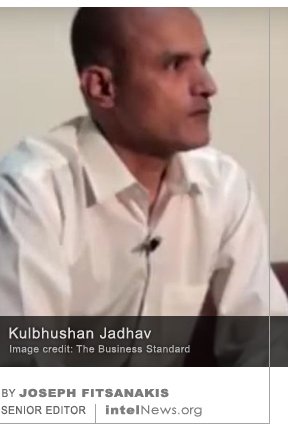 Analysts warn that South Asia may witness its worst crisis since the 2008 Mumbai attacks if Pakistan carries out its threat to execute an Indian former naval officer whom it accuses of espionage. Authorities in Islamabad say Kulbhushan Jadhav (pictured) worked for the Indian Navy until 2003, when he was recruited by India’s Research and Analysis Wing (RAW), a government intelligence agency that conducts operations abroad. The Pakistanis claim that Jadhav was arrested in southwest Pakistan in 2016, where he was engaged in funding and training secessionist militants from Pakistan’s Baluch minority. The Baluch are an Iranic people, most of whom live in a region known as Baluchistan, which is split between Iran and Pakistan. There are populous Baluch communities in the southern city of Karachi, one of Pakistan’s most populous ports. Some members of the Baluch community have secessionist aspirations and are accused of terrorism by Iranian and Pakistani authorities.
 Four hidden communications-surveillance compartments which are believed to date back to the Cold War, have been found in one of the most prestigious hotels of the former Yugoslavia. The discovery was made during an extensive renovation project that was recently completed in the Hotel Jama. The hotel is located in the southeastern Slovenian city of Postojnska, near the Italian border. For over a century, Postojnska has been famous for its network of limestone caves, which are among the largest in the world. Eager to cater to Italian, Austrian and other Western tourists, the government of Yugoslavia began construction on Hotel Jama in 1969. The hotel opened its doors in 1971, amidst much publicity and fanfare. It eventually became known as one of the most luxurious hotels in the communist world.
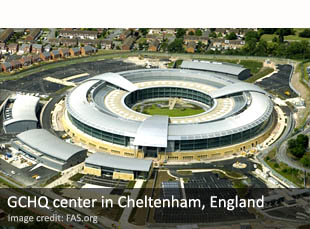 A new report authored by a consortium of government and private organizations in Britain has revealed the existence of a computer hacking operation, allegedly based in China, that is said to be “one of the largest ever” such campaigns globally. The operation is believed to have compromised sensitive information from an inestimable number of private companies in Southeast Asia, Europe and the United States. The
 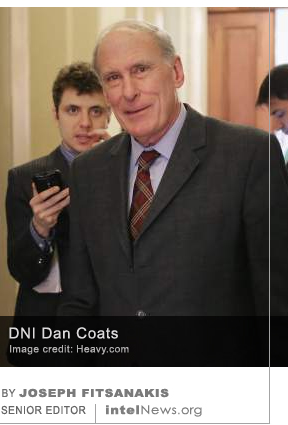 Relentless bureaucratic skirmishes between the White House and the United States Intelligence Community are occurring daily, with administration officials attempting to “seize the reins” of agencies, according to sources. The Associated Press
 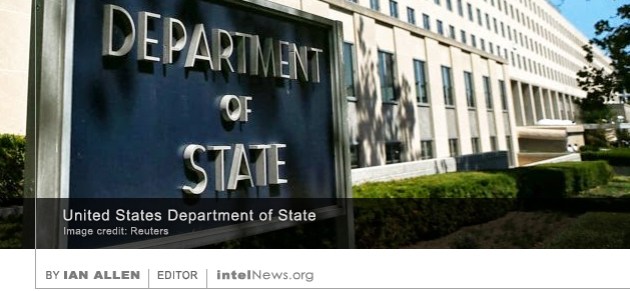 An employee of the United States Department of State has been charged with lying to authorities about her contacts with Chinese intelligence operatives, who gave her money and gifts in return for information. Candace Claiborne, 60, joined the Department of State in 1999 as an office management specialist. She lives in Washington, DC, but has served overseas in American diplomatic facilities in Baghdad, Iraq, Khartoum, Sudan, and China, where she was stationed in Beijing and Shanghai. According to information provided by the Federal Bureau of Investigation, Claiborne had a top security clearance, which required her to report contacts with foreign nationals.
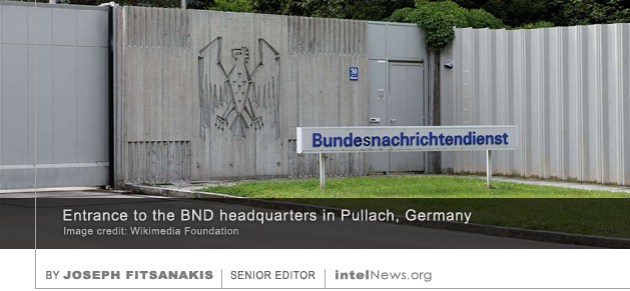 Earlier this week, it was
 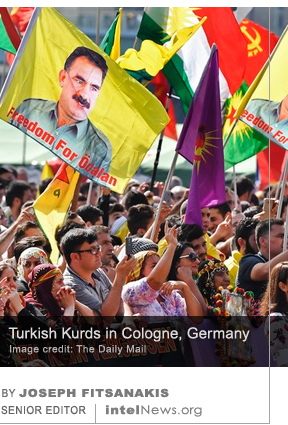 German intelligence and security agencies have publicly rejected a direct request made by Turkey’s intelligence chief to gather information on Turks who are living in Germany and are critical of the Turkish government. The request reportedly relates to attempts by the Turkish government to round up its critics, following a failed military coup in July of last year. The government of Turkish President Recep Tayyip Erdoğan accuses members of the so-called Gülen movement of orchestrating the coup, which included an armed attack on the country’s parliament and the murder of over 200 people across Turkey. The Gülen movement consists of supporters of Muslim cleric Fethullah Gülen, who runs a global network of schools, charities and businesses from his home in the United States. The government of Turkey has designated Gülen’s group a terrorist organization and claims that its members have stealthily infiltrated state institutions since the 1980s.
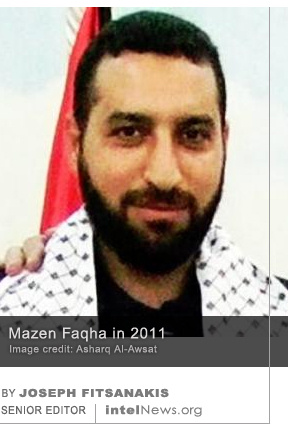 The sophistication behind the killing of a senior Hamas official, who was assassinated in his home in the Gaza Strip on Friday evening, points almost certainly to Israel, according to observers. Mazen Faqha, 38, helped plan several lethal operations by the Palestinian militant group, including a 2002 suicide bombing that killed nine and wounded over 50. Following an extensive manhunt, Israeli authorities arrested Faqha in the West Bank and in 2003 convicted him to nine life sentences. But in 2011, Faqha was among 1,027 Palestinian and Arab-Israeli prisoners that Israel released in exchange for Gilad Shalit, a soldier in the Israel Defense Forces, who was held prisoner by Hamas. Since that time, Faqha had lived in the Gaza Strip, the Hamas-controlled Palestinian enclave that has been under strict Israeli blockade since 2006.
 Comments made by a senior American intelligence official on Tuesday appeared to suggest that the North Korean government was behind an attempt to steal nearly $1 billion from a Bangladeshi bank last year. The heist took place in February of 2016, when a computer malware was used to issue several requests to transfer funds from Bangladesh Bank —the state-owned central bank of Bangladesh— using the SWIFT network. The hackers were able to transfer five separate sums of $101 million each to a linked Bangladesh Bank account at New York’s Federal Reserve Bank. However, when further requests were issued, Federal Reserve Bank employees contacted Bangladesh Bank and blocked further transactions. Eventually, most of the transferred funds, which neared $1 billion, were recovered; but the hackers managed to get away with approximately $81 million worth of funds.
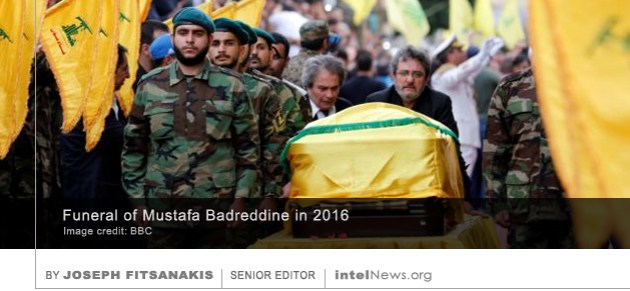 An Israeli military official has repeated claims in the Arab media that the Lebanese Shiite group Hezbollah killed its own military commander in Syria, following a dispute with Iran. Mustafa Amine Badreddine, 55, an expert in explosives and former bomb-maker, was a senior military commander in the military wing of Hezbollah. He rose through the ranks of the organization to become a trusted adviser to Hezbollah’s Secretary General, Hassan Nasrallah. In 2011, the Special Tribunal for Lebanon, set up by the United Nations, charged Badreddine with organizing the assassination of Lebanese Prime Minister Rafik Hariri. Hariri was killed with over 20 other people in a massive bomb blast in Beirut, in February of 2005.
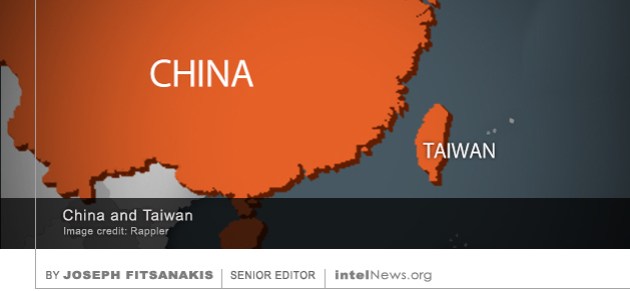 A Taiwanese government official has alleged that China maintains an army of more than 5,000 spies in Taiwan, many of whom have infiltrated the highest levels of government and industry. The allegation came after two sensational arrests were made in Taiwan last week, of people accused of spying for Beijing. Taiwanese counterintelligence officers reportedly arrested a bodyguard of Annette Lu, Taiwan’s former vice president. The bodyguard, who has been identified in Taiwanese media as Wang Hong-ju, has been charged with receiving payments from his Chinese intelligence handler in return for providing information about Mrs. Lu. This incident followed another arrest, made earlier in the week, this time of a Chinese man who is believed to have initially come to Taiwan as a student. Zhou Hong-xu is
 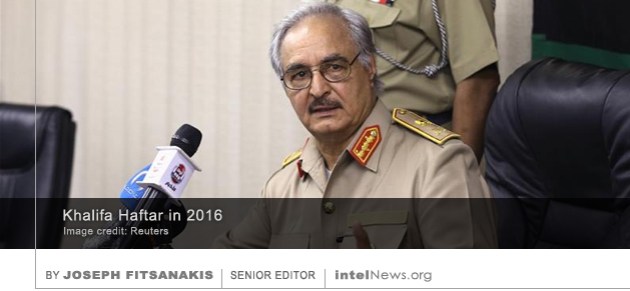 Russia may have become the latest country to deploy special forces soldiers in Libya, according to news reports citing anonymous United States officials. Late on Tuesday, the Reuters news agency
 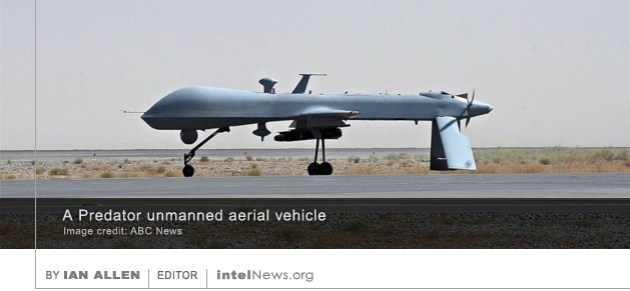 United States President Donald Trump has reportedly authorized the Central Intelligence Agency to bring back the routine use of lethal airstrikes by unmanned aerial vehicles (UAVs), which his predecessor, Barack Obama, curtailed in 2013. Washington began employing limited strikes by UAVs, otherwise known as drones, in the early 1990s, during the administration of President Bill Clinton. But it was under the Obama administration that the use of drone strikes reached an all-time high, with hundreds of such attacks documented after 2008. It is believed that Obama used this remote attack method to combat the Taliban and al-Qaeda, while at the same time keeping his promise of bringing back American troops from the Middle East and Central Asia. However, in 2013 the US president severely curtailed the controversial program, which some say damaged America’s image by inflicting civilian casualties.






 intelNews.org
Nigerian spy chief suspended after $43 million cash stash found in apartment
April 20, 2017 by Joseph Fitsanakis 1 Comment
According to media reports, the money was found in a vacant apartment located in Ikoyi, arguably the most affluent neighborhood of the Nigerian capital and one of the wealthiest urban areas in Africa. The cash had been wrapped in transparent plastic sheets and hidden inside several metallic filing cabinets, as well as concealed behind a fake partition in a wooden wardrobe. According to a statement issued by the Nigerian government, the apartment was searched following tip-offs by local residents. The latter allegedly reported that a mysterious woman was seen entering or leaving the apartment with suspicious-looking bags at all hours of the day or night. Some residents told EFCC investigators that the woman may have been a man in disguise.
Government officials in Lagos said on Wednesday that the apartment belongs to the National Intelligence Agency, Nigeria’s primary intelligence organization. An investigation has therefore been launched into how the cash was accumulated in the apartment, and whether it had been authorized by intelligence officials or other government executives. In the meantime, Nigerian President Muhammadu Buhari ordered the immediate suspension of Ambassador Ayo Oke, who has been serving as director of the National Intelligence Agency. The ambassador is believed to be under house arrest and is not permitted to resume his professional duties until after the investigation has been completed. President Buhari has asked to be given the results of the investigation in two weeks.
► Author: Joseph Fitsanakis | Date: 20 April 2017 | Permalink
Filed under Expert news and commentary on intelligence, espionage, spies and spying Tagged with Ayo Oke, corruption, Economic and Financial Crimes Commission (Nigeria), Lagos (Nigeria), money laundering, Muhammadu Buhari, National Intelligence Agency (Nigeria), News, Nigeria