Romania arrests four Israelis on espionage charges

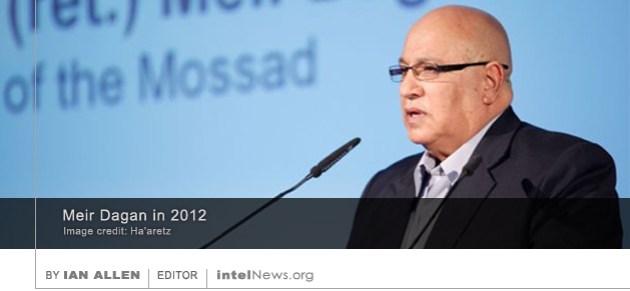
DIICOT RomaniaDIICOT RomaniaA Romanian agency tasked with security and counterterrorism has announced the arrest of four Israeli citizens on charges of hacking the email accounts of Romanian government officials. The arrests were announced on Thursday by Daniel Horodniceanu, chief of Romania’s Directorate for the Investigation of Organized Crime and Terrorism, known as DIICOT). In a press statement, Horodniceanu said the Israeli citizens are all employees of Black Cube, an Israeli security firm that is known for hiring former members of Israel’s intelligence and and special forces agencies. Among the company’s most high-profile board members was Meir Dagan, the former director of Israel’s Mossad intelligence agency, who died in March after a long illness.

Reports in the Romanian press have named two of the four Israeli citizens as Avi Yanus and Dan Zorella, both former members of the Israeli intelligence community, who are believed to be the founders of Black Cube. Two other Israelis, David Geclowicz and Ron Weiner, are accused of having hacked three email accounts belonging to a high-profile Romanian government agency tasked with anti-corruption efforts. Romanian media claim that the primary target of the Black Cube employees was Laura Codruta Kovesi, director of Romania’s National Anticorruption Directorate. Referred to as DNA, the agency was created in 2003 with the aim of combating serious organized crime and corruption in Romanian politics. The latter is seen by many in Romania as endemic and harmful to the country’s efforts to integrate fully into the European Union.

According to DIICOT, the arrests of the four Israelis were “preventive” and were prompted by an initial complaint filed against them by a former public prosecutor, Ion Lascu, who is Kovesi’s father. When approached by Israeli media, Black Cube confirmed that four of its employees had been arrested in Romania. However, it said its employees were careful to follow Romanian law and dismissed the espionage allegations against them as “unfounded and untrue”. In a statement, the company said it was recently hired to work on a project to collect intelligence on large-scale corruption in Romanian politics. The statement added that Black Cube employees were arrested “after having made significant discoveries” relating to the aforementioned project.

Late on Thursday, Romanian investigators said they were still trying to find out who hired Black Cube to work in Romania.

Author: Ian Allen | Date: 07 April 2016 | Permalink

Extraordinary lecture by Soviet spy Kim Philby surfaces on videotape

Kim PhilbyA videotaped lecture by Kim Philby, one of the Cold War’s most recognizable espionage figures, has been unearthed in the archives of the Stasi, the Ministry of State Security of the former East Germany. During the one-hour lecture, filmed in 1981, Philby addresses a select audience of Stasi operations officers and offers them advice on espionage, drawn from his own career. While working as a senior member of British intelligence, Harold Adrian Russell Philby, known as ‘Kim’ to his friends, spied on behalf of the Soviet NKVD and KGB from the early 1930s until 1963, when he secretly defected to the USSR from his home in Beirut, Lebanon. Philby’s defection sent ripples of shock across Western intelligence and is often seen as one of the most dramatic moments of the Cold War.

The videotaped lecture, which was never intended for public consumption, was found recently by the BBC in the archives of the BStU, the Federal Commissioner for Stasi Records in Berlin, Germany. Excerpts can now be viewed publicly for the first time.

The recording begins with an introduction by Markus Wolf, one of the most high-profile intelligence operatives of the Cold War, who was head of East Germany’s Main Directorate for Reconnaissance, the foreign intelligence division of the Stasi. Then Philby takes the stand and for about 15 minutes recounts his recruitment by the Soviet NKVD, the forerunner of the KGB. He tells his audience that the Soviets recruited him despite his extremely young age and joblessness, seeing him as “a long range project”. They did so, he says, because they knew he was part of “the ruling class of the British Empire” and was thus bound to end up in a position of power. His NKVD handler was clear as to his agent’s task, says Philby: his mission was to join the Secret Intelligence Service, known as MI6, Britain’s external intelligence agency. The young Philby then spent years trying to work his way into the intelligence agency, and did so successfully.

With extreme candidness, Philby proceeds to tell his East German audience about his mission, given to him by his NKVD handler in the late 1940s. It was to unseat Felix Cowgill, his boss in MI6’s Soviet counterespionage division, and take his place. He achieved that, he says, even though Cowgill was a man he “rather liked and admired. It was a very dirty story”, admits Philby, “but after all our work does imply getting dirty hands form time to time, but we do it for a cause that is not dirty in a way”.

Of particular interest to intelligence observers is Philby’s justification of his role in Operation VALUABLE/FIEND, in which the Central Intelligence Agency, in association with MI6 and other Western European intelligence agencies, secretly sent Western-trained Albanian agents into communist-controlled Albania. The agents were tasked with organizing an armed popular revolt against Albania’s communist rulers. But Philby, who had been given the job of overseeing the operation on behalf of MI6, betrayed the entire program to the Soviets, thus ensuring its complete failure. In his lecture, he justifies his betrayal by arguing that it helped prevent World War III. Had VALUABLE/FIEND succeeded, claims Philby, it would have been expanded to Bulgaria, at which point the USSR would have intervened, causing World War III.

Following the end of his prepared remarks, Philby takes a series of questions from his audience, including one about how he managed to “stay ideologically pure” while living in a capitalist society. In responding, the British defector praises his Soviet handler, who looked after his “political as well as physical health”, and advised his audience, which presumably included dozens of Stasi case officers, to do the same. A summary report of the recently unearthed videotape can be read on the BBC’s website, here. There is also an audio podcast on Philby’s lecture, which includes commentary from Professor Christopher Andrew, of Cambridge University, and Hayden B. Peake, most recently curator of the CIA’s Historical Intelligence Collection.

Author: Ian Allen and Joseph Fitsanakis | Date: 05 April 2016 | Permalink

Russia claims arrest of alleged CIA-trained spy

Lubyanka SquareThe Russian government says it has arrested a senior Ukrainian intelligence officer, who was allegedly trained by the United States Central Intelligence Agency and tasked with infiltrating the Russian secret services. In a statement published on Thursday, Russia’s Federal Security Service, known as FSB, said the alleged infiltrator is a “senior level employee” of the SBU, the Security Service of Ukraine. The SBU is Ukraine’s primary counterterrorism and counterintelligence agency, with much of its output focused on the Russian Federation.
The FSB statement identified the Ukrainian man as Lieutenant Colonel Yuriy Ivanchenko, but did not release further information about his background and identity, nor did it specify the details of his activities in Russia. According to the Russians, Ivanchenko allegedly entered the country in recent weeks, ostensibly in order to visit family members who live in Russia. But his real goal, according to the FSB, was to make contact with Russian intelligence and infiltrate the country’s security structure. Moscow says that Ivanchenko had planned to pose as a willing spy, namely an employee of Ukrainian intelligence who was offering to provide information to Russia. He was not a genuine spy, however, but rather a ‘dangle’ —namely someone posing as a genuine spy, but who is in fact attempting to deceive a rival intelligence agency by knowingly giving it misleading or inaccurate information.

Moreover, the Russians claim that Ivanchenko was being jointly run by the SBU and the CIA, and that the American intelligence agency had trained him to pose as a ‘dangle’ in order to collect information about FSB activities in Ukraine. The goal of the CIA, said Moscow, was to “lure an FSB employee and capture him with incriminating information”. However, the FSB statement said that Ivanchenko’s SBU connection and CIA affiliation were known to Russia prior to his arrival in the country, as he had previously tried to offer his services to Moscow. He was therefore arrested and will be deported in the coming days with a persona non grata (unwelcome person) designation. The CIA and SBU have not commented on Russia’s allegations.

Author: Joseph Fitsanakis | Date: 01 April 2016 | Permalink

France seizes ship with ‘hundreds of weapons’ heading for Yemen

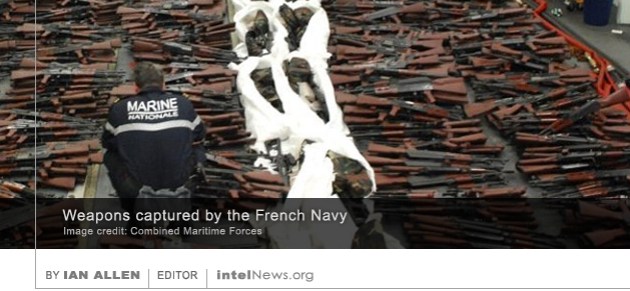
Combined Maritime ForcesThe United States says a ship carrying hundreds of weapons, which was captured by the French Navy in the Indian Ocean, originated from Iran, and that the cargo was destined for Yemeni rebels through Somalia. The ship was seized on March 20 by a French warship patrolling the Indian Ocean as part of the Combined Maritime Forces (CMF). The CMF is a multinational naval fleet that aims to implement United Nations sanctions on Somalia. The sanctions are designed to frustrate the activities of al-Shabaab, an al-Qaeda-linked Somali militant group, and to put an end to maritime piracy in the Horn of Africa.
The ship carrying the weapons is believed to have been initially spotted by a French helicopter that was conducting surveillance flights in support of CMF’s mission. Soon after boarding the ship, French forces discovered large amounts of weaponry. A statement posted on the CMF website said that the ship was found to be carrying “several hundred AK47 assault rifles, machine guns and anti-tank weapons”. The French Ministry of Defense said that the vessel was not registered to any country and that the crew of 10 was multinational. All crew members were released after being questioned by their French captors.

An assessment of the ship’s capture by the US Department of Defense states that the arms shipment probably originated in Iran and that it was heading to Somalia. However, the most likely final destination of the cargo was not al-Shabaab, but Houthi rebels in Yemen. Iran is known to be supporting and funding Houthi rebels, who are Shiite and are fighting a bitter civil war against the country’s Saudi-supported Sunni government.

It is worth noting that the recent capture of the unregistered vessel is the third such seizure of a large cache of weapons heading for Yemen through Somalia since September. In the previous most recent case, an Australian Navy ship sailing off the coast of Oman intercepted a large cache of weapons being transported to Yemen. US sources speculated that the intercepted ship originated from Iran and was heading to Yemen.

Author: Ian Allen | Date: 31 March 2016 | Permalink

Revealed: Decorated Nazi commander became Mossad assassin

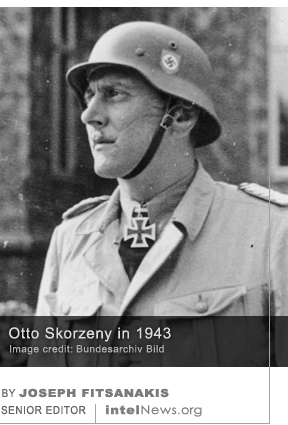
Otto SkorzenyA notorious lieutenant colonel in the Waffen SS, who served in Adolf Hitler’s personal bodyguard unit, worked as a hitman for the Israeli intelligence agency Mossad after World War II, it has been revealed. Austrian-born Otto Skorzeny became known as the most ruthless special-forces commander in the Third Reich. Having joined the Austrian branch of the National Socialist German Workers’ Party at 19, at age 23 Skorzeny began serving in the Waffen SS, Nazi Germany’s conscript army that consisted largely of foreign-born fighters. In 1943, Hitler himself decorated Skorzeny with the Knight’s Cross of the Iron Cross, in recognition of his leadership in Operation EICHE, the rescue by German commandos of Italian fascist dictator Benito Mussolini, who had been imprisoned at a ski resort in the Apennine Mountains following a coup against his government.
Skorzeny survived the war and ended up living in Spain under the protection of the country’s far-right dictator, Francisco Franco. The Mossad, Israel’s covert-action agency, which had made it a priority to arrest or kill senior Nazis who had survived the war, intended to kill Skorzeny. However, two veteran Israeli intelligence observers, Dan Raviv and Yossi Melman, revealed on Sunday that, instead of killing Skorzeny, the Mossad decided to recruit him. Based on “interviews with former Mossad officers and with Israelis who have access to the Mossad’s archived secrets”, Raviv and Melman allege that Isser Harel, who directed the Mossad from 1952 to 1963, decided that the former Waffen SS commander would be a useful asset against other Nazis operating in Europe and the Middle East. Specifically, Harel planned to use Skorzeny as a trap to lure a number of Nazi scientists who were secretly working for Egypt’s missile program.

According to Raviv and Melman, a Mossad team was sent to Spain to meet Skorzeny. After a tense incident that involved Skorzeny pointing a loaded weapon at two Mossad operatives, the former Nazi soldier agreed to cooperate with Israel in return for assurances that his name would be removed from the Mossad’s assassination list. Raviv and Melman claim that one of Skorzeny’s most high-profile operations as an agent of the Mossad culminated in the assassination of Heinz Krug in Munich in 1962. Krug was a German rocket scientist who was working for the Egyptian government under the tutelage of Dr Wolfgang Pilz, another rocketry expert who had put together a top-secret missile program for Cairo. Krug was targeted for assassination by Yitzhak Shamir, Israel’s future prime minister, who was then commander of the Mossad’s clandestine operations service.

Krug, who was worried for his life after receiving threatening messages from individuals he believed were connected with the Mossad, reached out to Skorzeny in hopes that the former Waffen SS commander could give him advice on enhancing his personal security. But Skorzeny, operating on orders of the Mossad, shot dead the German scientist in a remote wooded area outside Munich. A Mossad team then poured acid on Krug’s body before burying it in a grave that had been dug in preparation for his killing. According to Raviv and Melman, Skorzeny also sent German scientists in Egypt a number of mail bombs designed by the Mossad, which killed a number of people. Raviv and Melman also state that they received oral confirmation from Rafi Eitan, a legendary Mossad operations officer, that he “met and ran Skorzeny” on behalf of the Israeli intelligence agency.

Skorzeny died of cancer in Spain in 1975. He was 67. It is believed that the Mossad never tried to kill or kidnap him.

Author: Joseph Fitsanakis | Date: 29 March 2016 | Permalink

NSA director made secret visit to Israel last week

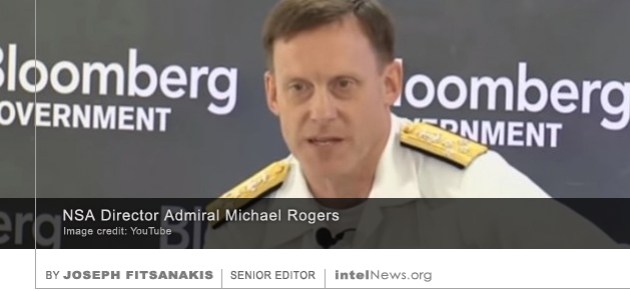
Michael RogersThe head of the United States’ largest intelligence agency secretly visited Israel last week, reportedly in order to explore forging closer ties between American and Israeli cyber intelligence experts. Israeli newspaper Ha’aretz said on Sunday that Admiral Michael Rogers, who directs the United States National Security Agency (NSA), was secretly in Israel last week. The NSA is America’s signals intelligence (SIGINT) agency, which is responsible for electronic collection, as well as protecting US government information and communication systems from foreign penetration and sabotage.
According to Ha’aretz, Rogers was hosted in Israel by the leadership of the Israel Defense Forces’ SIGINT unit, which is known as Intelligence Corps Unit 8200. The secretive group, which is seen as Israel’s equivalent to the NSA, is tasked with collecting SIGINT from Middle Eastern locations and protecting Israel’s electronic information infrastructure from adversaries. According to the Israeli newspaper, Rogers’ visit was aimed at exploring ways in which the NSA and Unit 8200 can enhance their cooperation, especially against regional Middle Eastern powers like Iran or non-state groups like Hezbollah.

IntelNews readers will recall that the IDF’s Unit 8200 is viewed by some Middle East observers as the creator of the Stuxnet virus. Stuxnet is a sophisticated malware that is believed to have been designed as an electronic weapon against Iran’s nuclear program. Among these observers is New York Times correspondent David Sanger; in his 2012 book, Confront and Conceal, Sanger claimed that Stuxnet was designed by NSA and Unit 8200 programmers as part of a joint offensive cyber operation codenamed OLYMPIC GAMES. According to Sanger, the two agencies collaborated very closely between 2008 and 2011 in order to bring about Stuxnet and other carefully engineered malware, including Flame.

Ha’aretz said that Rogers’ visit was meant to solidify US and Israeli cooperation on offensive cyber operations, based on the legacy of Stuxnet and Flame. During his visit to Israel, the US intelligence official also met with the heads of other Israeli intelligence agencies, said Ha’aretz.

Author: Joseph Fitsanakis | Date: 28 March 2016 | Permalink

News you may have missed #893: Intelligence and the attacks in Belgium

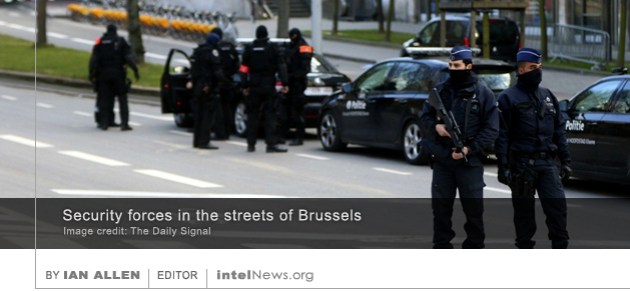
BrusselsBelgian Intelligence Services ‘Overwhelmed and Outnumbered’. Tuesday’s deadly attacks on Brussels airport and a metro station, which left at least 30 people dead, demonstrate that the Belgian security forces are overwhelmed and outnumbered by the threat posed by radical Islamists, experts say. Belgium’s security services are not so much incompetent, say experts, as understaffed—that leaves them outnumbered by the high number of suspected radical Islamists, some home-grown and some who have traveled to Syria and back.
Belgian intelligence service seen as weak link in Europe. Following the Paris attacks last November, it became apparent that the real intelligence failure had not been French but Belgian. Before those attacks one of the Belgian intelligence services, Surete de L’Etat, had only 600 personnel to keep tabs on 900 “persons of interest”, many of them potential jihadis who have travelled to Syria and Iraq. Apart from the lack of capacity, the Belgian intel services also lack the capability to deal with an internal ISIS threat.

Belgium feared tragedy was coming but couldn’t stop it. Belgium feared tragedy was coming but couldn’t stop it. Belgium has been trying to fight a growing threat with a relatively small security apparatus. Although Brussels is the diplomatic capital of the world, Belgian state security has only about 600 employees (the exact figure is classified information). Its military counterpart, meanwhile, the Adiv, has a similar number. That makes just over a thousand intelligence officers to secure a country that hosts not just Nato and the EU institutions but countless other organisations.

Controversial ex-Mossad director Meir Dagan dies in Tel Aviv

Meir DaganMeir Dagan, who directed the Israeli intelligence agency Mossad for a decade and emerged as a vocal critic of the Israeli government after his retirement, has died. A statement from his family said he died of liver cancer, a disease that prompted him to undergo a complex liver transplant operation in Belarus in 2012. But he suffered constant complications following his return to Israel, which led to his death on Thursday in Tel Aviv. Dagan was born Meir Hubermann in 1945 in Soviet Ukraine, and arrived with his family to Israeli in 1950. At age 18, he enlisted in the Israel Defense Forces and saw action in the 1967 Arab-Israeli war. In 2002, a few years after his retirement from the military with the rank of major general, Israeli Prime Minister Ariel Sharon appointed him to direct the Mossad, Israel’s primary intelligence agency.

During Dagan’s tenure, which spanned the rule of three Israeli prime ministers, the Mossad focused intensely on combating the Iranian nuclear program, using a variety of means ranging from alleged assassinations of Iranian scientists to cyber sabotage of Iranian nuclear facilities. However, like many other senior Israeli intelligence commanders, Dagan was strongly opposed to plans by the government of Benjamin Netanyahu to launch military strikes on Iran. Shortly after his retirement in 2011, Dagan spoke publicly against Netanyahu and senior members of his cabinet, including Minister of Defense Ehud Barak, who openly advocated the use of military force against Iran. In May 2011, Dagan condemned a possible Israeli attack on Iran as an act that would be “patently illegal under international law” and “the stupidest thing [he had] ever heard”. In June, hawkish Israeli Prime Minister Benjamin Netanyahu effectively stripped Dagan of his diplomatic passport, after the longtime Mossad Director called Israel’s leaders “reckless and irresponsible” people, who will not hesitate to engage in military adventurism in Iran to ensure their political primacy at home.

But Dagan continued to openly criticize the Israeli government, refusing to describe the Iranian nuclear program as an existential threat to Israel and calling instead for the establishment of a peace treaty with the Palestinians. He said in an interview in 2012 that, when he directed the Mossad, he could “block any perilous adventurism” in the Middle East; but after his retirement from the senior ranks of the agency, he feared that there was “no one to stop Barak and Bibi”, referring to Prime Minister Netanyahu by his nickname.

Dagan was 71. His burial took place on Sunday with full military honors in the town of Rosh Pina, in Israel’s northern district.

Author: Ian Allen | Date: 21 March 2016 | Permalink

German court sentences intelligence officer who spied for CIA

Markus ReichelA court in Germany has sentenced a former officer of the country’s intelligence agency, who spied for the United States and Russia from 2008 to 2014. Regular readers of this website will recall the case of ‘Markus R.’, a clerk at the Bundesnachrichtendienst, or BND, Germany’s external intelligence agency. The 32-year-old was arrested in July 2014 on suspicion of having spied for the United States’ Central Intelligence Agency. Germany’s Office of the Federal Prosecutor said at the time that Markus R. voluntarily made contact with the CIA in 2008 and offered his services to the American spy agency. He began working for the United States as a double agent soon afterwards. Soon after Markus R.’s arrest was made public, the German government ordered the immediate removal from Germany of the CIA chief of station –who was essentially the top American intelligence official in the country. Berlin also instructed its intelligence agencies to limit their cooperation with their American counterparts “to the bare essentials” until further notice.

On Thursday, Markus R., identified in some German media as Markus Reichel, was sentenced for selling over 200 classified German government documents to the CIA between 2008 and 2012, for which he said he received €80,000 ($90,000). During his trial, Reichel also admitted giving German government documents to personnel at the consulate of the Russian Federation in Munich in the summer of 2014. Among the documents that the former BND clerks is said to have given the CIA was a list of thousands of German intelligence operatives —including agents— stationed abroad, which contained their operational cover names and real identities. But Reichel was caught when German counterintelligence officers intercepted correspondence between him and his handlers and then used the information to set up a successful sting operation.

During his trial, Reichel issued a formal apology for engaging in espionage against the German state. He told the court that he had been motivated by boredom and by “lust for adventure”, which he said he did not get working for the BND. He also said he was frustrated by the lack of confidence that his superiors and colleagues had in him. “At the BND, I had the impression that no one trusted me with anything”, said Reichel. “But the CIA was different. You had the opportunity to prove yourself”, he added. Reichel was found guilty of treason against the German state and sentenced to eight years in prison.

Author: Joseph Fitsanakis | Date: 17 March 2016 | Permalink

Malaysia foiled Islamic State plan to kidnap prime minister, senior officials

Ahmad Zahid HamidAuthorities in Malaysia said they managed to foil a plan by the Islamic State to kidnap the country’s prime minister and two other senior cabinet officials, in exchange for ransom. According to the government of Malaysia, the Islamic State also planned to stage armed attacks throughout the country, including in major urban centers, such as Kuala Lumpur, the nation’s capital. News of the alleged plot was revealed in the Dewan Rakyat, the lower house of the Malaysian parliament, by Ahmad Zahid Hamid, the country’s deputy prime minister. He told members of parliament that Malaysian intelligence had managed to detect the plot, which had been planned for January 30, 2015, but that the government did not believe it was prudent to alarm the country until the investigation of the alleged plot had been finalized.
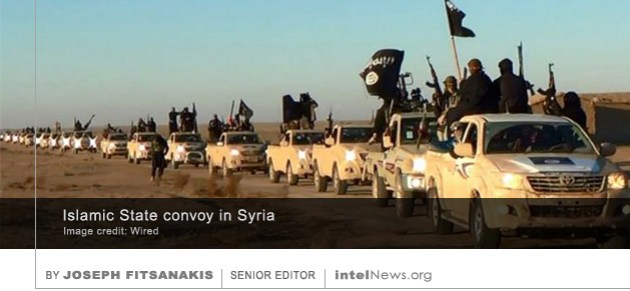
According to Hamid, 13 individuals with direct ties to the Islamic State were behind the plot to kidnap three senior members of the Malaysian government on the same day. The targets were the Malaysian Prime Minister Najib Razak, the Defense Minister Hishammuddin Tun Hussein, and Hamid himself, who informed the parliament on Tuesday. He said that the Islamic State members were planning to ask for a large amount of money in return for delivering the three politicians to the authorities unharmed. Along with the kidnappings, the Islamic State members had planned to raid military facilities and steal weapons, then plant explosions throughout the country. They also wanted to conduct a series of armed robberies in order to acquire funds for the militant organization.

Hamid told the parliament that intelligence agencies had not been able to establish proof of the existence of an independent network belonging to the Islamic State in Malaysia. Instead, Islamic State members and sympathizers in the country are being handled from abroad, primarily from Syria, he said. Speaking on Tuesday about the alleged plot, Defense Minister Hussein said that security had been increased at all military bases and that the personal protection detail of senior cabinet officials had been augmented as a result of the plot.

Author: Ian Allen | Date: 16 March 2016 | Permalink

Defector reveals thousands of Islamic State internal documents

ISIS - JFTens of thousands of classified documents belonging to the Islamic State have been released by a disillusioned former member of the organization, who says that the group has been taken over by secularists. According to British-based agency Sky News, the documents were provided on a memory stick stolen from the Islamic State by a Syrian former member of the organization, who goes by the name “Abu Hamed”. Hamed allegedly stole the documents from the Islamic State’s “internal security police”, which Sky News also refers to as “the group’s Security Service”. He took it with him when he defected from the organization, which he says he joined as a convert from the non-Islamist Free Syrian Army. He told Sky News’ Stuart Ramsay that he left the group after concluding that it had been “taken over” by former Iraqi soldiers belonging to Ba’ath, the secularist party that was at the heart of the regime led by the late Iraqi President Saddam Hussein. As a result, “Islamic rules […] have totally collapsed” inside the Islamic State, said Hamed.
The documents that Hamed gave Sky News are said to number in the “tens of thousands” and reportedly identify nationals from over 50 countries who are members of the Islamic State. Many of the documents contain the 23-question form that all prospective members of the Islamic State have to complete before being admitted into the organization. The questionnaires contain the prospective members’ names and aliases, contact information and family background, among other identifying data. Ramsay said he met Hamed “in a secret location in Turkey”, where the former Free Syrian Army soldier is now living after defecting from the Islamic State. According to the Sky News reporter, Hamed said he abandoned the Islamist organization because its current leadership consists almost exclusively of Ba’athists, who are not known for their religious views or lifestyle.

Ramsay reports that many of the names of Islamic State members that are contained in the documents are already “well-known” to Western and Middle Eastern intelligence agencies. But the collection of members’ names contains several individuals from the Middle East, Northern Africa, Europe, as well as North America, who were allegedly not included in intelligence agencies’ lists. One file surrendered by Hamed is headlined “Martyrs”, and allegedly features the names of members of a brigade that consists “entirely of fighters who wanted to carry out suicide attacks and were trained to do so”. Hamed is also reported to have told Sky News that the Islamic State is gradually abandoning its self-described state capital of Raqqa in Syria and relocating to Iraq. Sky News said it had informed Western government agencies about the documents.

Author: Joseph Fitsanakis | Date: 14 March 2016 | Permalink

Senior South Korean officials’ cell phones hacked by North: report

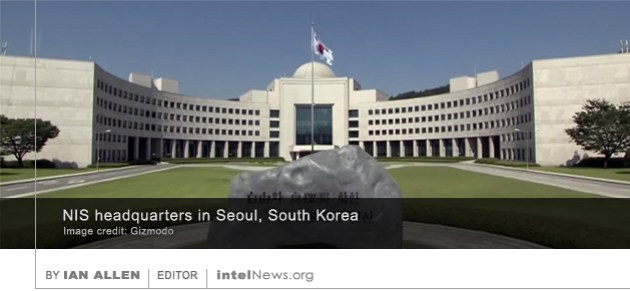
NIS South KoreaDozens of cell phones belonging to senior government officials in South Korea were compromised by North Korean hackers who systematically targeted them with texts containing malicious codes, according to reports. The National Intelligence Service (NIS), South Korea’s primary intelligence agency, said the cell phone penetrations were part of a concerted campaign by North Korea to target smart phones belonging to South Korean senior government officials. Once they managed to compromise a cell phone, the hackers were able to access the call history stored on the device, the content of text messages exchanged with other users and, in some cases, the content of telephone calls placed on the compromised device. Moreover, according to the NIS, the hackers were able to access the contact lists stored on compromised cell phones, which means that more attacks may be taking place against cell phones belonging to South Korean government officials.
The breach was considered critical enough for the NIS to host an emergency executive meeting with the security heads of 14 government ministries on Tuesday, in order to update them on the situation and to discuss ways of responding to the crisis. According to Korean media, the emergency meeting took place on Tuesday and lasted for over three hours. During the meeting the NIS told ministry representatives that the North Korean operation was launched in late February and was ongoing as of early this week. It specifically targeted government officials and appeared to concentrate on their cell phones, instead of their office phones –probably because the latter are known to be equipped with advanced anti-hacking features. The government employees’ cell phones were reportedly attacked using text messages and emails containing links to web sites that downloaded malicious codes on the users’ phones.

The NIS did not specify the precise purpose of the hacking operation, nor did it explain whether the attacks were informed by an overarching strategic goal. The officials targeted work for a variety of government ministries, but there is no clarification as to whether any operational or administrative links between them exist. The NIS did say, however, that approximately a fifth of all attacks against cell phones were successful in compromising the targeted devices.

Author: Joseph Fitsanakis | Date: 10 March 2016 | Permalink

Germans bill Israeli embassy after Mossad car gets stuck in mud

Mossad sealAuthorities in a northern German town have called on the Israeli embassy in Berlin to pay for the cost of extricating a car belonging to two Israeli spies, which was stuck in a mud pit in a restricted area. According to the Hamburg-based television station NDR, the incident occurred last December in Quarnbek, a coastal town in Germany’s Schleswig-Holstein state with a population of under 2,000. Two men were reportedly spotted late one afternoon driving a Ford Focus near a restricted area that is surrounded by a fence by the banks of the Kiel Canal. The men came across a locked gate to the restricted area, which, according to NDR, is clearly marked with “no trespassing” signs. However, they reportedly picked the lock and drove through the gate into the restricted area. Shortly afterwards, however, the Ford Focus got stuck in a mud pit inside the Kiel Canal restricted area.
As the two men unsuccessfully tried to get their car unstuck, night began to fall. An elderly resident spotted them and asked them if they were government employees. The men responded that they were there to survey the area in preparation for a sailing contest that was to take place in the Kiel Canal in the summer. But the resident became suspicious and called Quarnbek’s Mayor, Klaus Langer. In turn, the mayor called the police, which sent a team of officers to the restricted site. According to NDR, as soon as the two men spotted the police vehicle, they came out of their car and identified themselves as Israeli consular personnel with diplomatic immunity. They presented their credentials and informed the police officers that they were armed; indeed, two handguns were found in the Ford Focus.

German media reports said the police soon confirmed that the two men were officers of the Mossad, Israel’s primary external intelligence agency, and were in the region to accompany the transfer of the ThyssenKrupp submarine to Israeli hands. Known in Israel as the INS Rahav, the submarine was built in the Kiel shipyard on orders of the Israeli government. According to Mayor Langer, a team of local firefighters was dispatched to help extricate the Mossad officers’ car from the mud. Earlier attempts by a local farmer to extricate the car using a forklift had apparently failed. The Ford Focus was eventually extricated and the two Mossad agents were allowed to leave. Shortly afterwards, Mayor Langer, who was elected as a member of the Green Party, sent the Israeli embassy in Berlin a bill for $1392.28 to cover the cost of the extrication. According to recent reports, the Israelis said they intend to pay up.

Author: Joseph Fitsanakis | Date: 09 March 2015 | Permalink

French commandos kill senior al-Qaeda leader in Mali

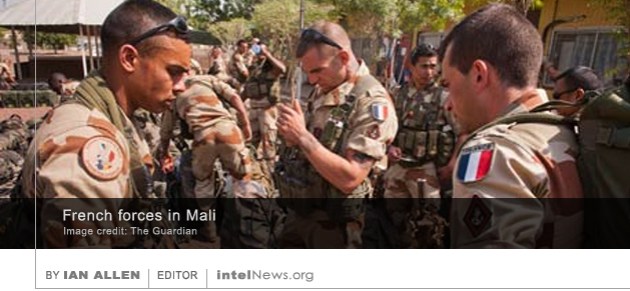
French troops MaliFrench troops have reportedly killed a Spanish citizen who was a senior commander of al-Qaeda in the Islamic Maghreb (AQIM), one of the most prolific al-Qaeda-linked groups in Africa. The Spaniard, Abu al-Nur al-Andalusi, 35, was from Melilla, a coastal Spanish enclave in northern Africa, which borders Morocco. Since 2014, al-Nur had operated as a military leader of AQIM, an armed Islamist group that aims to create a caliphate in northern Africa. AQIM emerged in the 1990s out of the brutal Algerian Civil War, which pitted the country’s secular but authoritarian government against a host of Islamist groups, including the Armed Islamic Group, known as GIA. In 1998 a band of GIA members left the group in protest against its indiscriminate killing of civilians, and formed a separate organization, which called itself Salafist Group for Preaching and Combat. In2007 the group renamed itself AQIM and pledged allegiance to al-Qaeda’s co-founder Osama bin Laden.
Al-Nur was reportedly in charge of a brigade of around two dozen AQIM fighters —most of them Algerians and Moroccans, with the addition of some Libyans. These fighters had been operating in the inhospitable desert north of the Malian city of Timbuktu. Some believe that Al-Nur helped coordinate AQIM’s attacks against Western targets in Mali and Burkina Faso in recent months. Moreover, al-Nur’s brigade has been linked to a daring attack against members of a United Nations peacekeeping force in Mali a few months ago.

Citing sources from Mali, Spanish intelligence expert Salvador Burguet said on Wednesday that al-Nur had been killed in a raid by a team of French commandos. Burguet, who directs the Spanish-based private intelligence company AICS, said the French troops specifically targeted an al-Qaeda meeting held by senior commanders of the organization in northern Mali. But he added that it is not known at this time whether al-Nur was the only AQIM militant killed in the attack. The Reuters news agency, which reported on the story, said it was able to corroborate al-Nur’s death by speaking to two unnamed “security officials in Mali”.

French forces were deployed in Mali in 2003, ostensibly to prevent the rapid rise of Islamist militancy following the collapse of the Libyan government of Muammar al-Gaddafi and the influx of weapons into the area. After the French military deployment, AQIM activities in the country receded. However, scattered groups of AQIM continue to operate in rural areas, and Paris maintains a force of nearly 4,000 troops throughout the country. Reuters said it contacted the French Department of Defense and Spain’s Ministry of Foreign Affairs, but both agencies declined comment on the Spaniard’s reputed death.

Author: Ian Allen | Date: 04 March 2016 | Permalink

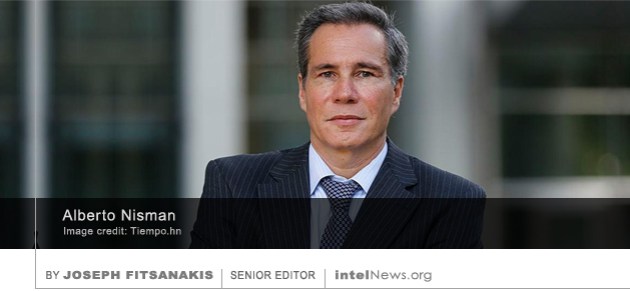
Argentine ex-spy says government killed prosecutor Alberto Nisman

Alberto NismanAn Argentine former senior intelligence official has claimed in court testimony that the administration of President Cristina Fernández de Kirchner murdered a state prosecutor who had accused senior officials of having colluded with Iran to bomb Israeli targets in Buenos Aires. In January 2015, the prosecutor, Alberto Nisman, prompted international headlines by launching a criminal complaint against President Kirchner and several other notable personalities of Argentine political life. Nisman accused them of having colluded with the government of Iran to obstruct an investigation into the bombings of the Israeli embassy and a Jewish cultural center in Buenos Aires in the mid-1990s. A dozen people died in the bombing of the embassy, while another 85 were killed two years later, when the Asociación Mutual Israelita Argentina community center in the Argentine capital was bombed. Nisman was found dead on January 19, 2015, hours before he was due to give Congressional testimony on the subject. His body was found in the bathroom of his apartment, which had been locked from the inside.

Argentine authorities say they believe Nisman killed himself with a single shot to the head from a .22 caliber handgun. His family, however, as well as many notable personalities in Argentina, believe he was murdered on the orders of government officials who wanted to silence him. Such claims were reinforced this week following a dramatic 17-hour court testimony by Antonio Horacio Stiuso, better known as Jaime Stiuso, who served as chief operating officer for Argentina’s Secretaría de Inteligencia del Estado (SIDE) under President Kirchner. Stiuso was fired after Nisman’s death, when the government suddenly dissolved SIDE and replaced it with a new agency, the Agencia Federal de Inteligencia. In justifying the dramatic move, President Kirchner accused SIDE of feeding Nisman fabricated information implicating her and her government minsters in a fictional collusion with the Islamic Republic, and then killing him in order to destabilize her rule. She then charged SIDE’s leadership, including Stiuso, with involvement in Nisman’s killing. Stiuso promptly fled Buenos Aires for Brazil, from where he flew to Miami, Florida, on February 19, using an Italian passport.

But the former spy recently returned to Argentina and on Monday he testified in a closed-door hearing as part of an official investigation into Nisman’s death. Although Stiuso gave his testimony in secret, Argentine media published several extracts on Tuesday, which appear to have been leaked by witnesses. According to the excerpts, Stiuso accused members of an “inner circle” inside President Kirchner’s government of having killed Nisman and then tampered with incriminating evidence from the scene of the crime. The former spy appears to have told the judge in the case, Fabiana Palmaghina, that the state prosecutor’s death “was intimately linked to the work he was doing”. He is reported to have added that “the author of all this madness was that woman, Cristina Fernández de Kirchner.

Stiuso has refrained from talking to the media, and his comments to the court have not been confirmed. However, the judge in the case, who previously favored the view that Nisman committed suicide, has now referred Nisman’s case to a higher federal court in Argentina with instructions that it be examined as a possible homicide.

Author: Joseph Fitsanakis | Date: 02 March 2016 | Permalink



