News you may have missed #0115

  • China says US intelligence report shows Cold War prejudice. The 2009 US National Intelligence Strategy (.pdf) report singles out Iran, North Korea, China and Russia as nations with the ability to challenge US interests. But government-owned China Daily newspaper says the report is “stuffed with outdated pride and prejudice” and “reflects typical Cold War and power politics mentality”.
  • Somali suicide bomber lived in the US. After Shirwa Ahmed, a US citizen of Somali descent who last October became history’s first known US-born suicide bomber, another Somali-American, who lived in Seattle, has been identified as one of the participants of a suicide bombing that killed 21 peacekeepers in Mogadishu last week. US officials have been warning for almost a year about the strange phenomenon of the “disappearing Somali youths” from their US homes.
  • UK spies used Monopoly sets to help WWII prisoners escape. British secret services embedded escape tools and maps in Monopoly game sets distributed by humanitarian groups in care packages to imprisoned British soldiers during World War II. The article contains some interesting photographs.

Bookmark and Share

News you may have missed #0106

  • North Korean succession rumor mill now silent. Rumors circulated last summer by South Korean intelligence sources, that Kim Jong Il was on his deathbed and was about to be replaced with his son, Kim Jong Un, have gone quiet, after the health of the “Great Leader” appears to have miraculously improved. Some now believe Pyongyang may have deliberately fed those rumors to discern reactions among senior North Korean officials in Kim John Il’s circle.
  • UK government issues apology for treatment of gay cryptanalyst after 57 years. British Prime Minister Gordon Brown has said he is sorry for the “appalling” way World War II code-breaker Alan Turing was treated by British authorities for being gay. In 1952, Turing was prosecuted for gross indecency after admitting a sexual relationship with a man. Two years later, he killed himself. He is most famous for his code-breaking work at Bletchley Park, also known as Station X, during WWII, where he helped create the Bombe that cracked messages enciphered with the German Enigma machines.
  • Ex-chief of Greek secret services to stand for far-right party. Yannis Korantis, who was axed two months ago from his post as chief of Greece’s State Intelligence Service (EYP), said he will stand for extreme-right party LAOS in next month’s parliamentary elections. Notorious neo-Nazi Dimitris Zafeiropoulos, who recently joined LAOS, said he would also stand for the party in Patras, in the northern Peloponnese. LAOS entered parliament for the first time in 2007, with 3.8 percent of votes and 10 parliamentarians.

Bookmark and Share

News you may have missed #0090

Bookmark and Share

News you may have missed #0076

  • Revealing CIA report published today. The CIA is expected to come under some of its toughest scrutiny for years, after the publication today of a report detailing the agency’s use of mock executions, and the threatening of detainees with power drills and guns during interrogations.
  • North Korean spy director meets South Korean officials. South Korean President Lee Myung-bak met a delegation of visiting North Korean officials on Sunday, including Kim Yang Gon who heads the United Front Department (UFD), an intelligence agency under the Korean Worker’s Party (KWP) of the DPRK.
  • Changes imminent at South African spy agency. The administration of President Jacob Zuma intends to move to restructure South Africa’s National Intelligence Agency (NIA), the country’s primary domestic spy organization. In July, a former member of South Africa’s ministerial Review Commission on Intelligence warned that a steadily declining culture of accountability in the country’s spy services is threatening the country’s constitutional order.

Bookmark and Share

News you may have missed #0039

  • Russians suspect sabotage behind ICBM test failure. The FSB is investigating the reasons behind the test failure earlier this month of a Russian Navy Bulava-30 (SS-NX-30) sea-based intercontinental ballistic missile, which disintegrated 28 seconds after launch. The Russian Navy developed the ICBM specifically to avoid future US ballistic missile defenses.
  • CIA kept bin Laden son’s death secret for months. US officials think that Saad bin Laden was killed in a Predator drone strike earlier this year in Pakistan, but CIA has tried to keep the news secret, allegedly in an attempt to confuse al-Qaeda. You may recall that some time ago intelNews reported that some in US intelligence believed Saad had been given government protection in Iran.
  • US DNI sees signs of North Korean succession. The Open Source Center of the US Directorate of National Intelligence adds its voice to widespread speculation that Kim Jong il may be preparing to hand power to his third son, Kim Jong Un.

Bookmark and Share

Ex-director of Japanese domestic intelligence convicted of fraud

Ogata

Ogata

By IAN ALLEN | intelNews.org |
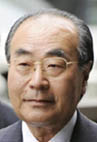
The former head of Japan’s Public Security Intelligence Agency (PSIA) has been handed a suspended prison sentence for defrauding North Korea’s de facto embassy in Tokyo. After a trial that lasted more than a year, Shigetake Ogata, who headed Japan’s primary domestic intelligence agency from 1993 to 1995, was found to have conspired to defraud Chongryon of about ¥484 million yen (US$ 5.1 million). Chongryon, which is known as General Association of North Korean Residents in Japan, represents the interests of over 200,000 long-term Korean residents in Japan who are ideologically aligned to North Korea. The group is generally considered to represent the Pyongyang government in Japan, in the absence of official diplomatic relations between the two nations. Read more of this post

Comment: Not So Fast, Cyberwarriors! [updated]

Hoekstra

Hoekstra

By JOSEPH FITSANAKIS | intelNews.org |
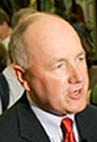
Rep. Peter Hoekstra wants to launch a cyberwar against North Korea. The Republican from Michigan, who heads his party’s delegation on the US House Permanent Select Committee on Intelligence, urged the US government last Thursday to “launch a cyber attack” or at least increase international sanctions on Pyongyang. Hoekstra urged this in response to a series of mysterious cyber-attacks that paralyzed major South Korean and US government websites for three days earlier this month. And he’s not alone. Last Friday, ABC News technology pundit Michael Malone effectively echoed Hoekstra and warned that “enemies of freedom everywhere” could use cyberterrorism to kill untold numbers of Americans by remotely controlling “fetal monitoring systems, surgical equipment, robotic bomb demolition equipment and ICBMs”. But South Korean cybersecurity specialists, who intensely monitor North Korean information systems, and were the ones who actually informed their US counterparts of the unfolding cyber-attacks on July 4, are not so sure that Pyongyang was behind the attacks. Read more of this post

News you may have missed #0026

  • US Attorney General considers torture probe. The Associated Press is among several news outlets reporting that Eric Holder is considering the appointment of a special prosecutor to investigate the use of torture by US intelligence agencies after September of 2001.
  • Iran’s invisible Nicaraguan embassy. The US State Department has been raising alarm bells about the Iranians supposedly “building a huge embassy in Managua”. But nobody in Nicaragua can find any super-embassy, The Washington Post reports.
  • Kim Jonh Il likely to die soon, CIA tells S. Korean spy agency. According to South Korean sources, the CIA now believes that Kim Jong-Il’s chances of surviving the next five years are less than 30%. Last June, intelNews relayed reports that Kim Jong Un, Kim Jong Il’s third son, appears to be his father’s most likely successor.

Bookmark and Share

News you may have missed #0024

  • Guantánamo prisoner asked to spy on homeland radicals. Umar Abdulayev, from Tajikistan, who has been held in Guantánamo for seven years, claims in court filings that he was visited by Tajik intelligence agents in Guantánamo, who asked him to spy on Tajik Muslim radicals in exchange for his release. Abdulayev has refused the offer and has asked for asylum at a third country.
  • We were not hacked, says NZ spy agency. A New Zealand Government Communications Security Bureau (GCSB) spokesman has denied the agency’s website was hacked on July 9. Those visiting the GCSB website on that day were presented with an error message.
  • Saudi charity lawyers ask federal judge to outlaw NSA wiretap program. Saudi-based charity Al-Haramain was taken to court in September 2004 by the US government, which accused it of maintaining terrorist links. But its lawyers have managed to reverse the case, and may now be close to getting a US federal judge to rule against warrantless NSA wiretapping.
  • Cyber attacks came from 16 countries. South Korea’s National Intelligence Service (NIS) officials have disclosed that the cyberattacks that paralyzed major South Korean websites last weekend were mounted from at least 16 different countries. Earlier this week, NIS said it believed North Korea or pro-Pyongyang forces were behind the attacks, which also affected US government websites.

Bookmark and Share

News you may have missed #0023

Bookmark and Share

Analysis: Al-Qaeda dumps phones, making interception impossible

Secret Sentry

Secret Sentry

By JOSEPH FITSANAKIS | intelNews.org |
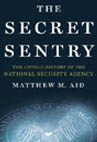
In his brief but perceptive review of Matthew M. Aid’s new book, The Secret Sentry: The Untold Story of the National Security Agency, Craig Seligman, critic for Bloomberg News, refers to an argument made in the book, which in my opinion deserves attention. Namely, in discussing the NSA’s activities in the so-called “war on terrorism”, Aid points out that, not only are Iran and North Korea increasingly converting their analog communications networks into fiber-optic cables, thus making their internal communications virtually impossible to intercept, but al-Qaeda and other militant groups are now “practically cut[ing] out the use of telephones and radios”. All of this is gradually turning the NSA, an agency that receives over $9 billion a year in US taxpayers’ money, into a gargantuan organization whose daily tasks are becoming “maddeningly difficult” –indeed, almost irrelevant. Read more of this post

News you may have missed #0010

  • Kim Jong Il’s son to head North Korea secret police. Since 1987, Kim Jong Il has been the official leader of the State Security Department of North Korea. However, South Korea’s Dong-a Ilbo reports that Kim Jong Un, Kim Jong Il’s third son, has now been named as the agency’s head. There are rumors in South Korea that the move could signify that a handover of power in Pyongyang may be imminent.
  • First US economic espionage trial winds down. A US court is preparing to sentence Dongfan “Greg” Chung, a Chinese-born engineer accused of passing critical trade secrets on the US space program to China for three decades. 
  • US and Venezuela to restore expelled ambassadors. The move appears to be a thawing gesture toward the new leadership in Washington by Venezuelan President Hugo Chavez. The Latin American leader has toned down his criticism of US foreign policy since Barack Obama took office in January, partly because the US president is popular in Latin America in contrast to his predecessor George W. Bush. 
  • US to send ambassador to Damascus. Washington has confirmed it is to send an ambassador to Damascus, ending a four-year diplomatic absence in Syria. The US envoy in Syria was withdrawn in 2005, following the assassination of Lebanon’s former PM Rafiq Hariri. 
  • Cuban Five spy case an obstacle to US-Cuban thaw, says Havana. The Cuban Five were arrested in 1998 and convicted of spying on anti-Castro exile groups on behalf of Havana. Cuba regards them as political prisoners and has lobbied intensively for their release. Cuban President Raúl Castro has said he would be willing to swap jailed political dissidents for the Five, but the US government has rejected the idea.

North Korean ex-spy meets Japanese abductee’s family

Kim Hyun-Hee

Kim Hyun-Hee

By IAN ALLEN | intelNews.org |
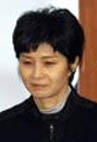
Relatives of a Japanese citizen abducted thirty years ago by North Korean agents have held a meeting with a North Korean former spy, who told them their relative is still alive. Yaeko Taguchi was among 17 Japanese citizens kidnapped by North Korean intelligence operatives in the 1970s and 1980s, and forced to familiarize North Koran spies with Japanese language and culture. The North Korean government, which has admitted conducting 13 of the 17 kidnappings, claims that Taguchi was killed in a car accident in 1986. But on Wednesday, Kim Hyun-Hee, a North Korean former spy who now lives in South Korea, told Taguchi’s son and brother that Taguchi was “her language tutor at a spy school in the North” and that she believes the Japanese woman is still alive. Read more of this post

Britain says at least 20 countries spying on it

By JOSEPH FITSANAKIS | intelNews.org |
Britain’s Sunday Telegraph newspaper has revealed a government report, which states that the UK is a “high priority espionage target” for “at least 20 foreign intelligence services”. The report, issued to UK government departments on January 19, 2009, warns against overlooking traditional espionage threats while focusing almost solely on the activities of al-Qaeda and other Islamist groups. Authored by a group of British Army Intelligence Corps officers, the report identifies Chinese and Russian espionage networks as the most active on British soil, and discloses that “[t]he number of Russian intelligence officers in London has not fallen since the Soviet times”. Read more of this post

Analysis: Former USAF Secretary discusses hidden history of nukes

It is not necessary to agree with Thomas C. Reed’s worldview in order to appreciate his deep knowledge of the history of nuclear politics. His argument, for instance, that “the world is safer for having all the permanent UN Security Council members possess nuclear weapons” may be seen as absurdly myopic -especially in light of numerous instances in which the US and the USSR came close to annihilating the entire world during the Cold War. Nevertheless, the former nuclear weapons designer and US Air Force Secretary always has interesting insights to share on the dark history of nuclear proliferation. For instance, in a recent interview with US News & World Report, Reed discussed how Klaus Fuchs, the nuclear scientist who was jailed in 1950 for having spied for the Soviets, also shared his immense nuclear knowledge with the Chinese, following his release from prison. He also outlined the Chinese contribution to nuclear proliferation in the Third World, which he attributes to a 1982 decision by the Chinese leadership, under the Chairmanship of Deng Xiaoping, to “proliferate nuclear technology to communists and Muslims” around the world. Read more of this post