China ‘hacked European government computers’ prior to G20 summit

G20 Summit participantsBy IAN ALLEN | intelNews.org
A group of hackers from China managed to compromise computer networks belonging to the foreign ministries of several European governments prior to last September’s G20 Summit, according to a private computer security firm. The Summit, which took place in St. Petersburg, Russia, on September 5 and 6 of this year, brought together the heads of state of 20 major economies, including the United States and many European Union countries. The meeting agenda was dominated by discussions concerning the response of the international community to the chemical attacks in Ghouta, Syria. According to the Reuters news agency, the hackers managed to infiltrate carefully targeted computer networks by sending emails containing infected attachments to employees of foreign ministries. The attached files bore titles such as “US_military_options_in_Syria”, which appeared designed to bear reference to the upcoming G20 Summit. The hacking revelations were made by FireEye, Inc., a California-based security firm, which says it has proof the hackers came from China. The firm says its confidence on the matters stems from “a variety of technical evidence”, such as the language used on the control server used by the hackers, as well as the types of machines that were used to test the virus before it was deployed. FireEye said its experts were able to keep tabs on the “inner workings” of the primary computer server that the hackers used to monitor the compromised computer networks. However, shortly before the Summit begun, the hackers migrated to another server, at which point the FireEye team lost contact with them. Read more of this post

US charges 49 Russian diplomats with fraud, says some were spies

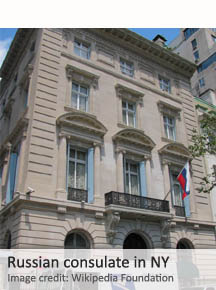
Russian consulate in NYBy JOSEPH FITSANAKIS | intelNews.org
The United States has filed charges against dozens of current and former Russian diplomats, accusing them of defrauding American taxpayers of over a million dollars. Meanwhile, sources have told CNN that some of the accused also engaged in espionage against the US. Last week, the US Department of Justice charged 49 Russian citizens with participating in a nine-year fraud scheme, through which they pocketed approximately $1.5 million from Medicaid. Created in 1965, Medicaid is a US government insurance program for persons of all ages whose income and resources are insufficient to pay for health care. Twenty-five of those accused of fraud are current and former Russian diplomats, while 24 are spouses of diplomats. Eleven of them are currently in the US, ten of whom work at the Russian consular mission in New York. The remaining diplomat is stationed at the embassy of Russia in Washington, DC. The members of the fraud ring are accused of falsifying applications for Medicaid benefits by systematically under-reporting or completely concealing their incomes. While receiving thousands of dollars in benefits from the American government, the diplomats and their spouses lived a frivolous lifestyle, purchasing luxury goods in some of America’s most expensive department stores, like Tiffany’s and Bloomingdale’s. On Monday, however, CNN’s Security Clearance blog reported that some of the 49 Russian diplomats involved in the fraud scheme are also believed to have engaged in espionage against the United States. The spies were in fact investigated “for quite some time” by Federal Bureau of Investigation counterintelligence agents in Washington and New York, said CNN. At the end, however, federal prosecutors decided they had insufficient evidence to file espionage charges, and passed the case on to the Department of Justice, which brought fraud charges against the Russians. Read more of this post
Further evidence shows Litvinenko worked for MI6 when killed

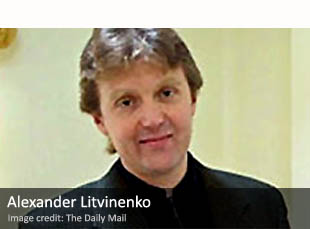
Alexander LitvinenkoBy JOSEPH FITSANAKIS | intelNews.org
In 2012, a court in the United Kingdom was told that former KGB officer Alexander Litvinenko, who died of poisoning in 2006, had been working for British and Spanish intelligence when he was killed. Now British newspaper The Independent says it has proof that the late Russian spy provided “expert analysis” on Russian politics for British intelligence, shortly before his death. Litvinenko was an employee of the Soviet KGB and one of its successor organizations, the FSB, until 2000, when he defected with his family to the UK. He soon became known as a vocal critic of the administration of Russian President Vladimir Putin. In 2006, Litvinenko came down with radioactive poisoning soon after meeting a former KGB/FSB colleague, Andrey Lugovoy, at a London restaurant. Many suspect that the Russian government is behind Litvinenko’s murder. But the dead spy’s family has argued for years that his killers did not only kill an intelligence defector, but also an officer of British intelligence. On Thursday, The Independent said it had seen a diplomatic memo that was given to Litvnenko for analysis by British external intelligence agency MI6. The document, known in the British Foreign Office lingo as a “diptel” (diplomatic telegram), was dispatched to several British embassies around the world in 2000. It includes a descriptive analysis of a confidential meeting in London between British intelligence officials and Sergei Ivanov. Currently a political powerhouse in Putin’s administration, Ivanon was at the time an unknown quantity in Western circles. He had entered politics after having spent nearly two decades working for Soviet and Russian external intelligence. The diptel seen by The Independent outlines the exchange of views between Ivanov and the British officials during the meeting, and evaluates his stance on a broad range of issues, ranging from the rise of Islamic militancy, to China, the Middle East, and the role of the North Atlantic Treaty Organization. Read more of this post

European, American, Russian fighters join both sides of Syrian war

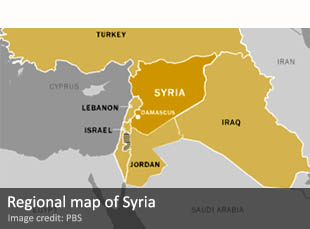
Regional map of SyriaBy JOSEPH FITSANAKIS | intelNews.org
Nearly three years into the Syrian Civil War, it is becoming increasingly clear that the opposition forces are far more fragmented than the government side. Many of the rebel factions are now largely concerned with fighting each other for control of territory and other key assets, including oil installations and cross-border trade routes. Amidst the chaos, thousands of foreign fighters are flooding into the country, motivated by ideology or money. It is estimated that between 6,000 and 11,000 foreign fighters have entered Syria since the war, causing United States intelligence officials to speak of “a growing presence of foreigners” in the ranks of armed factions. At least 300 British citizens are estimated to have traveled to Syria with the intent of joining the Civil War, according to The Times of London. Most of them are young Islamist radicals who are intent on helping topple the administration of Syrian President Bashar al-Assad, according to the paper. Another British newspaper, The Daily Telegraph, reported recently that four British citizens —all London residents— died recently in Syria’s largest city, Aleppo, while fighting alongside government troops in support of President Assad. They were fighting against the al-Nusra Front, an opposition group with strong links to al-Qaeda. Meanwhile, The New York Times said on Wednesday that “dozens of Americans” have entered or tried to enter Syria to join various rebel factions in their fight against the government. The paper cited unnamed “American intelligence officials” in alleging that the Americans are a “small subset” of a larger group of “roughly 600” Western-born Islamists who have entered Syria from Western Europe, North America and Australia since 2011. The ongoing conflict has also attracted hundreds of Russian fighters, according to reports. Foreign Policy magazine notes the “rising flow” of radical Islamists from the Russian Federation to Syria in recent months. Read more of this post

FBI investigates Russian cultural center for alleged intelligence links

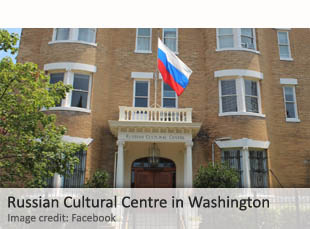
Russian Cultural CentreBy JOSEPH FITSANAKIS | intelNews.org
Authorities in the United States are probing a cultural exchange program run by the Russian government, on suspicion that it clandestinely recruited Americans as intelligence assets. Last week, Mother Jones magazine reported that agents from the Federal Bureau of Investigation had been interviewing American citizens who participated in the Rossotrudnichestvo exchange program. The program, which is operated by the Russian Centre for Science and Culture in Washington, DC, has sent approximately 130 Americans to Russia since 2001. Headquartered in northwest Washington, the Centre facilitates cultural programs and Russian-language lessons for a nominal cost. Many of the Americans who joined the Rossotrudnichestvo exchange program over the years were invited to travel to Russia in groups of 20 to 25. Most were graduate students, private-sector executives, political campaign staff, or workers in nonprofit organizations. They had their travel expenses, including transportation, lodging and meals, paid by the Russian government. During their trips to Russia, which customarily lasted for around 10 days, they stayed in expensive resorts and regularly met with officials from the Russian government. The American newsmagazine said that the FBI seems to be especially interested in Yury Zaytsev, a Russian government official who runs the Rossotrudnichestvo exchange program and is also Director of the Russian Centre for Science and Culture. The Washington Post reported that Zaytsev appears to be listed as a diplomat with the US Department of State. Read more of this post

News you may have missed #856

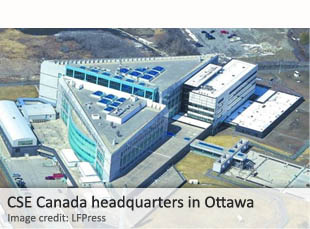
Communications Security Establishment CanadaBy IAN ALLEN | intelNews.org
►►Expert says Australia spies for the United States. Intelligence expert Professor Des Ball claims Australia is playing a role in America’s intelligence networks by monitoring vast swathes of the Asia Pacific region and feeding information to the US. Dr. Ball says the Australian Signals Directorate –formerly known as the Defence Signals Directorate– is sharing information with the National Security Agency (NSA). He adds that Australia has four key facilities that are part of the XKeyscore program, the NSA’s controversial computer system that searches and analyses vast amounts of internet data.
►►Canada silent on allegations of spying. A spokeswoman for Communications Security Establishment Canada has refused to comment on allegations that the agency mounts foreign operations through Canada’s embassies abroad. German magazine Der Spiegel says Canada is using diplomatic facilities to support surveillance operations in league with key allies the United States, Britain and Australia. The German newsmagazine indicates the Canadian spy agency hosts “Stateroom” sites —a term for covert signals-intelligence gathering bases hidden in consulates and embassies.
►►Russia denies spying on G20 leaders during summit. Russia has denied reports it attempted to spy on foreign powers meeting at the G20 summit in St Petersburg earlier this year, denouncing the allegations as a “clear attempt to divert attention” from revelations concerning the United States’ National Security Agency. Two Italian newspapers claimed on Tuesday that USB flash drives and cables to charge mobile phones that were given to delegates —including heads of state— at the September meeting were equipped with technology to retrieve data from computers and telephones.

News you may have missed #855

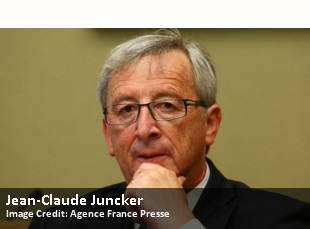
Jean-Claude JunckerBy IAN ALLEN | intelNews.org
►►Russian spy agency seeks to expand internet surveillance. Under an order drafted by Russia’s Communications Ministry, communications service providers would have to install equipment that would record and save all internet traffic for at least 12 hours and grant the security services exclusive access to the data. The draft order, made public on Monday, has been drafted with the help of the Federal Security Service (FSB), the successor to the Soviet-era KGB spy agency. It would take effect in July if it receives final government approval.
►►World War I spy Mata Hari’s birthplace gutted by fire. A fire in the Netherlands has gutted the birthplace of exotic dancer and World War I spy Mata Hari, Dutch media said on Sunday. Mata Hari was born as Margaretha Geertruida Zelle on August 7, 1876, the daughter of a local shopkeeper. She was arrested and executed by firing squad in October 1917, aged 41, after being accused of being a German spy during the First World War. The fire consumed the hair salon that now occupies the place of Mata Hari’s birth, the only remainder untouched by the flames was a small statuette of her dancing, erected outside the shop.
►►Luxembourg PM survives spy scandal in elections. Luxembourg’s Christian Democrat party of long-serving Prime Minister Jean-Claude Juncker easily remained the biggest party and the first choice to form a new coalition government following yesterday’s elections. Luxembourg was shocked into snap elections this summer after Juncker failed to contain a spying scandal centering on allegations of eavesdropping and wiretapping on politicians, and the keeping of files on ordinary citizens and leading figures dating back to the Cold War.

Russia ‘considering spy swap with Germany’

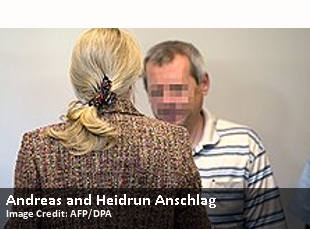
Andreas and Heidrun AnschlagBy JOSEPH FITSANAKIS | intelNews.org |
The Russian government has allegedly approached Germany with an offer to swap a number of jailed spies, including a couple of Russian sleeper agents sentenced for espionage earlier this month in Stuttgart. Russia’s Kommersant newspaper alleged on Monday that that the Russian intelligence services are pressing the Kremlin for the repatriation of Andreas and Heidrun Anschlag, a married couple who were arrested in Germany in October of 2011. The two were convicted on July 2, 2013, of having spied on Germany since at least 1990 for the Soviet KGB’s First Chief Directorate and its post-Soviet successor organization, the Foreign Intelligence Service (SVR). German federal prosecutors also accuse the couple of document forgery, since their Austrian passports, which they used to enter West Germany from Mexico in 1988 (Andreas) and 1990 (Heidrun) were shown to be counterfeit. In return for the Anschlags, Moscow would be prepared to hand over “at least one spy” convicted in Russia for spying for the West, said Kommersant. Possible candidates would be Andrei Dumenkov, who is currently serving a 12-year sentence for allegedly giving German military intelligence blueprints of Russian missile designs, and Valery Mikhailov, a Russian counterintelligence officer said to be one of the United States Central Intelligence Agency’s “most successful agents [in Russia] in recent years”.   Read more of this post

Are Russian spies switching to typewriters to avoid interception?

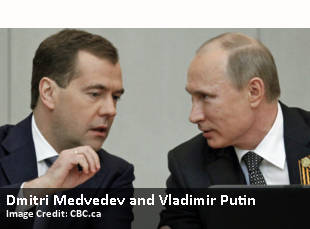
Dmitri Medvedev and Vladimir PutinBy JOSEPH FITSANAKIS | intelNews.org |
For the first time in over a decade, a Russian government department has decided to purchase typewriters, allegedly in order to safeguard classified documents against electronic interception. Russia’s Federal Protective Service has reportedly placed an order for the purchase of an estimated 20 typewriters, for 486,000 rubles –roughly US$15,000. The agency, known in Russia by its initials, FSO, is responsible for protecting high-ranking government officials, including the President of the Russian Federation, and is also tasked with operating federal emergency communications systems. It is the institutional descendant of the Soviet KGB’s Ninth Chief Directorate, which ceased to exist in 1992. According to the daily Russian broadsheet Izvestia, the FSO initially considered purchasing the typewriters in 2010, in response to a series of massive leaks of United States government classified documents by whistleblower website WikiLeaks. An unnamed source inside the FSO told the paper that the final decision to purchase the typewriters was made shortly after revelations made last month by former Central Intelligence Agency computer expert Edward Snowden. The self-styled whistleblower told Britain’s Guardian newspaper that British and American intelligence agencies targeted the electronic communications of heads of state and other senior officials during a G20 summit held in London in 2009. A principal target of the alleged spy operation was the then-Russian President Dmitri Medvedev, who headed the Russian delegation at the G20 summit. Interestingly, the FSO source told Izvestia that the initial purchase 20 typewriters will be followed by more orders, as large segments of Russia’s security establishment appear to be switching to typewriters as a means of producing classified documents. Read more of this post

Snowden flees to Russia despite US passport revocation

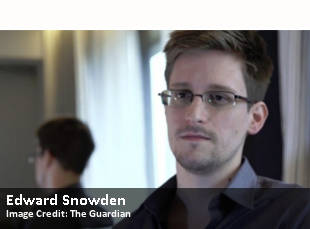
Edward SnowdenBy JOSEPH FITSANAKIS | intelNews.org |
An American former intelligence contractor, who leaked classified information about intelligence operations, was able to leave Hong Kong for Russia on Sunday, despite having his United States passport revoked. Earlier this month, Edward Snowden, a former technical assistant for the Central Intelligence Agency, disclosed the existence of PRISM, a clandestine electronic surveillance program operated by the US National Security Agency (NSA). Shortly before leaking information about US intelligence operations to the world’s media, Snowden traveled to Hong Kong, a territory under the control of the People’s Republic of China. Last week, Washington charged Snowden, a self-described whistleblower, under the Espionage Act, and revoked his American passport, in an attempt to prevent him from leaving Hong Kong. But reports emerged on Sunday that Snowden had boarded an Aeroflot flight from Honk Kong to Russian capital Moscow, despite the revocation of his American passport. US authorities claim that Snowden’s transfer to Moscow occurred after Washington revoked his American passport, which raises the question of how the former CIA employee was able to exit Chinese territory. Several reports suggest that Snowden was accompanied by “unidentified diplomats” as he left Hong Kong for Moscow. Previously, the US had applied considerable diplomatic pressure on China, requesting Snowden’s extradition. But Hong Kong allowed the American fugitive to board a plane to Moscow, saying it had been given “no legal basis to restrict Mr. Snowden from leaving”. Read more of this post

UK/US spy agencies targeted heads of state at London G20 meeting

NSA/GCHQ listening station in Menwith HillBy JOSEPH FITSANAKIS | intelNews.org |
British and American intelligence agencies targeted the communications of heads of state and other senior officials during a G20 summit held in London in 2009, according to documents. The summit was hosted by the then British Prime Minister Gordon Brown and was attended by delegates from 20 major world economies, including then Russian President Dmitry Medvedev, who was specifically targeted in the spy operation. British newspaper The Guardian, which published the information, said that delegates had their personal computers and cellular telephones monitored during a joint effort by the US National Security Agency (NSA) and Britain’s General Communications Headquarters (GCHQ). The two agencies, which are tasked with intercepting communications signals on behalf of their respective governments, maintain a jointly administered listening base inside the Royal Air Force station in Menwith Hill near Harrogate, North Yorkshire. According to one of the documents, entitled “Russian Leadership Communications in support of President Dmitry Medvedev at the G20 summit in London —Intercept at Menwith Hill station”, the listening facility was utilized to spy on the communications of the Russian President during his stay in London. The targeting began as soon as President Medvedev and the Russian delegation arrived in the British capital on April 1, and continued for several days. The top-secret document, which was shared between British, American, Australian, Canadian, and New Zealand intelligence services, noted “a change in the way Russian leadership signals have been normally transmitted” through satellite links from the Russian embassy in London. Another set of documents, also published by The Guardian, indicate that some G20 summit delegates were “tricked into using Internet cafes [that] had been set up by British intelligence agencies” in order to intercept their email communications. Read more of this post

News you may have missed #842 (world reaction to Snowden leak)

Edward SnowdenBy IAN ALLEN | intelNews.org |
►►Chinese media focus on Snowden leaks. The front pages of Chinese state media were covered Thursday with the allegations of ex-CIA employee Edward Snowden, who says the US government has been hacking computers in China for years. Speaking to media in Hong Kong, where he is currently staying, Snowden said the US has been hacking computers in Hong Kong and mainland China since 2009. He said targets include public officials, businesses and the Chinese University of Hong Kong. Those claims by Snowden were the top story on most of China’s major news portals on Thursday
►►Switzerland furious about Snowden’s charge that CIA spies on Swiss banks. One of the many lurid details in The Guardian’s remarkable interview with NSA whistleblower Edward Snowden was his account of what initially prompted him to leak: namely a CIA tour in Switzerland, where CIA officers recruited Swiss banking officials. The Snowden disclosure could not come at a worse time for the Swiss government, which is trying to convince parliament to back its emergency plan that would allow Swiss banks to turn over data on tax evaders to the US government.
►►Is Russia considering giving asylum to Snowden? Asked if the 29-year-old could claim asylum from Russia, a spokesman for President Vladimir Putin told the newspaper Kommersant: “If such a request is received, it will be considered”. Any attempt by the Kremlin to give refuge to Mr Snowden, amid calls for his prosecution under the US Espionage Act, is likely to infuriate the White House and provoke a major diplomatic standoff.

News you may have missed #838 (analysis edition)

Predator droneBy IAN ALLEN | intelNews.org |
►►Delisle spy case barely caused ripples between Canada and Russia. The arrest of Jeffrey Delisle, a Canadian naval officer spying for Russia, did little to discourage Canada from welcoming that country’s defense chief to a Newfoundland meeting of Arctic nations last year. The visit underscored the puzzling lengths to which the Canadian government went to carry on a business-as-usual relationship with the one-time Cold War adversary. Most other planned military contacts between the two nations last year —including participation in the anti-terrorism exercise Operation Vigilant Eagle— also remained curiously normal.
►►Don’t believe the hype on Chinese cyberespionage. Within a day of each other, The Washington Post published a shocking list of US defense programs whose designs have reportedly been stolen by Chinese cyberattacks, and ABC news said the plans for Australia’s spy headquarters were also stolen by Chinese hackers. It makes China sound like a secret-sucking cyber espionage machine, but is that really the case? The knee-jerk interpretation to this disclosure (and others) is that China is a powerhouse of cyber espionage capable of stealing whatever secrets they want and that the US is powerless to stop them. This seems very unlikely.
►►US Predator drone program quietly shifted from CIA to DoD. The White House has quietly shifted lead responsibility for its controversial armed drone program from the CIA to the Defense Department. In a landmark speech last week at National Defense University in Washington, US President Barack Obama offered some clues into the status of the program, opaquely signaling it will now primarily be conducted by the United States military.

Canada spy agency refused to notify Mounties about Russian agent

Jeffrey Paul DelisleBy JOSEPH FITSANAKIS | intelNews.org |
Canada’s main counterintelligence agency opted to keep secret from the Royal Canadian Mounted Police (RCMP) vital information about a Canadian naval officer who spied for Russia. Regular readers of this blog will be familiar with the case of Jeffrey Paul Delisle, a Sub-Lieutenant in the Royal Canadian Navy, who until 2011 was employed at Canada’s ultra-secure TRINITY communications center in Halifax. Delisle was arrested in January 2012 for passing information gathered from radio and radar signal interceptions to a foreign power, most likely Russia. In May of last year, it emerged that it was in fact the United States that alerted the Canadian Security Intelligence Service (CSIS) about Delisle’s espionage activities. What was supposed to happen next was that the CSIS —which is not a law enforcement agency— should have notified the RCMP of Delisle’s activities and requested his prompt arrest. Remarkably, however, the CSIS chose to keep the Delisle file concealed from the RCMP, ostensibly to prevent the possible exposure of intelligence sources and methods in open-court proceedings. The Canadian Press, which broke the story on Sunday, cited “numerous sources familiar with the Delisle case” in claiming that the CSIS’ refusal to request Delisle’s arrest “frustrated Washington”, which feared that the spy was routinely compromising United States secrets shared by America with its Canadian allies. So frustrated were the Americans, that the Federal Bureau of Investigation (FBI) sketched out a plan to lure Delisle onto US soil and arrest him there. Read more of this post