Researchers uncover secretive Russian spy unit by studying its commemorative badges

FSB RussiaA GROUP OF RESEARCHERS in Finland have managed to outline the structure and geographic footprint of a highly secretive Russian signals intelligence (SIGINT) unit by studying commemorative badges issued by the Russian government. The research group, known as CheckFirst, specializes in open-source (OSINT) investigative reporting and works to combat online disinformation.

Earlier this month, CheckFirst published its latest report titled “OSINT & Phaleristics: Unveiling FSB’s 16th  Center SIGINT Capabilities”. The 36-page report focuses on the study of Russian government-issued commemorative badges—also known as challenge coins—relating to Center 16 (16-й Центр). Also known as  Military Unit 71330, Center 16 is a secretive SIGINT unit that houses most of the cyber espionage capabilities of Russia’s Federal Security Service (FSB).

Challenge coins are custom-made medallions given by military, intelligence, and government agencies to recognize service, commemorate achievements, or build morale. Originating in the United States military during World War I, and popularized during the Vietnam War, challenge coins are routinely exchanged in ceremonies or offered to personnel as tokens of camaraderie and loyalty within a specific unit or mission.

Often regarded as collectors’ items, challenge coins from various agencies are often resold on websites such as eBay, or displayed online on websites maintained by private collectors. CheckFirst researchers tracked down several versions of Center 16 challenge coins found on a variety of publicly available websites, as well as on the websites of Russian challenge coin manufacturers, such as GosZnak, SpetsZnak, or Breget.

Based on this OSINT methodology, CheckFirst researchers were able to identify 10 distinct directorates within Center 16, which specialize on various aspects of defensive and offensive cyber espionage. Previously only a single Center 16 directorate had been identified in the unclassified domain. Moreover, by examining geographic indicators found on several of challenge coins, such as maps or coordinates, CheckFirst researchers were able to partly map out the geographic structure of Center 16, locating nearly a dozen interception facilities throughout Russia.

Author: Joseph Fitsanakis | Date: 21 July 2025 | Permalink

Interview reveals state of mind of Israeli intelligence prior to October 7 attack

Israeli General Staff MilitaryON MARCH 23, CHANNEL 12 of Israeli television aired a remarkable interview with Sassi Elya, the former director of technology at the Israel Security Agency (ISA). Better known by the acronyms Shin Bet or Shabak, the ISA is Israel’s domestic security service. The interview had initially been scheduled for broadcast as part of the evening news on October 7, 2023. However, its airing was canceled due to the attack on Israel by Hamas, which occurred that morning.

But on March 23, after about 5 months, Channel 12 aired the original interview with Elya. The retired official spoke with glee about the advanced technological capabilities developed by the ISA in order to prevent terrorist attacks against Israel. Elya said Israeli intelligence had built a unique system, known as “the Tool”, which allegedly provided intimate knowledge about the life of every Palestinian living in the West Bank and Gaza. This technologically advanced surveillance system allegedly monitored every move of its targets, all for the purpose of preventing potential terrorist attacks against the Jewish state. Elya claimed that, as a result of this advanced technological system, there was no chance that Israel would be surprised by Palestinian militants. This system was so advanced, he said, that intelligence agencies from all over the world were coming to Israel to learn about it.

Thanks to Channel 12, we can now examine Elya’s interview retrospectively, and especially in light of the ISA’s poor performance on October 7, as well as its failure to warn Israeli authorities about Hamas’ preparations for the attack. Notably, Elya was interviewed again for the same television program. Predictably, he admitted that his prior assessment had been wrong and regretted being so overly confident about the technology.

This case demonstrates the overestimation by Israeli intelligence of its own capabilities, because of arrogance and over-confidence. This approach refutes the basic premise of intelligence work: be skeptical and be modest. Furthermore, this case highlights that Israeli intelligence agencies overly relied on technology (SIGINT) in the lead-up to October 7, while seemingly neglecting the low-tech activity of gathering information through human intelligence (HUMINT).

The system that Elya described in his initial interview as the ultimate counterintelligence tool was reportedly criticized internally by some in the ISA for gathering huge amounts of information without offering sufficient analytical capability. This imbalance between collection and analysis can render an entire surveillance system practically useless. The bottom line is that, almost by accident, we are now aware of the state of mind that the ISA was in before the sudden attack by Hamas on October 7, which cost so many lives as a result of the ISA’s complacency.

► Author: Avner Barnea | Date: 01 April 2024 | Permalink

Dr. Avner Barnea is research fellow at the National Security Studies Center of the University of Haifa in Israel. He served as a senior officer in the Israel Security Agency (ISA). He is the author of We Never Expected That: A Comparative Study of Failures in National and Business Intelligence (Lexington Books, 2021).

Even Russian military commanders don’t know what Putin’s plans are on Ukraine

Vladimir PutinEVEN RUSSIAN MILITARY COMMANDERS and intelligence officials on the ground near the Ukrainian border are in the dark about whether the Kremlin intends to invade Ukraine in the coming weeks, according to a report. The American news network CNN reported on Monday that Russian “intelligence and military operatives” stationed near the Ukrainian border are “not really understanding what the game plan is”.
Citing “four people familiar with the intelligence” on the matter, the news network said United States spy agencies had intercepted communications between Russian military and intelligence officials on the ground near Ukraine. The intercepts suggest that at least some Russian government personnel are concerned that the Kremlin may have miscalculated the tactical, financial and logistical challenges of a possible full-scale invasion of Ukraine.

The CNN report noted that Russian military commanders on the ground are unlikely to oppose, or even hesitate to carry out, a direct order to invade Ukraine by the government in Moscow. However, there is reportedly concern among the Russian military and intelligence forces at the border that logistical support remains inadequate. It is currently believed that the size of the Russian military force along the Ukrainian border remains about 30 percent below what is needed to mount a full-scale military invasion of Ukraine.

Nevertheless, there are now indications that crucial supply lines needed to provide frontline Russian troops with war materiel, fuel, medicine, food, and other supplies, are being assembled. These supply lines could potentially allow the Kremlin’s forces to persist during a protracted conventional war through the upcoming spring and summer months. However, the intentions of Russian President Vladimir Putin remain a mystery, even to most Russian government officials. American intelligence agencies have “insights into the Russian military and foreign ministry”, according to CNN. However, they still lack adequate access to Putin’s inner circle, whose members remain firmly in control of plans for a possible invasion of Ukraine.

Author: Joseph Fitsanakis | Date: 08 February 2022 | Permalink

Analysis: How serious is the Edward Lin spy case?

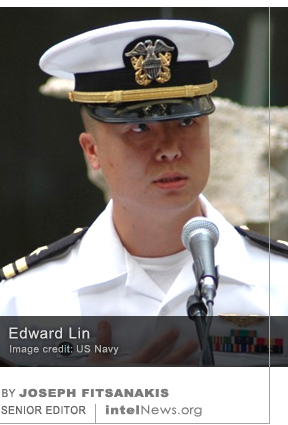
Edward LinFor the first time since 1985, when the Federal Bureau of Investigation broke the John Walker spy ring, an active United States Navy officer has been charged with espionage. On Sunday, the US Navy reported the arrest Lt. Cmdr. Edward C. Lin, who faces two counts of espionage and three counts of attempted espionage, among other charges. Aside from a three-page, heavily redacted charge sheet released by the US Navy, almost nothing is known about this case. However, there are several clues that point to the seriousness of the charges against Lin, and their potential ramifications for US national security, which are likely to be extensive.
Lin was a signals intelligence (SIGINT) specialist with the Navy, focusing on the airborne collection of maritime intelligence, mostly in the Pacific Ocean. Given that he is a naturalized citizen from Taiwan and speaks fluent Mandarin, it is almost certain that he was tasked with collecting SIGINT from targets in China and Taiwan. If that is so, then the prospect that Lin may have given classified information to Chinese or Taiwanese intelligence officers will be especially unsettling for Washington. Moreover, Lin is believed to have worked with some of the most advanced airborne intelligence-gathering platforms in the Pentagon’s arsenal, including the MQ-4C Triton, the P-3C Orion, the P-8A Poseidon, and the EP-3 Aries II, which is arguably the most advanced maritime surveillance aircraft ever used by the US Navy.

It also appears that Lin had a relatively senior position in the US Navy’s chain of command. He was a departmental head in the Navy’s Patrol and Reconnaissance Group, overseeing the work of over 7,000 sailors. Prior to that post, he served as the Congressional Liaison for the Assistant Secretary of the Navy, Financial Management and Comptroller. Lin’s critical positions in the chain of command may explain why US authorities arrested him nearly eight months ago in absolute secrecy and been holding him in pre-trial confinement without releasing any information to the media until last weekend. This level of secrecy in a national security investigation is rare and possibly points to the extent of damage assessment that needed to be completed following Lin’s arrest. Read more of this post

NSA director made secret visit to Israel last week

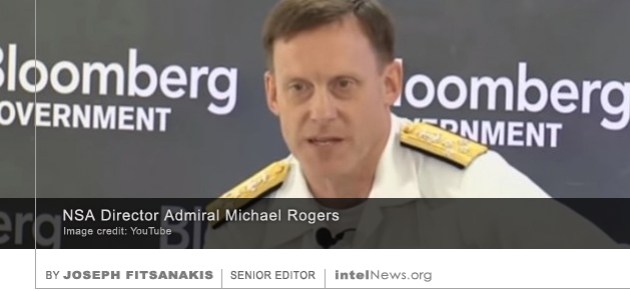
Michael RogersThe head of the United States’ largest intelligence agency secretly visited Israel last week, reportedly in order to explore forging closer ties between American and Israeli cyber intelligence experts. Israeli newspaper Ha’aretz said on Sunday that Admiral Michael Rogers, who directs the United States National Security Agency (NSA), was secretly in Israel last week. The NSA is America’s signals intelligence (SIGINT) agency, which is responsible for electronic collection, as well as protecting US government information and communication systems from foreign penetration and sabotage.
According to Ha’aretz, Rogers was hosted in Israel by the leadership of the Israel Defense Forces’ SIGINT unit, which is known as Intelligence Corps Unit 8200. The secretive group, which is seen as Israel’s equivalent to the NSA, is tasked with collecting SIGINT from Middle Eastern locations and protecting Israel’s electronic information infrastructure from adversaries. According to the Israeli newspaper, Rogers’ visit was aimed at exploring ways in which the NSA and Unit 8200 can enhance their cooperation, especially against regional Middle Eastern powers like Iran or non-state groups like Hezbollah.

IntelNews readers will recall that the IDF’s Unit 8200 is viewed by some Middle East observers as the creator of the Stuxnet virus. Stuxnet is a sophisticated malware that is believed to have been designed as an electronic weapon against Iran’s nuclear program. Among these observers is New York Times correspondent David Sanger; in his 2012 book, Confront and Conceal, Sanger claimed that Stuxnet was designed by NSA and Unit 8200 programmers as part of a joint offensive cyber operation codenamed OLYMPIC GAMES. According to Sanger, the two agencies collaborated very closely between 2008 and 2011 in order to bring about Stuxnet and other carefully engineered malware, including Flame.

Ha’aretz said that Rogers’ visit was meant to solidify US and Israeli cooperation on offensive cyber operations, based on the legacy of Stuxnet and Flame. During his visit to Israel, the US intelligence official also met with the heads of other Israeli intelligence agencies, said Ha’aretz.

Author: Joseph Fitsanakis | Date: 28 March 2016 | Permalink

Joint British-American operation hacked Israeli drones, documents show

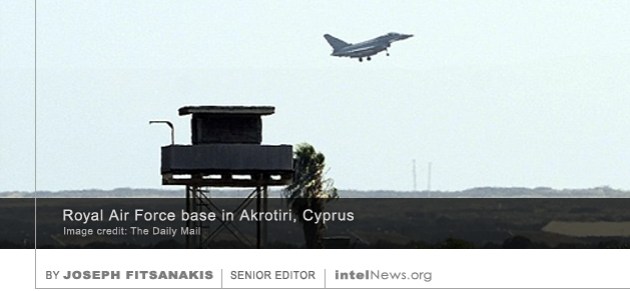
RAF base CyprusBritish and American intelligence services worked together to hack Israeli unmanned aerial vehicles in order to acquire information on the Jewish state’s military intentions in the Middle East, according to documents leaked last week. Online publication The Intercept, said the operation was code-named ANARCHIST and was a joint project of Britain’s General Communications Headquarters (GCHQ) and America’s National Security Agency (NSA). The publication said it acquired documents about the operation from former NSA contractor Edward Snowden, who defected to Russia in 2013 and was offered political asylum by Moscow.

In an article published on Thursday, The Intercept said the joint GCHQ-NSA operation was headquartered in a Royal Air Force military facility high on the Troodos Mountains in the Mediterranean island of Cyprus. The documents provided by Snowden suggest that British and American spies were able to collect footage captured by the Israeli drone for at least two years, namely in 2009 and 2010. It is not clear whether that period included the first three weeks of January 2009, when the Gaza War was fought between Israel and Hamas. During that time, there were persistent rumors that Tel Aviv was seriously considering launching air strikes against Iran.

According to The Intercept, the main goal of operation ANARCHIST was to collect information about Israeli “military operations in Gaza” and watch “for a potential strike against Iran”. Additionally, the UK-US spy program “kept tabs on the drone technology Israel exports around the world”, said the article. According to one GCHQ document cited by The Intercept, the access to Israeli drone data gained through ANARCHIST was “indispensable for maintaining an understanding of Israeli military training and operations”.

Speaking on Israel’s Army Radio on Friday, Israel’s Minister for National Infrastructure, Energy and Water, Yuval Steinitz, said he was not surprised by the revelations. “We know that the Americans are spying on the whole world, including their friends”, said Steinitz. But it was “disappointing”, he said, given that Israel had “not spied” on the US “for decades”. Israeli intelligence agencies had “not collected intelligence or attempted to crack the encryption of the United States”, said the Minister, implying that recent revelations of US spying on Israel may cause a change of strategy in Israeli intelligence policy.

Author: Joseph Fitsanakis | Date: 01 February 2016 | Permalink

Canada stops sharing intelligence with Five Eyes partners over data breach

CSE CanadaCanada says it will stop sharing certain types of intelligence with some of its closest international allies until it ensures that Canadian citizens’ information is not included in the data given to foreign spy agencies. The announcement follows an official admission, made earlier this week, that a Canadian intelligence agency failed to remove Canadian citizens’ data from information it shared with member-agencies of the so-called Five Eyes Agreement. The pact, which is sometimes referred to as the UK-USA Security Agreement, has been in existence since World War II. It provides a multilateral framework for cooperation in signals intelligence (SIGINT) between the United Kingdom, the United States, Canada, Australia, and New Zealand.

On Thursday, the Commissioner of the Communications Security Establishment (CSE) of Canada, Jean-Pierre Plouffe, published a report on the activities of the CSE —the country’s primary SIGINT agency. The document, which is published annually by the Commissioner, states that the majority of the CSE’s SIGINT collection activities took place in accordance with Canadian law. However, the report found that some of the data shared by CSE with its Five Eyes partners contained data that could potentially be used to identify the identities of Canadian citizens. According to Canadian law, the CSE is not allowed to specifically target the communications of —or information about— Canadian citizens or Canadian companies. Moreover, information pertaining to those, which may be indirectly collected in the course of legitimate targeting of foreign citizens, is supposed to be immediately purged by CSE collection staff.

However, the Commissioner’s report found that some metadata —namely information pertaining to communications other than their content— that could be used to identify Canadian citizens had been shared by the CSE with Five Eyes spy agencies. Later on Thursday, Harjit Sajjan, Canada’s Minister of Defense, announced that SIGINT intelligence-sharing would be suspended until the metadata breach identified in the Commissioner’s report could be adequately addressed and corrected. Minister Sajjan said the roots of the breach had to do with “technical deficiencies” at the CSE, but added that it was crucial that the privacy of Canadians was protected. Therefore, he said, the spy agency would “not resume sharing this information with our partners” until he was “fully satisfied” that the proper control systems were in place.

Author: Joseph Fitsanakis | Date: 29 January 2016 | Permalink

Russia says it uncovered spy satellites disguised as space debris

Space debrisBy JOSEPH FITSANAKIS | intelNews.org
The Russian government says it recently detected a group of satellites that are spying on Russia while orbiting the Earth camouflaged as “space junk”. The finding was announced on Sunday, April 12, on the Moscow-based Zvezda television station, which is wholly owned by Russia’s Ministry of Defense. For much of the day, Zvezda marked “Space Day”, which has been annually commemorated in Russia ever since 1961, when cosmonaut Yury Gagarin journeyed in outer space.

The station hosted Major General Oleg Maidanovich, of the country’s Aerospace Defense Forces (ADF), in a program entitled “Special Operations in Space”. Maidanovich told the program that specialists in the ADF’s Intelligence Center uncovered “a newly deployed group of space satellites” that were designed to collect signals intelligence (SIGINT) from Russian telecommunications and other electronic systems. However, the satellites had been disguised to appear and behave like “space junk”, he said. By “space junk”, Maidanovich was referring to rocket stages, old and defunct communications satellites, and various other fragments of manmade devices that have ended up in outer space since the 1950s and are endlessly orbiting the Earth.

Maidanovich said that it was not unusual for space reconnaissance agencies to camouflage their spy satellites as space debris and deploy them into Earth’s orbit in a dormant state for several years. Then, once the target country’s space reconnaissance counterintelligence forces disregard the device as a piece of space junk, the satellite is suddenly reawakened and begins to collect SIGINT. For that reason, he said, Russia’s ADF monitors at least a fifth of a total of 100,000 objects orbiting planet Earth on any given day, due to concerns that such objects may be used for SIGINT collection by rival spy agencies.

The Russian ADF commander declined a request to identify the country believed to be behind the alleged camouflaged spy satellites, saying it was “not necessary to do so at the present time”. He added that his office typically notifies the Kremlin when it detects disguised spy satellites, and that the decision on whether to shoot them down is made “on a national level”.

American spies use NZ embassies to collect intelligence

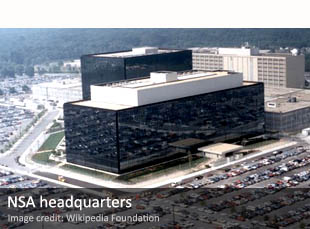
NSA headquartersBy IAN ALLEN | intelNews.org
Embassies belonging to the government of New Zealand are secretly being used by the United States as part of a worldwide network of intelligence-collection facilities, according to documents leaked over the weekend. The documents were released by Edwards Snowden, an American former technical expert for the Central Intelligence Agency (CIA) and the National Security Agency (NSA), who is currently living in Russia and is responsible for countless leaks of classified information in recent years. The latest disclosure concerns Project STATEROOM, a highly secretive signals intelligence (SIGINT) collection program targeting international Internet, radio and telecommunications traffic. The existence of the program was disclosed in the summer of 2013 by Snowden, who told German newsmagazine Der Spiegel that it consisted of SIGINT collection facilities in nearly 100 US embassies and consulates in almost as many countries. According to the Snowden, STATEROOM operations are handled by a unit called Special Collection Service (SCS), which is jointly operated by the CIA and the NSA. In October of 2013, Professor Des Ball, an intelligence expert, claimed that Australian embassies served as collection sites for Project STATEROOM, by helping the SCS monitor the Asia Pacific region. Dr. Ball said the Australian Signals Directorate was sharing information with the NSA as part of the UKUSA agreement (also known as Five Eyes), an intelligence cooperation network comprising agencies from Australia, New Zealand, Britain, Canada and the United States. Now new documents made available by Snowden appear to show that New Zealand’s embassies and consulates around the world are also being used as part of Project STATEROOM. The documents date from 2003, and contain a synopsis of a number of NSA intelligence-collection programs, along with their operational titles and status. The list, which is marked “Top Secret” is titled “Exceptionally Controlled Information”, and contains several entries under the heading “STATEROOM”. Underneath the heading appears the description: “SIGINT from diplomatic missions abroad”. The document then states that “this activity is conducted by USA, AUS, CAN, GBR and NZL”. Although the existence of STATEROOM has been known for over a year, this is the first time that New Zealand diplomatic missions are specifically identified in documents as collection sites for the program. Read more of this post

Secret Russian spy base in Syria seized by Western-backed rebels

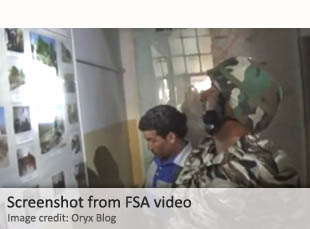
Screenshot from FSA videoBy JOSEPH FITSANAKIS | intelNews.org
Rebel forces aligned to Syria’s Western-backed opposition have announced the seizure of a joint Syrian-Russian spy base, which observers say reveals the extent of Russia’s intelligence cooperation with Syria. The base is located at the base of the Tel Al-Hara Mountain, in southern Syria’s Golan Heights region, just south of the border crossing with Israel in the now largely destroyed Syrian city of Quneitra. The Western-backed Free Syrian Army (FSA) said it took over the spy base on Sunday, following several weeks of fighting against rival groups, including Syrian government soldiers and members of Jabhat al-Nusra, al-Qaeda’s branch in Syria. The FSA said the base, referred to as “Center C” by Russian intelligence, had been under Russian command until it was abandoned at a time and for reasons that remain unknown. In a three-minute video released by the Western-backed rebel group on YouTube, an FSA officer appears to be guiding the cameraman around part of the seized base. He points to several diagrams and captions on the walls, which are both in Arabic and in Russian. At some point in the video, the seal of Syrian intelligence is clearly visible, placed next to the seal of the GRU’s 6th Directorate, the branch of Russian military intelligence that is tasked with collecting signals intelligence (SIGINT). At another point in the video, a series of photographs can be seen that depict Syrian and Russian intelligence officers working together in gathering and analyzing intelligence. Interestingly, one of the walls in the base features a map of northern Israel, an area that is adjacent to the Golan Heights, and appears to show the location of Israeli SIGINT stations and military encampments. It is unclear when exactly the spy base was abandoned by the Russian and Syrian intelligence officers that staffed it, Read more of this post

Secret program gives US, UK spies access to German telecoms

 Deutsche Telekom headquarters in BerlinBy JOSEPH FITSANAKIS | intelNews.org
American and British intelligence services have access to the network structure of German telecommunications through a top-secret program likened to a “Google Earth of the global Internet”, say reports. The program, codenamed TREASURE MAP, was first revealed late last year by The New York Times. The paper described it as a “sophisticated tool” that was designed by the United States National Security Agency as a “massive Internet mapping, analysis and exploration engine”. The paper said at the time that TREASURE MAP provided the NSA with a “near real-time, interactive map of the Internet” and gave it a “300,000 foot view” of the World Wide Web. Now German newsmagazine Der Spiegel has said that the top-secret program allows the NSA and its British counterpart, the General Communications Headquarters, to map the entire network of German telecommunications providers. The latter include the partially government-owned Deutsche Telekom, as well as several large local service providers, such as Stellar Telecommunications, Cetel, Inc., and NetCologne. Der Spiegel said TREASURE MAP collected network and geo-location data from each of these companies, thus allowing the NSA and GCHQ to map “any device, anywhere, all of the time”. These data permit the immediate identification of the owner and location of any computer or mobile device, by connecting the latter with unique Internet protocol addresses. The German magazine likened TREASURE MAP to “the Google Earth of the Internet” and said it gave its users access to the mapping of the German Internet, but also pointed to the addresses and locations of individual subscribers’ routers, as well as to targeted computer and smart phone devices. The data acquired through TREASURE MAP included “trade secrets and sensitive information, said Spiegel. Read more of this post

Russian jet ‘chased US spy plane into Swedish airspace’

RC-135 Rivet Joint reconnaissance aircraftBy IAN ALLEN | intelNews.org
An American spy plane was forced to enter Swedish airspace without permission in order to avoid a potentially serious encounter with a Russian military jet, which tried to intercept it in international airspace. Swedish news agency Svenska Dagbladet said on Monday that the incident happened on July 18, one day after Malaysia Airlines Flight 17 was shot down over Ukraine. According to Swedish sources, the US plane was an RC-135 Rivet Joint reconnaissance aircraft, which had been flying in international airspace on an eavesdropping mission, collecting signals intelligence on Russian military positions. All of a sudden, however, the American pilot noticed that Russian land-based military radars had begun to track the plane. Eventually, the Russians “locked” their radar on the US plane, which is usually interpreted as a step before firing at the aircraft. Such a move is not illegal, but is described by experts as “highly unusual”, especially when involving unarmed aircraft flying in international airspace. Shortly afterwards, the Russian Air Force sent “at least one” fighter jet toward the US aircraft in an apparent effort to intercept it. Swedish officials were later told by their US counterparts that the American pilot became seriously concerned that his aircraft might get fired upon, so he decided to abort his mission as soon as he could. He therefore ended up flying the plane over Sweden’s airspace without approval from Swedish air controllers. It is believed that the US plane may have crossed into other nations’ airspace, also without permission. Stephan Persson Tyrling, director of air operations at Sweden’s National Defense College, told Svenska Dagbladet that “Russia may have felt provoked” and embarked on an interception operation in order to “tell the US that they flew too close to their airspace or interfered with their [military] exercises”. Read more of this post

Russia to reopen electronic listening command post in Cuba

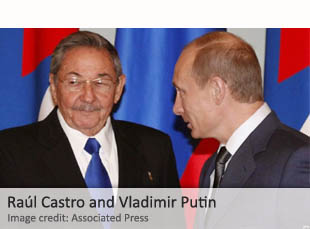
Raúl Castro and Vladimir PutinBy JOSEPH FITSANAKIS | intelNews.org
The government of the Russian Federation has reached an agreement with the authorities in Cuba to reopen an electronic communications listening base that was built by the Soviets during the Cold War. Russian newspaper Kommersant said on Wednesday that the agreement between the two nations was struck late last week during a visit to the communist-run island by Russian President Vladimir Putin. The agreement centers on the Lourdes signals intelligence (SIGINT) facility, located just outside Cuban capital Havana. Situated approximately 100 miles from the United States mainland, the facility was used throughout the last two decades of the Cold War to provide intelligence for Soviet military and civilian spy agencies, while also operating as an overseas communications hub for the Soviet Navy. It was regarded at the time as the most formidable Soviet electronic listening post located anywhere outside Soviet territory. Cuban authorities once bragged that Lourdes provided Moscow with 75 percent of its actionable intelligence on its American adversary —though some experts consider the statement an exaggeration. At its peak, in the late 1970s, Lourdes hosted approximately 3,000 technical specialists and support personnel, over half of whom were Soviet. Initially, the Cuban government permitted Moscow to make use of Lourdes free of charge. However, in 1992 Havana introduced an annual rental fee, which by 2001 had risen to $200 million. Under the bilateral agreement, Russia was paying the rental fee in kind, by supplying the Cuban government with food products and fuel, as well as military equipment. But in 2001, the administration of President Putin withdrew from the agreement, citing the high cost of maintaining the base. Moscow said at the time that it was financially impossible to keep up a SIGINT complex located 6 thousand miles away from Moscow. Read more of this post

NSA ‘high-target’ list includes names of 122 world leaders

NSA headquartersBy JOSEPH FITSANAKIS | intelNews.org
A list of high-priority intelligence targets published over the weekend includes the names of over a hundred current and former heads of state, who were systematically targeted by the United States National Security Agency (NSA). The list appears to be part of a wider “Target Knowledge Base” assembled by the NSA in order to help produce “complete profiles” of what the NSA calls “high-priority intelligence targets”. The list is contained in a classified top-secret briefing created by the NSA in 2009. It was published by German newsmagazine Der Spiegel, which said it acquired it from American intelligence defector Edward Snowden. Snowden, a former computer expert for the NSA and the Central Intelligence Agency, is currently living in Russia, where he has been offered political asylum. The leaked briefing explains the function of an extensive NSA signals intelligence (SIGINT) collection program codenamed NYMROD. The computer-based program is allegedly able to sift through millions of SIGINT reports and collate information on individual targets from the transcripts of intercepted telephone calls, faxes, as well as computer data. The list provided to Der Spiegel by Snowden contains 122 names of international political figures, said the newsmagazine, adding that all of them were “heads of foreign governments”. It includes the name of German Chancellor Angela Merkel, Syrian president Bashar al-Assad, Ukraine’s Yulia Tymoshenko, as well as Belarussian strongman Alexander Lukashenko. Colombia’s former President, Alvaro Uribe, and Malaysia’s Prime Minster from 2003 to 2009, Abdullah bin Haji Ahmad Badawi, also figure on the list. Interestingly, the leaders of Malaysia, Somalia, the Palestinian Authority and Peru top the NSA’s list of high-value executive targets. Read more of this post

British agency spies on foreign diplomats’ hotel reservations

GCHQ center in Cheltenham, EnglandBy JOSEPH FITSANAKIS | intelNews.org
Britain’s signals intelligence agency operates a system that monitors the hotel bookings of international diplomats and foreign government officials around the world, according to information published on Sunday. German newsmagazine Der Spiegel said the revelation came from the personal archive of American intelligence whistleblower Edward Snowden, who has been offered political asylum in Russia. In an article published last weekend, the magazine said the classified program is codenamed ROYAL CONCIERGE, and it is operated by the United Kingdom’s Government Communications Headquarters (GCHQ). The classified documents allegedly show that ROYAL CONCIERGE was launched on an experimental basis in 2010; the program was apparently “so successful” that it was approved for “further development” by GCHQ’s intelligence planners. Since that time, the British signals intelligence agency has been able to compromise the booking systems of at least 350 high-end hotels around the world, which are frequented by international diplomats and foreign government officials. As soon as a room booking is confirmed by an email to an account in a governmental Internet domain, GCHQ receives an alert, allowing it to know the name and arrival details of the guest(s). This information, says Der Spiegel, enables the British “technical operations community” to target the hotel guests according to the intelligence requirements set out by the British government. In some cases, the hotel room’s telephone and fax machine are monitored, while unsuspecting hotel guests have their computers and personal cellphones targeted by GCHQ. Read more of this post