News you may have missed #769 (analysis edition)

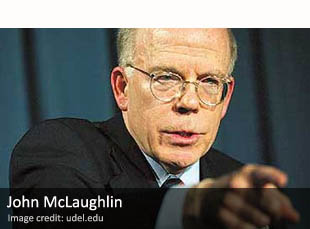
John McLaughlinBy IAN ALLEN | intelNews.org |
►►Is S. Korea’s spy agency losing its capabilities? The National Intelligence Service, South Korea’s primary external intelligence agency, is presumed to spend around US $1 billion a year, most of which it uses to spy on its northern neighbor. But when asked about the identity of the young woman who frequently accompanies new North Korean leader Kim Jong Un in his public appearances, the state intelligence agency offers no clear answer. Although it was seven months ago, at the time of Kim Jong-il’s funeral, that the woman was first spotted, the agency still does not know who she is. In the past 20 years, NIS has undergone a process of transformation to rid it of political functions. But the lingering question is: have the changes compromised the overall capabilities of the giant organization?
►►How 10 years of war has changed US spies. John McLaughlin, who was a CIA officer for 32 years and served as Deputy Director and Acting Director from 2000-2004, says he is often asked how American intelligence has changed in the 11 years since 9/11. His answer is that the changes are profound and have been transformative. Perhaps the most important thing to realize about American intelligence officers in 2012, he says, is that this is the first generation since Vietnam to have been “socialized” –that is hired, trained, and initiated– in wartime. And to a greater degree than even the Vietnam generation, their experience approximates that of their World War II forbears in the Office of Strategic Services (OSS) –the organization to which most American intelligence officers trace their professional roots.
►►Assessing the Social Media Battlefield in Syria. While the numerous insurgent factions and the Syrian security forces engage each other in combat in towns and cities to secure tangible battlefield gains, the warring parties are also waging a contentious information war in cyberspace, specifically within the virtual arena of online social media. The various strands of the opposition in Syria —political and violent— have taken to social media since the earliest stages of the uprising to advance their agendas. Analogous to their role in facilitating communication and information exchange during the wave of revolts that have been sweeping the Arab world since 2011, new media platforms such as the array of social media websites and related technologies that are available to the public at virtually little or no cost have become crucial to shaping how the crisis in Syria is portrayed and perceived.
News you may have missed #718 (GCHQ edition)

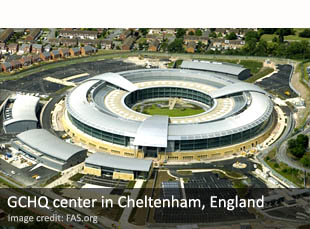
GCHQ center in Cheltenham, EnglandBy IAN ALLEN | intelNews.org |
►►GCHQ releases Alan Turing papers. Britain’s signals intelligence agency, GCHQ has released two mathematical papers written by cryptographer Alan Turing after keeping the works secret for over half a century. The intelligence agency believes the handwritten papers were produced by Turing during his time at Bletchley Park, the World War II code-breaking center. The year 2012 marks the centenary of Alan Turing’s birth. Turing, whose work heavily contributing to the Allied war effort, committed suicide in 1954 by taking cyanide. Turing had been convicted of homosexuality, which was then a crime, and was given the choice between prison or chemical castration. The UK government officially apologized over Turing’s treatment in 2009, over 50 years after his death.
►►Britain’s GCHQ sued for ‘racism’. Alfred Bacchus, 42, claims he was bullied by bosses while he was a senior press officer at the Government Communications Headquarters in Cheltenham. He says he wanted to publish an official report in 2010 into race bias inside GCHQ which warned that not enough ethnic minority staff were being recruited to help fight terrorism. It found that black and Asian intelligence officers at GCHQ complained of a racist culture in which they were insulted by white colleagues and challenged over their loyalty to Britain.
►►Ex-GCHQ chief wants more surveillance of Facebook and Twitter. Sir David Omand, an ex-Cabinet Office security chief and former director of Britain’s GCHQ electronic eavesdropping agency, said it was essential that monitoring of social media was put on a proper legal footing. A report by the think-tank Demos, which Sir David co-authored, said existing laws regulating the interception of communications by police and intelligence agencies needed to be overhauled to meet the complexities of social media. However, the ability of state security agencies and the police to intercept social network communications such as tweets must be placed on a clear legal footing, the report says.

Spies seen behind fake Facebook profile of senior NATO commander

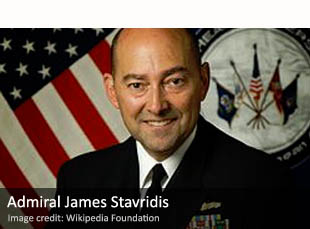
James G. StavridisBy JOSEPH FITSANAKIS| intelNews.org |
A Facebook account bearing the name of a senior commander of the North Atlantic Treaty Organization was set up by Chinese spies to siphon information from unsuspecting Western military officials, according to a British newspaper. The London-based Daily Telegraph said in an article that the fake Facebook account was discovered a year ago by NATO counterintelligence officers. It bore the name of United States Admiral James Stavridis, who serves as Supreme Allied Commander in Europe and currently leads the Organization’s mission in Libya. The account was reportedly used to befriend Western military officials, primarily in Britain and other European countries, probably in an attempt to collect personal information found on their personal pages on the popular social networking site. This sort of practice is known as ‘spear phishing’, and consists of messages sent to carefully targeted individuals, seemingly sent from a trusted source. The operation involving Admiral Stavridis appears to have been purposely targeted at high-ranking Western officials, a technique sometimes known as ‘whaling’. The London-based daily says NATO officials have been “reluctant to say publicly who was behind the attack”. But the paper claims it has been told that declassified briefings from NATO point to a series of Internet protocol addresses belonging to Chinese government facilities. Organization officials insist —correctly— that the individuals or government agencies behind the operation to falsify Stavridis’ social networking identity are unlikely to have acquired any actual military secrets. However, the information collected from Western military officials befriended online by Admiral Stavridis’ fake Facebook account could aid the compilation of personal and psychological profiles of these officials produced by foreign intelligence agencies. Read more of this post

Research: Spies increasingly using Facebook, Twitter to gather data

Spying on social networkingBy JOSEPH FITSANAKIS | intelNews.org |
During the past four years, this blog has reported several incidents pointing to the increasing frequency with which spy agencies of various countries are utilizing social networking media as sources of tactical intelligence. But are we at a point where we can speak of a trend? In other words, is the rapid rise of social networking creating the conditions for the emergence of a new domain in tactical intelligence collection? This past week saw the publication of a new research paper (.pdf), which I co-authored with Micah-Sage Bolden, entitled “Social Networking as a Paradigm Shift in Tactical Intelligence Collection”. In it, we argue that recent case studies point to social networking as the new cutting edge in open-source tactical intelligence collection. We explain that Facebook, Twitter, YouTube, and a host of other social networking platforms are increasingly viewed by intelligence agencies as invaluable channels of information acquisition. We base our findings on three recent case studies, which we believe highlight the intelligence function of social networking. The first case study comes out of the Arab Spring, which, according to one report, “prompted the US government to begin developing guidelines for culling intelligence from social media networks”. We also examine NATO’s operations during the 2011 Libyan civil war (Operation UNIFIED PROTECTOR), when Western military forces systematically resorted to social networking media to gather actionable intelligence, by utilizing open sources like Twitter to pinpoint targets for attack. Finally, we examine the sabotage by Israeli security services of the 2011 “Welcome to Palestine Air Flotilla” initiative, a campaign organized by several European groups aiming to draw worldwide attention to the travel restrictions imposed by Israeli authorities on the Occupied Territories. Read more of this post

News you may have missed #659

China and PakistanBy IAN ALLEN | intelNews.org |
►►China wants military bases in Pakistan. An Indian intelligence report leaked in the country’s press appears to reveal that China and Pakistan are in secret negotiations to allow Beijing to build military bases on Pakistani soil. The report states that “China’s desire for a military presence in Pakistan has been discussed by the political and military leadership of that country in the recent months. China’s deepening strategic penetration of Pakistan and joint plans to set up […] oil pipelines/rail/roads as well as naval and military bases are a matter of concern”.
►►Turkey ‘almost shot down’ Israeli spy drone. An Israeli drone flying over Turkey was nearly intercepted by Turkish aerial defense forces, an Istanbul-based media outlet reported on Tuesday. According to the report, “by the time the order [to shoot down the Israeli drone] was given, [it] had already left the area”. A spokesperson for the Israel Defense Forces refused to comment on the Turkish report.
►►Analysis: Global apparatus for drone killing emerges under Obama. “The Obama administration’s counterterrorism accomplishments are most apparent in what it has been able to dismantle, including CIA prisons and entire tiers of al-Qaeda’s leadership. But what the administration has assembled, hidden from public view, may be equally consequential”. Excellent analysis by Greg Miller, who argues that “the rapid expansion of the drone program has blurred long-standing boundaries between the CIA and the military”.

Announcement: intelNews gets down with social networking

Social networkingBy JOSEPH FITSANAKIS | intelNews.org |
This blog first boarded the social-networking train by joining Twitter, in June of 2009. Back then Leon Panetta was in the hot seat at the CIA, US troops (of the non-mercenary kind) were still in Iraq, Osama bin Laden was living the high life in exotic Abbottabad, and South Korean intelligence were trying to kill the North’s “dear leader”, Kim Jong-Il. We’ve since managed to post over 1,200 Tweets, and have attracted a microblogging community numbering a moderately respectable 600 members. If you haven’t signed up, you can do so, here. Today we’d also like to invite you to join our newest adventure in the land of social networking, by signing onto Facebook and becoming a member of our new breathtaking, awe-inspiring page, which is located here. Our grand plan is to use the new page as a way to interact with our readers on a more frequent basis, and to invite further feedback and discussion on issues of concern to intelNews readers. Check us out, and let us know of your thoughts. We also have a hip new channel on YouTube, where we post audiovisual content relating to our work, including our research and periodic media appearances. You can find the YouTube channel here. In case you didn’t know, you can also share or bookmark articles that appear on intelNews, you can subscribe to read intelNews in one of the popular readers out there, you can get intelNews articles on your email, and you can even place our headlines on your website or blog. So there. I think we’ve covered everything. Or, have we? If you have any suggestions or advice for our growing social-networking empire, get in touch.

News you may have missed #646

Syed Ghulam Nabi Fai

Syed Fai

►►Analysis: Reorganizing Colombia’s disgraced spy agency. One former director of Colombia’s Administrative Department of Security, or DAS, has been convicted of conspiring to kill union activists. A former high-ranking manager is accused of collaborating with death squads to assassinate a television humorist. Dozens of agents have been implicated in what prosecutors call a systematic effort to illegally spy on the Supreme Court and opposition politicians, which some former DAS agents said was done with US equipment and funding. The new man in charge, however, Ricardo Giraldo, is an affable bankruptcy lawyer and former university professor, and his role is decidedly different from his predecessors’: namely to dismantle the agency.
►►Russian site snubs FSB request to block opposition networking. Russia’s top social networking site on Thursday defiantly rejected a request by the Federal Security Service to block opposition groups from using it to organize street protests accusing the authorities of rigging this week’s election. Over 45,000 people in Moscow alone have pledged on Facebook and the Russian site, VKontakte, to join fresh protests on Saturday against the 12-year rule of Vladimir Putin and the victory of his United Russia party in last Sunday’s parliament vote.
►►American citizen admits he took Pakistan spy money. Ghulam Nabi Fai, who is accused of working in Washington for Pakistan’s Inter-Services Intelligence (ISI) directorate, to lobby for Kashmiri independence, has pleaded guilty to secretly receiving millions of dollars from Pakistan’s spy agency in violation of US federal laws.

Analysis: CIA Open Source Center monitors Facebook, Twitter, blogs

CIA HQ

CIA HQ

By JOSEPH FITSANAKIS | intelNews.org |
The Associated Press has been given unprecedented access to the United States Central Intelligence Agency’s Open Source Center, which is tasked with, among other things, monitoring social networking media. The Center, which was set up in response to the events of 9/11, employs several hundred multilingual analysts. Some are dispatched to US diplomatic missions abroad, but most work out of “an anonymous industrial park” in the US state of Virginia, which the Associated Press agreed not to disclose. The analysts, who are jokingly known in CIA OSINT (open-source intelligence) parlance as “ninja librarians”, engage in constant mining of publicly available information. The latter ranges from articles found in scholarly journals, to civilian television and radio station programs, as well as information available on the Internet. According to the Associated Press report, the Center began paying particular attention to social networking websites in 2009, when Facebook and Twitter emerged as primary organizing instruments in Iran’s so-called “Green Revolution”. The term describes the actions that Iranians opposed to President Mahmoud Ahmadinejad took to protest the disputed election results that kept him in power. Since that time, the CIA’s Open Source Center has acquired the ability to monitor up to five million tweets a day, and produces daily snapshots of global opinion assembled from tweets, Facebook updates and blog posts. Its executive briefings reportedly find their way to President Barack Obama’s Daily Brief on a regular basis. The Associated Press was given access to the Center’s main facility, and interviewed several of its senior staff members, including its Director, Doug Naquin. He told the news agency that the CIA Open Source Center had “predicted that social media in places like Egypt could be a game-changer and a threat to the regime”, but had been unable to foresee the precise development of Internet-based social activism in the Arab world. Read more of this post

News you may have missed #611

Kalevi Sorsa

Kalevi Sorsa

►►Diplomat says Finland’s ex-prime minister was Stasi agent. Finnish former diplomat Alpo Rusi said last week that Kalevi Sorsa, Finland’s longest serving prime minister, who led the country in the 1970s and 1980s, is on a secret list of 18 high-profile Finns with links to the Stasi, East Germany’s Cold-War security service. West German intelligence handed the file to its Finnish counterpart in 1990, but the Finnish Supreme Court ruled last year that the list would not be made public.
►►Nazi criminal spied for West Germany. A wiretap operation conducted in the early 1960s by the CIA against the BND, West Germany’s foreign intelligence service, revealed that the BND employed a senior Nazi war criminal, Franz Rademacher, to spy for it in Syria, CIA records show.
►►US government aims to build ‘data eye in the sky’. Social scientists are trying to mine the vast resources of the Internet — Web searches and Twitter messages, Facebook and blog posts, the digital location trails generated by billions of cell phones to “predict the future”.

Western companies help Bahrain spy on democracy activists

NSN Logo

By JOSEPH FITSANAKIS | intelNews.org |
While Western governments preach to the world about the benefits of democracy, Western companies supply some of the most detestable dictatorial regimes with surveillance technologies for use against pro-democracy activists. One example in point is the repressive government of Bahrain, which, according to Amnesty International, is responsible for some of the most extensive human rights violations anywhere in the Middle East. Bahrain is the kind of place where even medical professionals who treat people wounded by police or soldiers in demonstrations are charged with “incitement”. Despite the fervor of the pro-democracy movement that has risen as part of the Arab Spring, the oil-rich royal clique that rules the nation has managed a series of debilitating hits against the reformists. The success of the crackdown is largely due the use of sophisticated telecommunications surveillance systems that allow Bahraini authorities to spy on cell phones and social networking platforms used by members of the pro-democracy opposition. Who supplied the Bahraini dictators with this equipment? Step forward German engineering conglomerate Siemens AG, and Finnish multinational Nokia. An article published this week in Bloomberg’s Markets magazine, fingers the German company as the primary supplier of telecommunications surveillance systems to the Bahraini royals. The latter rely on contracts with Nokia’s Trovicor GmbH subsidiary to maintain the sophisticated software and hardware. Bloomberg says it was notified of the Nokia Siemens Networks (NSN) partnership by two unnamed insiders, “whose positions at the companies gave them direct knowledge of the installations and the sale and maintenance contracts”. Read more of this post

Israel used Facebook to stop European pro-Palestine activists

Facebook

Facebook

By JOSEPH FITSANAKIS | intelNews.org |
Israeli intelligence services managed to stop dozens of European pro-Palestine activists from flying to Israel, by gathering open-source intelligence about them on social media sites, such as Facebook. According to Israeli Foreign Ministry spokesman Yigal Palmor, intelligence gathered on Facebook formed the basis of a blacklist containing over 300 names of European activists, who had signed up on an open-access Facebook page of a group planning nonviolent actions in Israel this summer. Israeli intelligence agencies forwarded the names on the lists to European airline carriers, asking them not to allow the activists onboard their flights, as they were not going to be allowed into the country. This action prompted airline carriers to prevent over 200 activists from boarding scheduled flights to Israel. Israeli security officers detained over 310 other activists, who arrived in Israel on several European flights last week. Of those, almost 70 were denied entry to the country, while more detentions are expected to take place later this week, according to Israeli Interior Ministry spokeswoman Sabine Hadad. Read more of this post

US intel wants to automate analysis of online videos

IARPA logo

IARPA logo

By IAN ALLEN | intelNews.org |
A new project funded by the US intelligence community’s research unit aims to automate the collection and analysis of videos from YouTube and other popular online platforms, with the intent of unearthing “valuable intelligence”. The program is called Automated Low-Level Analysis and Description of Diverse Intelligence Video (ALADDIN). It is directed by the Intelligence Advanced Research Projects Activity (IARPA), whose mission is to work under the Director of National Intelligence to create hi-tech applications for America’s intelligence agencies. Few people are aware of the existence of IARPA, which was quietly established in 2007, is based at the University of Maryland, and is staffed mostly by CIA personnel. The research body’s latest project apparently aims to equip the US intelligence community with the ability to scan “for the occurrence of specific events of interest” embedded in online video files, and then “rapidly and automatically produce a textual English-language recounting [and] describing the particular scene, actors, objects and activities involved”. Read more of this post

News you may have missed #356

Bookmark and Share

US government urged to release data on social networking spying

Facebook

Facebook

By IAN ALLEN | intelNews.org |
An Internet watchdog has filed a court complaint to force the US government to disclose how its law enforcement and spy agencies monitor social networking sites, such as Facebook and Twitter. IntelNews regulars have known since October that the CIA has invested in a private software company specializing in monitoring online social media, such as YouTube, Twitter and Flickr. Additionally, we have previously reported on persistent rumors that the National Security Agency, America’s communications spying outfit, is actively monitoring popular social networking sites in order to make links between individuals and construct maps of who associates with whom. Now the San Francisco-based Electronic Frontier Foundation (EFF) wants to find out the extent to which US intelligence and law enforcement agencies are secretly monitoring social networking sites on the Internet. Read more of this post