Did Aussies ‘burn’ Israel’s Prisoner X and was he also a British citizen?

Ben ZygierBy JOSEPH FITSANAKIS | intelNews.org |
As intriguing questions continue to mount about the case of Israel’s so-called ‘Prisoner X’, the flow of verifiable information from official channels in Australia and Israel has slowed to a trickle. However, two important analyses appeared over the weekend, which could potentially place the incarceration and subsequent death of Ben Zygier under new light. One claims that the Australian-born Israeli was a low-level Mossad operative who did not commit any serious crime —let along high treason. The other suggests that Zygier might have held British citizenship, in addition to being a dual Australian and Israeli citizen, and that the British government might have been privy to the information regarding his arrest and subsequent incarceration in Israel’s Ayalon prison. In an article for Ynet, the online outlet for Israel’s high-selling newspaper Yediot Ahronot, veteran security correspondent Ron Ben-Yishai posits that Zygier was simply a “support operative” for the Mossad, adding that he “did not commit treason”. Instead, says Ben-Yishai, Zygier was probably arrested by the Israelis because they suspected he might have given, or might consider giving, information about forged Australian passports to Canberra. The Mossad decided to detain him after he told them he had been contacted by Australian journalist Jason Koutskoukis in late 2009 and asked whether he was a Mossad operative. Koutsoukis was tipped-off by Australian counterintelligence, which suspected Zygier of supplying the Mossad with Australian passports in his possession. It was the stigma of being considered a traitor by his own people that drove Zygier —a passionate Zionist— to suicide, claims Ben-Yishai. Read more of this post

Would UK, USA, share intel with independent Scottish spy agencies?

United Kingdom and IrelandBy JOSEPH FITSANAKIS | intelNews.org |
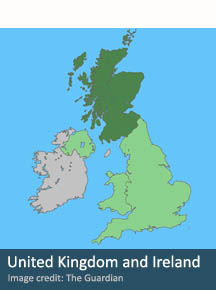
Scotland plans to set up its own security and intelligence agencies if its people vote in favor of independence from the United Kingdom in 2014, according to policy planners. But critics contend that it might be some time before Scotland’s spy organizations are trusted by their sister intelligence agencies in Britain and the United States. The Scottish National Party (SNP) which won an absolute majority in the Scottish Parliament in the 2011 election, has put forward a plan for a referendum proposing Scotland’s full independence from the UK, to be held in late 2014. On Monday, the Scottish Parliament’s Committee on Foreign Affairs met in Edinburgh to conduct an official inquiry into the possible foreign policy implications of an independent Scotland. Nicola Sturgeon, the SNP’s Deputy Leader and Deputy First Minister of Scotland, told the Committee that an independent Scotland would have to build a domestic intelligence agency to combat security threats such as terrorism, organized crime and cyber attacks. She said the agency would serve the interests of the Scottish people and the Scottish government, but would maintain “very close intelligence sharing with the rest of the UK”. According to Sturgeon, given that Scotland shares “an island with the rest of the UK”, a Scottish domestic security service would inevitably find itself “sharing intelligence and sharing our response to some of these threats”. She also suggested that an independent nation of Scotland would have the option to establish an “external security service” modeled on Britain’s MI6, also known as the Secret Intelligence Service. But Committee members opposed to independence directed heavy criticism against the minister’s plans, arguing that the financial cost of replicating existing UK intelligence and security structures would be colossal. They also warned Sturgeon that Scottish intelligence agencies would have to prove that they were reliable and safe before they struck intelligence-sharing arrangements with British and American organizations. Read more of this post
Philby’s son, widow, speak on 50th anniversary of his defection

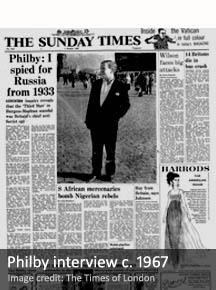
Philby interview c.1967 By IAN ALLEN | intelNews.org |
For most of us, January 23, 2013, was a day like any other. But for intelligence history aficionados it marked the 50th anniversary of the escape to Moscow of notorious double spy Harold Adrian Russell Philby. Known as ‘Kim’ to his friends, Philby secretly defected to the USSR from his home in Beirut, Lebanon, in 1963. He is widely considered history’s most successful double spy. While working as a senior member of British intelligence, he spied on behalf of the Soviet NKVD and KGB from the early 1930s until his defection. In 1965, he was awarded the Order of the Red Banner. When he died, in 1988, he was buried with honors by the Soviet authorities. Philby’s defection sent ripples of shock across Western intelligence and is often described as one of the most dramatic moments of the Cold War. On the 50th anniversary of Philby’s defection to Moscow, British newspaper The Daily Telegraph carried an article with excerpts of interviews with one of Philby’s sons, Dudley Thomas Philby, and his Russian widow, Rufina Pukhova Philby. Born in 1946, Dudley ‘Tommy’ Philby is the third of Kim’s five children with his second of four wives, Aileen Furse Philby. Aileen died in 1957, when Tommy was just 11 years old; his contact with his father was cut off as soon as the double spy defected to the USSR in January 1963. But it was resumed a few months later, when he received a letter from his father in Moscow. Eventually, Tommy visited Kim five times in Moscow in the 1970s. Speaking on the anniversary of his late father’s defection, he described him as “a very kind man” and “a very good father”, who “had his belief [in] communism [and] carried it out”. He told The Telegraph that he personally did not agree with his father’s political views, but added: “he was what he was, what could I do?”. He told the paper that Kim eventually came to think that “it was all wrong”, implying that Philby grew disillusioned with the Soviet system. Read more of this post

News you may have missed #820

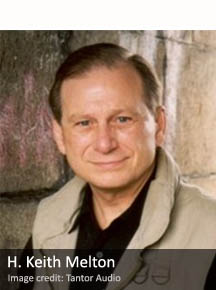
H. Keith MeltonBy IAN ALLEN | intelNews.org |
►►World’s best known spy collector displays his home. And now for something completely different. Most intelNews readers will be aware of H. Keith Melton, the author of more than 25 nonfiction works on espionage (including The Ultimate Spy Book) and the world’s largest private collector of spy memorabilia. The question is, where does he keep all this stuff? The 68-year-old author invited Forbes magazine to his Boca Raton house, which includes his two-story private spy museum. The article is here, a photo gallery here, and a video of the house (but not the museum) is here.
►►Acting CIA director criticizes ‘Zero Dark Thirty’. IntelNews has ignored the commentary that has flooded the Web about Zero Dark Thirty, the feature film fictional account of the assassination of al-Qaeda founder Osama bin Laden. But when the Director of CIA, the agency behind the real-life operation to kill bin Laden, publicly comments, it is time to pay attention. Michael J. Morell, who took over as CIA Director from General David Petraeus last month, has criticized the film, saying it exaggerates the role of coercive interrogations in producing clues to bin Laden’s whereabouts.
►►British police says MI6 expert ‘killed himself’. British police say MI6 cryptology expert Gareth Williams, who was found dead inside a sports bag in August 2010, probably locked himself into the sports bag, where his naked body was found, and was not the victim of a hit by the security services. Williams, 31, worked for Britain’s secret eavesdropping service GCHQ but was attached to MI6 when his remains were found inside the bag in a bathtub at his London apartment.

Soviets used civilian airliners to gather intelligence, documents show

Soviet Aeroflot airlinerBy JOSEPH FITSANAKIS | intelNews.org |
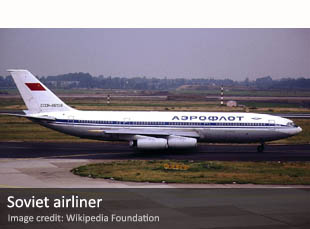
Soviet spy agencies routinely used civilian airplanes to collect aerial intelligence over Western military installations, according to newly declassified documents. The revelation is contained in British government files from 1982 that were declassified on Friday, following the expiration of the United Kingdom’s 30-year classification rule. According to Bloomberg’s Robet Hutton and Thomas Penny, who accessed the files, they include a detailed memorandum addressed to Conservative Party politician Margaret Thatcher, who was serving as Britain’s Prime Minister at the time. The memorandum, which was authored by then Secretary of State for Defence, John Nott, informed Mrs. Thatcher that the airborne behavior of airliners belonging to Aeroflot, the Soviet Union’s state-owned civilian air carrier, appeared suspicious. Secretary Nott wrote in the memo that Britain’s Royal Air Force had “established that some [Soviet] aircraft deviated from their flight-plan routes” when flying over Western military bases. He goes on to describe an “incident of particular interest”, in which an Aeroflot Ilyushin IL62 airplane descended without authorization from 35,000 feet to 10,000 feet right above the village of Boulmer. Located in Northumberland, England, Boulmer is adjacent to a Royal Air Force base, which at the time featured a newly modernized radar system. The same Aeroflot airplane behaved in similar fashion while flying over a United States Navy base in Groton, Connecticut, which at the time hosted the first US submarine equipped with Trident Ballistic Missiles. The memorandum states that the circumstances surrounding the flight patterns of Aeroflot airliners had led the Royal Air Force to assume that the Soviet airplanes “were gathering intelligence” on Western military targets. Read more of this post

Litvinenko was working for UK, Spanish intelligence when he was killed

Alexander LitvinenkoBy JOSEPH FITSANAKIS | intelNews.org |

A lawyer representing the family of a KGB defector to Britain, who died of poisoning in 2006, has told a court hearing in London that the late spy was working for British and Spanish intelligence at the time of his death. Alexander Litvinenko was an employee of the Soviet KGB and one of its successor organizations, the FSB, until 2000, when he defected with his family to the United Kingdom. He soon became known as a vocal critic of the administration of Russian President Vladimir Putin. In 2006, Litvinenko came down with radioactive poisoning soon after meeting a former KGB/FSB colleague, Andrey Lugovoy, at a London restaurant. Speaking at a preliminary court hearing on Thursday, in light of an upcoming British government inquiry into Litvinenko’s death, Ben Emmerson, QC, said that the late Russian spy was a “registered and paid” asset of the Secret Intelligence Service. This is not the first time that Litvinenko has been linked to the SIS —known informally as MI6— Britain’s external spy agency. Litvinenko’s widow, Marina, made similar claims to the British press in January of this year. But yesterday’s testimony by her legal team provided the public record with further revelations about her husband’s connections with British intelligence. The court heard that Litvinenko received a regular stipend from MI6 either in cash or via electronic transfer and that he had been provided with an encrypted telephone, which MI6 used to contact him on a routine basis. The night before his poisoning, said Emmerson, Litvinenko had met his MI6 handler, who went by the operational alias MARTIN. Read more of this post

News you may have missed #815 (analysis edition)

Polygraph testBy IAN ALLEN | intelNews.org |
►►Should polygraph tests be trusted?  US federal polygraph programs have flourished, targeting a growing number of private contractors with more intensely personal questions than ever before. More than 70,000 people are now screened yearly in the US. Yet thousands of people a year could be identified as lying in polygraph screenings when they are not, according to statistical models by the National Academies, which advises the federal government on scientific matters. Under the current system, many of them would have no way to legally challenge polygraphists’ conclusions, especially in the intelligence world.
►►Why the US does not need another law against intelligence leaks. Leonard Downie Jr., vice president at large of The Washington Post, warns that the 2013 Intelligence Authorization Act “would make it a crime for career intelligence officers to provide almost any type of information to the news media, whether the information is classified or not”. He argues that the proposed legislation would “end contacts that often benefit both the government and the public by allowing the exchange of accurate information about vital national security issues and intelligence activities, including abuses requiring attention”.
►►The preventable decline of British defense intelligence. Defense intelligence refers to something rather different from ‘military intelligence’. It takes place at the topmost levels of defense coordination and decision-making and draws together participation from all of the armed services with civilian subject-matter and technical experts and produce consolidated assessments for senior civil servants, ministers and the service chiefs of staff. Philip Davies, director of the Brunel Centre for Intelligence and Security Studies in the United Kingdom, argues that, in Britain, defense and military intelligence remains “something of a poor cousin in the intelligence community, the eternal Peter robbed to pay the Paul of other, seemingly more urgent, defense expenditure and policy priorities”.

News you may have missed #814

Ilir KumbaroBy IAN ALLEN | intelNews.org |
►►Israel accuses Palestinian of spying for Hezbollah. Israel’s Shin Bet internal security agency says a Palestinian man has been charged with relaying information to Hezbollah in Lebanon about sensitive government sites, including parliament. It identified the suspect as Azzam Mashahara, a resident of east Jerusalem, which Israel captured in 1967. Palestinian residents of east Jerusalem, unlike Palestinians from the West Bank or the Gaza Strip, have Israeli identity cards that allow them to travel freely within Israel. Mashahara was charged with maintaining contacts with a foreign agent and relaying information to the enemy.
►►UK agency tries to crack coded message from WWII-era carrier pigeon. The note, written on official stationary with the heading “Pigeon Service,” was discovered in a red canister attached to the skeletal leg of a pigeon in a chimney in Surrey, England. The message is made up of 27 seemingly random five-letter blocks and though it’s undated, government analysts believe the pigeon met his end while on a secret mission during the Second World War. The note is signed “Sjt W Stot” and was intended for the destination “XO2”. In a statement, Britain’s Government Communications Headquarters (GCHQ), said that during the war secret communications would often utilize specialized codebooks “in which each code group of four or five letters had a meaning relevant to a specific operation, allowing much information to be sent in a short message”. The GCHQ said that those messages may have been put through an additional layer of security by being re-coded with what’s known as a one-time pad.
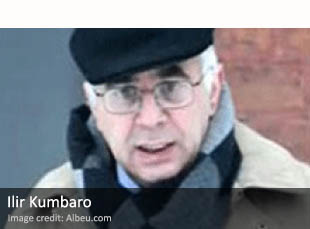
►►Albania court convicts fugitive ex-spy chief. An Albanian court has convicted Ilir Kumbaro, the country’s fugitive former intelligence chief, of murder for the 1995 death of a suspect who was illegally detained for an alleged plot to murder the President of the Republic of Macedonia. The victim, businessman Remzi Hoxha, an ethnic Albanian from Macedonia, was abducted by the secret police 17 years ago along with two other suspects for allegedly planning to kill then-Macedonian President Kiro Gligorov during a visit to Albania. The court said the three suspects were held illegally and tortured during questioning. Kumbaro traveled to Britain in 1996 under a false identity, claiming to be a refugee from Kosovo. He has been missing for a year, after skipping an extradition hearing in London. Hoxha was never found and is presumed to have died in custody.

MI5 arrests Royal Navy petty officer for trying to spy for Russia

Edward DevenneyBy JOSEPH FITSANAKIS | intelNews.org |
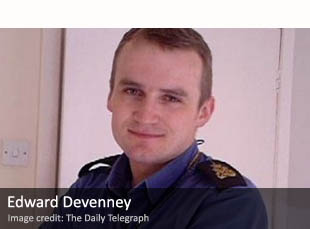
An member of the British Royal Navy has been arrested in a counterintelligence sting operation, after trying to sell top-secret government documents to people he believed were Russian operatives. Petty Officer Edward Devenney, who has been in the Royal Navy for over a decade, was arrested earlier this week while meeting with two MI5 officers posing as Russian spies. Originally from Northern Ireland, Devenney, 29, appears to have been motivated by disgruntlement against the Navy, after his planned promotion to commissioned officer was halted due to financial austerity measures imposed on the military by the British government. According to the court indictment, Devenney contacted an unnamed “embassy of a foreign country” in London, offering to provide classified information in exchange for money. It is unknown at this point how exactly MI5, the British government’s foremost counterintelligence organization, became privy to the content of Devenney’s communication with officials at the unidentified embassy. What is known is that, after several messages were exchanged between the parties, Devenney arranged to meet two people he believed were Russian government employees. In reality, the two individuals were MI5 officers, who were able to film the clandestine meeting. Devenney was apparently arrested on the spot, having first announced that he wished to “hurt the Navy” because his promotion to a commissioned officer had been “binned” by the British government. Read more of this post

News you may have missed #812

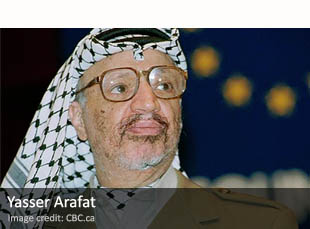
Yasser ArafatBy IAN ALLEN | intelNews.org |
►►Russia to help probe Yasser Arafat’s death. Russia will join an international investigation to determine whether the first Palestinian president, Yasser Arafat, was murdered, the current Palestinian leader, Mahmoud Abbas, has said. French and Swiss experts are due to exhume Arafat’s body in Ramallah later this month in an attempt to discover how he died after an al-Jazeera documentary in July suggested he was killed by a rare radioactive poison. Abbas asked Russian foreign minister Sergei Lavrov for Moscow’s help during talks in Jordan, Palestinian sources said.
►►Revisiting the foiled 1984 Nigerian kidnap plot. In London in 1984, a team of Nigerians and Israelis attempted to kidnap and repatriate the exiled former Nigerian minister Umaru Dikko. Mr. Dikko, who had fled Nigeria after a military coup, was accused of stealing $1bn (£625m) of government money. The plot was foiled by a young British customs officer and, as a result, diplomatic relations between the UK and Nigeria broke down and were only fully restored two years later. The Nigerian and Israeli governments have always denied involvement in the kidnapping.
►►Putin congratulates KGB double spy on his birthday. Russian President Vladimir Putin has congratulated famous double agent George Blake on his 90th birthday, the Kremlin press office has said. Blake betrayed British intelligence starting in the 1950s; he was found out in 1961 and sentenced to 42 years in prison. But he escaped five years later using a ladder of rope and knitting needles, made his way to the Soviet Union and has been living out his last years serenely in a cottage outside Moscow. After his escape from the Wormwood Scrubs prison in London, he was smuggled to Berlin in a wooden box in the back of a van. In the interview published last week, he said he then presented himself to border guards in East Berlin, asked to speak to a Soviet officer, and when told to wait, immediately fell into a deep sleep.

News you may have missed #811

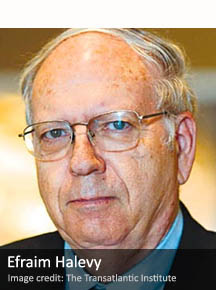
Efraim HalevyBy IAN ALLEN | intelNews.org |
►►Former Mossad chief pushes for dialogue with Iran. After Meir Dagan, another former chief of Israeli intelligence agency Mossad has publicly called for a dialogue between the West and Iran. Speaking to Al-Monitor, an American website covering Middle-East news, Halevy, who directed the Mossad from 1998 to 2002, said that “the Iranians, in their heart of hearts, would like to get out of their conundrum”. IntelNews readers may remember Halevy’s comments in August, when he warned that Israel’s threats of a military attack on Iran were “credible” and “serious”, adding that, if he were an Iranian, he would be “very fearful of the next 12 weeks”.
►►UK says attack on Iran ‘not right course at this time’. The British government has reiterated that it does not believe military action against Iran would be appropriate at the moment, following the disclosure that Britain has rebuffed US requests to use UK military bases to support the buildup of forces in the Gulf. US diplomats have lobbied for the use of British bases in Cyprus, and for permission to fly from US bases on Ascension Island in the Atlantic and Diego Garcia in the Indian Ocean, both of which are British territories.
►►German spy agencies disclose spy tools in rare move. Most law enforcement agencies refuse to reveal the surveillance technologies they use, claiming doing so could threaten national security. But authorities in Germany have shown it is possible to be transparent without the sky falling in —by disclosing how they have spent millions on spy tools to help monitor Skype, email, and mobile phones. Earlier this year, German politician Jan Korte submitted a series of written questions to the country’s federal ministry of home affairs regarding surveillance tools. The answers Korte received were published in German in July, but have only this month been translated (.pdf) into English.

Murdered British businessman ‘was MI6 operative’ (we told you so)

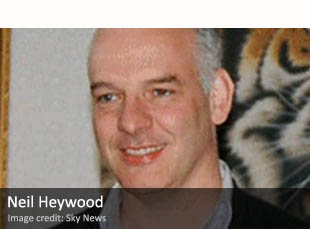
Neil HeywoodBy JOSEPH FITSANAKIS | intelNews.org |

An investigation by The Wall Street Journal has concluded that Neil Heywood, the British businessman who was murdered in China last November, was an active informant for British intelligence at the time of his death. The news appears to confirm intelNews’ assessment of April 2012 that Heywood was in fact connected with British intelligence. A highly successful financial consultant and fluent Chinese speaker who had lived in China for over a decade, Heywood was found dead on November 14, 2011, in his room at the Nanshan Lijing Holiday Hotel in Chongqing. His death led to the dramatic downfall of Bo Xilai and Gu Kailai, a husband-and-wife team of political celebrities who were found guilty in a Chinese court of killing the British businessman. Immediately after Heywood’s death, there was widespread speculation that he may have been a spy for MI6, Britain’s external intelligence service. On April 27, 2012, I argued that I was not aware of anyone “with serious knowledge of intelligence issues who was not completely certain, or did not deeply suspect, that Heywood had indeed collaborated with British intelligence at some stage during the past decade”. I wrote this in the face of an official denial by British Foreign Secretary William Hague, who had said earlier in the week that “Heywood was not an employee of the British government in any capacity”. Now an extensive investigation by The Wall Street Journal has concluded that the dead British businessman had been an MI6 operative “for more than a year” prior to his death. Read more of this post

News you may have missed #807

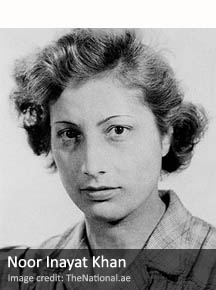
Noor Inayat KhanBy IAN ALLEN | intelNews.org |
►►Britain to unveil statue of female SOE spy of Indian origin. Born in Moscow to an Indian father and an American mother, Noor Inayat Khan was in Paris when it fell to Nazi occupation. She immediately returned to London to volunteer for the war effort, joined the Women’s Auxiliary Air Force and was recruited by the Special Operations Executive (SOE). She was sent into France on a secret mission in June 1943, but was betrayed and captured a few months later. She was shot by the Nazis in Dachau in September 1944, aged 30, and was posthumously awarded the George Cross as well as the Croix de Guerre by France. She was one of only three women in the SOE to be awarded the George Cross.
►►US intelligence spending falls or second year in a row. The US government’s total spending on intelligence activities fell in 2012, the second year in a row of declining numbers after years of soaring security spending since the September 11 attacks in 2001. The Office of Director of National Intelligence, the top US intelligence authority, announced on Tuesday that total funding appropriated for the National Intelligence Program, covering activities of the CIA and high-tech spy agencies such as the National Reconnaissance Office, was $53.9 billion in Fiscal Year 2012, which ended on September 30. That was down from the $54.6 billion appropriated during Fiscal Year 2011, according to government officials and figures published by the private Federation of American Scientists.
►►Russia wants to park spy planes on French base. France has been asked by Moscow to allow two Russian spy planes to be deployed at a French base in Djibouti to help track down pirates. Russian Defense Minister Anatoly Serdyukov said last week that the Ilyushin Il-38 naval reconnaissance planes would improve Russia’s ability to spot pirates plaguing waters off the coast of Somalia. Djibouti is at the juncture of the Red Sea and the Gulf of Aden. The French base is home to several thousand French service members and a number of military aircraft.

MI5 official’s diaries reveal tensions between UK, US spy agencies

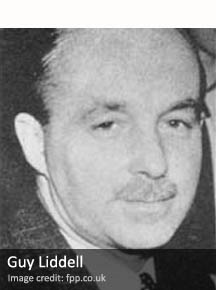
Guy LiddellBy JOSEPH FITSANAKIS | intelNews.org |
Newly declassified personal diaries belonging to a senior British intelligence official reveal tensions between British and American spy agencies in the years immediately following World War II. The National Archives, an executive agency operating under the United Kingdom’s Secretary of State for Justice, released the diaries on Friday. They belong to Guy Maynard Liddell, a longtime British intelligence operative who rose to the post of Deputy Director General of MI5, Britain’s domestic intelligence agency. Liddell meticulously kept a diary during most of the 1940s and 1950s, in which he detailed both personal information and details of his work at MI5. Two volumes of his diaries (from 1939 to 1945, edited by Nigel West) have already been published. Now a third installment has been declassified by the National Archives, containing Liddell’s diary entries from the late 1940s and 1950s. The diaries project what some intelligence historians describe as “a certain friction” between postwar British and American intelligence services. Even though the two countries were largely viewed as allies in the immediate postwar period, their respective intelligence agencies did not always see eye to eye. In one instance, Liddell describes his American colleagues as “utterly incapable […] of seeing anybody’s point of view except their own” and accuses them of being “quite ready to cut off their noses to spite their faces”. He also comes across as skeptical of the then-newly established Central Intelligence Agency, which, he writes, “someday” may be able to produce information that would be “worth disseminating, evaluating, or coordinating”. In 1947, shortly after the CIA’s founding, Liddell wrote with a degree of uncertainty that “in the course of time, [the Agency] may produce something of value”. Further on he relayed the opinion of CIA Deputy Director Edwin Kennedy Wright, who apparently told British intelligence officials that in American intelligence organizations “500 people were employed to do what 50 people would do” in the UK. Read more of this post

News you may have missed #801

Alan TuringBy IAN ALLEN | intelNews.org |
►►Israel charges Arab man with spying for Hezbollah. Israel has charged Milad Khatib, a 26-year-old Arab Israeli truck driver, who was arrested a month ago, with spying for Hezbollah, making contact with a foreign agent, conspiring to aid the enemy and belonging to an illegal group. According to the indictment, Khatib was in contact with a man named Barhan, a Hezbollah agent who operated in various European locations. The two allegedly met several times between 2007-2009 in Barhan’s home in Denmark, with all of Khatib’s expenses, including food, hospitality and entertainment, covered by Barhan.
►►Britains’ GCHQ praises Alan Turing legacy. In a rare public speech, Iain Lobban, the Director of GCHQ, Britain’s signals intelligence agency, has praised the legacy of British mathematician and codebreaker Alan Turing. Widely considered the father of computer science and artificial intelligence, Turing committed suicide in 1954, after the British government prosecuted him for being a homosexual. In 2009, British Prime Minister Gordon Brown offered a public apology for Turing, who is also credited with cracking the Nazi Enigma code —a vital part of the Allied effort in World War II.
►►Canada’s SIGINT agency to get new headquarters. Canada’s electronic spy organization believes that the state-of-the-art headquarters now being built in an Ottawa suburb will make it a leader among its allies and attract the best and brightest of spies, according to newly released Canadian government documents obtained by The Ottawa Citizen. When finished in 2015-16, the Canadian Communications Security Establishment’s new $880-million spy campus in Gloucester is expected to be home to more than 1,800 employees.