News you may have missed #538

Wali Karzai

Wali Karzai

By IAN ALLEN | intelNews.org |
►►Egyptian diplomat dead in London after bizarre suicide attempt. Police in London are trying to solve the mysterious apparent suicide of Ayman Mohammed Fayed, a 41-year-old employee of the Egyptian embassy, who plunged to his death from one of the embassy’s third-floor windows last week. Embassy officials said he did so after hurriedly signing a brief suicide note to his family. Interestingly, one witness saw him trying to get back into the building from the window, apparently having changed his mind about killing himself. But, says The Daily Mail, he seems to have “lost control and fell”. The death does not seem to be related to the political changes that have taken place in Egypt this year. ►►CIA agent Wali Karzai dead in Afghanistan. Another death, that of Afghan President Hamid Karzai’s brother, has featured all over the news media in the past few days. Ahmed Wali Karzai, Afghan drug lord and influential strongman, was shot dead by his bodyguards last Tuesday. Wali Karzai’s role as a CIA agent is less widely advertised in obituaries (with a few notable exceptions). IntelNews readers will remember that, in October of 2009, The New York Times revealed that Wali Karzai had been financially sustained by the CIA ever since the initial US invasion of Afghanistan, in 2001, and that he was still —as of 2009— receiving “regular payments” from the Agency.  Read more of this post

News you may have missed #535

Stella Rimington

Stella Rimington

By IAN ALLEN | intelNews.org |
Last Monday’s Daily Telegraph carried a lengthy interview with Dame Stella Rimintgon, who headed MI5, Britain’s domestic intelligence agency, from 1992 to 1995. The interviewer notes that Rimington’s answers are often “so long you forget what you asked in the first place”, and when it comes to questions on MI5, she appears “practiced in the use of abstract generalities. I suspect is intentional”, she adds. No kidding. On July 10, the same newspaper revealed that, in the 1980s, an internationally renowned cancer researcher used his post at Britain’s Imperial Cancer Research Fund laboratories to steal samples and equipment on behalf of Eastern Bloc intelligence services. Jiri Bartek was working for the StB, Czechoslovakia’s secret intelligence service, says the paper. The paper notes that the revelation, which is based on declassified documents from the time, shows that Bartek (codename ‘Raki’), was probably “only one of dozens of Czech spies who used scientific positions in the West as cover for espionage”. Meanwhile, in South Africa, the country’s troubled National Intelligence Agency (NIA) has been hit an embarrassing revelation. It appears that Andre Vorster, a NIA specialist technical adviser at the agency’s Pretoria headquarters, claimed to have two doctorate degrees, both of which are fake. He also tried to swindle a leading British charity foundation by claiming to be acting on behalf of South African President Jacob Zuma. Vorster’s duties at the NIA included countersurveillance and the safeguarding of South African embassies and key installations around the world.
Israel used Facebook to stop European pro-Palestine activists

Facebook

Facebook

By JOSEPH FITSANAKIS | intelNews.org |
Israeli intelligence services managed to stop dozens of European pro-Palestine activists from flying to Israel, by gathering open-source intelligence about them on social media sites, such as Facebook. According to Israeli Foreign Ministry spokesman Yigal Palmor, intelligence gathered on Facebook formed the basis of a blacklist containing over 300 names of European activists, who had signed up on an open-access Facebook page of a group planning nonviolent actions in Israel this summer. Israeli intelligence agencies forwarded the names on the lists to European airline carriers, asking them not to allow the activists onboard their flights, as they were not going to be allowed into the country. This action prompted airline carriers to prevent over 200 activists from boarding scheduled flights to Israel. Israeli security officers detained over 310 other activists, who arrived in Israel on several European flights last week. Of those, almost 70 were denied entry to the country, while more detentions are expected to take place later this week, according to Israeli Interior Ministry spokeswoman Sabine Hadad. Read more of this post

News you may have missed #534

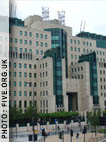
MI6 HQ

By IAN ALLEN | intelNews.org |
According to extracts from the diary of Alastair Campbell, British Prime Minister Tony Blair’s communications director from 2000 to 2003, officials from the MI6 intelligence agency told Blair that France and Germany aimed to “exploit his feud” with then Chancellor of the Exchequer Gordon Brown. Gotta love European unity. In Kuwait, meanwhile, the oil state’s Al-Shahed daily quotes “knowledgeable sources”, who claim that “a lot of spy networks exploit the Kuwaiti environment” and use the country as a transit point to spy on neighboring countries. Hopefully the Kuwaitis will not emulate authorities in Dubai, which in March of last year called on all foreign spies “to leave the region within a week. If not”, they warned, “we will cross that bridge when we come to it”. In the nearby state of Israel, public opinion is still divided about former Mossad chief Meir Dagan’s criticism of the Netanyahu government. As Bloomberg columnist Jeffrey Goldberg notes, Dagan has “called into question the wisdom –and, privately, even the sanity– of any Israeli leader who contemplates a preemptive strike on Iran’s nuclear facilities”. But why is he doing it, and could it backfire?

News you may have missed #530

  • Another spy ring reportedly busted in Kuwait. Kuwait has allegedly busted another spy ring, working for the intelligence services “of an Arab country [that] is currently embroiled in political turmoil”, reports Al-Jaridah daily. The paper also said that information gathered by the spy ring was sent to a liaison officer in the embassy of that country. Last April, two Iranians and a Kuwaiti national, all serving in Kuwait’s army, were sentenced to death for belonging to an Iranian spy ring.
  • How defectors come in from the cold. Interesting historical account of how defectors adjust to their new lives, from the BBC’s News Magazine. Sadly, much of the article is about –you guessed it– the Cambridge Five, which the British seem unable to get over, half a century later.
  • UK report says hackers should fight cyber spies. Britain faces losing its position at the leading edge of technology unless new ideas are developed to fight cyber attacks, including recruiting computer hackers to help fight organized cyber crime and espionage by foreign powers. This is the conclusion of a new report by the University College London’s Institute for Security and Resilience Studies.

US helped France go nuclear to keep Europe divided, documents show

Henry Kissinger

Henry Kissinger

By JOSEPH FITSANAKIS| intelNews.org |
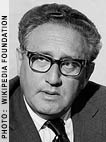
The government of the United States secretly helped France expand its nuclear arsenal, in order to promote its rivalry with Britain, according to newly declassified documents. The clandestine assistance to France, which tested its first nuclear bomb in Africa in 1960, began during the Richard Nixon administration, and was actively directed by Henry Kissinger, Nixon’s senior National Security Advisor. The documents, which were obtained by researchers at the George Washington University and the Woodrow Wilson International Center for Scholars, include a 1973 memorandum authored by Kissinger, in which he writes: “We want to keep Europe from developing their unity as a bloc against us. If we keep the French hoping they can get ahead of the British, this would accomplish our objective”. Toward that goal, the US ought to provide the French with information that will make them “drool but doesn’t give [them] anything but something to study for a while”. By doing so, Washington would be able to force Britain to stop “behaving shitty” and conform to American foreign policy objectives: “if they know we have another option, they might buck up”, writes Kissinger. Read more of this post

News you may have missed #523

  • Archbishop of Canterbury branded ‘subversive’ by MI5. A senior officer of MI5, Britain’s domestic intelligence agency, labeled Rowan Williams ‘a subversive’ in the 1980s, over his involvement with a group of leftwing campaigners.
  • Pakistan ambassador defends arrest of bin Laden informants. Pakistan Ambassador to the United States Husain Haqqani has defended his country’s decision to round up more than 30 people, some of whom may have helped US intelligence track down Osama bin Laden. Meanwhile, the US government is still bankrolling the Pakistani intelligence services. No changes there.
  • US weighs harsher penalties in wake of CIA/FBI hacker attacks. Under a new White House proposal, the 10-year maximum sentence for potentially endangering national security would double, and so would the five-year sentence for computer thefts up to $5,000. Also, the one year maximum for accessing a government computer —either to deface it or download an unimportant file— could become a three-year sentence.

News you may have missed #519

  • Australian ex-spy wins right to compensation. The former spy, known only as FXWZ, worked for the Australian Security Intelligence Organisation for almost 15 years before leaving it in 1979. Now at 67, he has won the right to compensation claiming that his work for ASIO induced a mental disorder.
  • Eritrea releases UK citizens detained for espionage. The four British men, two of whom are former Royal Marines, were arrested in Eritrea last December on suspicion of espionage, after they were caught in possession of arms including 18 different types of snipers, ammunition and night vision equipment. They have been released after a months-long diplomatic row between Eritrea and Britain.
  • Pakistan to deport US national suspected of spying. Twenty-seven year-old Matthew Craig Barrett has been arrested for allegedly scouting nuclear facilities near the Pakistani capital Islamabad, and is expected to be deported soon.

News you may have missed #517

  • New Zealand to launch new cybersecurity agency. The new National Cyber Security Centre will protect high-risk government agencies from attacks by cyber spies and criminals. It will also take on the functions of the Centre for Critical Infrastructure Protection, which helps protect critical national infrastructure such as the computer networks of banks and power companies.
  • New book on China-US spy wars. An extensive review by Joseph Goulden (author of SpySpeak: The Dictionary of Intelligence) of David Wise‘s new book, Tiger Trap: America’s Secret Spy War with China, which has been published by Houghton Mifflin Harcourt.
  • Over 1,000 cyber attacks against UK MoD last year. Criminals and foreign spy agencies launched more than 1,000 cyber attacks on Britain’s Ministry of Defence last year in an effort to steal secrets and disrupt services, Britain’s Defence Secretary Liam Fox has revealed.

News you may have missed #516

  • UK government will continue to spy on Muslims says official. Britain’s Home Secretary, Theresa May, says she does not see “anything wrong with identifying people who are vulnerable to being taken down a certain route”.
  • UK government outed IRA double agent. Senior Irish Provisional Army volunteer Denis Donaldson, who spied for the British government, was deliberately outed by the government to send a message to the IRA that he was expendable, and that it had another, more valuable informant within the IRA leadership ranks. The revelation is contained in a leaked US diplomatic document published by whistleblower website WikiLeaks. Donaldson was shot dead shortly after his role as an MI5 informant was revealed.
  • Legendary CIA airline now in danger of crashing. There was a time, not so long ago, that CIA-linked contractor Evergreen International Aviation was doing quite well for itself. Today, the venerable intelligence-helpers have fallen on hard times. The other day, it had to unload its 200 million square foot maintenance facility in southern Arizona in order to help pay off its debts.

Did compromised laptop prompt Israel to bomb Syrian nuclear reactor?

Al-Kibar reactor

Al-Kibar reactor

By JOSEPH FITSANAKIS | intelNews.org |
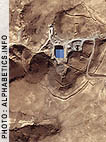
One of the Middle East’s biggest mysteries in recent years concerns Operation ORCHARD, the September 6, 2007, attack by Israeli fighter jets on a site deep in the Syro-Arabian Desert. Many observers, including former CIA Director, General Michael Hayden, have called for the secrecy surrounding the covert operation to be finally lifted. But it has been more-or-less confirmed that the attack targeted a plutonium production reactor, which was part of Syria’s secret nuclear weapons program. And officials in Tel Aviv have repeatedly hinted that Israel was behind the operation. The burning question, however, is how did Israel learn of the existence of Syria’s nuclear reactor at Al-Kibar, a secret and isolated site deep in the Syro-Arabian Desert? The authoritative account of the operation, which appeared in German newsmagazine Der Spiegel in 2009, suggested that the initial tip came from the US National Security Agency, which “detected a suspiciously high number of telephone calls between Syria and North Korea”. But it also alleged that the Mossad managed to acquire vital clues about the Al-Kibar building site by installing a stealth “Trojan horse” program on the laptop of a Syrian government official, while the latter was visiting Britain. Read more of this post

Hundreds of European mercenaries ‘fighting for Gaddafi’

Libya

Libya

By JOSEPH FITSANAKIS | intelNews.org |
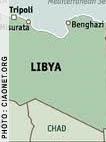
Hundreds of European mercenaries, including large numbers of European Union citizens, have voluntarily enrolled in the armed forces of the Libyan government, and are fighting under the command of Colonel Muammar al-Gaddafi. According to criminologist Michel Koutouzis, the Greek CEO of a French-registered consulting firm with connections to Libya, up to 500 European soldiers-of-fortune have been hired by the Libyan government to provide “special services”, particularly in heavy weaponry and attack helicopters. Koutouzis says that most of the European mercenaries, who sell their services for thousands of dollars a day, come from Eastern Europe, especially Poland, Belarus, Ukraine and Serbia, but there are also French, British and Greek nationals currently in Libya. He also claims that Gaddafi is supported by serving military personnel from Russia, Syria and Algeria. It is believed that the Gaddafi camp is also employing thousands of non-specialist mercenaries from various African nations, including Somalia, Mali, Niger, Chad, and the Central African Republic. Unconfirmed reports have surfaced in the American press that the Gaddafi forces are employing female snipers from Colombia. Read more of this post

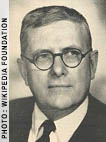
Australian Labour Party leader worked for Soviets, claims historian

H.V. Evatt

H.V. Evatt

By IAN ALLEN | intelNews.org |
One of Australia’s leading intelligence historians has said that Herbert V. Evatt, who led the Australian Labour Party in the 1950s, operated as a secret agent for the Soviet Union. Dr Desmond Ball, professor at the Australian National University’s Strategic and Defence Studies Centre, made the claim following last week’s release in London of previously classified documents relating to Australian intelligence. The documents, which came from the archives of MI5, Britain’s domestic intelligence agency, reveal that Australian Prime Minister Robert Menzies was convinced that Evatt was a Soviet agent. His fear appears to have culminated two days before the national election of November 22, 1958, when he privately expressed the fear that Evatt would destroy Australian counterintelligence documents on the Soviet Union if the Labour Party was elected to power. With this in mind, he ordered the Australian Security Intelligence Organization (ASIO) to share top-secret documents on the Soviet Union with London and Washington. Following Menzies’ directive, the ASIO provided Britain’s MI5 and MI6, as well as America’s CIA with two sets each of a number of intelligence reports acquired through KGB defector Vladimir Petrov. Read more of this post

News you may have missed #493 (MI6 edition)

  • MI6 scientist’s death questioned by close friend. A close friend of MI6 worker Gareth Williams, whose body was found in a locked bag in a London apartment, has questioned suggestions that his death was linked to his private sex life.
  • Who killed MI6 agent Lionel Crabb? A relative of MI6 agent Lionel Crabb wants to know who killed him. Crabb is thought to have disappeared in a 1956 botched CIA/MI6 attempt to sabotage a Soviet warship docked at Portsmouth harbor. In 2007, Eduard Koltsov, a retired Russian military diver, said he killed a man he thinks was Crabb, as he was “trying to place a mine” on the Soviet ship.
  • Analysis: Libya gives spies a chance to shine. British officers of the Secret Intelligence Service, better known as MI6, are actively operating in Libya. Among their tasks is encouraging senior Libyan officials to defect to the West.

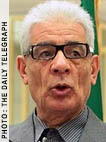
Suspicion mounts as US unlocks Moussa Koussa’s foreign assets

Moussa Koussa

Moussa Koussa

By JOSEPH FITSANAKIS | intelNews.org |
Eyebrows were raised in intelligence circles on Monday, after the United States lifted its freeze of foreign assets belonging to Libya’s former intelligence chief, who defected to London last week. Libya’s Minister of Foreign Affairs, Moussa Koussa, who headed the country’s intelligence agency from 1994 to 2009, managed to escape to the UK from Tunisia on a Swiss-registered private airplane. He is currently reported to be in an MI6 safe house in England, allegedly being interrogated about his inside knowledge of the regime of Muammar al-Gaddafi. But Koussa is also thought to be the mastermind behind the 1988 bombing of Pan Am flight 103 over Lockerbie, Scotland, which killed nearly 300 people. The 57-year-old defector is also believed to have facilitated Libya’s funding of the Provisional Irish Republican Army and to have authorized the assassination of several Libyan dissidents living in Britain. In light of that, the news that Washington lifted its sanctions on Koussa’s sizeable fortune abroad is worth noting. It is also interesting to note that Britain’s Foreign Secretary, William Hague, is reportedly pressuring European Union member-states to follow the US’ example in also unfreezing Koussa’s foreign assets. Read more of this post