News you may have missed #792 (US diplomatic attacks edition)

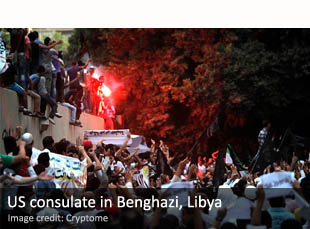
US consulate in Benghazi, LibyaBy IAN ALLEN | intelNews.org |
►►Attack on US diplomats ‘was intelligence failure’. James Corum, an American military historian and the author of several books on military history and counter-insurgency, argues that the mob attacks on US diplomatic facilities in Cairo, Benghazi and Sana’a marked “one of the worst intelligence failures in American history”. Either, he says, US intelligence agencies had no warnings of mass action against the embassies, or senior intelligence officers disregarded or downplayed the information received from field agents. Finally, he suggests that “the real explanation is probably the latter”.
►►Attack on consulate in Libya ‘may have been planned’. Senior US officials and Middle East analysts raised questions Wednesday about the motivation for the Benghazi attack, noting that it involved the use of a rocket-propelled grenade and followed an al-Qaeda call to avenge the death of a senior Libyan member of the terrorist network. Libyan officials and a witness said the attackers took advantage of a protest over the film to launch their assault. Libyan Deputy Interior Minister Wanis al-Sharif said the security force was outgunned by the attackers, who joined a demonstration of “hundreds” of people outside the consulate
►►What happened in Benghazi was a battle. “It was not a simple mob that attacked the US consulate in Benghazi on Tuesday, killing four Americans. Benghazi was the scene of a pitched battle, one in which unknown Libyan assailants besieged American diplomats with small-arms fire for over four hours, repelling several attempts by US personnel to regain control of it. Nor was what happened in Benghazi a simple story of Americans assaulted by the Libyans they helped to liberate from Muammar Gaddafi last year. Libyan security forces and a sympathetic local militia helped the Americans to suppress the attack and get the diplomats inside to safety”.

News you may have missed #791

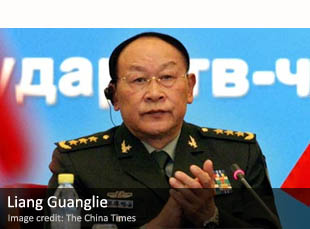
Liang GuanglieBy IAN ALLEN | intelNews.org |
►►India sees espionage behind Chinese cash payments to Indian pilots. According to Indian government sources, Chinese Defense Minister General Liang Guanglie gave two envelopes to the two Indian pilots, both wing commanders, who had flown him in a special Indian Air Force aircraft to New Delhi from Mumbai. After seeing off Liang, the pilots opened the sealed envelopes and found cash gifts inside. They immediately reported this to their superiors, who, in turn, informed the Indian Defense Ministry. India is now planning to lodge a protest with China over the incident.
►►NSA says foreign cyberattacks increasingly reckless. Debora Plunkett, of the secretive National Security Agency, whose responsibilities include protecting US government computer networks, has said that other nations are increasingly employing cyberattacks without “any sense of restraint”, citing “reckless” behaviors that neither the United States nor the Soviet Union would have dared at the height of Cold War tensions. She also predicted that Congress would pass long-stalled cybersecurity legislation within the next year. One wonders whether the Stuxnet incident is included in such “reckless” cyberattacks?
►►Taliban ‘using Facebook to lure Australian soldiers’. According to a review of social media by the Australian federal government, Australian soldiers are being warned by their commanders that enemies are creating fake Facebook profiles to spy on them. The report says that Taliban insurgents in Afghanistan are posing as “attractive women” on Facebook to befriend coalition soldiers and gather intelligence about operations. It adds that family and friends of soldiers are inadvertently jeopardizing missions by sharing confidential information online. This is not the first such warning in recent years.

News you may have missed #790

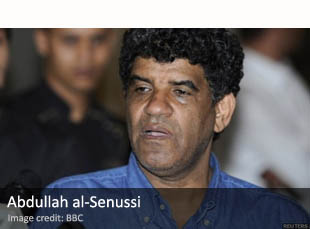
Abdullah al-SenussiBy IAN ALLEN | intelNews.org |
►►New report reopens CIA torture allegations. A report from Human Rights Watch, which was released last week, said that Libyan fighters opposed to Muammar Gaddafi’s regime were subjected to harsh interrogation techniques while in US custody overseas, during the administration of George W. Bush. The accusations, if substantiated, would suggest wider use of waterboarding than US officials have previously acknowledged. The report, which is based on documents and interviews in Libya after the fall of Gaddafi, includes a detailed description of what appears to be a previously unknown instance of waterboarding by the CIA in Afghanistan nine years ago.
►►Analysis: What does Gaddafi’s ex-spy chief know about Lockerbie? Abdullah al-Senussi became a hate-figure in his home country as head of an intelligence machinery responsible for the mistreatment of thousands of opponents of the regime of Muammar Gaddafi, his brother-in-law. He is nicknamed the “butcher” and known as Gaddafi’s “black box” because of the secrets he supposedly holds. The new Libyan regime had been negotiating for months with Mauritania where al-Senussi had fled following the fall of the Gaddafi regime last September. But now that al-Senussi has been flown back to Libya by private jet, he may at last be able to face questions by British police about Lockerbie.
►►Chinese hardware manufacturer denies spying allegations. The Chinese hardware-manufacturing firm Huawei has released a 24-page report, written by John Suffolk, a former British government chief information officer who has now turned Huawei’s global security officer, which states that protecting the network security of its worldwide customers is one of company’s “fundamental interests”. The report follows allegations in the United States, Australia, India, and elsewhere, that the company maintains close operational ties to China’s intelligence establishment.

Israeli PM had ‘sharp exchange’ with US Ambassador over Iran

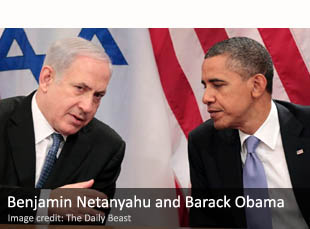
Benjamin Netanyahu and Barack ObamaBy JOSEPH FITSANAKIS | intelNews.org |
A United States Congressman, who chairs the US House of Representatives Intelligence Committee, says he witnessed a “sharp exchange” between the Israeli Prime Minister and the American Ambassador to Israel, over the Iranian nuclear program.  Earlier this week we reported that Representative Mike Rogers (R-MI), who visited Israel in an official capacity last week, said that he did not believe Israel would attack Iran before the US Presidential elections in November. But in a radio interview with the Detroit-based WJR station on Thursday, Rogers said he thought Israeli leaders were “at wits’ end” over what he described as indecisiveness by the Barack Obama administration in responding to the Iranian nuclear program. The Republican politician said that the meeting he attended at the Israeli Prime Minister’s office was supposed to be a “discussion on intelligence and technical issues”. But it quickly “spun out of control”, he said, when the Israeli leader allegedly criticized the US Ambassador to the country, Dan Shapiro, over the US government’s perceived unwillingness to go beyond imposing diplomatic sanctions on Iran. Rogers described the situation as “a very tense […], very sharp exchange” between the two men, which revealed “elevated concerns on behalf of the Israelis” about the unfolding Iranian nuclear stalemate. Responding to a question from the interviewer, Rogers added that he did not think he had ever witnessed “such a high-level confrontation” between a representative of the American government and a foreign official. Read more of this post

News you may have missed #789

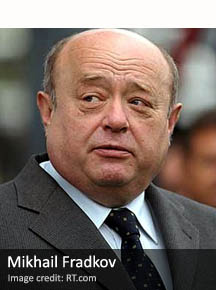
Mikhail FradkovBy IAN ALLEN | intelNews.org |
►►Putin adds spy chief to energy commission. Russian President Vladimir Putin has reinforced a presidential commission seen as Kremlin’s vehicle for vying for control over the country’s crucial oil and gas sector, by adding the country’s top police officer and senior spy to its ranks. They are Interior Minister Vladimir Kolokoltsev and Mikhail Fradkov, director of the Foreign Intelligence Service, formerly a department of the KGB. The commission is driven by Igor Sechin, a former KGB officer and close ally of President Putin.
►►US spy sat agency plans major expansion. The National Reconnaissance Office (NRO), America’s secretive spy satellite agency, operates a vast constellation of spy satellites in orbit. But these surveillance spacecraft have traditionally only been able to gaze down on a few small areas of the planet at a time, like flashlights probing the dark. And this, only with careful advance planning by human operators on the ground. Now the NRO wants to expand the current flashlight-like satellite deployment to a horizon-spanning, overhead spotlight that can illuminate vast swaths of the planet all at once. The agency also wants new spacecraft that can crunch the resulting data using sophisticated computer algorithms, freeing the satellites somewhat from their current reliance on human analysts.
►►GCHQ warns of ‘unprecedented’ cyberattack threat. The British government’s electronic eavesdropping and security agency, GCHQ, has warned the chief executives of Britain’s biggest companies about an allegedly “unprecedented threat” from cyber-attacks. “GCHQ now sees real and credible threats to cybersecurity of an unprecedented scale, diversity, and complexity”, said Ian Lobban, the agency’s director. The magnitude and tempo of the attacks pose a real threat to Britain’s economic security’, Lobban adds, but notes that about 80% of known attacks would be defeated by embedding basic information security practices.

Ex-CIA Director cautions Israel against attacking Iran

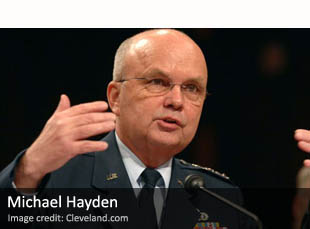
Michael HaydenBy JOSEPH FITSANAKIS | intelNews.org |
The former Director of the United States Central Intelligence Agency has warned that an Israeli attack on Iran would likely backlash and might actually push Tehran to build nuclear weapons earlier than currently projected. General Michael Hayden, the only person to lead both the CIA and the US National Security Agency, told Israeli newspaper Ha’aretz on Monday that Iran is not yet close to building a nuclear weapon and that Israel should carefully consider how to respond to its neighbor’s alleged nuclear weapons ambitions. During his CIA tenure, General Hayden supervised the 2007 US National Intelligence Estimate, produced cooperatively by all 16 agencies of the US intelligence community, which concluded that Iran had halted its nuclear weapons activities. In his interview on Monday, Hayden said that, in his view, the conclusion of the 2007 NIE “still holds”, as Tehran has not yet made the decision to weaponize its missile and fissile material. Hayden, who was recently appointed as national security adviser to Republican Presidential hopeful Mitt Romney, said that, by rushing to attack Iran now, Israeli military leaders would “actually push [Tehran] to do that which [an attack] is supposed to prevent: getting nuclear weapons”. The retired General added that any military attack on Iran would “pose a difficult challenge” in terms of its strategic outcome, since “there is no absolute certainty that all targets are known” inside Iran. Furthermore, he said, even if Israel decided to attack Iran militarily, it would have to go beyond mere air raids, and would soon discover that its resources were limited. Read more of this post

CIA Director reportedly in Turkey for secret talks

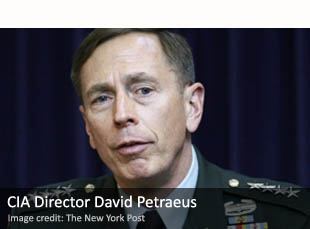
David PetraeusBy JOSEPH FITSANAKIS | intelNews.org |
Turkish and American authorities have refused comment on persistent reports that the Director of the Central Intelligence Agency is currently on a secret visit to Turkey. News of the alleged trip was first reported on Monday by Turkish tabloid daily Akşam. The newspaper said David Petraeus, who heads the United States’ foremost civilian intelligence agency, had arrived earlier that day in Istanbul’s Atatürk International Airport, on his private plane. According to the article, the CIA chief decided to embark on the unannounced trip in order to discuss “counterterrorism and the situation in Syria” with senior Turkish officials. Several hours later, French news agency Agence France Presse reported that, according to “a US official”, the CIA Director was indeed in Turkey, holding secret “meetings on regional issues”. However, the unnamed US source would not provide specific information about Petreaeus’ meeting arrangements while in Turkey, nor would (s)he divulge the names of the Turkish officials that were scheduled to meet with him. Another Turkish daily, Hürriyet, said the CIA Director would probably meet with his Turkish counterpart, MİT chief Hakan Fidan, as well as with Turkey’s Prime Minister Recep Tayyip Erdoğan . But repeated efforts by the paper to confirm this were rebuffed by representatives of the US embassy in Ankara, as well as Turkish officials. Read more of this post

News you may have missed #788

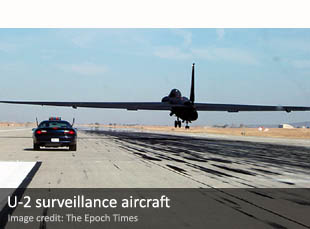
U-2 surveillance aircraftBy IAN ALLEN | intelNews.org |
►►US spy planes violated Israeli airspace in 1950s. American U-2 espionage planes repeatedly entered Israeli airspace in the 1950s for a series of secret spy missions, according to new information to be published by the Israel Air Force magazine next week, bringing to an end a decades-long mystery. At the time, Israel’s defense establishment was baffled by the entrance of high-flying crafts. For years, officials in IAF command disagreed on the identity of the mystery crafts, with some claiming that they were British Vickers-Valiants, and others saying they were American Vought F-8 Crusader planes, that had been stationed on a US aircraft carrier. According to documents to be published next week, it was the USSR that aided Israeli officials to expose the identity of the mystery planes, after a US U-2 espionage plane was shot down over Soviet soil.
►►US guard pleads guilty to espionage. A civilian guard at a new US consulate in China pleaded guilty on Thursday to attempting to sell Chinese security officials photographs and access to the compound so they could plant listening devices. According to a court proffer, Bryan Underwood had lost a significant amount of money in the stock market and hoped to make between $3 million and $5 million by supplying classified photos and information to China’s Ministry of State Security. Underwood, 32, appeared in federal court in Washington and pleaded guilty to one count of attempting to communicate national defense information to a foreign government.
►►CIA torture probe ends without any charges. The US Department of Justice has ended its investigation into the CIA’s interrogation program for terror detainees, without bringing charges. Attorney General Eric Holder said there was not enough evidence to “sustain a conviction beyond a reasonable doubt”. Jameel Jaffer, deputy legal director of the American Civil Liberties Union, said the investigation’s conclusions were a “nothing short of a scandal”. But CIA officials welcomed the decision. CIA Director David Petraeus thanked his staff for co-operating with the investigation. “As intelligence officers, our inclination is to look ahead to the challenges of the future rather than backwards at those of the past”, he said. No surprises here, surely.

News you may have missed #787

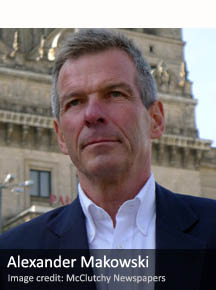
Alexander Makowski By IAN ALLEN | intelNews.org |

►►An interview with a senior Yemeni spy. Here’s something you don’t read every day: an interview with Ahmed Bin Mo’aili, 66 (pictured here), who worked as a spy for Yemen’s Political Security Organization (PSO) for more than 30 years. He says that, due to his “different duties in different countries”, which required him to travel in several Arab countries, he acquired “tens of wives” over the years. He is now upset with the PSO because the Organization has “separted him from his 31 children who live all around the Arab countries he has worked in and who are awaiting his return”.
►►Cyprus wants answers from UK over Syria spy claims. Dr. Erato Kozakou-Marcoullis, the Minister of Foreign Affairs of the Republic of Cyprus, has asked British authorities for “a full explanation” into media reports that UK military installations in Cyprus are providing intelligence to Syrian rebels. Earlier this month, The London Times claimed that two British military bases on Cyprus, located in Dhekelia and Akrotiri, were being used to collect signals intelligence on Syria. The data collected at the listening posts, operated by the General Communications Headquarters, Britain’s foremost signals intelligence agency, was passed on to the Free Syrian Army through Turkish intelligence operatives, said The Times. But the Cypriot Foreign Minister said that it was crucial that the bases were not being used for purposes not enshrined in the island’s Treaty of Establishment, which mandates the British Bases to be used for defensive purposes only.
►►CIA ‘turned down offer’ to kill bin Laden in 1999. In late 1999, two years before the 9/11 terrorist attacks, which killed nearly 3,000 people, a group of Afghan agents loyal to an anti-Taliban guerrilla leader proposed assassinating Osama bin Laden. In returne, they asked for the $5 million reward the Bill Clinton administration had offered for bin Laden’s capture. But the CIA rejected the plan, saying: “we do not have a license to kill”. This is according to the book Ferreting Out Bin Laden (not yet available in English), by Polish former spy Alexander Makowski (pictured), who claims he was the Afghans’ go-between on the plot. Makowski’s credentials are many: the son of a spy, he attended primary school in Great Britain, high school in the United States, and received a postgraduate law degree from Harvard. He graduated from the Polish military intelligence academy at Stare Kiejkuty before spending 20 years in Polish intelligence.

News you may have missed #786

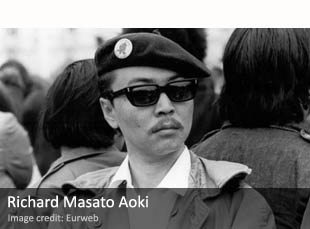
Richard Masato AokiBy IAN ALLEN | intelNews.org |
►►US Pentagon wants to share intel with Egypt. The US Department of Defense is offering Egypt a package of classified intelligence-sharing capabilities designed to help it identify military threats along its border with Israel. According to an unnamed senior US official, the Pentagon leadership is concerned about “rising militancy” along the Egyptian-Israeli border. The purported intelligence package includes satellite imagery, data collected through unmanned drones, as well as intercepts of cell phone and other communications among militants suspected of planning attacks. The Egyptian intelligence chief was summarily fired earlier this month, after more than a dozen Egyptian soldiers were killed near Israel’s border when gunmen attacked a post and tried to enter Israel.
►►Researcher disputes Aoki was FBI informant. Last week author Seth Rosenfeld alleged that prominent 1960s Black Panther Party member Richard Masato Aoki, who gave the Black Panthers some of their first firearms and weapons training, was an undercover FBI informer. But the claim, which is detailed in Rosenfeld’s new book, Subversives, is disputed by another researcher, Diane C. Fujino. A professor and chair of Asian American studies at UC Santa Barbara, and author of the recently published Samurai Among Panthers, Fujino argues that Rosenfeld has not met the burden of proof on Aoki, and that he “made definitive conclusions based on inconclusive evidence”.
►►Russian intelligence to monitor blogosphere. Russia’s Foreign Intelligence Service, the FSB, says it plans to fund a program that monitors the Internet’s “blogosphere”, with an aim to “shape public views through social networking”. Citing unnamed sources from inside the FSB, Russian newspaper Kommersant said that the project’s research stage will cost around $1 million. The article implies that the online surveillance and opinion-shaping program will target both Russian- and foreign-language online users. This is not the first time that the FSB has displayed interest in online social networking in recent years.

Cuban Vice President’s daughter defects to the United States

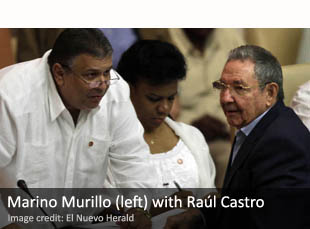
Marino Murillo (left) with Raúl CastroBy JOSEPH FITSANAKIS | intelNews.org |
The daughter of one of Cuba’s most senior government officials secretly defected to the United States earlier this month and is now living in Tampa, Florida, according to a Spanish-language newspaper. The paper, El Nuevo Herald, published in Florida, said Glenda Murillo Diaz, 24, daughter of Cuban Vice President Marino Murillo Jorge, defected on August 16, 2012. Diaz, a psychology student at the University of Havana, had apparently left Cuba earlier this month to attend an international psychology conference in Mexico. But instead of appearing at the conference, she crossed from Mexico into the US at Laredo, Texas. Her father, Marino Murillo, a prominent Cuban economist, is currently Vice President of Cuba’s State Council and longtime member of the Cuban Communist Party’s Political Bureau. In 2009, soon succeeding his brother Fidel to the post of Cuba’s President, Raúl Castro appointed Murillo Minister of Planning and Economy. Upon assuming this post, Murillo became the leading figure in the implementation of the administration’s ambitious economic reform, which is aimed at revitalizing the island’s finances. Since then, Murillo is often mentioned as one of a number of possible successors to Raúl Castro. He has made headlines recently, after voicing criticism of economic reforms taking place in China and Vietnam, and claiming that Cuba’s economic reforms aim at the establishment of a hybrid planned and market economy, but that “the planned economy will remain dominant”. Read more of this post

News you may have missed #785 (interview edition)

Stella RimingtonBy IAN ALLEN | intelNews.org |
►►Interview with first-ever NSA Compliance Director. John DeLong, the first-ever compliance director at the US National Security Agency, has given an interview to NextGov. In it, he says that “we’re nothing if we lose the confidence of the American people”. He is referring to frequent allegations, by whistleblowers and others, that the Agency is increasingly spying on Americans’ communications. As Compliance Director, DeLong is responsible for ensuring that the NSA abides by US law, which forbids it from intercepting electronic messages exchanged between US citizens or persons.
►►Ex-MI5 boss offers comment on WikiLeaks. Former MI5 Director-General Dame Stella Rimington has criticized “the indiscriminate pouring out into the public domain of streams of leaked documents by Julian Assange and his WikiLeaks organization”. But she also said that the US government should have taken better steps to prevent WikiLeaks from acquiring the information in the first place. Speaking at an international archiving conference in Brisbane, Australia, Dame Stella said that while the WikiLeaks saga could prompt the US government to come up with better databases, it would more likely encourage it to be even more secretive. This, she added, “must be absolutely the opposite effect of what WikiLeaks was seeking”.
►►Interview with NSA whistleblower. Filmmaker Laura Poitras interviews William Binney, a 32-year veteran of the US National Security Agency, who helped set up STELLAR WIND, the NSA’s top-secret domestic spying program, which was put in place after 9/11. The program was so controversial that it nearly caused top Justice Department officials to resign in protest in 2004. Binney, who resigned over STELLAR WIND in 2001, and began speaking out publicly in the last year, explains how the program he created for foreign intelligence gathering was turned inward on America.

Interview with NSA whistleblower

Situation Report: Is DARPA’s Phoenix Program Intelligence-Related?

DARPA's Phoenix ProgramBy TIMOTHY W. COLEMAN| intelNews.org |
The Defense Advanced Research Projects Agency (DARPA), the out-there research arm of the United States Department of Defense, is well known for it’s futuristic and bleeding-edge technology research projects. Often times, the Agency’s highflying efforts seem to protrude a motto of “failure is an option”. In fact, a 2003 article in The Los Angeles Times states that DARPA’s failure rates are between 85 and 90 percent. But this has not prevented the Agency from trying out new things, which sometimes help shape the future. It’s predecessor, Advanced Research Projects Agency, renamed DARPA in 1972, helped create what is today the Internet. Multiplexed Information and Computing Service (aka UNIX), Speech Interpretation and Recognition Interface (Siri, that female voice on your iPhone —yup, she’s a spinout from a DARPA Artificial Intelligence project called CALO), and Onion Routing (core technique for anonymous communications over computer networks, i.e. the base technology underlying Tor), were all funded, in part, by DARPA. Unsurprisingly, DARPA is at it again. The question remains, though, can the hype become a reality or will the new effort find a home in the vast majority of DARPAs forward-looking failed adventures? Read more of this post

Judge orders CIA to release files on drug kingpin Pablo Escobar

Pablo EscobarBy JOSEPH FITSANAKIS | intelNews.org |
In the late 1980s, it was nearly impossible to sit through a primetime news bulletin without coming across the name ‘Pablo Escobar’. Born in 1949 in the town of Rionegro, Colombia, Escobar rose to become the leader of the Medellín cartel, history’s most notorious narcotics smuggling ring. By 1986, the Medellín cartel controlled over 80 percent of the global cocaine market, shipping daily around 15 tons of the drug (worth an estimated street value of $500,000) to the United States. In 1989, Forbes magazine included Escobar on his list of the world’s richest persons, with an estimated net worth of $3 billion. By that time, the Medellín cartel had become powerful enough to directly threaten the very institutional integrity of the Colombian state. At the same time, Escobar carefully cultivated his ‘Robin Hood’ image by regularly building hospitals, schools, and churches in some of Colombia’s most impoverished regions. He was thus able to surround himself with a sea of grateful and devoted supporters, who directly depended on his generosity for their livelihood. They also shielded him from the reach of the Colombian and United States government forces, which repeatedly went after him without success. Eventually, the Colombian government, in association with the US Drug Enforcement Administration and the Central Intelligence Agency, managed to stop Escobar by creating a rival organization called Los PEPES —a Spanish-language acronym that stands for ‘People Persecuted by Pablo Escobar’. Los PEPES, which consisted of members of rival drug smuggling cartels, as well as trained mercenaries belonging to Colombian rightwing militias, went after Escobar’s closest associates with indescribable ruthlessness. They hunted down and eventually tortured and killed several of his relatives, advisors and bodyguards. Ultimately, in 1993, they helped the Colombian National Police corner Escobar and shoot him dead at a Medellín barrio. The celebrations in Washington and Bogotá didn’t last long; as soon as Los PEPES disbanded, many of its leading members regrouped to found the United Self-Defense Forces of Colombia (AUC), a rightwing paramilitary group that has since killed thousands of civilians in Colombia’s bitter civil war. The AUC, which funds its operations through kidnappings and drug trafficking, is today a designated terrorist group by most Western governments, including the United States and the European Union. Read more of this post

News you may have missed #783

Uri SaguyBy IAN ALLEN | intelNews.org |
►►Israeli ex-intel chief says warns of ‘hysteria’ over Iran. Major General Uri Saguy (a.k.a. Uri Sagi), who was head of the IDF’s Operations Directorate during the 1982 Lebanon war, and Military Intelligence chief from 1991 to 1995, has warned of an “orchestrated and purposely timed hysteria that puts the country into a state of anxiety, artificial or not”, regarding the Iranian nuclear issue. Saguy, who resigned from the IDF in 1995 due to a conflict between him and the Chief of General Staff, added that “it would be a mistake if Israel uses force, certainly now, in order to thwart the Iranian nuclear potential”. The essence of Saguy’s message, notes Ha’aretz‘s Amir Oren, is that Israel’s citizens cannot trust Defense Minister Ehud Barak or Prime Minister Benjamin Netanyahu.
►►Australian spy chief warns of economic espionage. The director-general of the Australian Security Intelligence Organisation, David Irvine, has warned that the online revolution has left Australian companies increasingly vulnerable to cyber attacks and commercial espionage. Speaking to a business audience in Canberra, Irvine said that most online attacks in the business world go undetected, despite growing awareness of the threat. Asked how much commercial cyber crime went undetected, he said: “I would be very surprised if we who are active in this area are picking up the greater proportion of it, in fact, quite the reverse”.
►►Top US military official objects to attack on Iran. As Israeli officials are telling local reporters that they’re really, really ready to attack Iran’s nuclear facilities, and they mean it this time, the top US military officer is saying what a terrible idea that would be. “I may not know about all of [Israel’s] capabilities”, said General Martin Dempsey, the chairman of the Joint Chiefs of Staff. “But I think that it’s a fair characterization to say that they could delay but not destroy Iran’s nuclear capabilities”. Left unsaid: in a few years, the US and Israel would be back to the same standoff with Iran —except this time it might do so amidst a proxy terrorist war to avenge the Iranians.