News you may have missed #428 (history edition)

  • US government study of Soviet-era spy services released. A historiographic blog has released a study by the US Federal Office of Criminal Investigations on Practices and Methods of East-Bloc Intelligence Services, which examines the spy craft and operations of Soviet-aligned secret services active in Germany.
  • Simon Wiesenthal worked for Mossad, claims book. A new book claims that famous Israeli Nazi hunter Simon Wiesenthal worked as an informant for Israel’s Mossad spy agency. Written by Tom Segev, the book, entitled Wiesenthal: The Life and Legends, claims that Wiesenthal gave the Mossad valuable information during Operation DAMOCLES.
  • UK spies did ‘very bad things’ in Cold War, says Le Carre. But even though they assassinated individuals and engaged in “a lot of direct action”, “decent humanitarian instincts came into play” in Western intelligence agencies’ operations, claims the former MI5 and MI6 spy and novelist. Raw Story‘s Daniel Tencer offers an interesting response.


Emirates police says US, Israel, use BlackBerry to spy

Dahi Tamim

Dahi Tamim

By IAN ALLEN | intelNews.org |
The alleged use of encrypted BlackBerry communications by adversary intelligence services operating in the United Arab Emirates (UAE) is prompting local authorities to consider a nationwide ban on the popular phone. This was revealed late last week by Dubai Police chief, Lt. General Dahi Khalfan bin Tamim, who repeated a warning by UAE authorities that BlackBerry services in the country will be curtailed on October 11, unless the government is given access to BlackBerry’s encryption code by the manufacturer. Several other countries in the Middle East and beyond have made similar moves, including Lebanon, Syria, Saudi Arabia, India and Indonesia, all of which have cited security reasons for the ban. But Lt. General Tamim’s comments provide the first known connection between a threat to ban BlackBerry and its alleged use by rival intelligence agencies. Read more of this post

CIA spies consider Mossad ‘most unfriendly’ agency

Mossad seal

Mossad seal

By JOSEPH FITSANAKIS | intelNews.org |
This blog frequently considers the issue of US-Israeli intelligence relations, said to be undergoing a turbulent period in recent times. Indeed, the change of guard at the White House, the rearrangement of Washington’s policy priorities following the economic crash, as well as the dramatic rightwing shift in Israeli politics have rapidly altered the political playing field between the two nations. To this extent, it is worth noting that Meir Dagan, director of Israeli intelligence agency Mossad, told a Knesset committee last July that “Israel is gradually turning from an asset to the United States to a burden”. How is this evident in intelligence relations between Washington and Tel Aviv? The Washington Post’s security correspondent Jeff Stein may be able to help fill in the picture. He wrote a few days ago that an internal poll, which was recently administered to CIA operatives, found that Israeli intelligence agencies are considered the world’s least friendly and most uncooperative with their US counterparts. Read more of this post

News you may have missed #425 (US edition)

  • US Pentagon considering pre-emptive cyber-strikes? This is what The Washington Post is reporting, noting that military officials are “still wrestling with how to pursue the strategy legally”. If anyone in the DoD discovers a legal method of launching pre-emptive aggression, we’d sure like to know.
  • More changes in US FISA court. After a recent change of leadership, the US Foreign Intelligence Surveillance Act (FISA) court is considering new compliance rules for handling surveillance requests by US counterspy agencies. The court authorizes requests by agencies for surveillance of foreign suspects operating inside the US.
  • Why do US officials want to deport Chinese defector? Washington wants to deport Li Fengzhi, a Chinese ex-intelligence agent who defected to the US in 2004, back to China, where he could be executed for treason. There are rumors that Li may have “oversold” himself to the FBI and the CIA.

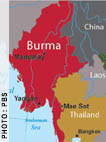
Analysis: How the CIA bedded down in Burma

Burma

Burma

By JOSEPH FITSANAKIS | intelNews.org |
It is a story that was largely ignored when it surfaced last year: since 1994, US Drug Enforcement Agency (DEA) officer Richard A. Horn had been claiming that CIA agents illegally wiretapped his conversations while he was stationed in Burma. It appears that, at the time, the US diplomatic representation in Burma and the CIA station in Rangoon were at loggerheads with the DEA. The latter, represented by special agent Horn, had a policy of publicly commending the Burmese government for its significant efforts to end the vastly lucrative illegal drug trade in the country. But the diplomatic leadership at the US embassy in Rangoon, supported by the CIA, felt that their inroads with the Burmese military junta, which has controlled the country since 1990, were being obstructed by the DEA. Read more of this post

News you may have missed #422 (suspicious deaths edition)

  • Self-described CIA assassin dies in gun accident. Roland W. Haas, a senior intelligence officer in the US Army Reserve who claimed in a 2007 memoir that he was a CIA assassin, died over the weekend when he accidentally shot himself, police in the US state of Georgia said.
  • Russian military intel chief in mystery death. General Yuri Ivanov, 52, deputy head of Russia’s powerful military intelligence agency, the GRU, died mysteriously in a swimming accident “several days ago”, Russian media has reported. No further details have been released on the circumstances or the location of Ivanov’s death.
  • David Kelly inquest calls ‘outrageous’, says friend. Professor Christian Seelos, was a UN weapons inspector in Iraq alongside British biological weapons expert Dr. David Kelly, who was found dead four days after appearing before a UK Parliament committee investigating claims about Iraq’s purported ‘weapons of mass destruction’. Seelos now says that calls for a fresh examination into Dr. Kelly’s death are “totally politically motivated”.

News you may have missed #421 (‘not news’ edition)

  • Not news: Senior Afghan officials on CIA payroll. The New York Times‘ Mark Mazzetti and Dexter Filkins are right to air this story, but the real news here is the media industry’s collective gasp of fake shock and horror. Really?
  • Not news: Pentagon breached by foreign hacker. US Deputy Defense Secretary William Lynn has disclosed that an undisclosed foreign spy agency carried out a serious cyberattack on US military networks with the help of a tainted flash drive that was inserted into a laptop in the Middle East. Ah, the old memory-stick gift trick
  • Not news: Sex-obsessed coverage of Russian espionage continues. Russian and US media keep avoiding serious analysis of post-Cold-War Russian intelligence operations by focusing on Anna Chapman. This is no surprise, since pursuing the real story behind Russian deep-cover espionage in the United States takes hard work.>response to Le Carre’s comments.

Police see ‘professional job’ in British spy’s death

Gareth Williams

Gareth Williams

By JOSEPH FITSANAKIS | intelNews.org |
As authorities investigate the recent death of British spy Dr. Gareth Williams, the country’s notorious tabloid media industry is having a field day disorienting interested observers. It is thus easy to miss important news breakthroughs in the cacophony of sensationalized headlines about Williams, whose body was discovered a week ago, stuffed in a sports duffle bag in the bath of his London apartment. One such breakthrough was yesterday’s report by Britain’s widely respected Channel 4, which said that law enforcement investigators described Williams’ death as “a neat job”, a term used to refer to professional killings. The Channel 4 report was preceded by strong official denials by police that Williams’ murder was sex-related, as had been previously reported. Some investigators now believe that Williams was killed by a foreign agent, who then deliberately “planted a trail of clues” pointing to a homosexual link to the death. Read more of this post

News you may have missed #418

  • US military pays for intel widely available online. Experts say that the vast majority of the ‘intelligence’ needed by the United States is freely available on the Internet. But that has not stopped a company called Military Periscope from selling its subscription services to the US government, on things such as updates on foreign militaries, peacekeeping missions, weapons databases and terrorist organizations “via monthly CD-ROM delivery”.
  • Son of Russian spies could return to US for school. Tim Foley, the elder son of Donald Howard Heathfield and Tracey Lee Ann Foley, the two deported US residents who were living a double life as Russian spies, may be trying to return to study in the United States, but his younger brother plans to stay in Moscow.
  • German spy chief notes cyberattack surge. Cyberattacks against German corporate and government computers have been on the rise since 2005, according to Heinz Fromm, Director of Germany’s Federal Office for the Protection of the Constitution. He said the attacks “come mainly from Asia, often from China”, and that often “state agencies are involved”.

‘Lord of War’ weapons smuggler enjoys Russian protection

Viktor Bout

Viktor Bout

By JOSEPH FITSANAKIS | intelNews.org |
The case of notorious arms smuggler Viktor Bout is well known. Born in Dushanbe, Soviet Tajikistan, in 1967, Bout served in the GRU (Soviet military intelligence) until the collapse of the USSR, at which point he began supplying weapons to shady groups, ranging from Congolese rebels and Angolan paramilitaries to the Taliban and al-Qaeda. In March of 2008, Bout, known as ‘Lord of War’, was finally arrested by the Royal Thai Police, after a tip by US Drug Enforcement Administration (DEA) officers. The latter had managed to lure Bout to Thailand by pretending to be Colombian FARC arms procurers. Recently, Washington scored a second victory by convincing Thai authorities to extradite Bout to the United States on terrorism charges. Presumably, Bout will be tried as an arms smuggler acting on his own accord. But is this right? Read more of this post

News you may have missed #416 (Iran edition)

  • Israel not to attack Iran in 2011, say US sources. The Obama administration, citing evidence of continued troubles inside Iran’s nuclear program, has persuaded Israel that it would take roughly a year for Iran to complete a “dash” for a nuclear weapon. US officials say the assessment has dimmed the prospect that Israel would pre-emptively strike Iran within the next year.
  • Iran launches first spy drone. Iran has launched a domestically made long-range high-altitude drone, called Karrar, according to state media. Hamed Saeedi, managing director of Farnas Aerospace Company, which is in charge of the project, said plans are under way to produce additional drones and unmanned choppers.
  • Iranian tried for espionage collapses in Armenian court. Behnam Bagheri, an Iranian citizen being tried in Armenia on charges of spying for Azerbaijan, collapsed in court in Yerevan on August 19 while delivering his defense speech, according to reports. In a similar case in October of 2009, Armenia charged one of its own officers with spying for Azerbaijan.

Bookmark and Share

News you may have missed #415

  • GCHQ tech arm adopts new personnel evaluation tests. The Communications Electronics Security Group is the information assurance arm of the General Communications Headquarters –Britain’s equivalent of the National Security Agency. CESG has now adopted a new testing method of verifying the competency of its IT security professionals, because apparently there are “not enough security professionals in the public and private sectors to go around”.
  • Swapped Russian insists he was no CIA spy. Of the four jailed Russians the US received from Moscow in exchange for the 11 Russian illegals in July, only one is talking. But Igor Sutyagin, a nuclear proliferation expert, who was convicted of links with a CIA front-company, insists he was no CIA spy. However, if that is so, why was he on Washington’s swap list in the first place?
  • Militants target Yemen spy officials. Two officers in Yemen’s Political Security Organization, Colonel Ali Abdul Kareem al-Ban, and Juman Safian, have been shot dead in recent days. Al-Qaeda militants, who assumed responsibility for the attacks, warned they will be stepping up operations inside neighboring Saudi Arabia.

Bookmark and Share

News you may have missed #414

Bookmark and Share

Russian alleged CIA spy gives interview

Igor Sutyagin

Igor Sutyagin

By IAN ALLEN | intelNews.org |
Of the four Russians alleged spies that the US and the UK received from Moscow in exchange for the 11 Russian illegals in July, only one is talking to the media. The Russian government convicted Igor Sutyagin, a nuclear proliferation expert, of having links with Alternative Futures, a British consulting company alleged by Moscow to be a CIA front. This past weekend, Sutyagin, who now lives in an undisclosed London location, gave a detailed interview to Natalya Golitsyna, a London-based correspondent for US government-owned Radio Liberty’s. As in his previous statements to the press, the Russian scientist rejected he was ever a spy, claiming that “[t]he first thing in my mind […] was doing and thinking for my country”. He also rejected accusations that he provided Alternative Futures with classified information on Russian nuclear weapons policy: “there was no transfer of information”, said Sutyagin, noting that the information he shared with the British-registered company “was just an illustration of the processes that are going on in Russia tasks”. Read more of this post

News you may have missed #413

  • Complex politics behind Ugandan spy chief’s removal. The recent sacking of Dr Amos Mukumbi from heading Uganda‘s Internal Security Organisation (ISO) was the handiwork of politics, intrigue and suspicion within the country’s intelligence community and between politicians. It was also related to ongoing turf wars between the ISO and its sister agency, the External Security Organisation.
  • Experts still evaluating WikiLeaks impact. Some analysts believe that the US intelligence establishment will call for an increased clampdown on secrecy in the wake of the WikiLeaks Afghan War Diary files release. But the data dump has also spurred those arguing that the US government needs to reduce the amount of information it classifies as secret, much of which may be unnecessary.
  • Radio program investigates the Mossad. BBC Radio has aired a relatively well-produced primer on Israeli intelligence agency Mossad. The BBC’s Security Correspondent Gordon Corera interviews former Mossad Director Efraim Halevy and former Mossad operative Rafi Eitan, among others.

Bookmark and Share