News you may have missed #383 (Russian spy ring edition IV)

  • Analysis: Why Russia and the US still spy. The sensationalist media coverage of the FBI’s recent bust of a Russian spy ring in the US has failed to examine this development in light of the post-Cold War relations between Russia and the United States. The fact is that espionage will continue, even as the United States and Russia work out a new post-Cold War modus vivendi, says Peter Earnest, a 35-year CIA veteran.
  • Analysis: The lure of the SVR. For most Russians, getting a job in the country’s vast bureaucracy is a happy career step. Even more glamorous is the FSB, Russia’s ubiquitous domestic intelligence service. But the most prestigious agency of all is still the SVR, Russia’s equivalent of MI6, which is responsible for all foreign intelligence operations abroad, including the long-term, deep cover espionage ring just busted by the FBI. The Cold War may be over, but the SVR still offers a globe-trotting career for a small, elite group of ambitious graduates with the right connections.
  • Analysis: Was the Russian spy operation worth the trouble? The FBI has alleged no espionage or loss of classified materials as a result of the operations of the 11-member Russian spy ring. Indeed, much of what it maintains the Russians were seeking could be gleaned from a Google search. So the wider ramifications of the spy arrests may turn out to be primarily political rather than cloak-and-dagger.


Bookmark and Share

Analysis: What we know about the Russian spy ring case

SVR seal

SVR seal

By JOSEPH FITSANAKIS | intelNews.org |
If you are frustrated with the increasingly idiotic and sex-obsessed media coverage of the Russian spy ring recently busted by the FBI, you are not alone. Less than a week since news of the arrests in the US of ten alleged deep-cover agents of Russia’s SVR intelligence agency emerged, sensationalist media hacks have left no stone unturned. Thankfully, Stratfor Global Intelligence has produced an excellent early summary of this developing story, complete with a useful diagram of the known members of the SVR spy ring. The summary correctly points out some of the critical issues in the espionage case, including the fact that the 11 suspects appeared to be primarily run out of the SVR residence at the Russian mission to the United Nations in New York, and not out of the Russian Embassy in Washington DC. Read more of this post

News you may have missed #382 (Russian spy ring edition III)

Bookmark and Share

News you may have missed #381 (Russian spy ring edition II)

  • Accused Russian spies lived perfect Boston lives. It is almost certain that the members of the Russian spy ring, arrested by the FBI last weekend, trained for years in Moscow’s most elite SVR intelligence school to pass as Canadians or Americans. Their real-life identities and backgrounds may never be learned.
  • Russian spies blended well, sought contacts. The 11 people arrested and accused of being members of a Russian spy ring operating under deep cover in America’s suburbs were active in the East Coast networking circuit.
  • Kremlin adopts calmer tone on US spy affair. Moscow on Wednesday softened its initially furious reaction to this week’s spy scandal in the US, when it said that the arrest of 11 people accused of working for Russian intelligence would not have a negative impact on bilateral relations. Earlier in the week, Vladimir Putin had accused US authorities of having “gone on a rampage”.

Bookmark and Share

Wanted Russian spy ring member skips bail in Cyprus

Achilleos Hotel

Achilleos Hotel

By JOSEPH FITSANAKIS | intelNews.org |
Police in the Mediterranean island nation of Cyprus have issued an arrest warrant for a member of an alleged Russian spy ring in the United States, who had been released on bail following his capture on Tuesday. The FBI says that Christopher R. Metsos, who holds Canadian citizenship, was the financial go-between in the 11-member Russian spy ring, which was busted in a series of coordinated raids across several US states on Saturday. On June 25, Interpol issued an international arrest warrant for Metsos, who escaped arrest in the US because he was in Cyprus, where he had arrived on June 17. He was arrested at the island’s Larnaca International Airport on Tuesday, while trying to board a flight for Budapest, Hungary. Remarkably, however, Metsos was soon released on bail, awaiting an extradition request from Washington. Predictably, on Wednesday, he failed to report to Larnaca police, as stipulated in his bail release court order. Read more of this post

News you may have missed #380 (Russian spy ring edition I)

Bookmark and Share

FBI busts alleged Russian spy ring, 11 arrested [updated]

Anna Chapman

Anna Chapman

By JOSEPH FITSANAKIS | intelNews.org |
Ten members of an alleged Russian spy ring operating in America’s East Coast were arrested in a series of coordinated raids on Sunday. US Department of Justice insiders said that the arrests, which took place in Arlington, New Jersey, New York, and Boston, marked the culmination of an FBI counterintelligence operation initiated during the second administration of President Bill Clinton. It appears that the alleged Russian agents were non-official-cover (NOC) operatives, otherwise known as ‘illegals’, a term used to identify deep-cover intelligence operatives not associated with the diplomatic representation of the Russian Federation in the United States. Eight of the arrestees were married couples and all were using fake identities. Almost all are fluent in several languages; they include “Vicky Pelaez”, who worked for a New York Spanish-language newspaper, another woman identified as “Anna Chapman” (see photo), and “Mikhail Semenko”, who is said to be fluent in English, Spanish, Russian, and even Mandarin. An eleventh alleged member of the spy ring, named as “Christopher R. Metsos”, remains at large and is wanted by the FBI was captured by Greek-Cypriot authorities at Larnaca airport earlier today, while trying to board a flight for Hungary. Read more of this post

European Union targeted by Colombian intelligence, documents show

DAS seal

DAS seal

By JOSEPH FITSANAKIS | intelNews.org |
Several members of the European Parliament have voiced concern over the recent disclosure in Colombia of an alleged operation to undermine the European Union’s parliamentary and human rights bodies. The operation is reportedly mentioned in internal documents belonging to Colombia’s Administrative Department of Security (DAS), which were recently confiscated by the office of the Colombian Attorney General. The confiscated documents describe a clandestine program codenamed Operation EUROPE, which aims to wage a “legal war” intended to discredit and “neutralize the influence of the European judicial system, the European Parliament’s human rights subcommittee, and the office of the United Nations High Commissioner for Human Rights”. Read more of this post

News you may have missed #378


Bookmark and Share


CIA slowly opens up about botched 1952 mission in China

CIA HQ

CIA HQ

By JOSEPH FITSANAKIS | intelNews.org |
The CIA has produced an hour-long documentary about a failed 1952 covert mission inside China, which resulted in the death of two American pilots and the capture of two CIA paramilitary officers, who spent a total of 40 years in Chinese prisons. The documentary, which premiered last week on a restricted basis at the Agency’s Langley, Virginia, headquarters, is based on internal CIA accounts of the operation, some of which were released in 2006. The premiere was reportedly attended by John Downey and Richard Fecteau, two CIA paramilitary officers on their first mission, who were captured by Chinese People’s Liberation Army (PLA) units inside Chinese territory, after the CIA-operated C-47 Skytrain airplane that was carrying them deep inside Chinese airspace was shot down in a Chinese ambush. Read more of this post

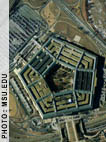
Has US Pentagon revived Bush-era domestic spy program?

US Pentagon

US Pentagon

By JOSEPH FITSANAKIS | intelNews.org |
A little-known US Department of Defense counterintelligence is suspected to have resuscitated a notorious Bush-era domestic surveillance program, which was banned by Congress for being too obtrusive. In 2002, the then Deputy Secretary of Defense, Paul Wolfowitz authorized the Threat and Local Observation Notice (TALON), a US Air Force intelligence collection program aimed to gather data on potential threats to American armed forces personnel in the US and abroad. But the initiative was allegedly shelved by the Bush administration, after it emerged that TALON intelligence collection focused largely on political policing against lawful antiwar groups. But now new reports suggest that an obscure unit under the Pentagon’s Defense Intelligence Agency (DIA), called the Defense Counterintelligence and Human Intelligence Center (DCHC), is creating a new system of consolidated databases whose focus closely resembles that of TALON. Read more of this post

News you may have missed #376

  • Dubai plans more cameras after Mossad operation. Dubai will beef up its surveillance capability by installing more cameras around the city-state after the Israeli hit squad that murdered a senior Hamas operative was caught on a hotel video. As intelNews has reported before, Mossad has really helped the Gulf surveillance industry.
  • Iran hangs ‘spy’ with alleged US connections. Iran hanged Sunni militant leader Abdolmalek Rigi last weekend for allegedly having connections with foreign secret services, including “intelligence officers of the US and Israel working under the cover of NATO and certain Arab countries” as well as “anti-revolutionary expatriate groups such as the MEK”, the People’s Mujahedeen Organization of Iran.
  • Analysis: FBI use of Muslim informers now part of daily life. Gathering information on people in Muslim communities in the United States has become part of daily life. After 9/11, all data is considered useful. But, Stephan Salisbury of The Philadelphia Inquirer asks, is that how America should be?

Bookmark and Share

US intel wants to automate analysis of online videos

IARPA logo

IARPA logo

By IAN ALLEN | intelNews.org |
A new project funded by the US intelligence community’s research unit aims to automate the collection and analysis of videos from YouTube and other popular online platforms, with the intent of unearthing “valuable intelligence”. The program is called Automated Low-Level Analysis and Description of Diverse Intelligence Video (ALADDIN). It is directed by the Intelligence Advanced Research Projects Activity (IARPA), whose mission is to work under the Director of National Intelligence to create hi-tech applications for America’s intelligence agencies. Few people are aware of the existence of IARPA, which was quietly established in 2007, is based at the University of Maryland, and is staffed mostly by CIA personnel. The research body’s latest project apparently aims to equip the US intelligence community with the ability to scan “for the occurrence of specific events of interest” embedded in online video files, and then “rapidly and automatically produce a textual English-language recounting [and] describing the particular scene, actors, objects and activities involved”. Read more of this post

News you may have missed #375 (analysis edition)

  • Analysis: Israel worried by new Turkey spy chief’s defense of Iran. Israel’s defense establishment, which maintains ties with Turkey’s national intelligence organization (MİT), is concerned over the recent appointment of Hakan Fidan as head of that organization, and the implications of that appointment vis-a-vis Turkish relations with Israel and Iran.
  • Analysis: How the CIA bolstered radical Islam during Cold War. The CIA’s battle with communism during the Cold War allowed radical Islamists to gain a foothold in Europe, according to a new book by Pulitzer Prize-winning author Ian Johnson, entitled A Mosque in Munich: Nazis, the CIA and the Rise of the Muslim Brotherhood in the West.

Bookmark and Share

US agencies still lack basic language skills, says new report

GAO report

GAO report

By IAN ALLEN | intelNews.org |
A major US government audit into the performance of national security departments and agencies has once again criticized the substantial absence of skilled foreign-language speakers. According to the Government Accountability Office’s latest assessment (.pdf) of the US Department of Defense and the Department of State, not only has the availability of foreign language fluency not improved, but has actually deteriorated during the past few years. The situation is especially desperate in the State Department, says the report, where the percentage of “generalists and specialists in language-designated positions” who fail to meet essential language criteria increased from 29 percent in 2005 to 31 percent last year. Read more of this post