News you may have missed #691

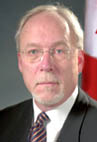
Thomas DrakeBy IAN ALLEN| intelNews.org |
►►NSA whistleblower says Obama worse than Bush. Thomas Drake, the whistleblower whom the administration of US President Barack Obama tried and failed to prosecute for leaking information about waste, fraud and abuse at the National Security Agency, now works at an Apple store in Maryland. In an interview with Salon, Drake says the Obama administration is “expanding the secrecy regime far beyond what Bush ever intended”.
►►Australian spies reportedly buying computer bugs. The Australian government is buying computer security weaknesses found by hackers before they are sold on the black market, as part of its defense strategy, according to an Australian security consultant who wishes to remain anonymous. He says while the government won’t admit it, buying vulnerabilities is an obvious part of “gathering intelligence”.
►►Refugees in Finland face spying threats. Foreign governments and groups are carrying out more spying on refugees and dissidents living in Finland, according to SUPO, the country’s security intelligence service. SUPO issued a report last week contending that while the Scandinavian country isn’t seeing an increased threat of terrorist acts on its soil, it still faces several terror-related challenges. One of them is “regular” surveillance activity by foreign intelligence services operating within Finland, whose aim is spy on their home countries’ dissidents and develop links with other refugees and expatriates.

News you may have missed #687

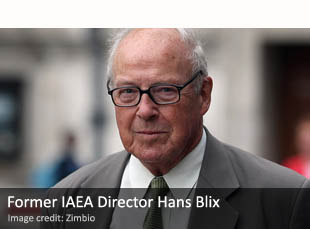
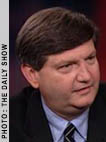
Hans BlixBy IAN ALLEN | intelNews.org |
►►Analysis: Is Obama abusing the US Espionage Act? Prosecutors may still attempt to indict WikiLeaks founder Julian Assange under the 1917 Espionage Act, though their case will likely depend on exactly how he received his information. But, WikiLeaks aside, the Obama administration has made increasing use of the act to clamp down on whistleblowers.
►►Ex-head admits IAEA does work with spies (shock, horror). The International Atomic Energy Agency, which acts as the nuclear watchdog of the United Nations has been closely cooperating with the world’s spy agencies, including on Iran and Syria, for years, according to its former director. Hans Blix told RT that the IAEA’s cooperation with the world’s intelligences started following the Iraqi crisis of the 1990s. “Of course, intelligence can always try to fool everybody”, he said. “Half of the information may be true, half of it may be disinformation, and therefore they have to examine it critically”.
►►Afghanistan arrests diplomat on spying charges. Afghanistan’s State Intelligence Agency (KHAD) on Monday said that a senior foreign ministry diplomat and three other government officials had been arrested over charges of spying for Iran and Pakistan. The men were detained “on charges of spying for neighboring regions” and “the arrests were made with concrete evidence”, KHAD’s spokesman, Lutfullah Mashal, said. An unnamed source in the same agency also claimed that the deputy head of KHAD’s Asia desk and two government employees had been arrested in a similar incident in the eastern Afghan province Nangarhar a month before.

News you may have missed #686

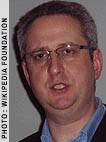
Folkert Arie van KoutrikBy IAN ALLEN| intelNews.org |
►►WikiLeaks to publish 5 million StratFor emails. In its latest high-profile data dump, WikiLeaks is to reveal five million internal and external emails from StratFor today. In a press release late Sunday, Wikileaks said the emails “show StratFor’s web of informers, pay-off structure, payment-laundering techniques and psychological methods”, and reveal “how StratFor has recruited a global network of informants who are paid via Swiss banks accounts and pre-paid credit cards. Stratfor has a mix of covert and overt informants, which includes government employees, embassy staff and journalists around the world”.
►►Analysis: Blurred line between espionage and truth under Obama. “There is plenty of authorized leaking going on, but this particular boat leaks from the top. Leaks from the decks below, especially ones that might embarrass the administration, have been dealt with very differently […]. And it’s worth pointing out that the administration’s emphasis on secrecy comes and goes depending on the news. Reporters were immediately and endlessly briefed on the “secret” operation that successfully found and killed Osama bin Laden. And the drone program in Pakistan and Afghanistan comes to light in a very organized and systematic way every time there is a successful mission”.
►►Nazis had spy in MI5 but failed to use him. Dutchman Folkert Arie van Koutrik was the first German agent to ever infiltrate MI5 when he was employed by them in 1940, just a month before Anthony Blunt, who was later exposed as a Soviet spy. Koutrik had already worked for Abwehr, the German secret service, before the war as a double agent with MI6 in Europe and exposed some of the UK’s top agents. But, incredibly, after he moved to the UK and joined MI5 all contact appears to have broken off.

News you may have missed #672

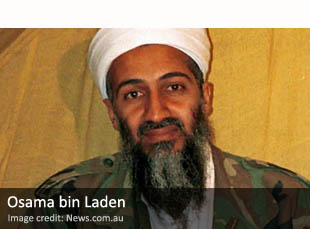
Osama bin LadenBy IAN ALLEN | intelNews.org |
►►CIA claims bin Laden death photos would trigger violence. The Central Intelligence Agency says releasing images of a dead Osama bin Laden “could trigger violence, attacks, or acts of revenge against the United States”. Disclosing such images, including one showing the bullet wound to bin Laden’s head, the government said, “plausibly and logically pose a particularly grave threat of inflaming anti-American sentiment and resulting in retaliatory harm”. The agency made that argument Wednesday in a Freedom of Information Act lawsuit brought by Judicial Watch, which claims the CIA should release the photos taken by US forces. The American public, Judicial Watch said, has a “right to these historical artifacts”.
►►Kuwait accused of tapping phones of prominent citizens. According to the report published in Kuwaiti media, the country’s State Security Department purchased an integrated intelligence system from a former Soviet country last year, and placed it in a restricted zone inside the headquarters’ building. But last July, everything in the isolated room, including staff members hired specifically to operate the devices, vanished without an explanation, said sources. An investigation is currently ongoing to unearth the mystery behind the devices’ disappearance, and also examine information which hint that the devices could have been used by a certain unnamed individual to spy on prominent Kuwaitis.
►►Did US FDA spy on whistleblowers? The US Food and Drug Administration electronically spied on whistleblowers who alerted the Obama administration and Congress of alleged misconduct in the agency, according to a complaint filed in a US federal court. Named as defendants in the lawsuit are the FDA and several of its employees, the Surgeon General, the Health and Human Services Secretary, among others.

Ex-CIA officer John Kiriakou’s indictment made simple

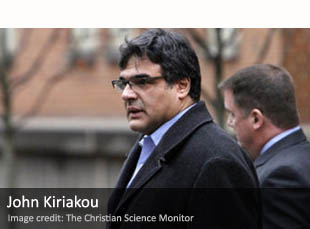
John KiriakouBy JOSEPH FITSANAKIS | intelNews.org |
On Monday, the United States Department of Justice charged former Central Intelligence Agency officer John Kiriakou with leaking classified government information to reporters and deceiving a CIA review board. An FBI press release accused Kiriakou of repeatedly providing secrets to journalists between 2007 and 2009, and said the former CIA officer would be tried under the Espionage and the Intelligence Identities Protection Acts. The latter forbids the disclosure of the identities of undercover intelligence personnel, which is precisely what Kiriakou is accused of having done. An American of Greek descent, Kiriakou joined the CIA in 1990 and did tours in Greece, Pakistan, and elsewhere, before retiring in 2004. While in Pakistan he commanded the CIA team that helped capture senior al-Qaeda logistician Abu Zubaydah. In 2010 he published a memoir titled The Reluctant Spy.  Two years earlier, Kiriakou had made international headlines by becoming the first US intelligence official to publicly acknowledge that a terrorism suspect —in this case Zubaydah— had indeed been waterboarded while in CIA custody. Speaking on ABC News, the former CIA officer recognized that waterboarding was torture, but said it was “necessary” in the “war on terrorism”. In subsequent interviews, however, he questioned whether any actionable intelligence had been extracted from waterboarding, and opined that torturing terrorism detainees “caused more damage to [America’s] national prestige than was worth it”. Kiriakou’s skepticism, at a time when the incoming President, Barack Obama, publicly condemned waterboarding as torture, worried the CIA. Eventually, the Obama Administration backed down on its public proclamations about torture, and ruled out criminal prosecutions of CIA personnel. But he Agency didn’t forget Kiriakou’s role. Read more of this post

News you may have missed #613 (court case edition)

Katia Zatuliveter

Katia Zatuliveter

►►Russian accused spy admits affair with British MP. Katia Zatuliveter, 26, who is accused by British counterintelligence service MI5 of being a spy for Russia, has admitted having a four-year affair with Liberal Democrat MP Mike Hancock, 66, while she worked as his parliamentary researcher. She also admitted that before meeting Mr Hancock she had affairs with a NATO official and a Dutch diplomat. However, she has denied working as a spy or targeting Mr Hancock in a honey trap operation.
►►Trial for ex-CIA officer accused of leaking secrets delayed. The trial for Jeffrey Sterling, a former CIA officer charged with leaking classified defense information has been delayed. Opening arguments were expected to begin this week, but the trial was postponed on Monday after prosecutors said they intended to appeal the judge’s decision to strike two witnesses.
►►UK justice secreary plans closed-door terrorism trials. Intelligence gathered by British intelligence agencies MI5 and MI6, even if obtained by torture, will never be disclosed in court proceedings, under proposals announced by British justice secretary Kenneth Clarke. The proposals have been welcomed by the security and intelligence agencies, but criticized by civil rights groups for promoting “secret justice”.

News you may have missed #604 (CIA edition)

Raymond Allen Davis

Raymond Davis

►►Aid agency leaves Pakistan following CIA vaccination scheme. Fears that a fake CIA vaccination scheme, created to hunt Osama bin Laden, has compromised the operations of aid agencies in Pakistan have intensified, after it emerged that Save the Children, a major NGO, was forced to evacuate its staff following warnings about their security.
►►CIA contractor arrested in car park brawl. A CIA contractor Raymond Davis, who was freed by Pakistani authorities after the families of two men he killed in a shootout agreed to accept more than $2.34 million in blood money, has been arrested after a brawl over a car parking space, according to police in the US state of Colorado.
►►Judge approves secret evidence for CIA leak trial. A federal judge has ruled that prosecutors pursuing a leak case against former CIA officer Jeffrey Sterling may use a controversial procedure known as the “silent witness rule” to present evidence to the jury that will not be seen by the public. Sterling is accused of leaking CIA secrets to New York Times journalist James Risen.

News you may have missed #556

David Irvine

David Irvine

►►Australian computer networks spied ‘massively’. Cyberespionage is being used against Australia on a “massive scale” and some foreign spies are using Australian government networks to penetrate the cyberdefenses of allies such as the United States. This according to the Director of the Australian Security Intelligence Organisation (ASIO) David Irvine. Speaking at a business forum, Mr. Irvine said that “it seems the more rocks we turn over in cyberspace, the more [cyberespionage] we find”.
►►US to give Iraq wiretapping system. The US will give the government of Iraq a wiretapping system that will allow it to monitor and store voice calls, data transmissions and text messages from up to 5,000 devices simultaneously. The system is to be installed with the acquiescence of the three current cellular communications providers in Iraq, according to the US Air Force. A similar system was set up by a US contractor three years ago in Afghanistan.
►►Judge says NSA whistleblower faced ‘tyrannical’ US government. This blog has kept an eye on the case of Thoma Drake, a former US National Security Agency employee  who was taken to court for leaking secrets about the agency to a journalist. But the judge in his case, Richard D. Bennett, refused Read more of this post

News you may have missed #546

Thomas Drake

Thomas Drake

By IAN ALLEN | intelNews.org |

►►Whistleblower says NSA mismanagement continues. Former US National Security Agency employee Thomas Drake was recently sentenced to a year’s probation for leaking secrets about the agency to a journalist. The presiding judge did not sentence him to prison, recognizing that his genuine intention was to expose mismanagement. Soon after his sentencing, Drake told The Washington Times that mismanagement continues at the NSA, which he compared to “the Enron of the intelligence world”. He also told the paper that NSA’s accounts were “unauditable”, like those of most of the other agencies operating under the Pentagon. ►►Taliban claim phones hacked by NATO. The Afghan Taliban have accused NATO and the CIA of hacking pro-Taliban websites, as well as personal email accounts and cell phones belonging to Taliban leaders, in order to send out a false message saying that their leader, Mullah Mohammad Omar, had died. Taliban spokesman Zabihullah Mujahid told the Reuters news agency that the hacking was “the work of American intelligence” and that the Taliban would “take revenge on the telephone network providers”. ►►Rumsfeld memo says ‘US can’t keep a secret’. “The United States Government is incapable of keeping a secret”. This was opined in a November 2, 2005 memo authored by Donald Rumsfeld. The memo by the then-Defense Secretary continues: Read more of this post

News you may have missed #540

Jim Judd

Jim Judd

By IAN ALLEN | intelNews.org |
►► Bulgaria bars ex-spies from holding diplomatic posts. Bulgaria’s conservative-majority parliament has voted to bar individuals who once worked for the country’s communist-era secret service from holding top diplomatic jobs. The aim of the legislation is what Eastern European countries call ‘lustration’, namely the process of cleansing of their security and intelligence agencies from Soviet-era operatives. The practical problem with that, of course, is that, in doing so, Eastern European intelligence services do away with some of their best-trained operatives. Moreover, there is nothing to suggest that Bulgaria’s post-communist spy agencies are significantly more law-abiding than their communist-era predecessors. Regular IntelNews readers might remember our coverage of Operation GALERIA as a case in point. ►► Ex-spymaster says Canada is too concerned about torture. The Canadian Security Intelligence Service’s (CSIS) struggle to isolate itself from complicity in torture by US and British spy agencies has reached the “point where we were probably alienating foreign partners” by not sharing intelligence. This is the opinion of Jim Judd, former Director of CSIS. He also argued that “strident anti-torture interpretations” would affect “everything and anything CSIS did, with respect to foreign intelligence agencies”. Judd, a career spy who retired in 2009, is considered something of a hawk, and probably rightly so. ►► NSA whistleblower requests reduced sentence (update: No jail time for Drake, judge releases him saying he has been through “four years of hell”). Thomas Drake was a senior official with the US National Security Agency. Read more of this post

News you may have missed #536 (US edition)

James Risen

James Risen

By IAN ALLEN | intelNews.org |

►►US federal agencies sitting on decade-old FOIA requests. In the United States, as Freedom of Information Act (FOIA) requests are growing, a new study has found that eight government agencies are sitting on requests filed over ten years ago. According to the Knight Open Government Survey, conducted by the National Security Archive at George Washington University, the single oldest request is now 20 years old. FOIA requires agencies to process and respond to a request within 20 business days. ►►US journalist seeks to avoid testifying at CIA agent’s trial. A sizeable percentage of FOIA requests are filed by journalists, who are also on the receiving ends of most intelligence-related ‘leaks’ in the United States. One of those journalists, James Risen, of The New York Times, has been subpoenaed by the Obama administration to testify at the trial of Jeffrey Sterling. Sterling is a former CIA employee, who has been arrested under the Espionage Act for allegedly revealing details about Operation MERLIN to Risen. MERLIN was a botched US effort to provide Iran with a flawed design for building a nuclear weapon, in order to delay the alleged Iranian nuclear weapons program. Times lawyers argue that the First Amendment should shield Risen from having to testify at Sterling’s trial. ►►US intel research agency works on 3-D holographs. Also in the United States, IARPA, the US intelligence community’s technical research wing, has announced that it is working on a system that lets intelligence analysts collaborate with each other using “interactive 3-D holographic displays”. Through this system, IARPA hopes that intelligence personnel could take simultaneous virtual strolls through real-life target locations, help plan raids, etc.

News you may have missed #515

  • US spies tracked suspected terrorists in Sweden. US intelligence agents have staked out suspected terrorists in Sweden without the authorization of the government there, Svenska Daglbadet newspaper has reported. Last November, Norway, Sweden and Denmark launched official investigations into reports that US embassies there operated illegal intelligence-gathering networks.
  • Aussie spy agency reported on WikiLeaks. Australian Prime Minister Julia Gillard’s department has revealed that WikiLeaks and its founder, Julian Assange, were the subject of Australian intelligence reporting last year, as the government anticipated the whistleblower website would spill “highly sensitive and politically embarrassing” secrets.
  • Former Taiwanese general accused of spying. Taiwanese government prosecutors are seeking a life sentence for Major General Lo Hsien-che, the most senior Taiwanese official to be arrested on espionage charges in the country since the early 1960s.

Leaked US cable reveals concern about China spying in Chile

WikiLeaks

WikiLeaks

By JOSEPH FITSANAKIS | intelNews.org |
A leaked US government document reveals strong concerns expressed by the US embassy in Santiago about Chinese intelligence operations in Chile. The document, classified “secret”, and dated August 29, 2005, was released by whistleblower website WikiLeaks. It contains a report sent by the embassy to the US Department of State, concerning Chinese intelligence collection activities in the South American nation. The report points out that the Chinese embassy in the Chilean capital is one of the largest in Latin America, with 22 employees, who are “all good Spanish speakers”. It also notes that Chinese news agency Xinhua maintains three full-time correspondents in Chile, who are “assumed [to be] involved in some kind of collection activity”. But the leaked document focuses mostly on alleged Chinese intelligence collection activities aimed at the Chilean military, which is heavily subsisted by the United States. It suggests that bilateral ties between the Chinese and Chilean military were significantly strengthened in 2004, when, during an official visit to China, the then Chief of the Chilean Army, General Juan Emilio Cheyre, adopted a Chinese proposal to establish a Mandarin-language training program for selected officers of the Chilean military, which became operational shortly after. Read more of this post

News you may have missed #476

Embassy cables show US spied on UK Foreign Office

Ivan Lewis

Ivan Lewis

By IAN ALLEN | intelNews.org |
The latest release of US embassy cables from whistleblower website WikiLeaks shows that the US Department of State ordered its diplomats to actively report on the personal lives of British Foreign Office officials. On several instances, American diplomats in London appear to have reported on the personal life of Ivan Lewis, a Labour Party politician who served as Minister of State for Foreign and Commonwealth Affairs during the closing days of Gordon Brown’s government. It seems that the reports on Lewis were compiled at the request of the State Department in Washington, which issued calls for specific background information on Lewis’ personal life. In response to the request, a memorandum was sent from the US embassy in London on August 12, 2009, suggesting that Lewis was “possibly prone to depression” and that he was described by one of his colleagues as “a bully”. The cable also indicated that Lewis had apologized “in 2007 to a female in his office who accused him of sexual harassment”, and suggested that the incident had been purposely leaked to the British media by Downing Street a few months later, after Lewis publicly joined the internal Labour Party revolt against Brown. Read more of this post