News you may have missed #575

IARPA logo

IARPA logo

►►Inquest into death of MI6 spy to go ahead. The inquest into the bizarre death of MI6 and GCHQ officer Gareth Williams will go ahead before Christmas without a jury, according to London-based newspaper The Express. The paper says that “12 spy chiefs will attend [the inquest] to explain the background to the case”.
►►Colombia’s ex-president denies role in spy scandal. Alvaro Uribe has denied, during a 3½-hour appearance before a Colombian congressional committee, that he ordered the country’s domestic intelligence agency to spy on judges, journalists and political foes. More than 20 agents of the DAS intelligence agency have been imprisoned for alleged roles in the spying. Two more have pleaded guilty in exchange for reduced sentences.
►►US spy research firm eyes stock market. IARPA, the US intelligence community’s research arm, plans to introduce a new program to develop tools to help analysts “quickly and accurately assess petabytes of complex anonymized financial data”. According to a conference presentation, the program would help spies “analyze massive amounts of data to spot indicators of market behavior, find relationships between seemingly unrelated transactions across hundreds of global markets, and provide insight into specific events and general financial trends”.

News you may have missed #563 [updated]

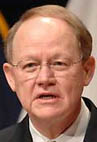
Mike McConnell

Mike McConnell

►►Colombia spy official imprisoned for illegal wiretapping. Gustavo Sierra Prieto, the former analysis chief of Colombia’s soon-to-be-dismantled DAS intelligence agency, has been sentenced to eight years and four months in jail for his role in the illegal wiretapping of government opponents, judges and journalists. But the main culprit in the wiretapping scandal, former DAS Director Maria Pilar Hurtado, is still hiding in Panama.
►►Cold War documents detail CIA interest of Canada. The CIA has declassified some of its Cold-War-era reports on Canada. The documents show that the Agency’s interest in America’s northern neighbor was mostly related to the its satellite R&D, as well as its economic sector, with a particular focus on Canada’s energy and minerals sector. There is also discussion in some documents of how to best utilize Canada’s energy resources in a possible war with the Soviet Union.
►►Ex-intel official says US must engage in cyberspying. Is it just me, or is there a calculated echo chamber developing by former senior US spy officials? Read more of this post

News you may have missed #556

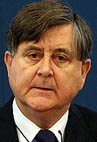
David Irvine

David Irvine

►►Australian computer networks spied ‘massively’. Cyberespionage is being used against Australia on a “massive scale” and some foreign spies are using Australian government networks to penetrate the cyberdefenses of allies such as the United States. This according to the Director of the Australian Security Intelligence Organisation (ASIO) David Irvine. Speaking at a business forum, Mr. Irvine said that “it seems the more rocks we turn over in cyberspace, the more [cyberespionage] we find”.
►►US to give Iraq wiretapping system. The US will give the government of Iraq a wiretapping system that will allow it to monitor and store voice calls, data transmissions and text messages from up to 5,000 devices simultaneously. The system is to be installed with the acquiescence of the three current cellular communications providers in Iraq, according to the US Air Force. A similar system was set up by a US contractor three years ago in Afghanistan.
►►Judge says NSA whistleblower faced ‘tyrannical’ US government. This blog has kept an eye on the case of Thoma Drake, a former US National Security Agency employee  who was taken to court for leaking secrets about the agency to a journalist. But the judge in his case, Richard D. Bennett, refused Read more of this post

News you may have missed #554

Bat Khurts

Bat Khurts

►►UK and US tried to delay Pakistan nuclear weapons program. We have written before about attempts by the CIA to delay or stop Pakistan’s nuclear program. Now newly declassified documents show that the United States and Great Britain undertook a coordinated secret diplomatic campaign between 1978 and 1981 to prevent Pakistan’s attempted covert purchasing of “gray area” technology for its nuclear weapons program.
►►FBI monitoring new phone technologies. According to an internal FBI document, obtained by the Federation of American Scientists through a FOIA request, the FBI continuously monitors the surveillance challenges posed by new mobile phone technologies. The document highlights the Bureau’s concerns that that 4G will require agencies to “deal with significantly higher data rates than in current wireless network intercepts”.
►►Mongolian ex-spy chief to be extradited to Germany. Britain has decided to extradite Bat Khurts, former director of the General Intelligence Agency of Mongolia, to Germany. Read more of this post

Nixon White House may have bugged Pentagon leadership

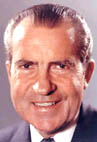
Richard Nixon

Richard Nixon

By JOSEPH FITSANAKIS | intelNews.org |
Everyone familiar with American political history knows about the ‘White House Plumbers’, a covert special investigations unit established during the Presidency of Richard Nixon, and tasked with spying on his political opponents. The unit’s bungled attempt to burgle the Watergate offices of the Democratic National Committee, in 1972, eventually led to Nixon’s resignation. But the Watergate burglary was but one of many operations conducted by the ‘Plumbers’, who were one of several ‘dirty tricks’ units managed by the Nixon White House. Now, nearly 40 years after the Watergate scandal erupted, veteran intelligence correspondent Jeff Stein provides new information that suggests the Nixon White House may have bugged the Pentagon telephones of senior American military officials. Stein managed to track down Dave Mann, a former member of the Pentagon’s Counterintelligence Force, who in 1971 stumbled upon a classified report claiming that listening bug signals had been detected emanating from offices in the Joint Chiefs of Staff. The signals had been picked up by a technical surveillance countermeasures (TSCM) team during a routine sweep of the Pentagon, in search of unauthorized interception devices. Mann run some tests to verify the TCM team’s report, and discovered that the bug signals originated from the personal office telephone line of General William Westmoreland, who was then the US Army’s Chief of Staff. He also discovered that the telephone of his assistant had been compromised, as well as the telephone lines belonging to the US Army’s assistant secretary, its logistics director, and at least one general. Mann’s personal conclusion was that the phone lines were most likely bugged with the cooperation of the Chesapeake and Potomac Telephone Company, which was at that the time considered an operational wing of the FBI, under Director J. Edgar Hoover. Read more of this post

News you may have missed #531 (US edition)

  • US spy agencies looking into cloud computing. In-Q-Tel, the investment arm of the US intelligence community, recently sunk money into a cloud-based storage company called Cleversafe. The CIA has emerged as one of the US government’s strongest advocates of cloud computing, but some US intel insiders are not so hot on the idea.
  • Obama administration drops most CIA torture probes. So, this is how one of the darkest chapters in US counterterrorism ends: with practically every instance of suspected CIA torture dodging criminal scrutiny. Wired’s Danger Room blog calls it “one of the greatest gifts the Justice Department could have given the CIA as David Petraeus takes over the agency”.
  • US report shows increase in authorized wiretaps. US federal and state applications for orders authorizing or approving the interception of wire, oral or electronic communications increased 34 percent in 2010, compared to the number reported in 2009.

News you may have missed #370

  • Ukrainians ‘not spying any more’ on Russian FSB. Ukrainian counterintelligence services have stopped monitoring Russian Federal Security Service (FSB) officials stationed in Ukraine, according to a leading Ukrainian weekly. Ukrainian-Russian relations have dramatically improved since February, when Ukraine’s pro-Moscow leader Viktor Yanukovych was elected President.
  • US House votes to allow auditing of spy agencies. Despite several veto threats from the White House, the US House of Representatives has adopted an amendment to defense authorization bill HR 5136, which would give the Government Accountability Office the power to audit intelligence agencies.
  • Leading Turkish daily wiretapped. Turkish former deputy police chief Emin Aslan, who was arrested in 2009 in a drug trafficking investigation, says he was told in 2008 that the phone lines at Turkey’s leading daily Milliyet were wiretapped. The wiretapping appears to be connected to the notorious Ergenekon affair.

Bookmark and Share

News you may have missed #340

  • West Bank urged to drop Israeli cell phone companies. The Palestinian Authority (PA) is urging Palestinians to stop using the Israeli cellular companies Pelephone, Orange, Cellcom and Mirs. The official reasons are economic (Israeli companies don’t pay taxes to the PA), but the real reasons are probably related to communications security.
  • US police wiretaps up 26 percent in one year. The number of wiretaps authorized by US state and federal judges in criminal investigations jumped 26 percent from 2008 to 2009, according to a report released Friday by the Administrative Office of the US Courts.
  • Taliban group executes high-profile ex-ISI spy. Khalid Khawaja, one of two Pakistani former Inter-Services Intelligence directorate officers captured by a Taliban splinter group, named Asian Tigers, has been found dead. The other ex-ISI official, Sultan Amir Tarar, a.k.a. Colonel Imam, who was Taliban leader Mullah Mohammad Omar’s former handler, remains in captivity.

Bookmark and Share

Political wiretap scandal erupts in India

Outlook magazine

Outlook magazine

By IAN ALEN | intelNews.org |
A major scandal has erupted in India, with the revelation last weekend that government intelligence services have monitored the telecommunications of senior political figures since at least 2006. Indian newsmagazine Outlook, which is published nationwide, reported on Sunday that the left leaning government of the United Progressive Alliance and the Indian National Congress ordered intelligence officers to tap the telephone communications of several politicians. The list allegedly included Bihar state chief minister Nitish Kumar, Communist Party of India (Marxist) general secretary Prakash Karat, and minister for agriculture Sharad Pawar. According to Outlook, the government also used powerful communications interception hardware to “listen in on the conversations of opposition leaders during the July 2008 no-confidence motion on the Indo-US nuclear deal”. Read more of this post

News you may have missed #338

  • US intel on Iran suffering from information overload? The US National Intelligence Estimate was due last fall but has been delayed at least twice amid efforts to “incorporate information from [Iranian] sources who are still being vetted”. Some say that significant new material has come from Iranian informants, who are motivated by antipathy toward the Iranian government and its suppression of the opposition.
  • Canada’s ex-intel boss slams new anti-terrorism measures. Reid Morden, the former director of the Canadian Security Intelligence Service, has urged the country’s Conservative government to re-think its plans to re-introduce controversial anti-terrorism measures initially adopted in the wake of 9/11.
  • Wiretapping scandals continue in Colombia. Caracol TV reports that Colombian security agency DAS has asked opposition Senator Piedad Cordoba to hand over evidence of her claims that President Alvaro Uribe ordered DAS to spy on her.

Bookmark and Share

News you may have missed #332

Bookmark and Share

Analysis: Landrieu-Gate is Scary, but it’s No Watergate

Stan Dai

Stan Dai

By J. FITSANAKIS and I. ALLEN | intelNews.org |
The arrests by US Marshals of four self-described conservative activists, who were caught trying to tamper with the telephone lines of Democratic Senator Mary Landrieu’ New Orleans office, have caused outcry in liberal and silence in conservative blogs. Most political allies of the four young men have been scrambling to denounce them, and the few who haven’t, have tried to play off the case as an ill-conceived political prank that got out of hand. Considering that America’s political culture still reels from the effects of Watergate (1972-1974), and the far more serious COINTELPRO (1956-1971), it would be criminal neglect on behalf of the FBI to treat the Landrieu incident as a “prank”. At the same time, however, Landrieu-gate is no Watergate. Neither the target nor the operational tactics and institutional affiliations of the four men involved in the case resemble anything remotely akin to either Watergate or COINTELPRO. Keep reading →

Bookmark and Share

US to stop funding scandal-prone Colombian spy agency

By IAN ALLEN| intelNews.org |
The US Congress has voted to stop subsidizing Colombia’s soon-to-be dismantled Administrative Department of Security (DAS) intelligence agency. The Colombian government recently decided to disband DAS, after it was found to have illegally wiretapped the phones of several public figures, including the chief of the Colombian National Police, the minister of defense, as well as those of former Presidents, Supreme Court judges, prominent journalists, union leaders and human rights campaigners. The activities of the scandal-prone agency had not, until now, affected US-Colombian relations, nor had they dampened US-Colombian intelligence cooperation. Read more of this post

News you may have missed #0181

Bookmark and Share

News you may have missed #0137

  • Colombian paramilitaries active in Honduras. United Nations human rights officials have voiced concern at reports that right-wing paramilitaries from the United Self-Defense Forces of Colombia are active in Honduras following the military coup. Last September it was revealed that the United Self-Defense Forces of Colombia also participated in the planning of the failed 2002 coup attempt in Venezuela.
  • Lawsuit probes US government spying on GTMO attorneys. In Wilner v. National Security Agency, the Washington DC-based Center for Constitutional Rights argued on Friday that the US government must disclose whether it has records related to wiretapping of Guantánamo attorney conversations without a warrant.
  • France arrests CERN worker with alleged al-Qaeda links. France has arrested a researcher at the European Organization for Nuclear Research (CERN) for suspected links with the al-Qaeda Organization in the Islamic Maghreb (al-Qaeda’s North African wing). CERN, Europe’s particle physics lab, is known for a particle collider that aims to recreate conditions of the Big Bang.

Bookmark and Share