News you may have missed #770

Horn of Africa mapBy TIMOTHY W. COLEMAN | intelNews.org |
►►Kaspersky Lab is ‘thwarting US cyber spies’. According to an article in Wired magazine, Eugene Kaspersky, the CEO of Russia-based Kaspersky Labs has been working to support Russian allies in the Kremlin and the FSB. Kasperksy’s firm first discovered the cyber attack weapon known as Stuxnet. As the profile piece notes, “Kaspersky’s rise is particularly notable —and to some, downright troubling— given his KGB-sponsored training, his tenure as a Soviet intelligence officer, his alliance with Vladimir Putin’s regime, and his deep and ongoing relationship with Russia’s Federal Security Service, or FSB”.
►►Al-Shabaab executes alleged CIA and MI6 assets. Somalia’s largest and most deadly armed Islamist group, al-Shabaab, announced that it had captured and executed at least three informants who were allegedly passing intelligence to the CIA and to MI6. The Associated Press stated that Al-Shabaab’s official Twitter feed stated that the individuals, who were summarily interrogated and then executed by firing squad, “were part of a wide network of spies deployed by the British and American intelligence agencies”.
►►Australian intelligence briefed on Canadian spy. The espionage case against accused Canadian spy, former Sub-Lieutenant Jeffrey Paul Delisle, continues to garner intrigue. As was previously reported on this blog, Delisle, a former navy intelligence officer is accused of spying for Russia. But a report in The National Post states that representatives of Canada’s intelligence service briefed members of Australia’s intelligence services on the Delisle’s case and that information exchanges appear ongoing. The particulars of Australia’s involvement in the case are explained here.

CIA sees Israel as ‘genuine counterintelligence threat’: sources

Mossad sealBy JOSEPH FITSANAKIS | intelNews.org |
The Near East Division of the Central Intelligence Agency, America’s primary intelligence organization, views Israel as the most serious threat to its secrets, according to an exposé published yesterday by the Associated Press. Citing interviews with at least five current and former US intelligence officials, the news agency said the CIA views the Israeli spy community as “a genuine counterintelligence threat” to US interests. The intelligence officials, who spoke to the Associated Press on condition of anonymity, said the CIA believes US national secrets are less safe in the hands of Israel than in those of other governments in the region, such as Turkey, Jordan, or Lebanon. The Associated Press exposé will not surprise regular readers of intelNews, as this blog has regularly covered various aspects of the complex US-Israeli intelligence relationship. Indeed, seasoned readers of this blog may recall that a 2010 survey among officers in the CIA’s National Clandestine Service showed that they considered Israeli intelligence agencies to be the world’s least friendly and most uncooperative with their US counterparts. The survey also showed that officers in the NCS (the CIA division that includes actual operatives on the ground), also considered Israeli spy services as the world’s third most aggressive in their operations on American soil. This new report by the Associated Press seems to confirm the NCS survey results, while adding a partial explanation as to why the intelligence services of one of America’s closest geopolitical allies would be considered a threat by the CIA. It is widely thought that Israel’s intelligence agencies can often match —and sometimes surpass— their American counterparts in terms of their analytical and operational capabilities. These skills, coupled with Israel’s unique access to the inner sanctums of the American national security establishment, place the Jewish state in an unparalleled position to acquire and compromise US government secrets. Read more of this post

News you may have missed #769 (analysis edition)

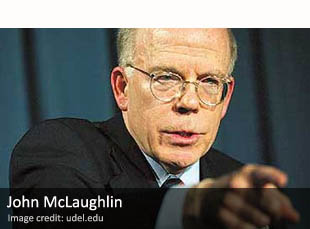
John McLaughlinBy IAN ALLEN | intelNews.org |
►►Is S. Korea’s spy agency losing its capabilities? The National Intelligence Service, South Korea’s primary external intelligence agency, is presumed to spend around US $1 billion a year, most of which it uses to spy on its northern neighbor. But when asked about the identity of the young woman who frequently accompanies new North Korean leader Kim Jong Un in his public appearances, the state intelligence agency offers no clear answer. Although it was seven months ago, at the time of Kim Jong-il’s funeral, that the woman was first spotted, the agency still does not know who she is. In the past 20 years, NIS has undergone a process of transformation to rid it of political functions. But the lingering question is: have the changes compromised the overall capabilities of the giant organization?
►►How 10 years of war has changed US spies. John McLaughlin, who was a CIA officer for 32 years and served as Deputy Director and Acting Director from 2000-2004, says he is often asked how American intelligence has changed in the 11 years since 9/11. His answer is that the changes are profound and have been transformative. Perhaps the most important thing to realize about American intelligence officers in 2012, he says, is that this is the first generation since Vietnam to have been “socialized” –that is hired, trained, and initiated– in wartime. And to a greater degree than even the Vietnam generation, their experience approximates that of their World War II forbears in the Office of Strategic Services (OSS) –the organization to which most American intelligence officers trace their professional roots.
►►Assessing the Social Media Battlefield in Syria. While the numerous insurgent factions and the Syrian security forces engage each other in combat in towns and cities to secure tangible battlefield gains, the warring parties are also waging a contentious information war in cyberspace, specifically within the virtual arena of online social media. The various strands of the opposition in Syria —political and violent— have taken to social media since the earliest stages of the uprising to advance their agendas. Analogous to their role in facilitating communication and information exchange during the wave of revolts that have been sweeping the Arab world since 2011, new media platforms such as the array of social media websites and related technologies that are available to the public at virtually little or no cost have become crucial to shaping how the crisis in Syria is portrayed and perceived.

Situation Report: Samsung accuses LG of corporate espionage

Samsung smartphones on display in KoreaBy TIMOTHY W. COLEMAN | intelNews.org |
Most technology companies spar with rivals over patent portfolio infringement, pricing arrangements, bundling of products and services with partners, and other trade practices. More recently, technology companies have been waging a war for talent and human capital. But in Korea, a dispute between Samsung and LG Electronics has been taken to a new level with Samsung publicly accusing LG of conducting corporate espionage. According to VenterBeat, Samsung has leveled corporate espionage charges against an employee at LG regarding particularly sensitive display technology that is used in smartphones and other mobile devices. This technology is of great value to Samsung, as its displays are used in nearly 98 percent of mobile phones around the globe. The critical display technology, active-matrix organic light-emitting diode, or MOLED, technology, is an extremely thin-film, which is a lynchpin technology for televisions and mobile devices. This technology replaced previously existing display technologies because it required significantly less power and therefore less battery drain and it also increased response rates to mere milliseconds. Such technology was perfectly positioned to help spur on the proliferation of the mobile and smartphone boom. Read more of this post

Canadian spy compromised Australian, British intelligence

Jeffrey Paul DelisleBy JOSEPH FITSANAKIS | intelNews.org |
Most regular readers of this blog are undoubtedly familiar with the case of Jeffrey Paul Delisle, a Sub-Lieutenant in the Royal Canadian Navy, who until recently was employed at Canada’s ultra-secure TRINITY communications center in Halifax. Delisle was arrested in January on suspicion of passing information gathered from radio and radar signal interceptions to a foreign power, most likely Russia. Back in May, when it was disclosed that the United States helped Canadian counterintelligence investigators build their case against Delisle, we warned that “a far more important subject concerns the degree in which [Delisle’s] penetration has affected Canada’s intelligence-sharing relationship with its […] partners”. Now a new report in The Sydney Morning Herald reveals that Delisle’s espionage activities compromised Australian secrets that had been shared with Canada under longstanding intelligence cooperation arrangements. Citing “Australian security sources”, the paper said that the Delisle case “has sent shock waves through Western security agencies” due to the volume of compromised information. The Herald claims that the stolen intelligence is “on a scale comparable to the alleged handover to WikiLeaks of US military and diplomatic reports by US Army private Bradley Manning”. An unnamed “Australian security source” told the paper that Delisle’s access to classified information was “apparently very wide” and that Australian intercepts were “inevitably compromised”. Read more of this post

News you may have missed #768

CIA headquartersBy IAN ALLEN | intelNews.org |
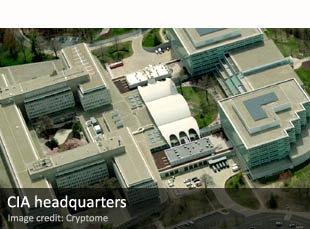
►►‘CIA could get bin Laden but can’t get a gym’. As CIA Director, General David Petraeus is credited by some as having helped turn the tide in the Iraq War, flush the Taliban from southern strongholds in Afghanistan, and infiltrated al-Qaeda in Yemen. But his campaign to improve the Agency’s fitness gyms has been a marathon effort –one that defeated other CIA directors over a course of some 16 years. Petraeus arrived at the CIA in 2011 to find two basement gyms at the Langley, Va., headquarters, one with original flooring dating to 1964. One gym is so small it can’t contain the punching bags and medicine balls that spill into the hall, where people stretch out and do mat exercises.
►►Israel convinced Hezbollah behind Bulgaria bombing. Israeli Prime Minister Benjamin Netanyahu said Sunday that his government has gathered “unquestionable intelligence” showing that the Lebanese militant group Hezbollah, backed by Iran, was behind a suicide bombing in Bulgaria last week that killed five Israeli nationals. The Israeli leader said the Mossad had drawn close parallels between the attack in Bulgaria and a foiled operation in Cyprus earlier this month, involving an alleged Hezbollah operative.
►►Hezbollah silent on reports of Israel spy arrests. Hezbollah would not comment on a local newspaper report on Wednesday, which said the Lebanese Shiite party had detained three men, including two of its own members, for spying for Israel. Lebanese daily newspaper An-Nahar said Hezbollah’s security apparatus had detained two Hezbollah members and a member of a Bekaa village municipal council on the suspicion that they have been collaborating with Israel.

Analysis: Bandar’s return affirms hawkish turn in Saudi foreign policy

Prince Bandar bin SultanBy JOSEPH FITSANAKIS | intelNews.org |
For over two decades, America’s relations with its most important Arab ally were primarily mediated by just one man: Prince Bandar bin Sultan, Saudi Arabia’s Ambassador to the United States from 1983 to 2005. But on June 26, 2005, Bandar, a personal friend of the Bush family, submitted his diplomatic resignation, after being recalled to Riyadh by Saudi Arabia’s King Abdullah. Almost immediately, Bandar, known for years in Washington’s diplomatic circles as a flamboyant socialite, disappeared from public view. It is said that he faced serious health problems, going in and out of hospitals. Others claim that he fell out of favor with Saudi Arabia’s autocratic ruling elite, and in 2009 there were even unconfirmed reports that he was under house arrest after allegedly trying to organize a military coup against King Abdullah. Last week, however, Bandar returned to the limelight in spectacular fashion: in a plainly worded statement, Saudi authorities announced that the Prince had been appointed Director General of the Mukhabarat Al A’amah, the Kingdom’s main intelligence agency.

To those who remember Bandar from his Washington days, which were filled with drinking and partying, it may seem incredible that the “peasant prince”, whose mother was one of Sultan bin Abdulaziz Al Saud’s countless underage concubines, is now heading Saudi intelligence, in what is perhaps the most challenging period in the Kingdom’s history. Read more of this post

News you may have missed #767

Omar SuleimanBy IAN ALLEN | intelNews.org |
►►Aussie spy chief warns of ‘digital footprints’. For the first time in the 60-year history of the Australian Secret Intelligence Service (ASIS), Australia’s main external spy agency, its Director has spoken publicly. Nick Warner used this unprecedented opportunity to reflect on where ASIS has come in the last 60 years, and the challenges it faces into the future. Among them, he said, are “developments in the cyber-realm”, which “are a two-edged sword for an agency like ASIS; they offer new ways of collecting new information, but the digital fingerprints and footprints which we all now leave behind complicate the task of operating covertly”.
►►India arrests alleged Pakistani spy. Indian authorities have announced the arrest of Zubair Khan, 37, of Uttar Pradesh, who was allegedly caught with several Indian Army documents in his possession. He had been reportedly asked to gather information on Air India pilots, military bases in the country, journalists who frequently visit Pakistan, and relatives of officials working in the Indian High Commission in Pakistan. Maps of cantonment boards and details of many battalions have been recovered from him, according to Indian media reports. Investigators are also said to have identified one of Khan’s handlers, a man named “Talib”, who works at Pakistan’s High Commission in New Delhi.
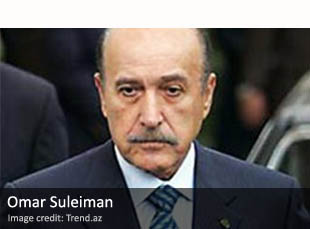
►►Egypt spies try to repair image as ex-Director dies. Egypt’s top spy agency, the General Intelligence Service —known as the “Mukhabarat” in Arabic— is taking a small but unprecedented step out of the shadows, in an apparent attempt to win the public’s support in the new Egypt. In an unusual move, the agency released a 41-minute-long documentary boasting of its achievements, presenting itself as the defender of the nation and vowing to continue to protect the country. The effort comes as the Mukhabarat’s former Director, the notorious Omar Suleiman, has died in the United States.

US spy agencies turn to Israel, Turkey, for help in Syria war

Regional map of SyriaBy JOSEPH FITSANAKIS | intelNews.org |
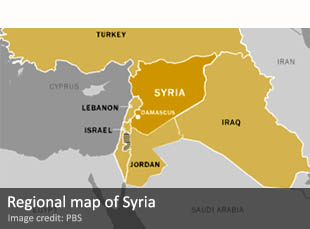
Just days after a senior United States defense official admitted Pentagon intelligence analysts missed early signs of the Arab Spring, a new report claims that Washington is still “struggling to understand” the Syrian situation, sixteen months into the uprising. Citing “interviews with US and foreign intelligence officials”, The Washington Post says that the US Intelligence Community has yet to develop a clear understanding of the intentions of the regime of Syrian President Bashar al-Assad. Nor have American analysts been able to draw a lucid picture of the fragmented opposition forces in the country. The paper says that, even though US spy agencies have intensified their intelligence-gathering efforts targeting all sides of the civil war, they have been unable to establish a physical presence inside Syria. This, according to The Post, is partly due to Washington’s decision, back in February of this year, to shut down the US embassy in Damascus, which has traditionally served as staging ground for Central Intelligence Agency operations inside Syria. This latest article confirms previous reports in The New York Times and elsewhere, of a small CIA team operating along the Syrian-Turkish border, with the task of overseeing a multinational effort to secretly deliver weapons, communications equipment and medical supplies to Syrian opposition forces. But this is about as close as the CIA has managed to get to Syria; for the most part, like its partner agencies in the US Intelligence Community, the Agency is “still largely confined to monitoring intercepted communications and observing the conflict from a distance”, says The Washington Post. As a result, US intelligence agencies are becoming increasingly dependent on their counterparts in Turkey, Jordan, and —most of all— Israel for reliable ground intelligence from inside Syria. Read more of this post

News you may have missed #766 (Arab world edition)

David SheddBy IAN ALLEN | intelNews.org |
►►Yemen busts alleged Iranian spy ring. Yemeni president Abd-Rabbu Mansour Hadi called on Tehran to stay out of Yemen’s internal affairs last week, after security officials in Sana’a, Yemen’s capital, announced they had uncovered an Iranian spy ring there. Yemen’s government-run SABA news agency said the spy cell, which was allegedly led by a former commander of Iran’s Islamic Revolutionary Guard corps, had operated in Yemen as well as in the Horn of Africa,  and that it had kept an operations center in Sana’a. An interior ministry official said all those detained were Yemenis.
►►CIA sued for killing US citizens in Yemen. Survivors of three Americans killed by targeted drone attacks in Yemen last year have sued top-ranking members of the United States government, alleging they illegally killed the three, including a 16 year-old boy, in violation of international human rights law and the US Constitution. The suit (.pdf), the first of its kind, alleges the United States was not engaged in an armed conflict with or within Yemen, prohibiting the use of lethal force unless “at the time it is applied, lethal force is a last resort to protect against a concrete, specific, and imminent threat of death or serious physical injury”. The case directly challenges the government’s decision to kill Americans without judicial scrutiny.
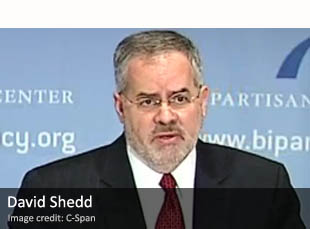
►►US intel official acknowledges missed Arab Spring signs. David Shedd, deputy director of the US Defense Intelligence Agency, the Pentagon’s intelligence arm, said analysts failed to note signs of the unrest across the Middle East and North Africa that exploded into the Arab Spring. Shedd’s comments were posted Thursday by the American Forces Press Service, a Pentagon information wire. They constitute a rare public acknowledgment of the US intelligence failure regarding the turmoil that has redrawn the Middle East’s political landscape, toppling autocratic rulers in Tunisia, Egypt, Yemen and Libya and now engulfing Syria.

Situation Report: Hacker convention brings out top NSA spy

DefConBy TIMOTHY W. COLEMAN | intelNews.org |
In less than a week, the 20th annual DefCon Hackers convention will take place in Las Vegas, Nevada. The yearly gathering brings out the good, the bad and the script kiddies alike. Computer security practitioners, cyber-criminals, grey and white hat hackers, law enforcement, and members of both the US intelligence community as well as probably foreign government representatives will be on hand to listen to presentations, see novel techniques, and view new innovative methods for cyber intrusion. DefCon has become a Mecca of sorts for those interested in groundbreaking developments and nefarious possibilities within the computer security and cyber realm. As organizers of the event explain in their call for presentations, “DefCon is all about thinking up cool and new ways to approach everything from the most complex modern technology to hacking grandma’s toaster […] what attack exploits, defensive techniques, or unique research [have] you have been working on”. The focus is often two-fold “how to break it”, followed by a segment on “how to fix it”. “Spot the Fed” is an ongoing and widely popular contest at the convention. The task of regular attendees is to properly identify plain-clothed members of law enforcement or the intelligence community. As DefCon explains, “if you see some shady MIB (Men in Black) earphone penny loafer sunglass wearing Clint Eastwood to live and die in LA type lurking about, point him out”.

Read more of this post

News you may have missed #765

Hillary ClintonBy TIMOTHY W. COLEMAN | intelNews.org |
►►MI6 chief says Iran will get nukes in 2 years. Sir John Sawers, the head of Britain’s Secret Intelligence Service, has been quoted as publicly forecasting that Iranian nuclear weapons efforts will likely come to fruition by 2014. Sawers is quoted in The Daily Telegraph as saying: “The Iranians are determinedly going down a path to master all aspects of nuclear weapons; all the technologies they need”, adding “it’s equally clear that Israel and the United States would face huge dangers if Iran were to become a nuclear weapon state”. He went on to assert that Iran would have achieved nuclear statehood in 2008 had it not been for clandestine efforts to thwart such ends. He did not elaborate on what he meant by his comments, for which he was criticized in Parliament earlier this week.
►►MI6 chief claims US interrogators were ‘obsessed’. In the same Telegraph interview, Sir John claimed that British interrogators, following the attacks of September 11, 2001, came “close to the line” of illegality. He went on to say that US interrogators straddled the line between legal and illegal, insinuating that US personnel may have crossed the line during interrogations. Sir John is quoted as explaining: “They [US interrogators] got so obsessed with getting a right answer that they drifted into an area that kind of amounted to torture”. He went on to claim that British personnel involved in interrogations never crossed the line, observing: “We’ve never been there, we’ve never been involved in that, and I think our accountability, our disciplines, have helped us keep on the right side of these lines”.
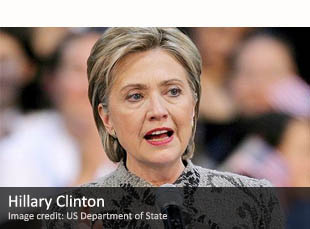
►►Clinton says Israeli spy Pollard unlikely to be freed. US Secretary of State Hillary Clinton has reaffirmed Washington’s position that Jonathan Pollard was unlikely to receive clemency or see freedom anytime soon. During a press conference in Jerusalem on July 16, Secretary Clinton stated unequivocally: “He [Jonathan Pollard] was sentenced to life in prison, he is serving that sentence, and I do not have any expectations that that is going to change”. Pollard, a former US naval intelligence analyst, was suspected of trying to provide classified information to South Africa, Pakistan, and Australia. He was arrested and convicted of espionage for providing classified information to the State of Israel. He is serving a life sentence for his crimes.

News you may have missed #761

Robert de La RochefoucauldBy TIMOTHY W. COLEMAN | intelNews.org |
►►US aircraft company owner charged with supplying Venezuelan military. Kirk Drellich, owner and president of SkyHigh Accessories in Florida, has pleaded not guilty to charges that he illegally supplied Venezuelan military contacts with pressure switches and cooling turbines, as well as other airplane parts. Court documents indicate that the aircraft parts were to be used for Venezuelan F-16 jets, attack helicopters and other military crafts. Prosecutors in Florida have filed charges (.pdf), stemming from violations of the Arms Export Control Act, on three other individuals who are supposedly involved in the conspiracy to export arms to Venezuela. Other defendants in the case include Alberto Pichardo and Freddy Arguelles, both former members of Venezuela’s Air Force, as well as Victor Brown, a local businessman.
►►Trial delayed again in Delisle espionage case. As previously reported on this blog, the espionage case against Sub-Lt. Jeffrey Paul Delisle, the Canadian navy intelligence officer accused of spying for Russia, has again been delayed. The attorney for Delisle requested an adjournment based on the governments disclosure of new documents and evidence in the case. The adjournment is expected to last until July 17.
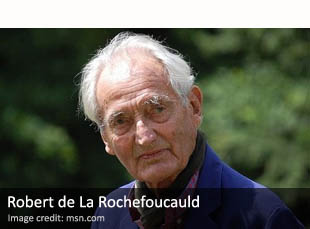
►►Legendary WWII spy de La Rochefoucauld dies. Robert de La Rochefoucauld, a French national who became a legendary British spy, helping direct and organize the Free French forces in England and underground movements in France during World War II, has died of natural causes at the age of 88. De La Rochefoucauld’s exploits as a spy have all the makings of a movie. As a little boy, he met Adolf Hitler, and as a spy he twice escaped execution by the Nazi’s. He was a knight in the French Legion of Honor, received the Medal of Resistance from France, was widely herald for his exceptional service by the British and he is believed to have been the last remaining French member of Winston Churchill’s Special Operations Executive.

News you may have missed #760

Aleksei DressenBy TIMOTHY W. COLEMAN | intelNews.org |
►►Turkey breaks up major military espionage ring. Turkish newspaper Hurriyet Daily News reported on July 9 that 51 active-duty soldiers from over twelve cities have been implicated in a major espionage ring involving Turkey’s military. Following a series of raids on July 7, at least 40 people were detained and four others were taken into custody. The raids were in response to an investigation launched in 2009, regarding warcraft radar locations in Turkey, illegal surveillance, as well as wiretapping of military officers.
►►Taiwan navy misplaces classified naval charts. During the decommissioning last June of Taiwan’s Hai Ou missile boats, classified naval charts were discovered to have gone missing during a final inventory check. The Taipei Times reports that the individual officer tasked with the responsibility of safeguarding the charts in question claimed to have burned one by accident, but was unable to account for the second chart. The classified charts contained information on Taiwanese naval activity including deployments in the Taiwan Strait.
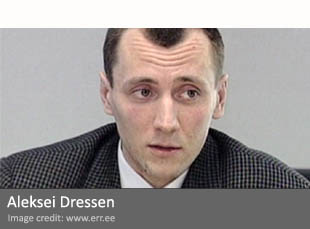
►►Estonia security official and wife jailed for treason. Aleksei Dressen, a former security official at Estonia’s Interior Ministry, and his wife, Viktoria, were both convicted of treason, receiving 16 years and 6 years respectively. During a closed trial the proceedings did not provide direct evidence as to whom Dressen and his wife were working for. However, reports indicate that Dressen’s handlers were most likely representatives of Russia’s FSB.  The prosecution alleged that Dressen brought classified state secrets from the Estonian Interior Ministry to the airport in an envelope and then passed them along to his wife, who acted as a courier to Russian handlers. Heili Sepp, the Estonian prosecutor, indicated that the sentencing of the Dressens was part of a plea bargain effort, noting: “To our knowledge, this is the harshest punishment meted out in plea bargain proceedings in Estonia”.

News you may have missed #757

Jonathan Jay PollardBy TIMOTHY W. COLEMAN | intelNews.org |
►►US government Pollard video declassified. In response to a Freedom of Information Act request initiated by the Institute for Research: Middle Eastern Policy, the Defense Intelligence Agency has released a 14-minute instructional video, which cites the Jonathan Pollard spy case. Pollard was a US Naval intelligence officer who for over 18 months provided thousands of classified documents to the Israelis government. He is serving a life sentence. The DIA’s Office of Security and Counterintelligence produced the instructional video in 1987 to urge employees to be on the lookout for suspicious behavior of fellow employees and to encourage them to report known security violations immediately. The video interviews an actor portraying the government employee who first reported Pollard’s espionage activities.
►►Senior CIA officer accused of being Mafia hitman. Enrique “Ricky” Prado’s resume reads like the ultimate CIA officer: a candidate for the CIA’s most senior post in South Korea, a top spy in America’s espionage programs against China, and deputy to Cofer Black, a chief strategist in America’s war on terror. But he is also alleged to have started out a career as a hitman for a notorious Miami mobster, and kept working for the mob even after joining the CIA. Finally, he went on to serve as the head of the CIA’s secret assassination squad against Al-Qaida. That’s according to journalist Evan Wright’s blockbuster story How to Get Away With Murder in America, distributed by Byliner. In it, Wright compiles lengthy, years-long investigations by state and federal police and tracks the history of Prado’s alleged Miami patron and notorious cocaine trafficker, Alberto San Pedro, and suspicions that Prado moved from a secret death squad from the CIA to notorious mercenary firm Blackwater.
►►Colombian pleads guilty to spy charges in Nicaragua. As previously reported on this blog, Luis Felipe Rios, a 34-year-old Colombian national, was arrested for espionage in Nicaragua on June 15. The Inside Costa Rica news agency says Rios admitted he was indeed committing espionage on behalf o foreign nation, and he is providing Nicaraguan authorities with all the details. Rios will likely be sentenced on July 9 and he faces up to 16 years in prison for violating Nicaragua’s state secrets and state intrusion laws.