Dead defector not connected to Russian spies, insists friend

Sergei Tretyakov

Sergei Tretyakov

By IAN ALLEN | intelNews.org |
On July 2, based on an excellent analysis by Stratfor of the 10 Russian deep-cover agents arrested in the US in June, we entertained the possibility that Sergei Tretyakov, a senior Russian SVR agent who defected to the US in 2000, may have helped the FBI identify the Russian spy ring. Last Friday, it emerged that 53-year-old Tretyakov had died at his home in Florida. When he defected to the US, along with his wife and daughter, Tretyakov was second-in-command at the SVR (Russian external intelligence) station operating out of Russia’s United Nations mission in New York. This is the same outfit that coordinated the 10 Russian deep-cover agents arrested by the FBI in June. Tretyakov’s death was announced by the late Russian spy’s friend and confidante Pete Earley, who in 2008 wrote a book about the defector. It is worth noting that Tretyakov actually died on June 13, but his wife, Helen Tretyakov, requested that his death not be publicly announced until the precise cause of death was determined. Read more of this post

News you may have missed #389

  • Secrecy over attack on Syrian nuclear plant unjustified, says ex-CIA chief. The secrecy surrounding the Israeli attack on the nuclear plant in eastern Syria in September 2007 was justified only for the period immediately after the operation, according to the CIA head at the time, Gen. Michael Hayden. That secrecy had been meant to save Syrian President Bashar al-Assad from embarrassment that could have provoked him to retaliate, argues Hayden in an authorized scholarly journal article.
  • No proof yet of Colombian spying, says Ecuador. Ecuadorean Security Minister Miguel Carvajal said Thursday that allegations that Colombian security agency DAS spied on Ecuadorean President Rafael Correa and other officials is “so far just a newspaper story”. Late last month, the Ecuadorean government threatened to break off diplomatic ties with Colombia over the media revelations.
  • GCHQ releases Stalin-era Soviet intercepts. A series of newly released telegrams and telephone conversations, intercepted by the UK’s General Communications Headquarters, paint a picture of Joseph Stalin’s regime in the immediate aftermath of the Second World War.


Bookmark and Share

Russia, US, in largest spy swap since World War II

Igor Sutyagin

Igor Sutyagin

By IAN ALLEN | intelNews.org |
The Russian and American governments have agreed to conduct one of history’s largest spy exchanges, as ten Russian agents captured in the US last month have been swapped for four Russian citizens imprisoned by Moscow for spying for the US and Britain. The ten Russians arrested by the FBI in June were non-official-cover (NOC) operatives, otherwise known as ‘illegals’, a term used to identify deep-cover intelligence operatives not associated with a country’s diplomatic representation. According to reports, they were all instructed by the SVR, Russia’s equivalent of MI6, which is responsible for all foreign intelligence operations abroad, to plead guilty to “acting as unregistered foreign agents” a charge not equivalent to espionage in either seriousness or repercussions. They were then legally forbidden from ever returning to the United States and summarily expelled. They were taken from the courtroom directly to the airport, where they boarded a plane to Vienna, Austria. In return, Russian government sources have confirmed that four Russian citizens, arrested in recent years for spying on behalf of the US or Britain, will be released from prison and delivered to US authorities. Read more of this post

News you may have missed #388

  • Political policing rising in US, ACLU report warns. A new report by the American Civil Liberties Union chronicles government spying and what it describes as the detention of groups and individuals “for doing little more than peacefully exercising their First Amendment rights”.
  • Mistrust still marks ISI-CIA ties, say US officials. John Tierney, chairman of the US House Armed Services Committee, told a Pakistani delegation that there is mistrust between the CIA and ISI, according to a report by the Pakistan Senate’s Standing Committee on Defence. Regular intelNews readers should not be surprised.
  • Britain releases secret document at heart of UKUSA agreement. Authorities in the UK have released a six-page document dating from 1946, which describes the “British-US Communication Intelligence Agreement”, known as BRUSA, later UKUSA. The deal has tied the US, UK, Canada, Australia and New Zealand into a worldwide network of electronic listening posts.

Bookmark and Share

Ex-Panama dictator Noriega describes ‘friendly ties’ with CIA

Manuel Noriega

Manuel Noriega

By JOSEPH FITSANAKIS | intelNews.org |
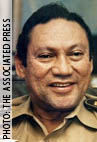
Panama’s notorious former dictator, Manuel Noriega, has described what he called his “long, friendly relationship” with the CIA in court testimony in France where he is defending charges of money laundering. Speaking on the second day of his trial in Paris, Noriega argued that millions of dollars he deposited in several French bank accounts were CIA payments for his services, not income from illicit drug sales. Panama’s former strongman described in his testimony how he gained power with the help of the CIA in the small but strategically important Central American nation, in 1983. He also listed the services he provided to the CIA during the closing stages of the Cold War, in relation to Cuba, Nicaragua and Iran. But Noriega, who was deposed during the 1989 US invasion of Panama, said the US leadership and the CIA turned against him after he repeatedly refused to take part in a series of covert operations against the leftist Sandinistas government in neighboring Nicaragua. Read more of this post

News you may have missed #387

  • Blackwater to ‘abandon US government market’. Erik Prince, occasional CIA operative and CEO of Xe Services, formerly known as Blackwater Worldwide, has said in an interview that he is tired of Congressional oversight regulations and plans to abandon US government business forever. Meanwhile, there are reports that Xe has just won a $100 million contract to guard CIA facilities in Afghanistan and elsewhere.
  • Congress won’t back down on CIA oversight battle. House Speaker Nancy Pelosi is battling a veto threat by US President Barack Obama, as well as against the CIA and powerful House and Senate Democrats and Republicans, over Congressional oversight of US intelligence services.
  • Mossad chief to step down after eight years. Mossad Director Meir Dagan’s request to extend his term by another year has been denied, and he will step down in three months’ time, according to Israeli media reports. The chief of Dubai Police, which exposed a January 2010 Mossad assassination of Hamas operative Mahmoud al-Mabhouh, said Dagan’s ousting is related to the botched operation.

Bookmark and Share

Retired US colonel charged with smuggling weapons to Somalia

Somalia

Somalia

By JOSEPH FITSANAKIS | intelNews.org |
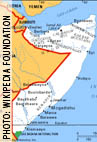
A retired US Air Force colonel, who was charged with weapons smuggling during the Iran-Contra scandal in the 1980s, has been indicted again, this time for trying to smuggle automatic weapons into Somalia. US federal authorities accuse Joseph O’Toole, now 79, of conspiring with Israeli citizen Chanoch Miller, formerly an aeronautics engineer with Israeli defense firm Radom Aviation, to transport nearly 2,000  AK-47s from Bosnia to Banderal, Somalia. The smuggling operation, which employed forged end-user certificates issued in Chad, violated US weapons export control regulations, which are in compliance with a United Nations weapons embargo to war-ravaged Somalia. This is the second time O’Toole has been indicted with conspiring to smuggle weapons. In 1989, he was charged of working with fellow-American Richard St. Francis and Israeli alleged ex-Mossad operative Ari Ben-Menashe, to sell several US C-130 cargo airplanes to the Iranian government. Read more of this post

News you may have missed #386 (Israel edition)

Bookmark and Share

Austrian probe finds Chechen president behind Vienna killing

Ramzan Kadyrov

Ramzan Kadyrov

By IAN ALLEN | intelNews.org |
A report by Austrian government officials has found that the Moscow-appointed President of Chechnya ordered the 2009 assassination in Vienna of a Chechen dissident, who had been given political asylum by Austrian authorities. In 2009, Umar Israilov, who was once a bodyguard of Chechen President Ramzan Kadyrov, alleged in Vienna and in the European Court of Human Rights in Strasbourg that Kadyrov had “personally participated in the torture of detainees”. But on January 13, 2009, Israilov was shot dead by two men in broad daylight outside a grocery store located less than two miles from Vienna’s historic city center. Now the Vienna Office for the Protection of the Constitution and Counterterrorism has said in a detailed report that Israilov’s murder was a political assassination ordered personally by Chechen President Kadyrov, who is a close ally of Russian President Vladimir Putin. Read more of this post

News you may have missed #385

  • Indian, Pakistani spy chiefs meet in Islamabad. The meeting between the Director of India’s General Intelligence Bureau, Rajiv Mathur, and his Pakistani counterpart Javed Noor, took place in the aftermath of the arrest of Madhuri Gupta, second secretary at the Indian high commission in Islamabad, Pakistan, who is accused of passing on secrets to Pakistan’s ISI spy agency.
  • CIA releases documents on Korean War. The US Central Intelligence Agency has released a document collection that includes more than 1,300 redacted files consisting of national estimates, intelligence memos, daily updates, and summaries of foreign media concerning developments on the Korean Peninsula from 1947 until 1954.
  • Lebanon to probe top government officials in Israeli spy ring case. The arrest of a senior Lebanese phone firm manager, who is accused of spying for Israel, has prompted prosecutors to ask that several senior government officials be stripped of their immunity so that they can be investigated in relation to a nationwide crackdown on alleged Israeli spy rings in the country.

Bookmark and Share

News you may have missed #384


Bookmark and Share

News you may have missed #383 (Russian spy ring edition IV)

  • Analysis: Why Russia and the US still spy. The sensationalist media coverage of the FBI’s recent bust of a Russian spy ring in the US has failed to examine this development in light of the post-Cold War relations between Russia and the United States. The fact is that espionage will continue, even as the United States and Russia work out a new post-Cold War modus vivendi, says Peter Earnest, a 35-year CIA veteran.
  • Analysis: The lure of the SVR. For most Russians, getting a job in the country’s vast bureaucracy is a happy career step. Even more glamorous is the FSB, Russia’s ubiquitous domestic intelligence service. But the most prestigious agency of all is still the SVR, Russia’s equivalent of MI6, which is responsible for all foreign intelligence operations abroad, including the long-term, deep cover espionage ring just busted by the FBI. The Cold War may be over, but the SVR still offers a globe-trotting career for a small, elite group of ambitious graduates with the right connections.
  • Analysis: Was the Russian spy operation worth the trouble? The FBI has alleged no espionage or loss of classified materials as a result of the operations of the 11-member Russian spy ring. Indeed, much of what it maintains the Russians were seeking could be gleaned from a Google search. So the wider ramifications of the spy arrests may turn out to be primarily political rather than cloak-and-dagger.

Bookmark and Share

Analysis: What we know about the Russian spy ring case

SVR seal

SVR seal

By JOSEPH FITSANAKIS | intelNews.org |
If you are frustrated with the increasingly idiotic and sex-obsessed media coverage of the Russian spy ring recently busted by the FBI, you are not alone. Less than a week since news of the arrests in the US of ten alleged deep-cover agents of Russia’s SVR intelligence agency emerged, sensationalist media hacks have left no stone unturned. Thankfully, Stratfor Global Intelligence has produced an excellent early summary of this developing story, complete with a useful diagram of the known members of the SVR spy ring. The summary correctly points out some of the critical issues in the espionage case, including the fact that the 11 suspects appeared to be primarily run out of the SVR residence at the Russian mission to the United Nations in New York, and not out of the Russian Embassy in Washington DC. Read more of this post

News you may have missed #382 (Russian spy ring edition III)

Bookmark and Share

News you may have missed #381 (Russian spy ring edition II)

  • Accused Russian spies lived perfect Boston lives. It is almost certain that the members of the Russian spy ring, arrested by the FBI last weekend, trained for years in Moscow’s most elite SVR intelligence school to pass as Canadians or Americans. Their real-life identities and backgrounds may never be learned.
  • Russian spies blended well, sought contacts. The 11 people arrested and accused of being members of a Russian spy ring operating under deep cover in America’s suburbs were active in the East Coast networking circuit.
  • Kremlin adopts calmer tone on US spy affair. Moscow on Wednesday softened its initially furious reaction to this week’s spy scandal in the US, when it said that the arrest of 11 people accused of working for Russian intelligence would not have a negative impact on bilateral relations. Earlier in the week, Vladimir Putin had accused US authorities of having “gone on a rampage”.

Bookmark and Share