US Pentagon computers cannot be protected, says NSA head

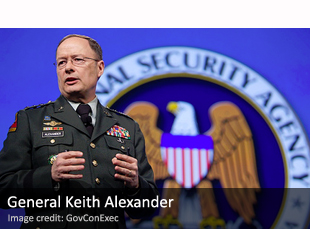
General Keith AlexanderBy JOSEPH FITSANAKIS | intelNews.org |

The man in charge of America’s most powerful intelligence agency says the United States Department of Defense computer network is so disordered and chaotic that it cannot be defended from cyberattacks. General Keith Alexander directs the National Security Agency, America’s wealthiest intelligence institution, which expert James Bamford has described as “the world’s most powerful spy agency”. As America’s foremost signals intelligence agency, the NSA is largely responsible for protecting the integrity, security and cohesion of the country’s public and restricted military communications networks, including computer networks. To do so, it consumes an annual budget that dwarfs those of most other intelligence agencies, and employs entire armies of computer security experts and other professionals. But, according to General Alexander, who also heads the US Pentagon’s new Cyber Command, there is not much his army of cyberwarriors can do to either prevent or repel possible large-scale cyberattacks directed against the DoD’s computer networks. The NSA chief was speaking yesterday at the International Conference on Cyber Security, a high-profile gathering of experts at New York’s Fordham University. He told the conference, which is sponsored by the Federal Bureau of Investigation, that the Pentagon’s computer infrastructure is too anarchic and chaotic to be successfully defended from cyberespionage, cyberterrorism, or cyberwarfare assaults. He said the DoD computer system consists of so many interconnected networks —over 15,000 in all— that the NSA “can’t see them all [let alone] defend them all”. As a result, said Alexander, the DoD’s current communications infrastructure “is indefensible”. Read more of this post

Comment: Drawing Careful Conclusions from the Iran Assassination

Mostafa Ahmadi-Roshan's carBy JOSEPH FITSANAKIS* | intelNews.org |
The body of Iranian academic Mostafa Ahmadi-Roshan was still warm when officials in Tehran began accusing Israel and the United States of having planned his assassination. Leveling such accusations without offering adequate proof is certainly unstatesmanlike; but even hasty conclusions can be logical, and even sworn enemies of the Iranian government would find it difficult to point at other possible culprits. Keeping in mind that, at this early stage, publicly available information about the assassination remains limited, are there conclusions that can be drawn with relative safety by intelligence observers? The answer is yes. Roshan, 32, was a supervisor at Iran’s top-secret Natanz fuel enrichment plant. His scientific specialty was in the technology of gas separation, the primary method used to enrich uranium in Iran’s nuclear energy program. His assassination, which took place in broad daylight amidst Tehran’s insufferable morning traffic, was a faithful reenactment of the attacks that killed two other Iranian nuclear scientists in November of 2010. A motorcycle, practically indistinguishable from the thousands of others that slide maniacally between cars in the busy streets of the Iranian capital, made its way to the car carrying Ahmadi-Roshan. As the driver kept his eyes on the road, the passenger skillfully affixed a magnetic explosive device to the outside surface of the targeted vehicle, next to where Ahmadi-Roshan was sitting. By the time the blast killed the scientist, as well as the car’s driver, and injured a third passenger, the motorcyclists were nowhere to be found. Two-and-a-half hours later, when the report of Ahmadi-Roshan’s assassination was making its way through the newsroom of Iran’s state-owned Fars news agency, the assassins were making their way to Dubai, Oman, Qatar, or various other destinations around the Middle East. Read more of this post

Israeli Mossad training Iranian exiles in Kurdistan: French newspaper

Predomiantly Kurdish Middle East regionsBy JOSEPH FITSANAKIS | intelNews.org |
A leading French newspaper has claimed that Israeli intelligence agents are recruiting and training Iranian dissidents in clandestine bases located in Iraq’s Kurdish region. Paris-based daily Le Figaro, France’s second-largest national newspaper, cited a “security source in Baghdad”, who alleged that members of Israeli intelligence are currently operating in Iraq’s autonomous northern Kurdish region. According to the anonymous source, the Israelis, who are members of the Mossad, Israel’s foremost external intelligence agency, are actively recruiting Iranian exiles in Kurdistan. Many of these Iranian assets, who are members of Iran’s Kurdish minority and opposed to the Iranian regime, are allegedly being trained by the Mossad in spy-craft and sabotage. The article in Le Figaro claims that the Iranian assets are being prepared for conducting operations inside the energy-rich country, as part of Israel’s undercover intelligence war against Iran’s nuclear energy program. The Baghdad source told the French daily that part of Israel’s sabotage program against sensitive Iranian nuclear facilities, which includes targeted assassinations of Iranian nuclear experts, is directed out of the autonomous region of Iraqi Kurdistan, “where [Mossad] agents have stepped up their penetration”. For this, “the Israelis are using Kurdish oppositionists to the regime in Iran, who are living are refugees in the Kurdish regions of Iraq”, the source told Le Figaro. Although the article makes no mention of official or unofficial sanction of the Israeli operations by the Iraqi Kurdish authorities, it implies that the alleged Mossad activities are an open secret in Iraqi Kurdistan. This is not the first time that allegations have surfaced in the international press about Israeli intelligence activities in Kurdistan. In 2006, the BBC flagship investigative television program Newsnight obtained strong evidence of Israeli operatives providing military training to Kurdish militia members. Read more of this post

US expels Venezuelan diplomat over cyberespionage allegations

Livia Acosta NogueraBy JOSEPH FITSANAKIS | intelNews.org |
The United States has ordered the immediate expulsion of the head of the Venezuelan consulate in Miami, over allegations that she helped coordinate a cyberattack against US government targets in 2008. The diplomat, Livia Acosta Noguera, was declared “persona non grata” (an unwelcome person) by the US Department of State last Friday, and was given 72 hours to leave the country. State Department officials refused to discuss the reasons for Acosta’s expulsion. But the BBC said that the expulsion order was prompted by a letter sent last month to US Secretary of State Hillary Clinton by four members of the US Congress. The letter’s authors reportedly raised concerns about a documentary aired in December by Univision, a US-based Spanish-language broadcaster, titled “The Iranian Threat”. According to reports, the documentary alleged that Acosta was part of a multinational team of diplomats from Venezuela, Iran and Cuba, who, while stationed in Mexico in 2008, helped orchestrate a cyberespionage operation against US targets. The alleged operation was aimed at computer servers belonging to the US government computer, including some at the Department of Defense, the National Security Agency, the Central Intelligence Agency, and the White House. Computer servers at several nuclear power plants across the US were also reportedly targeted. The documentary exposé, which later appeared in print in US-based Spanish-language newspaper El Nuevo Herald, included allegations that Acosta is in fact a member of the Bolivarian Intelligence Service, Venezuela’s foremost external intelligence agency. Read more of this post

Did cell phone companies help India spy on the United States?

Page from the Lords of Dharamraja document leakBy JOSEPH FITSANAKIS | intelNews.org |

Leaked documents acquired by a computer hacker collective appear to show that international cell phone manufacturers helped Indian intelligence agencies spy on the United States, in return for access to the Indian cellular phone market. The documents, which are written in English, were posted online on Saturday by a group of Indian hackers calling themselves Lords of Dharamraja. In a statement, the group said they obtained the documents by breaking into the computer servers of Indian Military Intelligence, after managing to acquire the source code of Symantec Corporation, makers of Norton antivirus software. According to the documents, the companies arm-twisted to assist Indian intelligence agencies to spy on the US included Apple, Nokia, and Research in Motion, the company that builds BlackBerry devices. The documents also appear to show that Indian intelligence agencies were particularly eager to spy on the United States-China Economic and Security Review Commission. Established by the US Congress in 2000, the Commission is tasked with researching and reporting on the national security implications of bilateral trade between the US and China. Allegedly, the cellular telephone makers provided Indian intelligence agencies with backdoor access to personal phones used by Commission members. These back doors allegedly allowed the Indian Military Intelligence Directorate and India’s Central Bureau of Investigation to spy on Commission members beginning in April of 2011. Read more of this post

Afghanistan arrests British citizens with 30 unregistered AK-47s

AK-47sBy JOSEPH FITSANAKIS | intelNews.org |

Afghan authorities have announced the arrest of two British citizens who were found carrying 30 unregistered weapons without proper documentation. The two Britons, who have been identified as Julian Steele and James Davis, were stopped by Afghan police on Tuesday, January 3, at a checkpoint in the eastern suburbs of Afghan capital Kabul. The city’s police chief, Ayub Salangi, told the BBC that the two were arrested along with their Afghan interpreter and a local driver, after authorities discovered two metal boxes containing 30 AK-47s hidden under a blanket in their car. Moreover, most of the weapons had their serial numbers erased, and Steele and Davis were unable to produce registration documentation for the guns when asked to do so. When pressured, they told Afghan police that they worked for GardaWorld, an international security-consulting firm based in Montreal, Canada, with offices in the United States, Britain and the United Arab Emirates. GardaWorld, which is known to be currently active in Iraq, Pakistan, Haiti and Yemen, is thought to employ approximately 330 ‘bodyguards’ in Afghanistan, including around 30 foreign citizens. Strangely, however, GardaWorld, like every other private security firm operating in Afghanistan, is required by law to acquire all of its weapons from Afghanistan’s Ministry of the Interior. Furthermore, private security companies active in Afghanistan are not allowed to handle weapons without serial numbers, which is usually considered evidence of a black market connection. Read more of this post

Mossad spy network allegedly busted in Mauritania

Fares al-BannaBy JOSEPH FITSANAKIS | intelNews.org |
Authorities in the northwestern African country of Mauritania have allegedly busted an Israeli spy network linked to the 2010 assassination of Hamas operative Mahmoud al-Mabhouh in Dubai. One of Mauridania’s leading daily newspapers, Al-Huriyeh, says that the spy ring, which allegedly consisted “businessmen and activists [from] several Arab nationalities”, was uncovered following the arrest of one of its members, identified as Fares al-Banna. A Jordanian citizen of Palestinian extraction, al-Banna was arrested for larceny, which eventually lead to a warrant issued for searching his premises. Upon searching his house, authorities reportedly found a handwritten letter, addressed to the Ambassador of the United Arab Emirates in Mauritanian capital Nouakchott, in which al-Banna claimed had been recruited by Israeli intelligence agency Mossad. In the letter, al-Banna also claimed that he had participated in the January 2010 assassination of Hamas weapons procurer Mahmoud al-Mabhouh in Dubai. The letter also alleges that al-Banna helped Mossad carry out a bombing of Ethiopian Airlines flight ET409, which blew up in mid-air on January 24, 2010, five minutes after taking off from Beirut’s Rafiq Hariri International Airport, en route to Addis Ababa. Al-Huriyeh reports that al-Banna’s letter suggests the Mossad blew up the plane in order to kill one or more Hezbollah targets who were on board. The Mauritanian daily says that police officers who searched al-Banna’s home, as well as his office at a travel agents called “United Travel Services”, found several different passports containing his picture, “dozens of credit cards”, as well as a sophisticated device believed to be a transmitter of some kind. Read more of this post

US gave N. Ireland police weapons, spy equipment, despite Congress ban

Royal Ulster Constabulary forces in the 1980sBy JOSEPH FITSANAKIS | intelNews.org |
Declassified documents show that thousands of American-made weapons, as well as spy equipment, ended up in the hands of Northern Ireland’s police force in the 1980s, despite a strict ban enacted by Congress. The ban was passed in 1979, following strong pressure by organized groups in the Irish-American community. The latter accused Northern Ireland’s police, known as the Royal Ulster Constabulary (RUC), of severe human rights violations and systematically excluding Catholic recruits. But internal government documents released in Northern Ireland this week, reveal that thousands of pieces of American-made weaponry, as well as surveillance equipment, continued to get into the hands of the RUC, despite the official ban. According to the documents, which were released under the UK’s 30-year declassification rule, the RUC eventually managed to collect all 6,000 Ruger revolvers it had ordered from American manufacturers before 1979, when the Congressional ban was enacted. The weapons continued to be shipped to Northern Ireland by way of “third-party suppliers”, who sent them secretly and in small quantities, so as not to arouse suspicion. The documents also state that the RUC was able to “receive [from the United States] some US equipment for surveillance work which is arguably more sensitive than guns”. The documents do not specify if the White House was aware that the Congressional ban against selling weapons to the RUC was being broken, or if the weapons were being surreptitiously smuggled by the British government, which hid the shipments from Washington. But The Belfast News Letter, which accessed the declassified documents, said it spoke to “one former senior RUC officer” who said that “the Reagan Administration was aware of the shipments” and had “turned a blind eye to the issue”. Read more of this post

Australian government feared KGB spy scandal, documents show

Bob HawkeBy JOSEPH FITSANAKIS | intelNews.org |
Declassified papers from a 1983 Australian Cabinet meeting reveal that the Labor government of the day feared it could be brought down by revelations of spying by a Soviet diplomat in Canberra. The spy was Valeriy Nikolayevich Ivanov, First Secretary at the Soviet embassy in the Australian capital. Suspecting the Soviet diplomat of espionage activities, the Australian Security Intelligence Organisation (ASIO) had bugged his home, and by 1982 had concluded that he was “a professional KGB intelligence officer”. Moreover, ASIO counterintelligence officials believed that Ivanov had been actively cultivating a relationship with an Australian citizen with a possible view to recruitment. Their concern apparently intensified after the Australian citizen began meeting Ivanov at his diplomatic residence, at the Soviet official’s request. On April 20, 1983, ASIO Director General Harvey Barnett met newly installed Australian Prime Minister Bob Hawke, and informed him that the Australian citizen in question was no other than David Combe. A former National Secretary of the Australian Labor Party (ALP) from 1973 to 1981, Combe was also the Prime Minster’s personal friend and close associate. A member of the Australia-USSR Friendship Society, Combe had come to know Ivanov in 1982, when he asked the Soviet embassy in Canberra for assistance in preparing for a business trip to the Soviet Union. Combe had exited politics before the 1983 national election, which had resulted in a landslide victory for the ALP, and he had entered a career as a business consultant and lobbyist. But his close relationship with Hawke alerted senior ALP officials. Meeting minutes of the government’s National and International Security Committee, released last week by the National Archives of Australia, show that Hawke chose to take Director General Barnett and other ASIO officers with him to brief senior cabinet members on April 21, the day after he himself had been briefed about the Ivanov affair. Read more of this post

CIA installed nuclear surveillance device atop Himalayas mountains

Nanda DeviBy JOSEPH FITSANAKIS | intelNews.org |
The United States Central Intelligence Agency tried at least twice to install a nuclear-powered surveillance device atop the Indian Himalayas, in an effort to spy on China. The decision to plant the device was taken in 1964, soon after communist China detonated its first nuclear bomb. In 1965, a team of CIA operatives attempted to climb Nanda Devi in the Garhwal Himalayas, which, at 25,645 feet (7,816 meters), is the highest mountain peak located entirely within Indian territory. But the top-secret mission failed miserably after adverse weather forced the CIA team to give up its effort approximately 2,000 feet below the summit. Battling against a heavy snowstorm, the CIA officers abandoned the 125-pound device, which was eventually swept away (.pdf document) by an avalanche. Incredibly, the team members deserted the surveillance device even though they knew it contained plutonium 238, which can emit radioactivity for over 500 years. In 1966, the same CIA team returned to Nanda Devi, in an effort to recover the complex surveillance instrument, but failed to locate it. In response to the second failed mission, the Agency decided to close the book on Nanda Devi, and instead constructed an identical surveillance device, which was transported and installed on Nanda Kot, a mountain peak located about nine miles (15 km) southeast of Nanda Devi. At 6,861 meters, Nanda Kot is about 3,000 feet shorter and far less steep than Nanda Devi. In 1967, a successful CIA attempt was made to reach the peak of Nakda Kot, where the radioactive surveillance device was installed. It is believed that it served its purpose before being abandoned there in 1968. Ten years later, in 1978, both operations were revealed in an article published in US-based Outside magazine. The revelation caused a major political uproar in India, as many Indians consider the Himalayas ‘sacred’ ground. Now the National Archives of India has released a batch of previously classified internal documents from India’s Ministry of External Affairs. Read more of this post

Nuclear Iran ‘not an existential threat to Israel’, says Mossad chief

Tamir PardoBy JOSEPH FITSANAKIS | intelNews.org |
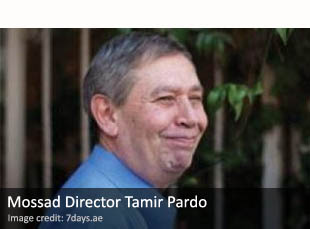
The director of Israel’s primary external intelligence agency, the Mossad, has said that it would be wrong to consider a nuclear-armed Iran an “existential threat” to Israel. For years, senior Israeli politicians and American military planners have described the prospect of a nuclear-capable Iran as an “existential threat” to the Jewish state. But this widespread belief is apparently not shared by Tamir Pardo, head of Israel’s revered Mossad intelligence agency. Pardo outlined his view while speaking yesterday before an audience of over 100 Israeli ambassadors and consuls general, at a conference dealing with diplomatic security issues and public affairs. Lectures at the conference, which is held annually at the Israeli Foreign Ministry in Jerusalem, are given behind closed doors. But Israeli newspaper Ha’aretz quoted three Israeli ambassadors who attended Pardo’s talk; they confirmed that the Mossad director rejected the view that Israel’s existence would necessarily be endangered by an Iranian nuclear arsenal, and dismissed the maxim “existential threat” as a “term used too liberally”. The Israeli newspaper quoted Pardo as saying: “Does [a nuclear-armed] Iran constitute a threat to Israel? Certainly. However, if we were to claim that a nuclear weapon in Iran’s possession was an existential threat [to Israel], it would simply mean that we would have to terminate [our operations] and go home. But this is not the case. The term [existential threat] is used too liberally”. The unnamed ambassadors told Ha’aretz that Pardo’s comments did not imply that the Mossad would stop its covert war on Iran, nor that Israel would accept the prospect of a nuclear Iran as inevitable. “However, what [Pardo’s] remarks undoubtedly imply is that he does not view a nuclear-armed Iran as an existential threat to Israel”, they said. Pardo’s comments closely echo those of his predecessor, Meir Dagan, who last May condemned a possible Israeli attack on Iran as an act that would be “patently illegal under international law” and “the stupidest thing [he had] ever heard”. Read more of this post

British Nazi was in fact MI5 double spy, new book reveals

Arthur OwensBy JOSEPH FITSANAKIS | intelNews.org |
A Welsh nationalist, whose aversion to British rule led him to spy for Nazi Germany during World War II, was in fact a double spy for Britain, and was instrumental in helping he Allies win the war, a new book reveals. The book, Snow: The Double Life of a World War II Spy, by Madoc Roberts and Nigel West (At Her Majesty’s Secret Service, A Matter of Trust, etc), centers on the life of Arthur Owens, who was recruited by the Abwehr, Germany’s military intelligence, in 1935, during a business trip to the Continent. Given the operational codename JOHNNY O’BRIEN by the Germans, he quickly began providing Berlin with inside information on Britain’s military buildup in the run-up to the War. But, according to Roberts and West, who base their account on declassified government documents, British counterintelligence agency MI5 became aware of Owens’ espionage activities and eventually recruited him as a double agent for the Crown. According to the book, Owens, who was given the codename SNOW by his British masters, became one of the human intelligence cornerstones of MI5’s XX (Double-Cross) System. Consisting of a close-knit group of deception specialists, XX is known for a series of outrageous —and often highly successful— covert operations during World War II, including Operation FORTITUDE, a plan to deceive the Germans about the location of the invasion of Europe by the Western Allies. The authors claim that agent SNOW’s activities successfully lured a large number of Nazi agents into the arms of MI5, thus eventually paving the way for some of MI5’s greatest wartime counterintelligence successes. In fact, it is believed that Owens’ pro-Nazi activities were so convincing, and his operational cover so deeply buried within the XX System, that in 1941 his MI5 handlers recommended that he be interned in a British prison. But the book alleges that, while in prison in Dartmoor, England, SNOW continued his intelligence collection for the Crown and kept feeding his handlers with information extracted from the prison’s German inmates. Read more of this post

South Korea to buy from France, after US delays sale of spy planes

RQ-4 Global HawkBy JOSEPH FITSANAKIS | intelNews.org |
The United States has unexpectedly delayed a previously agreed sale of spy drones to South Korea, prompting the Asian country to announce it will begin purchasing spy planes from France. The South Korean military has been under increasing pressure to improve its intelligence reconnaissance capabilities since last year, when North Korean forces opened fire at South Korea’s Big Yeonpyeong island, killing four and injuring over a dozen people. But an earlier agreement with Washington to supply Seoul with RQ-4 Global Hawk high-altitude surveillance spy planes, appears to have been derailed, after the Pentagon failed to approve the sale. South Korea’s state-run Yonhap news agency quoted an anonymous “government source” who said that Seoul had expected to receive the unmanned drones, built by US defense contractor Northrop Grumman, by 2015. But the sale cannot be completed without official approval by the US Department of Defense, which “has yet to send a letter of agreement” for the planned transaction. The South Korean government source did not explain why the US government appears to be backing out of the deal. But US sources tell intelNews that Washington’s move may be “of a punitive nature”, intended to penalize South Korea for challenging Northrop Grumman’s actions in the Korean Peninsula. IntelNews readers may remember a little-reported incident in November of 2009, when the government in Seoul ordered the arrest of two former South Korean army colonels, identified only as “Hwang” and “Ryu”, for allegedly leaking South Korean defense secrets to Northrop Grumman. The two worked for the Security Management Institute, a Seoul-based intelligence think-tank with strong connections to South Korea’s armed forces. According to the indictment by the prosecutor, Hwang and Ryu gave Northrop Grumman classified information on hardware purchase plans and operations of South Korea’s navy and coast guard. Read more of this post

Analysis: The strange world of cyberspy vendor conferences

ISS WorldBy JOSEPH FITSANAKIS | intelNews.org |
It is common knowledge among intelligence observers that espionage activity around the world is on the increase, having in some cases surpassed Cold-War levels. The main facilitator of this phenomenon is technological, namely the ease of access to classified information afforded by relatively safe cyberespionage techniques. In our 21st-century, therefore, the spy v. spy game takes place largely online. Ironically, however, many of the government agencies engaged in offensive cyberintelligence operations against each other buy the required software and hardware from the same vendors. The latter are private companies, headquartered in Milan, London, Johannesburg, Montreal, and other cities around the world, which periodically participate in industry trade shows. These gatherings are eerie, secretive meetings, frequented by international spies representing various governments, and are strictly closed to outsiders. Vernon Silver, of Bloomberg, which has done an admirable job lately tracking the operations of these secretive vendors, has penned a fascinating exposé of one such bizarre trade show, called ISS World. Known informally as ‘Wiretappers Ball’, ISS (short for Intelligence Support Systems) World convenes several times a year in various cities around the world. One recent show, which took place in Malaysia, hosted nearly 1,000 attendees from 56 countries, writes Silver: “unlike trade shows, this one had no social events [and] no corporate-sponsored cocktail parties”. Instead, merchants of communications interception technologies offered demonstrations to agents of various governments, of what is called “offensive IT intelligence”. These demonstrations, conducted by appointment only in darkened conference rooms, center on technologies that can hack cell phones, break into email accounts, unscramble encrypted Skype calls, and surreptitiously access targeted web cams. Read more of this post

Half of all IRA leaders were government spies, report claims

Ian HurstBy JOSEPH FITSANAKIS | intelNews.org |
A report to be presented before an Irish government inquiry states that nearly half of the leadership of the Provisional Irish Republican Army (PIRA) during the ‘Troubles’ of the 1960s and 1970s consisted of informants working for British or Irish intelligence services. The 24-page report is part of a larger dossier of evidence that is soon to be presented before the Smithwick Tribunal, a judicial inquiry into the 1989 killing by the Provisional IRA of two police officers of the Royal Ulster Constabulary (see previous intelNews coverage here). The evidence dossier has reportedly been prepared by Ian Hurst, former member of the Force Research Unit (FRU), a secretive body within the British Army’s Intelligence Corps, tasked with running agents inside militant groups. Hurst, who worked in the Intelligence Corps from 1981 to 1990, was responsible for handling informants and agents inside Irish paramilitary groups, including the Provisional IRA. He is believed to be the first-ever member of the FRU to have spoken publicly about his experience. In the report, which was leaked to The Belfast Telegraph, Hurst suggests that approximately one in every four volunteers of the Provisional IRA was an agent of an intelligence organization, and that among leading members this number increased to one in two. Among them was allegedly the British agent codenamed STAKEKNIFE, identified by some as Freddie Scappaticci, a senior member of the Provisional IRA Northern Command’s Internal Security Unit (ISU), tasked with counterintelligence operations (Scappaticci denies these claims). Read more of this post