News you may have missed #416 (Iran edition)

  • Israel not to attack Iran in 2011, say US sources. The Obama administration, citing evidence of continued troubles inside Iran’s nuclear program, has persuaded Israel that it would take roughly a year for Iran to complete a “dash” for a nuclear weapon. US officials say the assessment has dimmed the prospect that Israel would pre-emptively strike Iran within the next year.
  • Iran launches first spy drone. Iran has launched a domestically made long-range high-altitude drone, called Karrar, according to state media. Hamed Saeedi, managing director of Farnas Aerospace Company, which is in charge of the project, said plans are under way to produce additional drones and unmanned choppers.
  • Iranian tried for espionage collapses in Armenian court. Behnam Bagheri, an Iranian citizen being tried in Armenia on charges of spying for Azerbaijan, collapsed in court in Yerevan on August 19 while delivering his defense speech, according to reports. In a similar case in October of 2009, Armenia charged one of its own officers with spying for Azerbaijan.

Bookmark and Share

Russia, Romania, expel diplomats in spy tit-for-tat

Gabriel Grecu

Gabriel Grecu

By IAN ALLEN | intelNews.org |
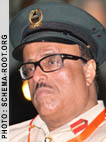
The Russian and Romanian governments have expelled each other’s diplomats in a spy scandal that made headlines in both countries last week. The spy affair began last Monday, August 16, when Russia’s Federal Security Service (FSB) announced the arrest of a Romanian diplomatic official, who was allegedly caught in the act of espionage. The official was later named as Gabriel Grecu, who was First Secretary of the Political Department of the Romanian embassy in Moscow. According to a laconic FSB press release, Grecu was detained while “attempting to solicit classified military information from a Russian national”. According to Russian media, the Romanian official was found “in possession of various pieces of espionage equipment”. Read more of this post

News you may have missed #415

  • GCHQ tech arm adopts new personnel evaluation tests. The Communications Electronics Security Group is the information assurance arm of the General Communications Headquarters –Britain’s equivalent of the National Security Agency. CESG has now adopted a new testing method of verifying the competency of its IT security professionals, because apparently there are “not enough security professionals in the public and private sectors to go around”.
  • Swapped Russian insists he was no CIA spy. Of the four jailed Russians the US received from Moscow in exchange for the 11 Russian illegals in July, only one is talking. But Igor Sutyagin, a nuclear proliferation expert, who was convicted of links with a CIA front-company, insists he was no CIA spy. However, if that is so, why was he on Washington’s swap list in the first place?
  • Militants target Yemen spy officials. Two officers in Yemen’s Political Security Organization, Colonel Ali Abdul Kareem al-Ban, and Juman Safian, have been shot dead in recent days. Al-Qaeda militants, who assumed responsibility for the attacks, warned they will be stepping up operations inside neighboring Saudi Arabia.

Bookmark and Share

Comment: What Can the US Do To Stop WikiLeaks?

Julian Assange

Julian Assange

By JOSEPH FITSANAKIS | intelNews.org |
Ever since whistleblower site WikiLeaks published 77,000 classified US military documents on the war in Afghanistan, several pundits have urged US government agencies, including the Pentagon, to take action. Late last week, former George W. Bush speechwriter Marc Thiessen urged the Pentagon to unleash its “cyber capabilities to prevent WikiLeaks from disseminating those materials”. Some columnists have even suggested that US intelligence services should “come up with an up-to-date photo of [WikiLeaks founder Julian] Assange and distribute it to […] SEAL sharpshooters”. Pentagon representatives have also stepped up their rhetoric, warning that “[i]f doing the right thing isn’t good enough for [WikiLeaks], we will figure out what alternatives we have to compel them to do the right thing”.

Read more of this post

News you may have missed #414

Bookmark and Share

Russian alleged CIA spy gives interview

Igor Sutyagin

Igor Sutyagin

By IAN ALLEN | intelNews.org |
Of the four Russians alleged spies that the US and the UK received from Moscow in exchange for the 11 Russian illegals in July, only one is talking to the media. The Russian government convicted Igor Sutyagin, a nuclear proliferation expert, of having links with Alternative Futures, a British consulting company alleged by Moscow to be a CIA front. This past weekend, Sutyagin, who now lives in an undisclosed London location, gave a detailed interview to Natalya Golitsyna, a London-based correspondent for US government-owned Radio Liberty’s. As in his previous statements to the press, the Russian scientist rejected he was ever a spy, claiming that “[t]he first thing in my mind […] was doing and thinking for my country”. He also rejected accusations that he provided Alternative Futures with classified information on Russian nuclear weapons policy: “there was no transfer of information”, said Sutyagin, noting that the information he shared with the British-registered company “was just an illustration of the processes that are going on in Russia tasks”. Read more of this post

Strike causes rift in Israeli diplomat-spy relations

Mossad seal

Mossad seal

By IAN ALLEN | intelNews.org |
Members of Israel’s striking diplomatic community say they will refuse cooperation with Israeli spies, after the latter stepped in to take over some of the striking diplomats’ tasks. The ongoing strike by the Diplomatic Association of the Israeli Ministry of Foreign Affairs aims to eliminate the notable income disparity between Israeli diplomats and civil servants in the country’s Ministry of Defense, who make almost double than their diplomatic colleagues. The impact of the strike on Israel’s worldwide diplomatic activity has been substantial, and has included cancellations of some state-level visits. One such visit is a trip by Israeli Prime Minister Benjamin Netanyahu to Greece, which the Israeli leader is keen on undertaking, despite the strike. Read more of this post

News you may have missed #413

  • Complex politics behind Ugandan spy chief’s removal. The recent sacking of Dr Amos Mukumbi from heading Uganda‘s Internal Security Organisation (ISO) was the handiwork of politics, intrigue and suspicion within the country’s intelligence community and between politicians. It was also related to ongoing turf wars between the ISO and its sister agency, the External Security Organisation.
  • Experts still evaluating WikiLeaks impact. Some analysts believe that the US intelligence establishment will call for an increased clampdown on secrecy in the wake of the WikiLeaks Afghan War Diary files release. But the data dump has also spurred those arguing that the US government needs to reduce the amount of information it classifies as secret, much of which may be unnecessary.
  • Radio program investigates the Mossad. BBC Radio has aired a relatively well-produced primer on Israeli intelligence agency Mossad. The BBC’s Security Correspondent Gordon Corera interviews former Mossad Director Efraim Halevy and former Mossad operative Rafi Eitan, among others.

Bookmark and Share

Germany lets captured Mossad spy suspect return to Israel

Mahmoud al-Mabhouh

Al-Mabhouh

By JOSEPH FITSANAKIS | intelNews.org |
German authorities have allowed an Israeli intelligence operative suspected of links to an assassination of a Palestinian official to return to Israel, despite outstanding passport forgery charges against him. The operative, whose travel documents identify him as Uri Brodsky, was arrested upon arriving in Poland on June 4, 2010. An Interpol arrest warrant for Brodsky had been previously issued by German prosecutors, who accuse Brodsky of  helping procure a forged German passport for use by a member of an assassination squad operating under Israeli intelligence agency Mossad. The user of the forged passport is believed to have used the travel document to enter Dubai, United Arab Emirates, in mid-January of this year, where he participated in the killing of Palestinian Mahmoud al-Mabhouh, a Hamas weapons procurer, who was found dead in his luxury Dubai hotel room on January 20. Polish authorities decided to extradite Brodsky to Germany despite intense diplomatic pressure from Israel, who pressed Warsaw and Berlin to allow the operative to return home to Israel without facing charges. But intelligence observers, who were initially impressed with Poland and Germany’s strong stance on the issue, soon realized that Brodsky’s extradition was part of a Polish-German-Israeli deal, under which Brodsky would avoid jail sentence and get away with a minor fine for forging an official German travel document. This is precisely what happened. Read more of this post

Analysis: Russian-Czech spy scandals show new direction in Russian espionage

ÚZSI seal

ÚZSI seal

By JOSEPH FITSANAKIS | intelNews.org |
Last July saw the resignations of three Czech Generals, including the head of the president’s military office and the country’s representative to NATO, following revelations that one of their senior staffers had a relationship with a Russian spy.  Intelligence observers have become accustomed to frequent reports of Russian-Czech spy scandals in recent years. But, according to reports from Prague, recent Russian intelligence activity in the Czech Republic may indicate a change of direction by Moscow. Some say that Russia’s new espionage doctrine focuses less on military intelligence in the post-US-missile-shield strategic environment, and more on political and economic espionage. To be sure, Russia’s intelligence presence in the Czech capital remains substantial: Czech counterintelligence sources estimate that at least 60 –that is, one in three– Russian diplomats in Prague are engaged in intelligence-related activities. But the intensity of Russian espionage in Prague is not unique. Read more of this post

CIA hid terrorism prisoners from US Supreme Court

CIA HQ

CIA HQ

By JOSEPH FITSANAKIS | intelNews.org |
The Central Intelligence Agency purposefully concealed at least four terrorism detainees from the US legal system, including the Supreme Court, according to an exclusive report by the Associated Press. The news agency has revealed that the CIA secretly transported the four to Guantánamo Bay Detention Camp on Cuba in 2003, two years before it publicly admitted their capture. It then secretly transferred them again to other sites in its black site prison network in various countries around the world, just three months before their prolonged stay at Guantánamo would entitle them to legal representation. While at Guantánamo, the four prisoners, Abd al-Nashiri, Mustafa al-Hawsawi, Ramzi Binalshibh and Abu Zubaydah, were kept at a facility known as ‘Strawberry Fields’, which is detached from the main prison site at the bay. By hiding the four, the Bush Administration managed to keep them under CIA custody while denying them legal representation for two years longer than allowed by US law. It also concealed their detention from national and international human rights monitoring bodies and from the US justice system, including the Supreme Court. Read more of this post

News you may have missed #412

Bookmark and Share

German ex-spies to be fined for advertising skills online

BND seal

BND seal

By IAN ALLEN | intelNews.org |
At least a dozen German former intelligence officers are to face disciplinary action after they were found advertising their past spy careers on a job-seekers’ professional networking Web site. The German government authorized the country’s leading external intelligence agency, the Federal Intelligence Service (BND), to initiate an internal investigation, after German tabloid newspaper Bild drew attention to the online revelations in a leading article. The newspaper listed 12 former BND officers who advertised their past intelligence careers on their publicly listed résumés on Xing.com, a German-language website that serves as Germany’s version of LinkedIn.com. German federal legislation expressly forbids BND personnel from ever publicly revealing their professional ties with the spy agency, even after dismissal, resignation or retirement. Read more of this post

News you may have missed #411

  • Third Lebanese telecom worker charged with spying for Israel. A Lebanese prosecutor has charged a third state telecommunications employee with spying for Israel. Milad Eid, who worked at the state-owned fixed-line operator Ogero, is accused of “dealing with the Israeli enemy [and] giving them technical information in his position as head of international communications at the Telecommunications Ministry”.
  • Author Roald Dahl was British spy, new book claims. A new book by Donald Sturrock, entitled Storyteller: The Life of Roald Dahl, claims that children’s author worked for British Security Coordination (BSC), a 1940s secret service network based in the United States, and was ‘run’ from New York by Canadian industrialist William Stephenson.
  • Israeli nuclear whistleblower wants to leave country. Nuclear whistle-blower Mordechai Vanunu has been released from prison after serving a 10-week sentence for violating the terms of his parole by speaking to a foreign journalist. Upon his release, he asked that he be allowed to leave the country.

Bookmark and Share

Mossad operative to avoid jail in extradition deal

Uri Brodsky

"Uri Brodsky"

By IAN ALLEN | intelNews.org |
An operative of Israeli intelligence agency Mossad, who was arrested in Poland on charges of forging a German passport, will avoid prison time for the offense, under a suspected Polish-German-Israeli secret deal. The man, whose travel documents identify him as Uri Brodsky, was arrested upon arriving in Poland on June 4. He is wanted by German prosecutors for procuring a forged German passport for use by a member of a Mossad hit squad, who used it to enter Dubai, United Arab Emirates, in mid-January of this year. The user of the forged passport is thought to have participated in the killing of Mahmoud al-Mabhouh, a Hamas weapons procurer, who was found dead in his luxury Dubai hotel room on January 20.  German prosecutors believe that Brodsky, who worked in Germany under the name of Alexander Werin, assisted numerous Mossad operatives acquire forged identity papers of several European countries, including Estonia, Latvia, Austria and Switzerland. Read more of this post