Venezuelan intelligence spied on Citgo executives on US soil, spy alleges

CitgoVENEZUELAN INTELLIGENCE SERVICES SPIED on executives of the Citgo Petroleum Corporation in the United States for at least a year, according to court testimony by a Venezuelan former counterintelligence official. The espionage targeted six executives of Citgo, a Texas-headquartered oil company owned by the Venezuelan government. The executives have been named as Gustavo Cardenas, Jose Luis Zambrano, Jose Pereira, Alirio Jose Zambrano, Tomeu Vadell and Jorge Toledo. Five of them are reportedly American citizens.

In 2017 the Venezuelan government accused the six executives of knowingly involving Citgo in a corrupt refinancing agreement, thus damaging the company’s financial wellbeing. They were arrested in Caracas and last year were given prison sentences ranging from eight to 13 years. The United States government condemned the court proceedings for lack of impartiality, and late last year imposed sanctions on the judge and leading prosecutors in the case.

On Wednesday the Reuters news agency said it had reviewed court documents from the appeal of the so-called “Citgo Six”. The documents include testimony from Ramon Balza, who in 2017 was director of operations for the Directorate General of Military Counterintelligence (DGCIM). The DGCIM is the military counterintelligence agency of Venezuela. According to Reuters, Balza told the appeals court on August 11 that the DGCIM and other Venezuelan intelligence agencies have been monitoring senior Citgo officials “ever since [Citgo] became Venezuelan”. He added that the monitoring includes physical surveillance, as well as wiretaps.

Balza’s testimony suggests that DGCIM and other Venezuelan intelligence personnel spied on the six (and possibly other) Citgo executives on American soil prior to their arrest in 2017. It is also possible, says Reuters, that the espionage against the executives was carried out by non-diplomatic foreign agents of Venezuela.

Author: Ian Allen | Date: 04 March 2021 | Permalink

Turkey and United States co-examine Russian missile system captured in Libya

Mitiga International AirportTURKEY AND THE UNITED States, two North Atlantic Treaty Organization (NATO) allies with a checkered relationship, have agreed to jointly examine a Russian missile system that was captured by fighters in Libya. Turkish troops are present on the ground in Libya, where they are fighting in support of the United Nations-backed Government of National Accord (GNA) in Tripoli. The United Arab Emirates and Russia support the Tobruk-based Libyan National Army (LNA) of General Khalifa Haftar.

Last year, General Haftar led the LNA in a major offensive aimed at capturing Tripoli and ending the conflict between the two sides, which has raged for nearly a decade. He was supported by Emirati advisors and Russian troops, which are ostensibly in Libya as private security contractors, but are commonly thought to receive directions from the Kremlin. In a surprise move, Turkey sent troops to assist in the defense of Tripoli. These troops were instrumental in beating back the LNA, and effectively terminating General Haftar’s ambitions.

In the process of beating back General Haftar’s’s offensive, GNA fighters took over the LNA’s airbase in Al-Watiya, 100 miles southwest of Tripoli, which LNA forces abandoned in haste. Among the looting was a Russian-built Pantsir missile defense system —reportedly captured in pristine condition. This is the Russian armed forces’ state-of-the-art self-propelled anti-aircraft system, which fires medium-range surface-to-air missiles. It had reportedly been given to the LNA by the Emiratis.

The captured Pantsir system disappeared for a few weeks, and eventually reappeared in the hands of a local militia in the town of Zawiya. The militia is commanded by Mohamed Bahroun, a Libyan warlord with links to the Islamic State. Turkish troops struck a deal with Bahroun, whose forces agreed to deliver the Pantsir to the Turkish-controlled Mitiga International Airport on the outskirts of Tripoli. Shortly afterwards, the United States warned Turkey that it was prepared to forcibly take control of the missile system, fearing that it could fall in the hands of the Islamic State. Washington also wanted to get its hands on Russia’s state-of-the-art anti-aircraft system.

According to reports, the two countries reached a deal in recent weeks. The United States sent a C-17 Globemaster cargo plane to Mitiga airport from its AFRICOM base in Germany, and collected the Pantsir. It then delivered it to Ankara, where it is now being examined by a joint team of Turkish and American weapons experts. Some weapons specialists suggest that this development could significantly affect Russia’s ability to counter NATO military systems, given that the Pantsir’s technology will now be compromised.

Author: Joseph Fitsanakis | Date: 03 March 2021 | Permalink

Analysis: Without fanfare, FBI places Putin’s right-hand man on most wanted list

Yevgeny PrigozhinWITHOUT MUCH FANFARE LAST week, the Federal Bureau of Investigation placed on its most wanted list Yevgeny Prigozhin, who is one of Russian President Vladimir Putin’s closest collaborators. Known as “Putin’s chef”, for providing catering services to the Kremlin, Prigozhin was indicted in February 2018 by United States prosecutors for his alleged role in Russia’s meddling in the 2016 presidential elections. According to the Special Counsel investigation, led by Robert Mueller, Prigozhin bankrolled the Internet Research Agency (IRA), which in turn played a central coordinating role in the effort to influence the outcome of the elections.
But it is one thing to be indicted by the US government, and quite another to be placed on the FBI’s most wanted list. What does this mean? And why did the FBI wait three years to place Prigozhin on its list of infamy?

With characteristic flamboyance, Prigozhin boasted victory against the FBI back in March of 2020, when US federal prosecutors requested that the Mueller-era criminal case against Concord Management and Consulting (CMC) be dismissed. Founded in 1995, CMC is Prigozhin’s flagship company. According to the US government, CMC was used to fund the IRA’s activities in the run-up to the 2016 US elections. Although some were surprised by that decision, it made sense from an intelligence point of view. US federal prosecutors said at the time that it would not be possible to prove the allegations against CMC due to a “classification determination”. The term basically meant that the US government could not prove the claims made against CMC without revealing “methods and sources”. The term refers to witnesses that have probably been recruited as US government assets, as well as to methods of surveillance that the government wishes to keep secret.

Even though the individual indictment against Prigozhin was never dropped, the flamboyant Russian boasted at the time that the dismissal of the case against CMC proved that he was not implicated in the US election meddling affair. He became even more boastful after September of last year, when Interpol removed his name from its international alert list. He reportedly began traveling outside Russia again, something that he had stopped doing after his 2018 indictment, out of an abundance of caution. At that time, everyone assumed that US prosecutors would eventually drop the case against Prigozhin too, for the same reason they had dropped the CMC case —namely a “classification determination”. Read more of this post

British SIGINT agency vows to integrate artificial intelligence into its operations

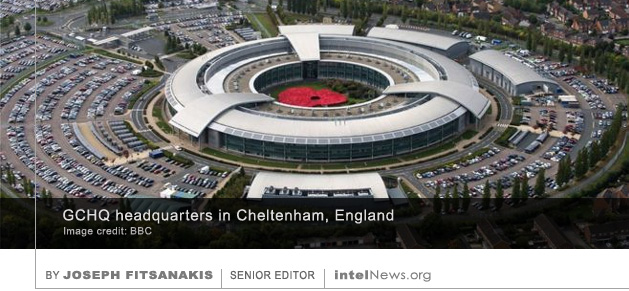
GCHQBRITAIN’S GOVERNMENT COMMUNICATIONS HEADQUARTERS, one of the world’s most advanced signals intelligence agencies, has published a position paper that vows to embrace artificial intelligence in its operations. For over 100 years, GCHQ, as it is known, has been in charge of spying on global communications on behalf of the British state, while protecting the government’s own communications systems from foreign espionage. In a report published on Thursday, the agency says it intends to use artificial intelligence (AI) to detect and analyze complex threats, and to fend against AI-enabled security challenges posed by Britain’s adversaries.

The report, entitled “Pioneering a New National Security: The Ethics of AI”, includes a foreword by GCHQ Director, Jeremy Fleming. Fleming was a career officer of the Security Service (MI5) until he became head of GCHQ in 2017. In his introductory note he argues that “technology and data” are engrained in the structure of GCHQ, and that AI has “the potential […] to transform [the agency’s] future operations”. The report acknowledges that GCHQ has been using AI for some time for functions including intelligence collection and automated translation. But the ability of AI to distinguish patterns in large sets of data in seconds, which would normally take humans months or years to detect, offers a transformational potential that should not be overlooked, it posits.

Security-related applications of AI are endless, says the report. They include measures against online child exploitation —for instance by detecting the methods used by child sex abusers to conceal their identities across multiple online platforms. Another potentially revolutionary application would be mapping global drug- or human-trafficking networks, by analyzing up-to-the-minute financial transactions and money-laundering activities around the world. Illicit activities that take place in the so-called “dark web” could also be mapped and monitored by AI systems, according to the report.

The report also states that GCHQ will seek ways to promote AI-related research and development in the United Kingdom. Its goal will be to establish bridges with industry by funding start-up ventures in AI, it states. Lastly, GCHQ will seek to formulate an ethical code of practice in AI, which will include best-practice guidelines, and will purposely recruit a diverse personnel of engineers, computer and data scientists. Future reports will tackle emerging technologies such as computational science and synthetic biology, among many others, the GCHQ report concludes.

Author: Joseph Fitsanakis | Date: 26 February 2021 | Permalink

Sweden charges consultant with spying for Russia, expels Russian diplomat

ScaniaA SWEDISH MAN HAS been charged with spying for Russia, after he was apprehended while meeting with a Russian diplomat stationed at the Russian embassy in Stockholm. Neither the Swedish man nor the Russian diplomat —who is believed to have been expelled from Sweden— have been named. Swedish government officials reportedly expelled the Russian diplomat following the incident, accusing him of working as an intelligence officer under diplomatic cover.
Government prosecutors said the Swedish man is 47 years old and worked as a consultant for numerous Swedish manufacturers. His employers included the car manufacturer Volvo, as well as Scania, a company that builds commercial vehicles, such as buses and trucks. According to Sweden’s public broadcaster, SVT, the man was arrested two years ago, in February 2019, while he was meeting in Stockholm with an accredited Russian diplomat. According to news reports, during the meeting the Swedish man gave the Russian a bag containing commercial secrets. In return, he received an envelope containing 27,800 Swedish kronor (US$3,350). These were confiscated by Swedish counterintelligence.

The indictment states that the 47-year-old Swede spied for Russia “for a number of years”, during which he routinely “transferred commercial secrets from his work computer to his home computer”. He would then transfer the files to USB memory sticks and pass them on to his Russian hander. Eventually, when his employer installed security software that monitored employees’ use of USB memory sticks, the consultant resorted to photographing material appearing on his work computer screen. He now faces “a lengthy sentence” if convicted, according to SVT.

Author: Joseph Fitsanakis | Date: 24 February 2021 | Permalink

Top Syrian chemical weapons scientist spied for CIA for 14 years, new book claims

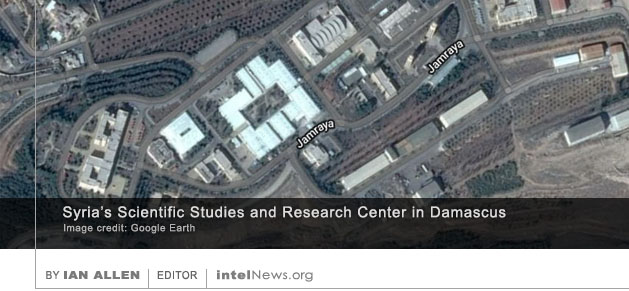
Syrian Scientific Studies and Research CenterTHE TOP SCIENTIST IN Syria’s chemical weapons program, reputed to be among the world’s deadliest, spied for the United States Central Intelligence Agency for 14 years, according to a new book by Pulitzer Prize-winning reporter Toby Warrick. The claim is included in Warrick’s latest book, Red Line: The Unraveling of Syria and America’s Race to Destroy the Most Dangerous Arsenal in the World, which has been published this week by Doubleday.
The scientist, whose name Warrick is withholding from publication, was partly educated in the United States in the 1980s, after receiving an academic scholarship. Upon returning to Syria, he became a senior researcher in Institute 3000, a secret chemical weapons program that was hidden within the Damascus-based Scientific Studies and Research Center (SSRC). Known mostly by its French name, Centre D’Etudes et de Recherches Scientifiques (CERS), the center coordinated scientific research throughout the country. Camouflaged as a CERS engineering outfit, Institute 3000 maintained over 40 research and storage facilities that manufactured and housed Damascus’ stockpiles of military grade sarin, mustard gas, VX, and other nerve agents.

Citing interviews with “three former US intelligence officials familiar with the case”, and with a Syrian defector who knew the scientist, Warrick claims that the scientist was in his 30s when he reached out to the CIA. It allegedly happened in the mid-1990s, when the scientist was attending a conference in Europe. A number of months later, the scientist, who is simply referred to as “Ayman” in Warrick’s book, was approached in Damascus by a CIA case officer. He soon began sharing classified information with the CIA, which included samples of nerve agents that the Syrians were working on. In return he received regular payments from the US spy agency “in the form of cash transfers to a foreign bank account”, according to Warrick.

But the scientist’s service to the CIA ended abruptly in late 2001, says Warrick, when officers from Syria’s Mukhabarat intelligence agency appeared at his Damascus office and took him away for questioning. It turns out they were there to investigate reports that he had been asking foreign suppliers to CERS for payoffs, in return for recommending them for contracts with the research agency. But the scientist thought his work for the CIA had been betrayed, so he confessed to everything, without realizing that the Mukhabarat had no idea about his espionage. He was executed by firing squad on April 7, 2002 in the Adra Prison, on the northeast outskirts of Damascus, says Warrick.

Author: Ian Allen | Date: 22 February 2021 | Permalink

Iran spies on dissidents via web server based in Holland, registered in Cyprus

Computer hackingA WEB SERVER BASED in Holland and owned by a company registered in Cyprus is being used by the Iranian government to spy on its critics abroad, according to Dutch public radio. The information about Iranian espionage was revealed on Thursday by NPO Radio 1, one of Holland’s public radio stations, with the help of Romanian cybersecurity firm BitDefender.
The discovery was reportedly made after an Iranian dissident based in Holland was sent an infected file by a user of the popular instant messaging application Telegram. Instead of opening the file, the recipient contacted cybersecurity experts, who identified it as a type of infected software that is known to have been used in the past by the Iranian state. Once it infects a computer, the software takes screenshots and uses the machine’s built-in microphone to make surreptitious recordings.

According to BitDefender’s cybersecurity experts, the server is being used for “command and control” functions in order to facilitate remote control of infected computers and phones. These functions include stealing data, as well as collecting screen shots and audio recordings. The server had been previously used to penetrate computers in Holland, Sweden, Germany, and several other countries, including India.

Cybersecurity experts from BitDefender found that the infected file was delivered to its target via a web server facility based in Haarlem, a city located 20 miles west of Amsterdam. The cybersecurity company said the server is registered to a company that belongs to a Romanian service provider. The company is registered in Cyprus and provides services to a number of companies, including in this case an American company. The latter reportedly stopped using the service provider once it was told of the Iranian connection, according to reports.

Author: Joseph Fitsanakis | Date: 19 February 2021 | Permalink

Citing security concerns, Lithuania bans Chinese airport baggage scanners

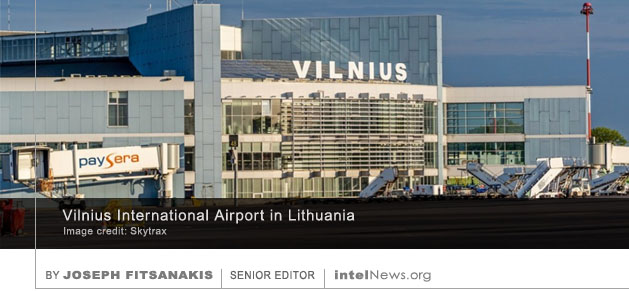
Vilnius International AirportCITING NATIONAL SECURITY GROUNDS, the government of Lithuania has canceled an agreement with a Chinese-owned company to supply baggage-scanning equipment at airports across the Baltic country. The Beijing-based company, Nuctech, is owned by Tsinghua Tongfang, which is in turn controlled by the China National Nuclear Corporation (CNNC). Tasked with managing China’s nuclear fuel supply and development program, CNCC is owned by the Chinese government.
Since its founding in 1997, Nuctech has become a major supplier of security-screening products and equipment in airports in Asia, Europe and Africa. Early in 2020, the company was awarded a competitive bid to install baggage-scanning equipment at several major Lithuanian airports, including those in Vilnius, Kaunas and Palanga. But in January of this year, it was reported that the United States government had approach several European governments with the aim of convincing them to drop Nuctech on security grounds. The Americans were claiming that passenger data collected by Nuctech could potentially be shared with the Chinese intelligence services, under a 2017 law that obligates state-owned companies to contribute to national intelligence gathering.

On Wednesday, following a closed-door meeting of the Lithuanian cabinet, a spokesman for the prime minister’s office announced that the government had “decided that the contract [with Nuctech] does not meet the interests of national security”. Earlier on Wednesday, a local news agency had quoted the United States ambassador to Lithuania, Robert Gilchrist, as saying that Washington welcomed the fact that Lithuania was reconsidering Nuctech’s role in airport security. Late on Wednesday, a Nuctech representative said the company failed to understand the Lithuanian government’s reasoning for canceling the agreement, since the scanning equipment used in Lithuanian airports would be manufactured in Poland, rather than in China.

Author: Joseph Fitsanakis | Date: 18 February 2021 | Permalink

Ion Pacepa, Cold War’s highest-ranking Soviet Bloc defector, dies of COVID-19

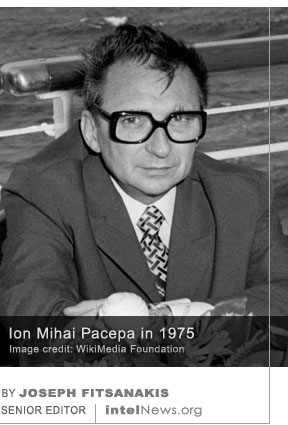
Ion Mihai PacepaION MIHAI PACEPA, WHO defected to the West as acting head of the Romanian intelligence service, making him the Cold War’s highest-ranking defector from the Soviet Bloc , has reportedly died in the United States of COVID-19. There has been no official announcement of Pacepa’s passing. However, a number of American and Romanian news outlets have reported his death in the past week, noting that he passed away on February 14. He reportedly died in hospital at “an undisclosed location”, having lived under protection from the Central Intelligence Agency’s National Resettlement Operations Center since his defection in 1978. He was 92.

Pacepa was born in Bucharest in 1928. He joined the Securitate, Romania’s secret police and intelligence service, in 1951, having earlier graduated with a degree in engineering from the Bucharest Polytechnic Institute. From his initial post in the Securitate’s Counter-Sabotage Directorate —a domestic assignment— Pacepa was moved to its Foreign Intelligence Directorate in 1955. He gradually reached the rank of station chief, serving in Frankfurt, West Germany. By the early 1970s Pacepa had reached the equivalent rank of a two-star general, and served as advisor to the Romanian President Nicolae Ceauşescu on matters of industrial and technological innovation. In 1978 he was appointed assistant secretary of the Ministry of the Interior and acting director of the Securitate.

But in July of that year, Pacepa defected to the United States while on assignment in Bonn, West Germany. He simply presented himself to the United States embassy there and was soon granted political asylum by Washington. Since that time, he lived under an assumed identity in a series of undisclosed locations in the United States. He reportedly had to change his living arrangements and assume new identities at least twice after his defection, in order to escape Romanian assassination squads who had been tasked with killing him. Among Pacepa’s aspiring assassins was Carlos the Jackal, who had allegedly been promised $1 million by Ceauşescu in return for killing the high-ranking defector.

Pacepa authored several books since his defection, with this first one, Red Horizons: Chronicles of a Communist Spy Chief, being the most notable. Translated from the original English into Romanian, the book was used by the prosecutors that argued in favor of the death penalty for Ceauşescu and his wife, Elena. Both were executed by firing squad in December 1989.

Author: Joseph Fitsanakis | Date: 17 February 2021 | Permalink

Rumors of federal informants are splintering American far-right groups

Proud BoysPERSISTENT RUMORS ABOUT THE existence of federal informants in their midst are dividing some of the American far-right groups that participated in last month’s attack on the Capitol in Washington. As Yahoo News’ Will Sommer and Kelly Weille correctly point out, mutual suspicions and paranoia about government informants are nothing new in American far-right circles. These groups always assume that they are being monitored by government, and have sophisticated counterintelligence practices in place.

But mutual suspicion between leading far-right figures and their supporters has reached new heights in recent weeks, according to reports. This is most notable among the Proud Boys, which is arguably the most recognizable group in the militant fringes of the Republican Party. Ever since a report by the Reuters news agency last month claimed that the leader of the organization, Enrique Tarrio, was a federal informant, the Proud Boys have seen many of their local groups splinter. Numerous senior leaders in the organization have reportedly voiced suspicions against each other, while several state chapters have left the national organization.

The split appears to be led by several Proud Boys chapters in Indiana, which have denounced the organization’s leadership. A number of chapters in Oklahoma have followed suit. Meanwhile, Yahoo News reports that the Manitoba chapter of the Proud Boys has dissolved. Many other chapters in Canada are expected to follow suit, after the Canadian government officially declared the organization a terrorist entity. Acceding to reports, Australia and New Zealand are considering following on Canada’s steps.

Author: Ian Allen | Date: 15 February 2021 | Permalink

Irish officials raise espionage concerns about expansion of Russian embassy in Dublin

IRELAND’S COUNTERINTELLIGENCE SERVICE HAS launched an investigation into an expansion project at the embassy of Russia in Dublin. According to sources cited by The Times newspaper, the Irish government is concerned that the expansion project is part of a secret plan by Moscow to turn its embassy in Dublin into a major espionage hub in Europe.

The two nations had no diplomatic relations until September 1973, when the Republic of Ireland officially recognized the Soviet Union, and the two countries proceeded to establish embassies at each other’s capitals. Since then, the Russian embassy in Dublin has been located on Orwell Road, in the southern suburb of Rathgar. For at least three decades, the embassy has been considered by Western intelligence a hub of Russian intelligence collection operations in Europe. Some claim that the tranquil environs of the Irish capital, coupled with Ireland’s relatively relaxed counterintelligence posture, have encouraged Moscow to use its Dublin embassy as a support base for espionage activities throughout much of Western Europe.

But the Irish government changed its stance in 2018 when, in a surprising move, it introduced emergency legislation aimed at stopping a previously approved expansion of the Russian embassy complex. The government reportedly feared that the initial plan, which proposed to add 86,000 sq ft of structures to the embassy’s existing 21,000 sq ft of building space, threatened Ireland’s national security. The Russians had little choice but to comply with the restrictions imposed by the Irish government. Now, however, the Irish government is reportedly concerned that Moscow was able to proceed with the establishment of an “intelligence hub”, despite the reduced size of the embassy’s expansion.

According to The Times, the Irish government’s concerns center on a building inside the Russian embassy compound, “whose design appears to incorporate military security features”. Another issue concerns an underground car park built by the Russians at the southern rear of the embassy complex, which can accommodate up to 23 vehicles. Apparently, Irish officials cannot explain why the Russians would go to the added trouble —and expense— of building an underground car park, when there appear to be sufficient car parking spaces above ground inside the embassy compound.

The paper reports that the new review of the Russian embassy compound is being led by the Directorate of Military Intelligence and the National Crime and Security Intelligence Service of the Garda, Ireland’s national police and security service. These two entities are expected to brief the National Security Committee in the coming weeks. Known also as “Cabinet Subcommittee F”, the National Security Committee is Ireland’s highest executive decision-making body, which is led by the prime minister.

Author: Joseph Fitsanakis | Date: 12 February 2021 | Permalink

Opinion: Israel Security Agency should tackle organized crime in the Arab sector

Israeli policeLAST MONTH I WROTE an article on Ynet, Israel’s most popular news website, calling on the Israel Security Agency (ISA) to prevent organized crime in the Arab sector in Israel, which has reached a level that the police cannot deal with. The article caused a broad public debate in Israel, as it marked the first time that the ISA was urged to take responsibility outside its security jurisdiction. It elicited public support, as well as opposition against perceived further invasion of privacy and granting additional powers to the ISA.

Crime in the Arab sector in Israel —especially murders— has reached record highs and is rising year after year. In 2020, over 100 people were killed in the Arab sector. There are many allegations that the police are failing to stop this murky wave of crime. The police are at a loss. The opening of more police stations in the Arab sector and increases in the forces allocated to the Arab sector have not made an impact on this gloomy picture.

The most serious crime in the Arab sector, especially organized crime, requires making out-of-the-box, inventive decisions. The Israel Police is not succeeding in this for several reasons: it has no quality intelligence; there is public distrust in the police that prevents citizens from cooperating with it; the police are perceived as an unreliable body that cannot maintain the confidentiality of sources; and mainly because the police is not an intelligence-oriented organization. The issue of crime in this sector, much of which is organized, requires advanced intelligence capabilities and only the ISA knows how to deal with organizations and individuals operating in secret. This is because the ISA has gained vast experience in covering the Arab sector in Israel for counterintelligence reasons. Read more of this post

MI6 starts recruiting naturalized British citizens after change in rules

MI6BRITAIN’S MAIN EXTERNAL INTELLIGENCE agency has begun hiring foreign-born British citizens for the first time in decades, reportedly in an effort to augment the skillsets of its personnel and diversify its workforce. For much of its history, the Secret Intelligence Service, known informally as MI6, required potential recruits to have been born in the United Kingdom to British-born parents. This excluded British-born children of immigrants to the United Kingdom.

In 2018, however, MI6 shelved the requirement that both parents of employment candidates had to be British-born. Since then, children of immigrants to the United Kingdom could apply for employment, so long as they had been born on British soil and held a British passport. This rule has now been shelved too. From now on, naturalized British citizens will be considered for work at MI6. The only stipulation is that one of their parents must be (or have been, if deceased) a British citizen, or have “substantial ties” to the United Kingdom.

The spy agency states that dual or multiple citizens who are hired to work at MI6 may be required to formally renounce their non-British citizenship(s), “depending on the type of role that they are offered”. reported to a government source cited in the London-based Times newspaper, the change in recruitment practices is aimed at creating a workforce “with a diversification of thought, not people who all think in similar ways”. The change in recruitment rules comes on the heels of a decision last year to lower the minimum age requirement for employment at MI6 from 21 to 18 years.

In a related development, several British newspapers reported last month that the spy agency had begun to recruit for the first time “part-time consultants” with valuable skills or contacts overseas. In several job advertisements that appeared online or in print publications, MI6 said it is seeking candidates with “diverse skill sets and life experiences for part-time and consulting roles”. The advertisements also note that MI6 is looking for “highly desirable individuals” with “expertise in their chosen field”.

Author: Joseph Fitsanakis | Date: 10 February 2021 | Permalink

Norwegian intelligence warns of new types of nuclear weapons developed by Russia

NIS NorwayTHE RUSSIAN MILITARY IS developing powerful new types of nuclear weapons, which cannot be contained in the framework of existing arms control treaties, according to a new report by Norwegian intelligence. The report, published on Monday by the Norwegian Intelligence Service (NIS), comes on the heels of a last-minute extension of the New START nuclear reduction treaty between the United States and Russia. On February 3, just days prior to its formal expiration, Washington and Moscow announced an emergency extension of the treaty, which will now last until February 2026.

But according to Focus 2021, the NIS’ annual assessment of ongoing security challenges, the New START treaty is insufficient to cover some of the new nuclear weapons that are being developed by the Russian Armed Forces. In an interview with The Barents Observer, NIS Director Vice Admiral Nils Andreas Stensønes, warned that, among other notable changes, the new Russian nuclear weapons “fly low or travel underwater”. This makes them extremely difficult to be detected by existing missile defense systems, he said.

The NIS report notes that the new Russian nuclear weapons are not yet operational. However, the Russian military is currently testing and developing them across military bases situated in northern Russia, some of which are located near Norwegian territory. Among these weapons is the Poseidon, which is described as a “nuclear-powered, nuclear-tipped underwater mega-drone”. Another concern for the NIS is the Burevestnik, a nuclear-powered cruise missile, which is reported to have global reach and is said to be able to evade existing missile defense systems.

Author: Joseph Fitsanakis | Date: 09 February 2021 | Permalink

UAE cyber-hacking program spied on Michelle Obama’s emails, book claims

Michelle ObamaMICHELLE OBAMA HAD SOME of her personal emails intercepted by a group of American cyber-spies who were working for the government of the United Arab Emirates (UAE), according to a new book. The book, This Is How They Tell Me the World Ends, is written by Nicole Perlroth, who covers cybersecurity-related topics for The New York Times. It tackles what the author describes as the global “cyber-weapons arms race” and its impact on international security.

Among the topics discussed in the book is Project RAVEN, a highly intrusive cyber-espionage effort by the government of the UAE. The project was allegedly aimed at neutralizing domestic and international targets, which the UAE monarchy saw as threats to its survival. According to the Reuters news agency, which revealed the existence of Project RAVEN in 2019, its targets included foreign governments, officials of international bodies, as well as suspected terrorists and human rights activists.

As the dispute between the UAE and Qatar deepened, Project RAVEN increasingly targeted the island oil kingdom. In one notable instance, UAE cyber-spies hacked into the email accounts of officials at the International Federation of Association Football (FIFA) in an unsuccessful effort to sabotage Qatar’s bid to host the 2022 football World Cup. According to Reuters, the cyber-spies sought to unearth damaging and potentially embarrassing private information about Qatari officials, and leak them in order to damage Qatar’s candidacy for the high-profile sporting competition. According to the news agency, several American former employees of the National Security Agency were involved in Project RAVEN.

Now Perlroth’s book claims that Project RAVEN’s cyber-spies acquired a series of emails exchanged between Moza bint Nasser, wife of Qatar’s then-ruling Emir, Hamad bin Khalifa Al Thani, and Michelle Obama, when she held the position of America’s First Lady. The emails, which were intercepted in 2015, contained the US first lady’s personal thoughts, information on her security detail, and the travel details of her planned visit to Doha later that year. According to Perlroth, the inclusion of Obama’s emails into Project RAVEN’s targets caused at least one American involved in the effort, a former NSA analyst, to quit and leave the UAE. The Emirati monarchy has not commented on allegations about Project RAVEN.

Author: Joseph Fitsanakis | Date: 08 February 2021 | Permalink