Revealed: British government minister spied for Czechoslovakia

Raymond MawbyBy JOSEPH FITSANAKIS | intelNews.org |

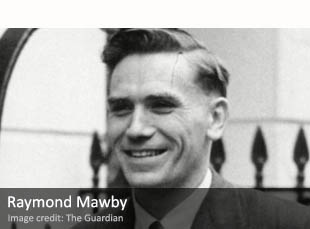
The BBC has uncovered evidence that a Conservative Party minister was a longtime paid informant for Czechoslovakia’s Cold-War-era secret intelligence service. The discovery was made earlier this month by the BBC’s security correspondent, Gordon Corera, while visiting the declassified archives of the Czechoslovakian ŠtB to investigate an alleged attempt to blackmail British Conservative politician Edward Heath in the 1970s.  Corera’s discovery shows that Raymond Mawby, who was a Tory Member of Parliament from 1955 until 1983, spied for the ŠtB in return for money for nearly a decade, starting in 1961.  The BBC describes Mawby, who served as assistant Postmaster General from 1963 to 1964, and rose to the rank of junior minister in 1963, as “an unusual Tory”, since he was “a working class trade unionist” from Devon. Indeed, his extensive ŠtB file, uncovered by the BBC, shows that he was not as loyal to conservative values as one might think. Mawby was first approached by Czechoslovakian intelligence in November 1960, while attending a cocktail reception at the Czechoslovakian embassy in London. His contacts with his ŠtB handlers became more frequent during the following year when, operating under the codename Laval, he began providing them with political information from the British Houses of Commons, in exchange for regular payments of £100. By 1964, he was on a £400 monthly retainer by the ŠtB, in return for supplying the Czechoslovaks with documents from Parliament, details about the personal lives of his colleagues, and lists of Parliamentary committee members. In one instance, Mawby even supplied his foreign handlers with a hand-drawn floor plan of the office of the Prime Minister at 10 Downing Street. Read more of this post

News you may have missed #754

Jonathan EvansBy IAN ALLEN | intelNews.org |
►►New German spy HQ to open a year late. The BND, Germany’s foreign intelligence service, was due to move from its base in Pullach, near Munich, to an enormous newly built center in Berlin, at the end of 2014. But that has now been officially put back by a year. The Berliner Morgenpost newspaper quoted BND president Gerhard Schindler saying he was “regularly losing young new staff”, due to the delay. The uncertainty has meant “they leave our authority and find themselves another employer”, he said.
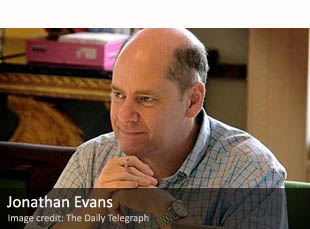
►►UK spy chief warns of ‘astonishing’ levels of cyberespionage. In a rare public speech, Jonathan Evans, director general of MI5, Britain’s domestic spy service, has said that the West now faces an “astonishing” cyberespionage threat on an “industrial scale” from specific nation states. He said that cyberespionage is now conducted “with industrial-scale processes involving many thousands of people lying behind both state-sponsored cyber espionage and organized cyber crime”. Surely, however, Evans does not mean to imply that the West’s role in cyberespionage is purely defensive?
►►Aussie spy agency lacks resources to vet asylum seekers. An official audit into the Australian Security Intelligence Organisation’s ability to vet asylum seekers for potential security threats, has found that it is struggling with the “sharp increase” in boat arrivals, rudimentary computer systems and 30 per cent fewer staff than needed. The audit report examined 411 cases as a sample of the almost 180,000 security assessments ASIO completes each year.

Guest Comment: India’s corporate espionage boom

AssoCham IndiaBy BRITTANY MINDER | intelNews.org |
A survey conducted earlier this month by the Associated Chambers of Commerce and Industry of India (AssoCham) found that corporate espionage in India is surging. The June 14 survey found that 35 percent of Indian firms regularly and aggressively conduct research on competitors and employees, which goes far beyond the normative business intelligence realm. Secretary General of AssoCham, D.S. Rawat, maintained that “demand from certain industries, such as information technology, infrastructure, insurance, [and] banking and manufacturing is overwhelming”. With an increasing demand for espionage gadgetry, up nearly 30 percent from last year, the survey also noted that “almost all the company representatives in these domains acknowledged the prevalence of industrial espionage to gain access to information and steal trade secrets of their competitors through private deals with sleuths and spy agencies”. The appetite for corporate espionage and gadgets doesn’t stop at rival-on-rival activity; espionage is a pursuit while industrial espionage is a practice. Overall corporate vulnerabilities, a lack of appreciation for corporate security best practices, and the tangible motivation of revenue is, according to AssoCham, driving, “companies who have strong unions and are vulnerable to pilferage hire spy agencies and plant an under-cover agent, a mole in minor job profiles in rival companies to ascertain if union leaders are getting paid for creating trouble”. According to The New York Times, conservative acknowledgements of the boon of the corporate spy industry willingly concede that some companies even hire “mystery vendors” to gauge their own employees’ response to sifting from outsiders. Read more of this post

News you may have missed #753

James ClapperBy IAN ALLEN | intelNews.org |
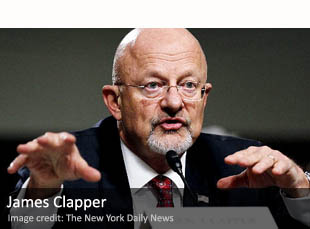
►►US spy agencies consider new polygraph questions. The US Director of National Intelligence, James Clapper, is considering a proposal to force intelligence agency employees to answer a direct question in their polygraph examinations about whether they have disclosed information to reporters. The Los Angeles Times quotes “officials familiar with the matter”, who say that Clapper is preparing “changes to the counterintelligence polygraph policy”, though “no final decisions have been made”.
►►Ex-“New Republic” editor speaks out against Pollard release. Few American journals can claim to have stood more staunchly by Israel than The New Republic. So we should be paying attention when Martin Peretz, who edited the magazine from 1974 until 2011, comes out against the proposed release of Jonathan Jay Pollard. Pollard is a former US Navy analyst, who is serving a life sentence for spying on the US for Israel. Peretz calls Pollard “a scoundrel spy” and reminds his readers that “before he decided to deliver reams of sensitive [US] intelligence and defense documents to Israel’s security apparatus, [Pollard] was negotiating with Pakistan […] to do similar chores for it”.
►►UK leader considered using special forces to seize Russian ship. British Prime Minister David Cameron considered ordering British special forces to board and impound a Russian ship suspected of carrying arms to Russian ally Syria, it has emerged. The ship, MV Alaed, was sailing in British waters when the US placed pressure on Britain to halt it. But the Russian ship suddenly changed course about 50 miles off the north coast of Scotland and it is showing that its next port of call is Murmansk, in Russia.

Dutch diplomat arrested for spying for Russia

Anna ChapmanBy JOSEPH FITSANAKIS | intelNews.org |
Authorities in Holland have arrested a Dutch diplomat who is said to have worked for the same Russian intelligence unit that handled a group of Russian sleeper agents captured in the United States in 2010. The 60-year-old diplomat, who has been publicly identified only as Raymond P., was arrested over the weekend in The Hague following an extensive investigation by German counterintelligence. According to German newsmagazine Focus, which first aired the story on Saturday, the diplomat is believed to have given nearly 500 classified documents to Andreas and Heidrun Anschlag, two Russian intelligence officers operating in Germany. The Anschlags, who are married to each other, and are believed to be Mexican-born, were arrested in October of 2011 in the university town of Marburg in central Germany. They are thought to have moved to Germany from Mexico in 1990, using false Austrian passports supplied to them by the SVR, the Russian Foreign Intelligence Service. At the time of the Anschlags’ arrest, Russian media claimed that the couple had “effectively retired” from the SVR several years ago and were being utilized mostly as message couriers. It now appears that Raymond P. was one of their informants, and that the three operated as part of the same espionage ring in Germany. Interestingly, the Anschlags were also said to be in frequent contact with Russian intelligence agent Anna Chapman (pictured), who was arrested by the FBI in the US in 2010. Chapman was part of a group of 11 Russian sleeper agents who were arrested on the same day by the FBI, and were later expelled to Russia. Read more of this post

News you may have missed #752

Charles SchumerBy IAN ALLEN | intelNews.org |
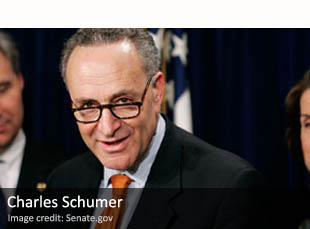
►►US companies ‘use military-style planes’ to make maps. Companies such as Apple and Google could push the limits of citizens’ privacy thanks to the use of “military-grade spy planes” when creating their next-generation mapping technologies, according to Senator Charles Schumer (D-NY). Schumer expressed his concerns in a letter to the two companies, arguing that hyper-detailed images of people’s backyards and other objects could pose a threat to both privacy and national security. The Senator also pointed out the potential for criminals and, yes, even terrorists to view detailed maps of “sensitive utilities”.
►►CIA wanted ‘torture cage’ for secret prison. Polish Senator Jozef Pinior claims prosecutors in Krakow have a document that shows a local contractor was asked to build a cage at Stare Kiekuty, a Polish army base used as a CIA prison for al-Qaeda suspects in 2002 and 2003. “In a state with rights”, Pinior told the Polish paper Gazeta Wyborcza, “people in prison are not kept in cages”. He said a cage was “non-standard equipment” for a prison, but standard “if torture was used there”. After Poland launched its official investigation of the Stare Kiekuty site, President Bronislaw Komorowski said the probe was needed because “the reputation of Poland is at stake”.
►►US Air Force spy planes facing postwar cut. The US Air Force plans to cut back on the number of Hawker Beechcraft’s MC-12 spy planes it wants to operate after the draw-down from Afghanistan and Iraq, official data indicates. With declining operations, the aircraft began to lose its priority role and recent comments indicated at least some of the aircraft would either be grounded or given to the National Guard or other services. Since the MC-12 was first deployed in Iraq, U. forces have acquired access to more sophisticated surveillance aircraft as well as drones that can perform roles previously assigned to manned aircraft.

Did Czechoslovakian spies plan to blackmail British leader?

Ted HeathBy JOSEPH FITSANAKIS | intelNews.org |

In 1975, Czechoslovakian intelligence officer Josef Frolík, who had defected to the United States, published a book titled The Frolik Defection: The Memoirs of an Intelligence Agent. Among several revelations in the book was an alleged plot by the ŠtB, Czechoslovakia’s Cold-War-era secret intelligence service, to sexually blackmail British Conservative politician Edward “Ted” Heath. According to Frolík, the ŠtB had concluded that Heath, a lifelong bachelor and Britain’s Prime Minister from 1970 to 1974, was gay. Based on this —highly questionable— belief, Jan Mrázek, an ŠtB officer working out of the Czechoslovakian embassy in London, had allegedly devised a plan in the mid-1960s, which aimed to expose Heath to homosexual blackmail. Frolík claims in his book that Mrázek developed the plot around Heath’s well-known preoccupation with classical music. Specifically, he planned to recruit Czechoslovakian classical organist Jiří Reinberger, who would be instructed to meet the British conservative politician in London and invite him to Prague for a concert. While there, the ŠtB hoped that a romantic affair would ensue, under the watchful eye of Czechoslovakian spies, who would make sure to capture the more intimate moments of the two men on camera. The audiovisual evidence would, the ŠtB believed, convince Heath to spy for Czechoslovakian intelligence. According Frolík, the plan was put to action but was eventually scrapped after MI5, Britain’s counterintelligence agency, warned Heath that a trip to Czechoslovakia would expose him to blackmail by that country’s intelligence service. When Frolík’s book came out, Heath, who had stepped down from his post as Britain’s Prime Minister and leader of the Conservative Party, dismissed the story as a fabrication, and threatened to sue the author. But was Frolík telling the truth? Read more of this post

News you may have missed #751

Leonid ShebarshinBy IAN ALLEN | intelNews.org |
►►Ex-CIA officer remembers his KGB rival. In April, Leonid Shebarshin, a retired General of the KGB, who was often referred to as “the last Soviet spy”, was found dead in his downtown Moscow apartment. Apparently, he had committed suicide. Now Milt Bearden, who was the CIA’s Chief of the Soviet/East European Division during the final years of the USSR, has written a piece in which he remembers Shebarshin. He says that, even though Shebarshin was “the closest thing [he] had to a main adversary” in the USSR, the two became friends in the late 1990s, despite the fact that Shebarshin remained a true believer in the USSR until the very end of his life.
►►NSA won’t reveal how many Americans it spied on. Last month, US Senators Ron Wyden and Mark Udall –both members of the US Senate’s Select Committee on Intelligence– asked the NSA how many persons inside the US it had spied upon since 2008. But Charles McCullough, the Inspector General of the Office of the Director of National Intelligence, has told the two Senators that giving such a figure of how many Americans were spied on was “beyond the capacity” of NSA’s oversight mechanisms, and that –ironically– looking into this matter would violate the privacy of American citizens.
►►Russian scientist who ‘spied for China’ freed. Igor Reshetin, the former director of Russian rocket technology firm TsNIIMASH-Export, who was jailed in 2007 for selling state secrets to China, has been released on parole. Reshetin had been initially sentenced to nearly 12 years, for illegally selling state-controlled technology secrets to a Chinese firm, and with stealing 30 million rubles (US$925,000) through a scheme involving bogus companies. His initial sentence was later reduced on appeal.

CIA helping Turkey, Saudi Arabia, smuggle weapons into Syria: sources

Turkish-Syrian borderBy JOSEPH FITSANAKIS | intelNews.org |

A growing team of United States Central Intelligence Agency personnel is currently in Turkey overseeing a multinational effort to secretly deliver weapons to Syrian anti-government rebels, according to The New York Times. Quoting “American officials and Arab intelligence officers”, the paper said last week that the weapons are being smuggled into Syria primarily through the Turkish border. The financial cost of smuggling into Syria such weapons as antitank explosives, rocket-propelled grenades, and automatic rifles, has so far been covered by the governments of Turkey, Qatar and Saudi Arabia, according to the article. The funds are partly required to bribe members of what The Times describes as “a shadowy network of intermediaries”, which reportedly includes forces loyal to the Syrian Muslim Brotherhood. The latter is a Sunni group that is widely viewed as the most dominant of the anti-government factions that make up the rebel side in the ongoing Syrian uprising. The paper quotes an “Arab intelligence official”, who says the CIA contingent in Turkey “is trying to make new sources and recruit people” along the porous Turkish-Syrian border. But its presence in the volatile region, which has been constant for “several weeks”, according to The Times, is also aimed at keeping the smuggled weapons out of the reach of Syrian anti-government forces that are allied with militant Islamist groups, including al-Qaeda. The article notes that American support for the Syrian rebels has been minimal, when compared with that in Libya in 2011, mostly because of staunch Russian support for the government forces of Syrian president Bashar al-Assad. Read more of this post

News you may have missed #750 (US edition)

NROL-38 reconnaissance spacecraftBy TIMOTHY W. COLEMAN | intelNews.org |
►►US spy agency launches new satellite. The US National Reconnaissance Office, the agency tasked with overseeing America’s intelligence satellites, successfully placed a new spy satellite into orbit. The Christian Science Monitor reports that the NROL-38 reconnaissance spacecraft was launched from Cape Canaveral Air Force Station in Florida. The satellite launch, sitting atop an Atlas 5 rocket, was streamed live via Webcast for several minutes before being terminated due to national security restrictions and the classified nature of the mission. Particulars regarding the capabilities or specific purpose of the spy satellite were not provided. However, just a few days before, the US Air Force’s highly classified space plane known as the  AX-37B returned to Vandenberg Air Force Base in California.
►►FBI takes on larger domestic intelligence role. The US Federal Bureau of Investigation, under a newly devised action plan, will be afforded a greater role in domestic intelligence efforts in the US, according to a recent Washington Post article.  Senior level field agents at the bureau are expected to serve as representatives for the Office of the Director of National Intelligence (ODNI), the agency created after 9/11 to oversee activities of all US intelligence efforts. The Post quotes CIA spokeswoman Jennifer Youngblood, who —remarkably, considering CIA/ODNI relations in recent years— said that the agency has not opposed the ODNI’s move to elevate FBI agents in the US, and that “the program is working well”.
►►CIA declassifies 9/11 documents. The CIA released this past week hundreds of pages of declassified documents related to the September 11, 2001, attacks, which detail the agency’s budgetary woes leading up to the deadly strikes and its attempts to track al-Qaeda leader Osama bin Laden. The National Security Archive at George Washington University says it obtained the documents through a Freedom of Information Act request. The documents are heavily redacted and offer little new information about what the US knew about the al-Qaeda plot before 2001.

US and Israel behind computer virus that hit Iran, say sources

Flame virus code segmentBy JOSEPH FITSANAKIS | intelNews.org |

Flame, a sophisticated computer malware that was detected last month in computers belonging to the Iranian National Oil Company and Iran’s Ministry of Petroleum, was created by Israel and the United States, according to a leading American newspaper. Quoting “officials familiar with US cyber-operations”, The Washington Post reported on Wednesday that the malware, which is said to be “massive in size”, is part of a wider covert program codenamed OLYMPIC GAMES. The paper said that the US portion of the program is spearheaded by the National Security Agency, which specializes in cyberespionage, and the CIA’s Information Operations Center. The Post further claims that OLYMPIC GAMES has a three-fold mission: to delay the development of the Iranian nuclear program; to discourage Israeli and American officials from resorting to a conventional military attack on Iran; and to buy time for those officials who favor addressing the Iranian nuclear stalemate with diplomatic pressures coupled with sanctions. According to one “former intelligence official” quoted in The Post, the scale of OLYMPIC GAMES “is proportionate to the problem that’s trying to be resolved”. Russian antivirus company Kaspersky Lab, which first spotted the Flame virus in May, said that it is “one of the most complex threats ever discovered”. It is over 20 megabytes in size, consisting of 650,000 lines of code. In comparison, Stuxnet, a computer super-virus that was detected by experts in 2010, and caused unprecedented waves of panic among Iranian cybersecurity experts, was 500 kilobytes in size. Read more of this post

News you may have missed #749

Mohammed DahabiBy IAN ALLEN | intelNews.org |
►►Why did CIA Director secretly visit Czech Republic? The CIA Director, David Petraeus, is known to make frequent secret trips to places like Pakistan, Afghanistan, or Iraq. But why was his recent trip to the Czech Republic kept secret? Photographs published in a Czech daily paper showed the CIA director and his team boarding a military plane at Prague’s Ruzyne Airport, headed for their next destination, Sofia, Bulgaria. But neither the US Embassy in Prague, nor the CIA will respond to questions by Czech media about Petraeus’ secretive visit to the former Soviet Bloc nation.
►►Jordan’s ex-spy chief on trial for corruption. Jordan’s former spy chief, General , who headed the General Intelligence Department (GID) from 2005 to 2009, has gone on trial in Amman on charges of corruption, which carry a maximum sentence of life imprisonment. In a case highlighting corruption in the country’s vaunted intelligence community, the prosecutor said Dahabi’s wealth had quadrupled during his years in office, reaching almost $40 million by the end of 2011. The money, he said, was held in several foreign currency accounts in a leading domestic bank.
►►CIA still refuses to comment on Predator drone attacks. The Central Intelligence Agency continues to refuse to confirm or deny the covert military use of drones to kill suspected terrorists overseas. This is despite numerous public comments on the CIA’s drone attacks in far-flung locales such as Yemen from various government officials, including former CIA Director Leon Panetta and US President Barack Obama. The development comes as 26 members of Congress asked Obama, in a letter, to consider the consequences of drone killing and to explain the necessity of the program.

Russian professors jailed for passing military secrets to China

The R-30 BulavaBy IAN ALLEN | intelNews.org |
Two Russian professors were convicted yesterday of handing over to Chinese government agents highly classified technical details about one of Russia’s most secretive military projects. Svyatoslav Bobyshev and Yevgeny Afanasyev, both employees of the military-affiliated Baltic State Technological University in St. Petersburg, had been arrested in March 2010 on suspicion of spying for a foreign government. The two have now been sentenced by the St. Petersburg City Court to 12 and 12 ½ years in prison respectively, after having been found guilty of treason. According to the court documents, Bobyshev and Afanasyev traveled to China in 2009, where they passed on to Chinese military intelligence officers highly secret technical details about Russia’s R-30 Bulava ballistic missile. Specifically, the two professors are accused of sharing information relating to Bulava’s underwater launch specifications. Additionally, the Russian government prosecutor said that the two were preparing to provide the Chinese with information about two of Russia’s land-based missile systems, the Topol-M and Iskander. The R-30 Bulava (the Russian word for “mace”) is the name for Moscow’s latest-generation submarine-based ballistic missile technology. It is widely considered to be one of the future cornerstones of Russia’s nuclear weapons capability, and is thought to be the most expensive weapons project currently being developed in the country. The missile was approved for production last year, and is expected to come to service this coming October, when it will begin to replace Russia’s Soviet-era stock of submarine-launched nuclear missiles. Read more of this post

News you may have missed #748 (US edition)

Michael HaydenBy IAN ALLEN | intelNews.org |
►►US lawmakers probe China companies over spy concerns. In letters sent last week to Chinese communications hardware firms Huawei Technologies and ZTE Corporation, a group of senior members of the US House of Representatives Intelligence Committee have outlined concerns about the companies’ ties with the Chinese government, including the role of a “party committee” at Huawei. The lawmakers have also asked about Huawei’s relationships with five US consulting firms and requested an expansive collection of documents, including the contracts between the firms and Huawei.
►►Lone Senator resists Bush/Obama NSA wiretapping plan. The Obama administration wanted a quick, no-questions-asked-or-answered renewal of broad electronic eavesdropping powers that largely legalized the Bush administration’s illegal warrantless wiretapping program. That’s despite President Barack Obama’s campaign promise to revisit and revise the rules to protect Americans’ rights. Everything seemed to be going to plan after a Senate committee approved the re-authorization in secret last month. But Senator Ron Wyden (D-Oregon) has stepped in to stop the bill because the government refuses to say how often the spy powers are being used.
►►What did Hayden tell Obama in January 2009? In December of 2008, a meeting took place between the incoming US Presiden Barack Obama and the departing CIA Director Michael Hayden. Several days later, on January 15, Hayden told journalists that Obama had privately assured him that “no plans to launch a legal inquiry” into the CIA’s use of controversial interrogation methods during the Bush administration. Now, several years later, Salon has published an insider’s account of what was said in that meeting between Obama and Hayden, as well as during the days that followed.

Western spy agencies ‘sharing intelligence’ with Syrian rebels

Robert MoodBy JOSEPH FITSANAKIS | intelNews.org |
A British newspaper has cited defense sources claiming that British and American intelligence agencies are passing vital information to Syrian rebels fighting to overthrow the country’s government. British tabloid The Daily Star quoted “a British defense source” who said that most of the raw intelligence on Syria is picked up by sophisticated British and American satellites monitoring Syrian communications. Once gathered and assessed by intelligence analysts in Washington and London, the information is passed on to operatives of the United States Central Intelligence Agency and Britain’s MI6, who are allegedly operating on the ground in Syria. They in turn communicate actionable intelligence to rebel leaders in Syria, who are fighting the government of Syrian President Bashar al-Assad. According to the British tabloid, information passed on to rebel leaders includes detailed satellite imagery of Syrian pro-government troop movements around the country, as well as the contents of intercepted communications between senior Syrian military commanders and their subordinates in the field. The Star quotes one unnamed British government source who claims that the satellites are so sophisticated that they allow British and American eavesdroppers to identify the individuals whose voices are heard in the intercepted communications, with the aid of advanced voice recognition systems. The intelligence has reportedly enabled rebel commanders to evacuate locations targeted by government forces, and may also have allowed the rebels to organize successful counterstrikes in response to offensives conducted by troops loyal to Damascus. Washington-based publication The Hill contacted the CIA and the White House but their spokespersons refused to comment on what they called “an ongoing intelligence operation” in Syria. A spokesman from the British Foreign and Commonwealth Office would only tell The Star that “all actions remain on the table”.   Read more of this post