News you may have missed #665
January 13, 2012 2 Comments
 By IAN ALLEN | intelNews.org |
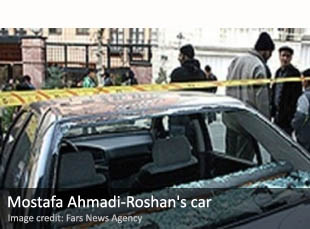
►►Joseph Fitsanakis interviewed on ABC Radio National. IntelNews‘ own Dr Joseph Fitsanakis was interviewed on Friday by reporter Suzanne Hill, for ABC Radio National’s flagship evening news program ‘PM‘. In the interview, which was about the assassination of Iranian nuclear scientist Mostafa Ahmadi-Roshan, Fitsanakis points the finger at the Mossad, and explains why he doesn’t believe the United States had anything to do with the killing. You can listen to the interview here. The transcript is here.
►►India releases diplomat jailed for spying. Last April, Madhuri Gupta, second secretary at the Indian high commission in Islamabad, Pakistan, was arrested for working for Pakistan’s ISI spy agency. She apparently had a “relationship of personal affection” with an aide of her Pakistani handler. On Tuesday, she was granted bail by an Indian court, after 21 months in prison.
►►Matthew Aid interviewed about his new book. Matthew M. Aid, author of The Secret Sentry, has written a new book, Intel Wars: The Secret History of the Fight Against Terror. You can listen to an extensive interview he gave on January 11 on NPR’s Fresh Air, in which Aid outlined his view that “overlapping jurisdictions, bureaucratic policies and a glut of data have crippled the intelligence community in its war against would-be terrorists”.
►►British spies to be cleared on torture allegations. The British government, including Scotland Yard and the Crown Prosecution Service, has just finished a four-year inquiry into the country’s security and intelligence services, sparked by allegations by terrorist suspects released from Guantanamo Bay, that they were severely tortured. The results have not yet been announced. But British media report that, according to information from trusted sources, the inquiry has concluded that (…drumroll…) there is no evidence that officers from either MI5 or MI6 were aware of the mistreatment of prisoners.

 By JOSEPH FITSANAKIS | intelNews.org |
 By IAN ALLEN | intelNews.org |










 intelNews.org
Bush “did nothing” about Mossad using US passports to recruit terrorists
January 16, 2012 by Joseph Fitsanakis 4 Comments
Current and former American intelligence officials have accused Israeli spy operatives of posing as US citizens to recruit members of a Pakistani terrorist group in a covert war against Iran. In an explosive exposé, the respectable US-based journal Foreign Policy has revealed that officers of Israel’s Mossad intelligence agency used forged US passports to pose as American personnel of the Central Intelligence Agency. They used their fake American identities to contact members of Pakistan-based terrorist group Jundallah, which is responsible for numerous brutal strikes against civilian targets in Iran. Jundallah (soldiers of God) is an extremist militant organization that claims to be fighting for the rights of Sunni Muslims in Iran. Most of its members belong to the Baluch ethnic group, which is concentrated along the Iranian-Pakistani border. The Foreign Policy article cites interviews conducted over the past 18 months with six anonymous US government officials, including two serving intelligence officers and at least two others who “have monitored Israeli intelligence operations from senior positions inside the US government”. They told the journal that, in 2007, during the concluding years of the administration of President George W. Bush, the CIA discovered that the Mossad was using forged US passports and US currency to court and fund Jundallah operatives, in a series of secret meetings in London, England. One US government source told Foreign Policy that American officials “were stunned by the brazenness” of the Mossad, saying: “it’s amazing what the Israelis thought they could get away with […]. They apparently didn’t give a damn what we thought”. A retired CIA officer told the journal that Agency analysts drafted official memoranda that made their way “up the US intelligence chain of command”, eventually reaching the White House. The CIA officer added that President Bush “went absolutely ballistic” when briefed on the Mossad operation. Read more of this post
Filed under Expert news and commentary on intelligence, espionage, spies and spying Tagged with Balochistan, Barack Obama, CIA, false flag operations, false identity, forgery, George W. Bush, intelligence cooperation, Iran, Jundallah, Mossad, News, Pakistan, terrorism, travel documentation, United States