Why is Germany protecting Iraqi informant who lied about WMDs?

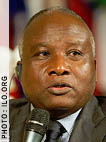
Rafid Ahmed Alwan

Alwan al-Janabi

By JOSEPH FITSANAKIS | intelNews.org |
German politicians in the state of Baden-Württemberg are questioning the protection given by German intelligence services to a notorious Iraqi informant, who lied about Iraq’s weapons program. Rafid Ahmed Alwan al-Janabi, known in intelligence circles as “Curveball”, arrived in Germany in 1999, where he applied for political asylum, saying he had been employed as a senior scientist in Iraq’s biological weapons program. Despite serious doubts expressed at the time by officials in Germany’s Federal Intelligence Service, the BND, and by some of their CIA colleagues, al-Janabi was given asylum in Germany. Moreover, information gathered from his testimony became a major source of the Bush Administration’s argument in favor of going to war in Iraq in 2003. Less than a year later, both the BND and the CIA concluded that al-Janabi had been lying about his alleged biological weapons role, and that he was in reality a taxi driver from Baghdad, who had used his undergraduate knowledge of engineering to fool Western intelligence. Read more of this post

News you may have missed #467

  • Ex-Mossad chief says Iran nuke program behind schedule. Meir Dagan, Israel’s recently retired spy chief, thinks Iran will not be able to build a nuclear bomb before 2015, further pushing back Israeli intelligence estimates on the subject. Time for critics of the 2007 US National Intelligence Estimate to reconsider their views?
  • NSA breaks ground on Utah cybersecurity center. Ground was broken last Thursday on the Utah Data Center, a $1.2 billion, 1 million-square-foot cybersecurity center being built for the US National Security Agency at Camp Williams, near Salt Lake City. Secrecy is expected to shroud the center, with the groundbreaking being one of the public’s last chances to take an open look at the project.
  • Colombian judge orders arrest of ex-spy chief. Colombia’s Prosecutor General has ordered the arrest of Jorge Noguera, a former director of the country’s DAS intelligence agency, for his alleged involvement in the spying on government opponents. This is not the first time Noguera, who was director of the DAS between 2002 and 2006, has been sent to jail. He was imprisoned and released twice for his alleged involvement in allowing members of paramilitary organization United Self-Defense Forces of Colombia to infiltrate the intelligence agency.

New clues in extensive recount of al-Mabhouh assassination

Ronen Bergman

Ronen Bergman

By JOSEPH FITSANAKIS | intelNews.org |
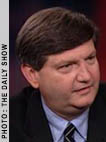
The current issue of US-based magazine GQ contains what must be the most extensive account in English of the 2010 assassination of Mahmoud al-Mabhouh by Israeli intelligence agency Mossad. Written by Israeli investigative journalist Ronen Bergman (author of The Secret War with Iran), the piece contains several new clues about the targeted killing of al-Mabhouh, a senior Hamas official, in a luxury hotel in Dubai last January. One new element that stands out in Bergman’s account is that, two months prior to his assassination, al-Mabhouh survived a poisoning attempt by the same team of Israeli operatives, again in Dubai. The Hamas official fell ill, but recovered fully. Bergman also claims that the operation to target al-Mabhouh, which must have lasted several months or even years, involved the use of an elaborate Trojan horse virus that was implanted on al-Mabhouh’s computer, and allowed Mossad operatives to monitor his email correspondence. It was through this method that the Israelis became aware of al-Mabhouh’s itinerary during his fatal trip to Dubai. Read more of this post

Ex-CIA officer faces up to 120 years for leaking secrets

James Risen

James Risen

By IAN ALLEN | intelNews.org |
A former CIA officer, who sued the Agency after he was fired, was arrested last Thursday in St. Louis, Missouri n charges of leaking classified information about a botched CIA covert operation in Iran. There is no information on the indictment about the recipient of the information that was leaked by Jeffrey Alexander Sterling, who worked for the CIA from 1993 until 2002. But it is common knowledge Sterling spoke to James Risen, a Pulitzer Prize winning journalist for The New York Times. In 2002, Risen wrote an article about Sterling’s lawsuit, in which the plaintiff claimed he was told by his superiors that he was “too big and black” to operate covertly overseas. According to the indictment, in 2003, after Sterling’s lawsuit was thrown out on national security grounds, he started leaking information (presumably to Risen), which he had gathered while working for the CIA’s Iran Task Force. Risen reportedly tried to publish Sterling’s disclosures, but The New York Times declined to print them, after its editors were warned by the White House that they would be severely detrimental to national security. Read more of this post

News you may have missed #466

  • France blasts economic warfare by industrial spies. The French government says it is the victim of an economic war, after Renault, France’s partially state-owned carmaker, suspended three top executives over leaks of secret electric-car technology. The French intelligence services are probing a possible Chinese connection. It should be noted that, according to US estimates, France leads industrial spying in Europe.
  • Canada a target for foreign interference, says spy chief. A keenly anticipated report by Canadian Security Intelligence Service director Richard Fadden paints a picture of a broad threat of foreign interference from countries out to influence Canada’s policy and politicians, target dissidents and pilfer technology. It is the most detailed articulation of the spy service’s concerns about overtures from foreign agents, including two suspected cases involving provincial cabinet ministers.
  • Jordanian Hamas spy awarded PhD in jail. Jordanian Azzam Jaber, jailed in Jordan for spying for the Palestinian group Hamas on potential targets including the Israeli embassy, has obtained his doctorate from the University of Yarmuk.

Analysis: Understanding WikiLeaks

WikiLeaks

WikiLeaks

By JOSEPH FITSANAKIS| intelNews.org |
The WikiLeaks cablegate revelations appear to be subsiding in the new year, and so is the public debate about their meaning and consequences. And yet, as calmer moods prevail, now is the appropriate time to probe the WikiLeaks phenomenon. To do so constructively, it is necessary to move beyond a mere political assessment of WikiLeaks. The question of whether the website, its founder, and its hundreds of volunteers, are criminals, heroes, terrorists, or dissidents, cannot even begin to be answered until WikiLeaks is understood, first and foremost. By ‘understood’, I don’t mean empathize. I mean comprehending WikiLeaks as an ideological paradigm, a technological vehicle reflective of the personal philosophies of its members, but also representative of a much wider sociotechnical trend. Click here to read my analysis brief published today by the Research Institute for European and American Studies.

News you may have missed #465

  • Germany denies secret spy collaboration with the US. Germany’s aerospace center denied Monday that it is working with the US on a $270 million high-tech secret spy program, insisting that its plans for a high-resolution optical satellite have purely scientific and security uses. The denial was in response to US State Department cables obtained by WikiLeaks and revealed by Norwegian daily Aftenposten.
  • Was Iranian nuclear defector tortured? Iranian nuclear scientist Shahram Amiri, who returned to Tehran in July after what he called a “kidnapping” by the CIA, has been held in detention by Iranian authorities for two months and tortured so badly he was hospitalized, according to a dissident Iranian web site.
  • WikiLeaks reveals France leads industrial spying in Europe. France is the country that conducts the most industrial espionage on other European countries, even ahead of China and Russia, according to leaked US diplomatic cables, reported in a translation by Agence France Presse of Norwegian daily Aftenposten‘s reporting.

US denies Ivory Coast coup claim

Emile Guirieoulou

Emile Guirieoulou

By IAN ALLEN | intelNews.org |
The United States has emphatically rejected assertions by officials in the Ivory Coast that it is plotting to overthrow the government of the West African country. For weeks now, Washington has been echoing calls by the United Nations, the African Union and the European Union for Ivorian President Laurent Gbagbo to stand down, after losing in the November 28 national elections. But Gbagbo’s government, which controls most of the military, rejects the alleged election victory of his political rival Alassane Ouattara, and refuses to hand over power. On December 29, the Ivory Coast’s Minister of the Interior, Emile Guirieoulou, told a press conference that the United States had dispatched at least ten German “mercenaries” to its embassy in Abidjan, as part of a multinational Western plot to overthrow Laurent Gbagbo. He told journalists that the German mercenaries were onboard a US-operated flight from Algiers to Bouake, Ivory Coast’s second-largest city. Read more of this post

News you may have missed #464 (Mossad edition)

2010: The year that was in espionage

ABC Australia

ABC Australia

By JOSEPH FITSANAKIS | intelNews.org |
I was interviewed yesterday by Australian National Radio’s Julian Morrow on the major espionage stories of 2010. Fortunately or unfortunately, there has been no shortage of spy-related news this past year, and one is forced to be selective in reviewing the subject. In the interview I spoke about Mahmoud al-Mabhouh, the senior Hamas official who was assassinated on January 19 in Dubai by agents of Israeli intelligence agency Mossad. I also spent some time recalling the intelligence aspects and diplomatic fallout of last May’s Israeli Navy attack on the Gaza Freedom Flotilla, which killed nine and injured over 100 international activists. Julian then asked me to speak briefly about last June’s Stuxnet virus, which attacked computers in Iran’s state-of-the-art uranium enrichment plant in Natanz and the nuclear reactor facility in Bushehr. We closed the interview by discussing the arrest last summer of eleven Russian illegals in the eastern United States. Read more of this post

News you may have missed #463

  • Iranian spy minister admits hacking emails. Iran’s Intelligence Minister Heydar Moslehi has publicly admitted that the Iranian government has hacked into the emails of Iranian opposition members. He claimed the hacking, conducted by Iran’s Intelligence Ministry, revealed messages exchanged between “foreigners and their elements inside Iran”.
  • Details on CIA officer killed in Afghanistan. An interesting article in The Washingtonian offers an interesting background story on Jennifer Matthews, a CIA officer who was killed nearly a year ago in Afghanistan in a suicide bombing by Taliban double-agent Humam Khalil Abu-Mulal al-Balawi.
  • China jails South Korean alleged spy. China is getting tougher with South Korean spies caught on Chinese soil collecting intelligence on North Korea, and has jailed one of them for more than a year, despite pleas from Seoul, according to news reports.

Israel sabotaged Egypt’s Internet, says alleged Mossad spy

Undersea Internet cable

Undersea cable

By IAN ALLEN | intelNews.org |
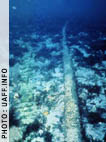
Israeli sabotage was behind the nationwide crippling of Egypt’s Internet in 2008, according to an alleged Mossad agent. The accused agent, Abdel Razeq Hussein Hassan, is an Egyptian businessman who was arrested earlier this year by Egyptian counterintelligence and is accused of working for the Israeli spy agency. Two of his alleged Israeli handlers, Joseph Daymour and Idid Moushay, are reportedly on the run and are wanted by the Egyptian government.  Hassan is due to go on trial next month, but transcripts of his interrogation records have been leaked to Egyptian media. In one instance, Hassan appears to tell his police interrogators that a team of Mossad operatives deliberately cut two undersea cables about 5 miles off the north Egyptian port city of Alexandria, disrupting the country’s Internet service for several days. Read more of this post

Germany launches probe into poisoning of ex-KGB colonel

KGB seal

KGB seal

By JOSEPH FITSANAKIS | intelNews.org |
An official government probe into the alleged poisoning of a Russian former KGB colonel and his wife has been launched in Berlin, German officials have announced. Regular intelNews visitors will recall the recent case of Viktor Kalashnikov, a former colonel and authority on military matters for the Soviet KGB, who was taken in critical condition to a Berlin hospital along with his wife, Marina. The two were found to have over ten times the highest permissible level of mercury in their blood, which, according to medical experts, points to a deliberate poisoning attempt. The case intrigued German officials, since the Kalashnikovs, who moved to Germany last September, are known in Russia as vocal critics of the Putin-Medvedev administration. The two have co-authored scathing critiques accusing Moscow of manipulating the separatist Chechen movement in order to create “a national security state” in Russia. Read more of this post

News you may have missed #462

  • CIA secrets could surface in Swiss nuclear case. A seven-year effort by the CIA to hide its relationship with the Tinners, a Swiss family who once acted as moles inside the world’s most successful atomic black market, hit a turning point on Thursday when a Swiss magistrate recommended charging the men with trafficking in technology and information for making nuclear arms.
  • Pakistan spy chief to ignore US summons. The Pakistani government has announced that hat there is “no possibility” that Lt. Gen. Ahmad Shuja Pasha, the head of Pakistan’s powerful Inter-Services Intelligence Directorate, would obey a summons requesting his appearance before a court in the United States relating to the 2008 Mumbai terrorist attacks.
  • Australia told to prioritize spy recruitment. Carl Ungerer, from the Australian Strategic Policy Institute, has advised the Australian intelligence agencies to “look at ways to improve information gathering from human sources”, as they undergo a period of reform.

Comment: Russian Espionage Steals 2010 Limelight

GRU emblem

GRU emblem

By JOSEPH FITSANAKIS | intelNews.org |
As the first decade of the 21st century is coming to an end, few would dispute that Israeli and American spy agencies have been among the most talked-about intelligence organizations of 2010. The reasons for this are equally undeniable: the United States tops the list because of its political prominence, which inevitably attracts media attention; Israel tops it because of the sheer ferocity of its espionage output throughout the Middle East. And yet there is nothing new about this, since neither the Central Intelligence Agency nor the Mossad are exactly novices when it comes to high-profile media exposures. The same cannot be said with respect to Russian intelligence agencies, which went through a period of prolonged hibernation following the end of the Cold War. Indeed, the year that is about to end demonstrates that the stagnant interlude in Russian espionage may well be in its closing stages.

Read more of this post